
Violin Tone | Why Many Beginners Struggle to Sound Good
Learning the violin is an exciting journey filled with small victories and meaningful milestones. Yet, almost every beginner experiences the same frustration during the early stages—they expect to produce a rich, beautiful violin tone but are instead greeted with squeaky, scratchy, or uneven sounds. Instead of the warm and expressive sound they imagined, the violin often produces harsh or inconsistent notes. This experience frequently leads beginners to question whether they simply lack natural talent.
Fortunately, poor tone is rarely a sign of inability. In fact, producing a beautiful violin tone is one of the most challenging aspects of learning the instrument because it requires several techniques to work together at the same time. Unlike instruments that produce a pleasant sound with minimal effort, the violin depends entirely on the player’s control of the bow, posture, hand position, and listening skills.
As a result, beginners usually struggle not because they are doing everything wrong, but because they are still developing the coordination needed to create a consistent sound. The encouraging news is that tone quality improves steadily with proper guidance, regular practice, and patience. Understanding why the violin sounds harsh in the beginning is the first step toward making it sing beautifully.

Understanding What Creates a Beautiful Violin Tone
Many people assume that the violin itself is responsible for producing a beautiful sound. While the quality of the instrument certainly plays a role, the player has a much greater influence on the tone. Even an affordable beginner violin can produce a pleasant sound when played with good technique, whereas an expensive instrument can sound unpleasant in inexperienced hands.
Beautiful tone comes from the relationship between the bow and the string. Every movement of the bow affects the vibration of the string, which ultimately determines the quality of the sound. Because of this, even small variations in pressure, speed, or angle can dramatically change what the listener hears.
In addition, posture, finger placement, and relaxation throughout the body all contribute to tone production. When these elements begin working together, the violin develops a warm, clear, and expressive voice. Until then, inconsistent sounds are simply part of the learning process rather than evidence of failure.
The Bow Is the Biggest Challenge
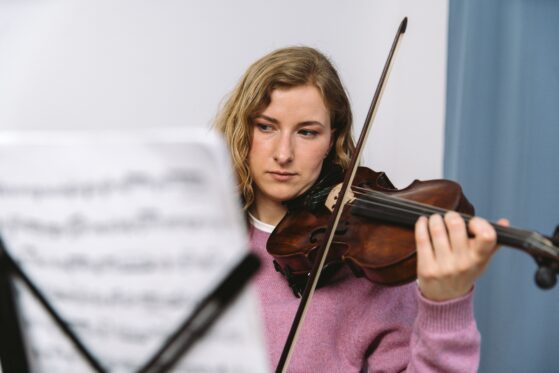
One of the most common reasons beginners struggle is that they underestimate the importance of bowing technique. Although many new students focus primarily on placing the fingers correctly, experienced violinists often say that the bow hand creates the music.
Controlling the bow requires remarkable precision. It must travel in a straight path while maintaining consistent pressure and speed throughout each stroke. At the same time, the player must keep the bow at the correct contact point between the fingerboard and the bridge. Managing all these elements simultaneously can feel overwhelming during the early months of learning.
Consequently, beginners often hear scratching, squeaking, or weak sounds. Sometimes the bow moves too quickly with too much pressure. On other occasions, it moves too slowly with too little weight. Since every combination creates a different sound, developing consistency takes time.
Gradually, however, the muscles begin to remember the correct movements. With regular practice, bow control becomes more natural, allowing the tone to become smoother and more refined.
How Bow Pressure and Bow Speed Affect Violin Tone
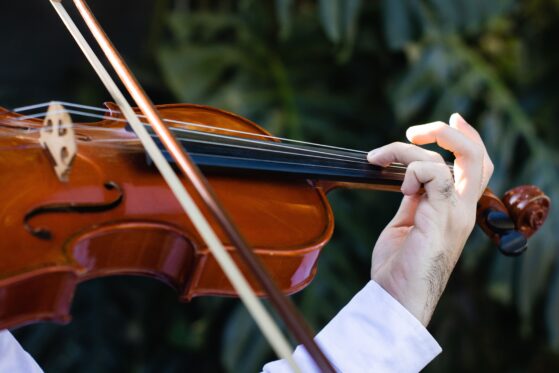
A common misconception is that pressing harder on the strings automatically produces a louder or better sound. In reality, excessive pressure often creates harsh and unpleasant tones. On the other hand, using too little pressure can make the sound weak, airy, or unstable.
Instead of thinking only about pressure, violinists learn to balance pressure with bow speed. Faster bow movement generally requires different weight than slower strokes. Similarly, the location of the bow on the string influences how these two factors interact.
Initially, beginners are still learning this balance, so tone quality changes from note to note. One phrase may sound surprisingly good, while the next becomes scratchy without any obvious reason. This inconsistency is completely normal because the hands are still developing coordination.
Eventually, students begin recognizing how small adjustments affect the sound. Over time, these tiny corrections become automatic, leading to a much more beautiful and controlled tone.
The Bow Angle Matters More Than Beginners Realize
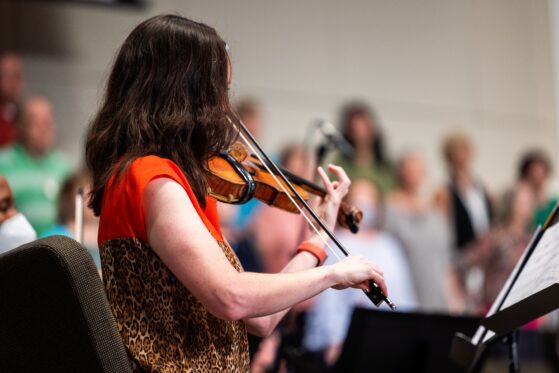
Another major reason for poor tone is an inconsistent bow angle. Ideally, the bow should remain parallel to the bridge throughout every stroke. However, maintaining this alignment is much harder than it appears.
As beginners move the bow across the strings, the arm often changes direction slightly without the player noticing. Consequently, the bow drifts toward the fingerboard or the bridge, producing uneven sound and inconsistent volume.
Furthermore, an incorrect bow angle can accidentally touch neighboring strings, creating unwanted noises and making simple melodies sound messy. This issue is especially common when students transition between strings because arm coordination is still developing.
Fortunately, regular practice helps train the eyes and muscles to maintain better alignment. With time, straight bowing becomes second nature, and the improvement in tone is immediately noticeable.
How Left-Hand Accuracy Improves Violin Tone
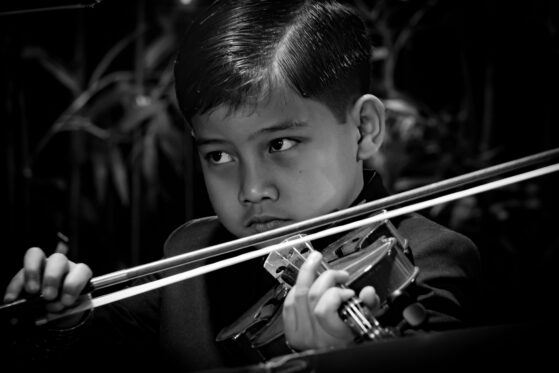
Although the bow receives most of the attention, the left hand also plays a significant role in producing a pleasing sound. Every finger must press the string firmly enough to create a clear pitch without unnecessary tension.
If the fingers are placed too far from their correct positions, the notes sound out of tune. Even when the bow technique is excellent, poor intonation can make the overall performance seem unpleasant.
Likewise, fingers that press too lightly may create buzzing or unclear notes. Excessive tension can also reduce flexibility, making smooth movement between notes more difficult.
As beginners develop finger strength and muscle memory, intonation becomes more reliable. Consequently, the tone begins sounding cleaner because each note vibrates more freely and accurately.
Tension Is the Hidden Enemy of Good Tone
Many beginners become nervous while playing, especially during lessons or performances. As a result, they unknowingly tighten their shoulders, arms, wrists, or hands.
Unfortunately, physical tension directly affects tone quality. Tight muscles reduce the natural flexibility needed for smooth bow movement and relaxed finger action. Instead of flowing across the strings, the bow becomes stiff, creating harsh or uneven sounds.
Moreover, tension often leads to fatigue, making practice sessions less productive and increasing the likelihood of mistakes.
Developing relaxation takes conscious effort. Slow practice, proper breathing, and frequent posture checks help students release unnecessary tension while maintaining control of the instrument. Once the body becomes more relaxed, the violin responds with a warmer and more resonant tone.

How Listening Skills Help Develop Better Violin Tone
One habit that separates successful violinists from struggling beginners is careful listening. Learning the violin is not simply about moving the fingers correctly; it is equally about developing the ear.
Students who actively listen begin noticing whether their tone is smooth, harsh, thin, or full. They also become more aware of changes in volume, consistency, and pitch. This awareness allows them to make small adjustments while practicing instead of repeating the same mistakes.
At first, many beginners cannot easily recognize the difference between average and excellent tone. Nevertheless, listening skills improve with experience. Regular exposure to professional violin performances also helps students develop a clearer understanding of the sound they are trying to achieve.
Gradually, the ears become one of the most valuable tools in tone development.
Quality Practice Produces Better Tone Than Long Practice
Many beginners believe that practicing for several hours automatically guarantees improvement. While consistent practice is essential, the quality of practice matters far more than the number of minutes spent holding the violin.
Focused practice encourages students to pay attention to bow movement, posture, intonation, and sound production instead of simply playing through pieces repeatedly. When each repetition has a clear purpose, progress becomes much faster.
Additionally, shorter sessions with complete concentration are often more effective than long periods of distracted practice. Since the violin demands precise coordination, mental focus is just as important as physical repetition.
Over time, these thoughtful practice habits build stronger technique, which naturally leads to a richer and more consistent tone.

How the Instrument Can Influence Violin Tone
Although technique remains the primary factor, the instrument itself also contributes to tone quality. Poorly adjusted violins may have strings that are too old, bridges that are improperly positioned, or bows that need fresh hair or additional rosin.
Because beginners often cannot identify these issues, they may assume that every unpleasant sound is their own fault. In reality, an instrument that is difficult to play can slow progress and make tone development more challenging.
Even so, owning the most expensive violin is not necessary for beginners. A properly set up student instrument with quality strings can produce an impressive sound when combined with good technique and consistent practice.
Therefore, maintaining the instrument regularly supports tone improvement without replacing the need for proper training.

Why Patience Is Part of Learning the Violin
Unlike some instruments that produce recognizable melodies within a short period, the violin demands patience from the very beginning. Every improvement in tone is built upon countless small corrections that gradually become permanent habits.
Because progress happens incrementally, many students fail to notice how much they have improved over several months. Recording practice sessions can be especially encouraging because it allows players to hear the difference that daily effort creates over time.
Rather than expecting perfection immediately, successful violinists focus on making today’s tone slightly better than yesterday’s. This mindset reduces frustration and encourages steady, lasting improvement.
Eventually, the scratchy sounds that once seemed impossible to eliminate become distant memories as confidence and technique continue to grow.
Conclusion | Building Beautiful Violin Tone Takes Time
Every violinist begins with imperfect tone. Scratchy sounds, squeaks, uneven notes, and inconsistent bowing are not signs of failure—they are natural stages of learning one of the world’s most expressive instruments.
As technique develops, the relationship between the bow, the strings, and the player’s movements becomes increasingly refined. Better posture, improved bow control, accurate finger placement, careful listening, and relaxed practice all work together to transform the sound.
Most importantly, a beautiful violin tone is not reserved for naturally gifted musicians. Instead, it is the result of consistent practice, proper instruction, and patience. Whether you are learning through in-person classes or Violin Lessons Online, steady guidance and regular practice can help you build confidence and achieve a richer, more expressive sound.
At The Mystic Keys, students are encouraged to focus on strong fundamentals, proper technique, and musical expression from the very beginning. With time, dedication, and the right support, every beginner can progress from producing uncertain sounds to creating music that is warm, expressive, and enjoyable to hear.
For more information and exciting resources about learning music, visit our website at The Mystic Keys. For more music content and exciting offers follow us on
Facebook, Instagram, YouTube, LinkedIn, Twitter, Pinterest, and Threads.