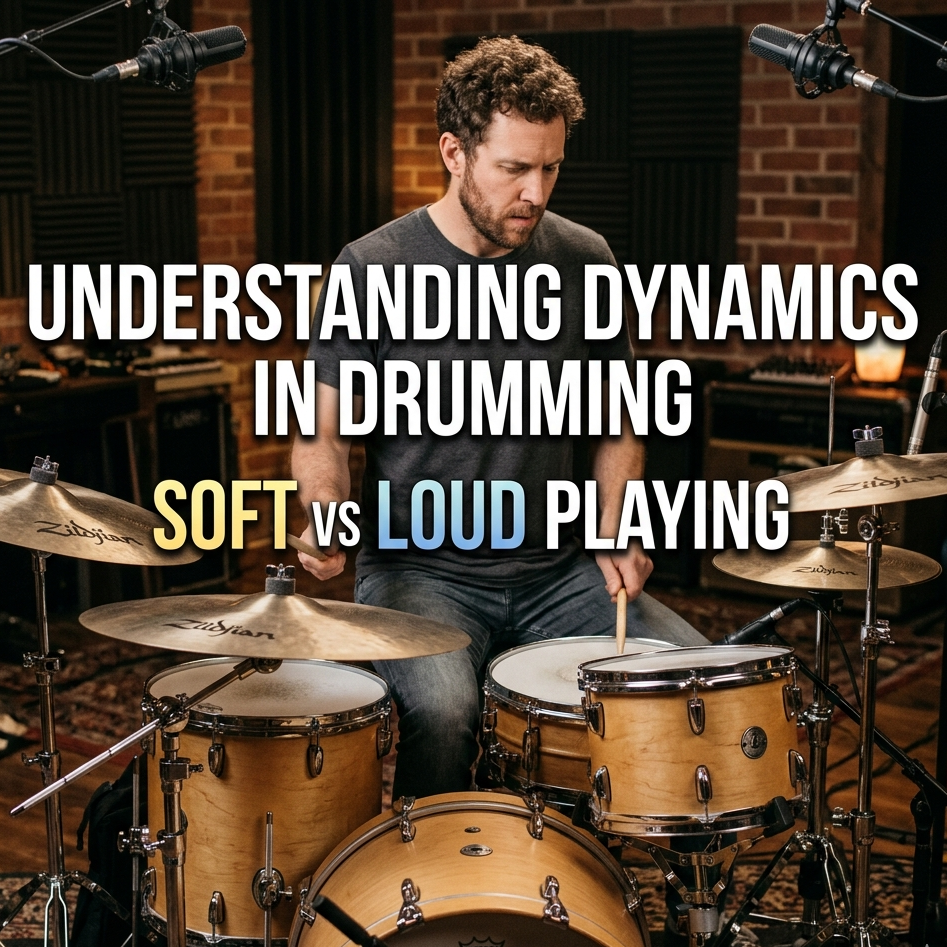
Understanding Dynamics in Drumming | Soft vs Loud Playing
Understanding dynamics in drumming begins with looking beyond power, speed, and energy—the qualities most people commonly associate with the instrument. For many listeners, the image of a drummer is tied to loud crashes, booming bass drums, and fast fills that push a song forward with force. Although that side of drumming is undeniably exciting, it represents only one part of the musical picture. Beneath the surface of every memorable drum performance lies something far more significant than volume alone: the art of dynamics.
Dynamics in drumming refer to the control of volume and intensity—how softly or loudly a drummer plays and, more importantly, when they choose to do so. This balance between soft and loud playing is what gives rhythm its emotional shape. It transforms a beat from something mechanical into something expressive.
A drummer who plays everything loudly may sound energetic at first, but without variation, the performance quickly becomes flat and predictable. On the other hand, a drummer who understands how to shift between subtle softness and commanding loudness creates movement, tension, release, and emotion within music.
Understanding the relationship between soft and loud playing is essential for every drummer, whether beginner or advanced. It is not just about hitting harder or lighter; it is about intention, control, and musical awareness.

Understanding Dynamics | The Foundation of Musical Expression
At its core, dynamics are the variations in volume within music. In drumming, this means controlling how much force is used on each stroke and how that affects the overall sound.
Every hit on the drum carries a certain weight. A soft tap on the snare can create intimacy and sensitivity, while a powerful strike can create excitement and urgency. The difference between these two extremes—and everything in between—is where dynamics live.
Music is rarely meant to stay at one volume level throughout. Songs breathe through dynamic contrast. They rise, fall, build, and settle. The drummer plays a major role in shaping that journey because rhythm often determines how energy is felt.
Think of dynamics as the emotional language of drumming. Volume becomes expression, and expression becomes storytelling.

Understanding Dynamics Through Soft Playing
Soft playing is often underestimated, especially by beginners. Many new drummers focus on speed or power because those qualities are more noticeable. However, playing softly is one of the hardest skills to master.
Soft playing requires precision. When strokes are gentle, every inconsistency becomes obvious. Timing must remain steady, and the sound must stay clean. There is less room to hide behind force.
Beyond technical control, softer drumming creates space in music. It allows vocals, melodies, and harmonies to breathe. Instead of dominating the arrangement, the drums support it in a way that feels natural.
In genres like jazz, acoustic music, ballads, and certain fusion styles, soft drumming becomes essential. The drummer must maintain groove without overpowering the musical conversation.
More importantly, soft playing develops touch. Touch refers to how a drummer interacts physically with the instrument. A refined touch allows for greater expression and more musical flexibility.
Without learning softness, loudness loses meaning.

Why Loud Playing Matters
Loud playing has its own important role in music. There are moments when songs demand power, impact, and energy, and drummers often become the driving force behind those moments.
A strong crash during a chorus can lift the emotional energy instantly. Heavy bass drum accents can make a groove feel bigger and more aggressive. Snare hits played with authority can add intensity that transforms the feel of a section.
Rock, metal, punk, and large live performances often rely heavily on powerful drumming. In these settings, projection and energy are crucial.
Yet loud playing is not simply about hitting as hard as possible. True loudness in drumming is controlled power. The sound should remain full, clear, and balanced, not harsh or messy.
When drummers play loudly with technique, they create impact without losing quality. That distinction separates expressive power from uncontrolled noise.

The Difference Between Playing Hard and Playing Loud
This distinction is one of the most misunderstood concepts in drumming.
Many drummers assume loud playing means using excessive force. In reality, volume is influenced by technique, stick height, rebound, and stroke efficiency—not just muscle strength.
Playing hard often creates tension in the arms, shoulders, and wrists. That tension can slow movement, reduce endurance, and increase the risk of injury.
Playing loud, however, can be achieved through proper mechanics. By using rebound effectively and allowing the stick to work naturally, drummers can produce bigger sounds with less effort.
The goal is efficiency. Energy should flow through the stroke instead of being forced into it.
As technique improves, loud playing becomes easier, cleaner, and more sustainable.

Understanding How Dynamics Contrast Creates Musical Interest
One of the most powerful tools in drumming is contrast.
Imagine listening to a song where the drums stay at the same intensity from beginning to end. Even with a good groove, the emotional experience would feel limited.
Now imagine a song that begins with soft hi-hats and ghost notes, gradually building into explosive crashes and driving bass drum patterns. That journey feels alive because contrast creates movement.
Dynamic contrast helps define sections within a song. Verses can feel intimate and controlled, while choruses can open up with power and energy. Bridges may drop in volume to create suspense before a final build.
This movement keeps listeners engaged.
More than that, dynamic shifts help communicate emotion. Quiet sections often feel vulnerable or reflective. Loud sections can feel triumphant, angry, or celebratory.

Understanding Dynamics with Ghost Notes
Ghost notes are a perfect example of soft playing in action.
These are very light strokes, usually played on the snare, that sit underneath the main groove. They are not meant to stand out individually. Instead, they add texture, depth, and movement.
A groove without ghost notes may sound straightforward. Add subtle ghost notes, and suddenly the rhythm feels richer and more human.
Mastering ghost notes requires excellent control because they must remain soft while fitting precisely into the timing of the groove.
At the same time, they create a striking contrast against louder backbeats. That difference in volume makes the groove feel more dynamic and layered.
Without soft strokes, ghost notes cannot exist effectively.

Understanding Accents and Their Role in Loud Dynamics
If ghost notes represent softness, accents represent strength.
An accent is a note played louder than the surrounding notes. It creates emphasis and draws attention to specific parts of the rhythm.
Accents can shape grooves, create patterns, and guide the listener’s ear. They add structure to drumming by highlighting important moments.
For example, a hi-hat pattern may sound repetitive until certain notes are accented. Once those accents are added, the groove gains shape and personality.
Similarly, snare accents and tom accents can create dramatic phrasing in fills.
Accents are not random bursts of loudness. They are intentional dynamic choices that create musical direction.

Learning Control | The Foundation of Dynamics
Dynamic playing depends on control.
Control means being able to decide exactly how loud or soft each note should be and executing that decision consistently.
This skill develops through focused practice. Rudiments played at varying volumes are especially useful because they train the hands to adapt without losing timing or balance.
Practicing single strokes, double strokes, and paradiddles at different dynamic levels builds awareness of touch and stick response.
Over time, drummers begin to feel comfortable moving between dynamic ranges naturally.
Control also means maintaining sound quality across all volumes. A soft note should still sound intentional. A loud note should still sound clean.
That consistency is the mark of mature drumming.

Listening | The Key to Dynamic Awareness
Technique alone is not enough. Dynamic awareness begins with listening.
A drummer must constantly listen to the full band, not just their own playing. Understanding when to pull back and when to push forward comes from recognizing the needs of the music.
In a quiet verse, aggressive drumming may overpower the vocals. During a climactic chorus, overly soft playing may weaken the energy.
Balance matters.
Listening helps drummers adjust in real time. It creates responsiveness, which is essential in live performance and ensemble settings.
Great drummers do not just play rhythms. They react, adapt, and shape the music through active listening.
That sensitivity is where true dynamics come alive.

Common Mistakes in Dynamic Playing
Many drummers struggle with dynamics because they focus too much on consistency of pattern rather than consistency of intention.
A common mistake is playing everything at the same volume. While the groove may be steady, the lack of dynamic variation makes it feel lifeless.
Another issue is over-accenting. When accents are too extreme, the groove can feel uneven or forced.
Some drummers also neglect soft practice altogether. Since loud playing feels more exciting, softer exercises are often ignored. This creates imbalance in development.
Additionally, tension can interfere with dynamic control. Tight muscles reduce flexibility, making smooth transitions between soft and loud difficult.
Awareness of these habits is the first step toward improvement.

Understanding Dynamic Transitions Through Practice
Moving between soft and loud smoothly is a skill that deserves focused attention.
A useful exercise is to start a groove very softly and gradually increase the volume over several measures. Then reverse the process by reducing the volume while maintaining the same tempo.
This teaches control over gradual change.
Another effective approach is practicing accented patterns surrounded by soft notes. That contrast strengthens hand control and improves musical phrasing.
Recording practice sessions can also reveal dynamic habits that may not be obvious while playing.
As drummers become more comfortable with transitions, their playing starts to feel more expressive and intentional.
The ability to shift naturally between intensity levels is what makes performances compelling.

Understanding Dynamics Across Different Musical Genres
Different genres approach dynamics in unique ways.
Jazz often relies on subtle dynamic shading. Drummers use brushes, light cymbal work, and delicate snare textures to support improvisation.
Rock uses stronger contrasts, with quieter verses and explosive choruses creating dramatic energy shifts.
Funk depends heavily on ghost notes and accents working together. The groove lives in those small dynamic differences.
Classical percussion requires extreme precision in dynamic markings, often moving between whisper-soft passages and powerful climaxes.
Even electronic and pop drumming, though sometimes programmed, still reflects dynamic design in arrangement and performance.
Understanding genre expectations helps drummers apply dynamics more effectively.

The Emotional Power of Dynamic Drumming
At its deepest level, dynamics are about emotion.
Volume changes affect how listeners feel. Soft playing can create closeness, tension, or vulnerability. Loud playing can release energy, excitement, or intensity.
Music without dynamic variation often feels emotionally flat because human emotion itself is never one-dimensional.
Drumming mirrors that emotional reality.
A sensitive drummer knows when silence is more powerful than sound, when restraint creates anticipation, and when force creates release.
These choices make the difference between simply keeping time and truly making music.

Final Thoughts
The relationship between soft and loud playing is one of the most essential aspects of drumming. Rather than existing as opposing forces, they work together as complementary elements that shape the character and emotion of music.
Soft playing develops control, touch, and subtlety, allowing drummers to create depth and space within a groove. Loud playing, in contrast, builds power, projection, and intensity, giving music its energy and impact. When these two elements are balanced effectively, drumming becomes far more expressive and musical.
A drummer who understands dynamics gains much more than technical skill. They develop the ability to shape emotion, control energy, and respond to the needs of the music with greater sensitivity. Every stroke carries meaning—not only in timing but in the way it is delivered.
At The Mystic Keys, dynamic control is a key part of the learning process in their drum training approach. Through structured drum lessons online, students learn how to develop touch, improve control, and understand the musical importance of balancing soft and loud playing. This foundation helps drummers move beyond simply keeping rhythm and toward becoming expressive musicians.
In the end, great drumming is not defined by how loud or fast someone can play. True mastery lies in knowing when to hold back, when to build intensity, and how to use dynamics to make every beat meaningful.
For more information and exciting resources about learning music, visit our website at The Mystic Keys. For more music content and exciting offers follow us on
Facebook, Instagram, YouTube, LinkedIn, Twitter, Pinterest, and Threads.