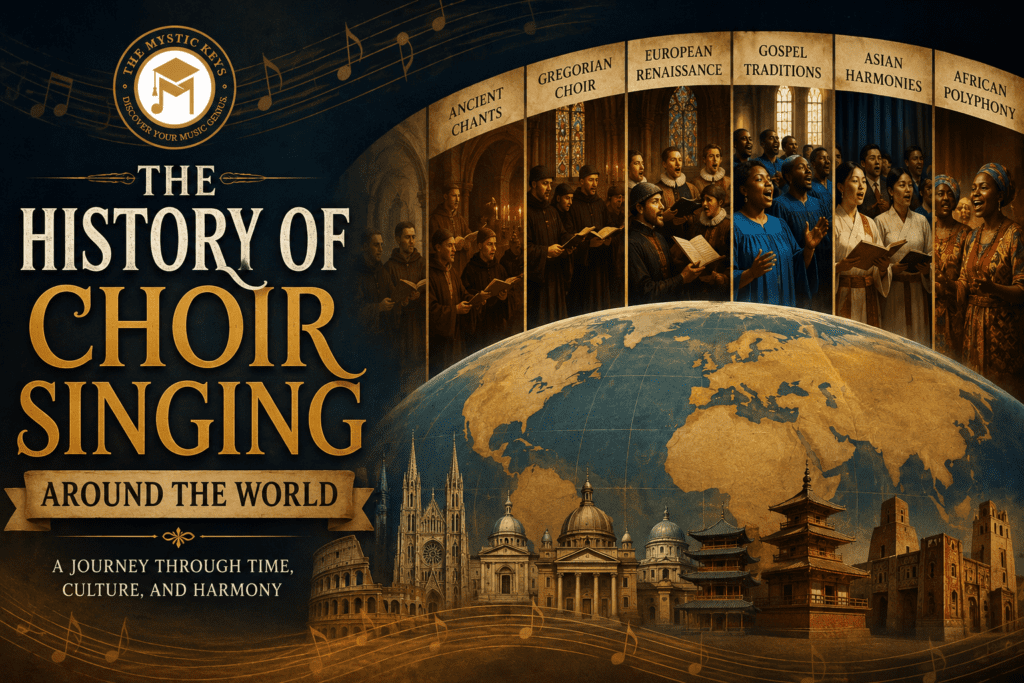
The History of Choir Singing Around the World
The history of choir singing around the world is a fascinating journey that spans thousands of years, crossing continents, cultures, religions, and musical traditions. Today, choirs can be found in schools, churches, concert halls, community organizations, and professional ensembles, but the roots of choral singing extend far beyond modern performances.
From ancient religious chants to contemporary vocal groups, choir singing has played an important role in human society. It has been used to celebrate traditions, preserve cultural heritage, strengthen communities, and express shared emotions. Although musical styles have evolved over time, the fundamental idea of people singing together in harmony remains one of humanity’s most enduring forms of artistic expression.
At The Mystic Keys, we encourage students to appreciate not only the techniques of singing but also the rich traditions that have shaped vocal music throughout history. In this blog, we explore the history of choir singing around the world and how it continues to inspire musicians today.
Understanding the History of Choir Singing Around the World

Choir singing has existed in various forms for thousands of years.
Throughout history, choirs have been used for:
- Religious ceremonies
- Cultural celebrations
- Community gatherings
- Royal events
- Artistic performances
The tradition of group singing is deeply connected to human culture.
Early Origins of Choral Singing
Long before written musical notation existed, people sang together as part of daily life.
Ancient civilizations used group singing for:
- Rituals
- Worship
- Storytelling
- Festivals
These early vocal traditions laid the foundation for organized choir singing.
Ancient Egypt and Early Vocal Traditions
Historical evidence suggests that music played a significant role in Ancient Egyptian society.
Group singing was used during:
- Religious ceremonies
- Temple rituals
- Royal celebrations
Although little written music survives, vocal ensembles were likely common in ceremonial life.
Ancient Greece and the Birth of the Chorus

The Greek word “choros” is one of the origins of the modern term “choir.”
In Ancient Greece:
- Choruses performed in theatrical productions
- Music accompanied poetry and drama
- Large groups sang during public events
These performances helped establish the concept of organized group singing.
The History of Choir Singing Around the World in Religious Traditions
Religious institutions played a major role in preserving and developing choral music.
Many traditions incorporated group singing into worship practices.
Examples include:
- Christian liturgical music
- Jewish temple singing
- Buddhist chanting
- Hindu devotional music
These practices helped choral traditions flourish.
Gregorian Chant and Medieval Choirs
One of the most influential developments in Western choral history was Gregorian chant.
Characteristics included:
- Unison singing
- Sacred texts
- Monophonic melodies
Monasteries and churches became important centers of musical education during the medieval period.
The Rise of Polyphonic Singing

By the Middle Ages, composers began experimenting with multiple vocal lines.
This innovation led to:
- Harmony
- Counterpoint
- More complex choral arrangements
Polyphonic music transformed the sound and structure of choirs.
Renaissance Choirs and Musical Growth
The Renaissance period marked a golden age for choral music.
Composers such as:
- Giovanni Pierluigi da Palestrina
- William Byrd
- Thomas Tallis
created sophisticated vocal works that remain influential today.
Renaissance choirs emphasized balance, harmony, and artistic expression.
The History of Choir Singing Around the World During the Baroque Era
The Baroque period introduced new levels of musical complexity.
Choirs became central to large-scale compositions including:
- Oratorios
- Cantatas
- Sacred works
Composers such as Johann Sebastian Bach and George Frideric Handel expanded the possibilities of choral music.
Classical and Romantic Choir Traditions

During the Classical and Romantic periods, choirs became increasingly prominent.
Composers including:
- Wolfgang Amadeus Mozart
- Ludwig van Beethoven
- Felix Mendelssohn
- Johannes Brahms
created monumental choral works that continue to be performed worldwide.
Large choirs became common in public concerts.
African Choral Traditions
Africa has a rich history of communal singing.
Many traditions feature:
- Call-and-response patterns
- Complex rhythms
- Group participation
These musical practices influenced choral music globally and continue to inspire modern vocal ensembles.
Asian Choral Traditions
The history of choir singing around the world also includes diverse Asian vocal traditions.
Examples include:
- Chinese ceremonial singing
- Japanese choral ensembles
- Korean vocal traditions
- Indian devotional singing
These traditions reflect unique cultural and musical identities.
Choir Singing in Indigenous Cultures
Many Indigenous communities around the world have preserved vocal traditions for generations.
Group singing often serves purposes such as:
- Storytelling
- Cultural preservation
- Spiritual expression
- Community bonding
These traditions continue to play an important role today.
The Rise of Gospel Choirs
Gospel music became one of the most influential forms of choral singing.
Gospel choirs are known for:
- Powerful vocal expression
- Emotional performances
- Strong community participation
Their impact extends far beyond religious settings.
School and Community Choirs
As music education expanded, choirs became common in:
- Schools
- Universities
- Community organizations
These ensembles introduced millions of people to choral singing.
Professional Choirs Around the World
Today, professional choirs perform:
- Classical masterpieces
- Contemporary works
- Film music
- Cultural repertoire
Professional ensembles help preserve and advance choral traditions.
How Technology Changed Choral Music

Modern technology has transformed choir participation.
Innovations include:
- Virtual choir projects
- Online rehearsals
- Digital recordings
- Global collaborations
Technology allows singers from different countries to perform together.
The History of Choir Singing Around the World in Modern Times
Contemporary choirs are more diverse than ever.
Modern ensembles perform:
- Traditional repertoire
- Popular music arrangements
- Film scores
- Cultural fusion works
Choirs continue to evolve while honoring historical traditions.
Why Choir Singing Remains Popular
Choir singing continues to thrive because it offers:
- Community
- Artistic expression
- Cultural connection
- Personal growth
People are naturally drawn to the experience of making music together.
The Educational Value of Choral Singing

Choir participation helps develop:
- Pitch accuracy
- Listening skills
- Teamwork
- Confidence
- Musical understanding
These benefits make choir singing valuable for students of all ages.
How Structured Vocal Training Supports Choral Excellence
Strong vocal technique enhances choir performance.
Students who receive structured training develop:
- Better breath control
- Stronger tone quality
- Improved pitch accuracy
- Greater vocal confidence
At The Mystic Keys, singers build the technical foundation needed to participate successfully in choirs and vocal ensembles.
Conclusion
The history of choir singing around the world reflects humanity’s enduring desire to connect through music. From ancient rituals and religious ceremonies to modern concert stages and virtual choirs, choral singing has united people across cultures and generations.
Although styles and traditions continue to evolve, the essence of choir singing remains unchanged: individuals joining their voices together to create something greater than themselves. As one of the world’s oldest and most powerful musical traditions, choir singing continues to inspire, educate, and bring communities together.
If you want to develop your vocal skills and become part of this rich musical heritage, explore Western Vocal Lessons Online with The Mystic Keys and begin your journey into the world of singing.
For more information and exciting resources about learning music, visit our website at The Mystic Keys. For more music content and exciting offers follow us on
Facebook, Instagram, YouTube, LinkedIn, Twitter, Pinterest, and Threads.