

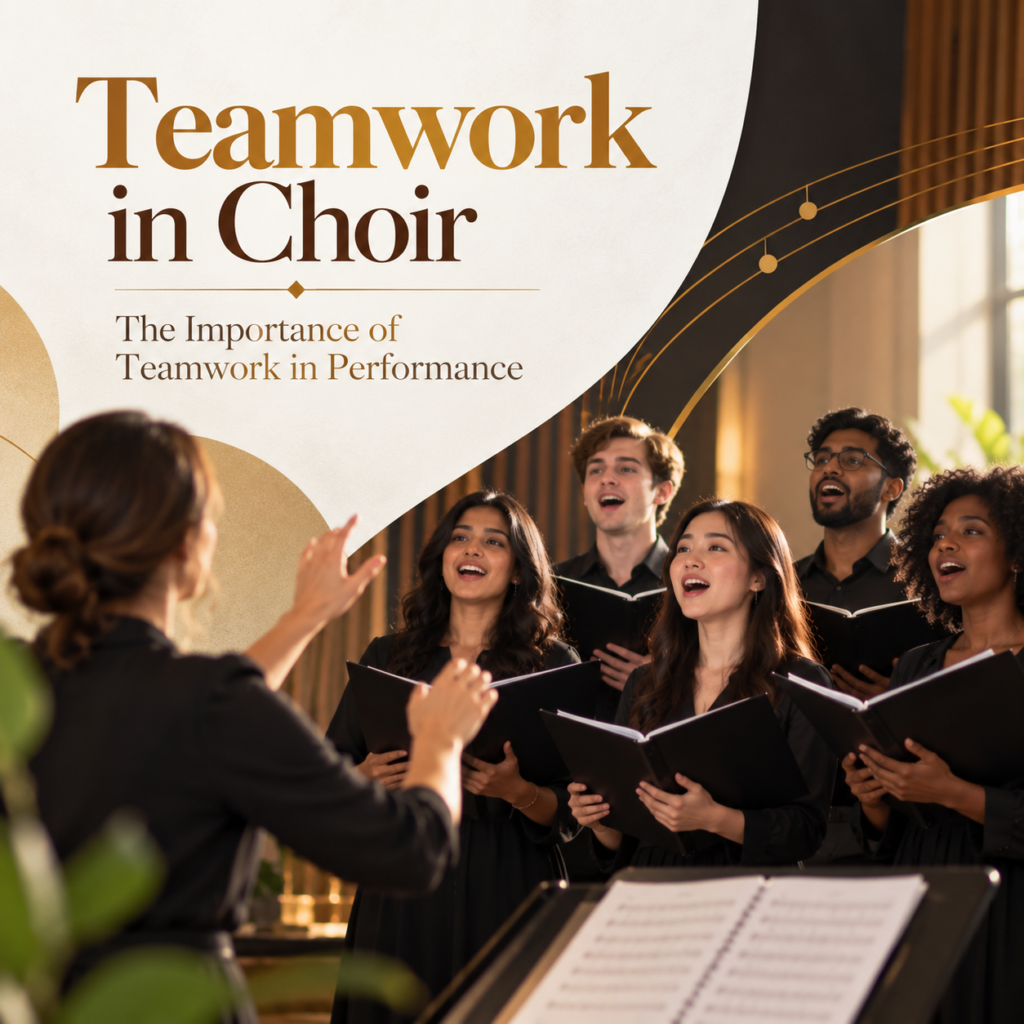
Teamwork in Choir | The Importance of Teamwork in Performances
A choir is made up of many voices, but a memorable performance sounds like one unified musical expression. Every singer brings a unique voice, personality, musical understanding, and level of experience to the ensemble. This is where teamwork in choir becomes essential, as individual strengths come together to create a performance that can be far more powerful than what any one singer could achieve alone. Through careful listening, coordination, trust, and a shared musical vision, singers learn to work as one while still bringing their own qualities to the performance.
Choir singing is not simply about knowing the lyrics or singing the correct notes. It involves listening, coordination, trust, timing, discipline, and a shared understanding of the music. From the first rehearsal to the final performance, teamwork influences almost every aspect of how a choir sounds and connects with its audience.

What Does Teamwork Mean in a Choir?
Teamwork in a choir means working together toward a common musical goal. Each singer has a specific part to contribute, but that part must fit naturally with the voices around them. A soprano line, for example, cannot be treated as completely separate from the alto, tenor, or bass sections. Every part interacts with the others to create harmony, balance, and musical depth.
At the same time, teamwork goes beyond simply singing together. It means paying attention to the conductor, responding to changes in dynamics, maintaining consistent rhythm, and adjusting individual volume when necessary. A singer may have a strong voice, but singing too loudly can overpower the rest of the ensemble. Similarly, holding back too much can make an important musical line disappear.
That is why successful choir singing requires a shift in mindset—from “How do I sound?” to “How do we sound together?”
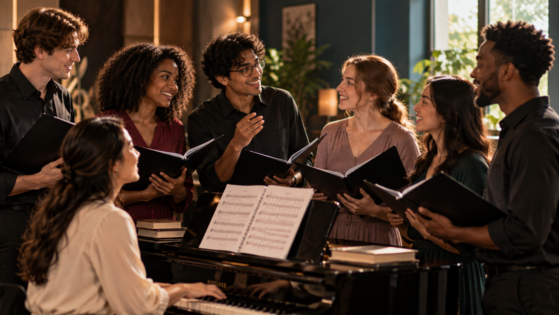
Teamwork in Choir Begins with Listening
One of the most important teamwork skills in a choir is active listening. Singers need to hear more than their own voices. They must become aware of the surrounding sections, harmonies, rhythm, pronunciation, dynamics, and overall sound of the ensemble.
During rehearsals, this listening helps singers identify where their voices fit within the arrangement. A singer may notice that their section needs to blend more softly, that another part is carrying an important melody, or that a particular entrance needs greater precision.
As this awareness develops, singers become more responsive to one another. They learn when to lead, when to support, and when to adjust. Consequently, the choir begins to sound less like a collection of individual singers and more like a coordinated musical unit.
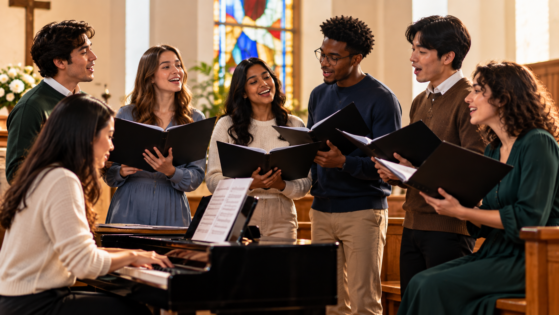
Teamwork in Choir | Every Voice Has a Role
A choir works because different voices perform different roles. The melody may move between sections, harmonies may create emotional depth, and lower voices may provide a strong musical foundation. Even a seemingly small vocal line can contribute significantly to the overall arrangement.
Understanding this helps singers appreciate that no part is automatically more important than another. A supporting harmony can be just as essential to the musical structure as the main melody.
When singers respect each other’s roles, competition gives way to collaboration. Instead of trying to stand out individually, they focus on making the complete arrangement sound stronger. This sense of shared responsibility creates a healthier and more cooperative rehearsal environment.

Rehearsals Build More Than Musical Skills
Rehearsals are where choir teamwork truly develops. Learning the notes is only the beginning. Singers also learn how to breathe together, enter together, follow the tempo, shape phrases, respond to the conductor, and maintain consistency throughout a performance.
Repeated practice also gives the ensemble an opportunity to identify weaknesses and solve them together. A difficult transition can be worked on repeatedly, an unclear entrance can be corrected, and an uneven harmony can gradually become more balanced.
Moreover, rehearsals teach patience. Different singers may learn at different speeds, and some sections may need additional practice. Supporting one another through these challenges strengthens the group and creates a sense of trust.

Teamwork in Choir | Trust Makes a Choir Stronger
A successful choir depends heavily on trust. Singers need to trust their fellow members to know their parts, maintain timing, listen carefully, and remain focused during a performance.
That trust becomes particularly important when something unexpected happens. Perhaps a singer misses an entrance, the tempo changes slightly, or a performer momentarily loses their place. Instead of allowing one mistake to disrupt the entire performance, experienced choir members know how to stay composed and continue with the group.
Over time, shared rehearsals and performances create familiarity between singers. They begin to anticipate musical cues and understand how their fellow performers respond. As a result, the ensemble becomes more confident and resilient.

The Conductor and the Ensemble
The conductor plays a central role in bringing the choir’s teamwork together. However, effective communication is not a one-way process. Singers must remain attentive and responsive to the conductor’s gestures, expressions, tempo changes, and musical direction.
A small movement can indicate a softer dynamic, a stronger entrance, a change in tempo, or the approach of a musical ending. When every singer watches and responds carefully, the choir can move together with greater precision.
This connection between conductor and singers creates musical unity. Rather than simply following instructions mechanically, the ensemble learns to respond as a team and communicate through music.
Teamwork Creates Better Musical Expression
Technical accuracy is important, but teamwork also affects how emotionally convincing a choir performance can be. When singers breathe together, phrase together, and respond to the same musical ideas, the emotional message becomes much clearer.
Imagine a quiet passage where every section gradually reduces its volume together. The effect can create intimacy and anticipation. When the choir then builds toward a powerful musical climax as one unit, the contrast becomes much more impactful.
Such moments rarely happen by accident. They are the result of singers understanding the music together and trusting one another enough to make coordinated musical choices.

Teamwork in Choir Goes Beyond Singing
Choir teamwork also depends on communication outside the actual singing. Discussing rehearsal requirements, helping someone understand a difficult section, sharing useful practice information, or simply encouraging another singer can make a significant difference.
Good communication also helps prevent misunderstandings. When singers feel comfortable asking questions or seeking clarification, problems can be addressed before they affect the performance.
Furthermore, respectful communication contributes to a positive choir culture. A supportive environment allows singers to focus on improvement rather than feeling afraid of making mistakes.

Individual Preparation Strengthens the Whole Choir
Although choir singing is a collective activity, teamwork begins with individual responsibility. Every singer needs to prepare their own part so that rehearsal time can focus on creating the ensemble sound rather than repeatedly correcting basic mistakes.
Practising rhythm, lyrics, pronunciation, notes, and difficult passages individually gives singers greater confidence. Once each person understands their own role, they can devote more attention to listening and blending with others.
In this way, individual preparation and collective teamwork are closely connected. A stronger individual contribution ultimately gives the entire choir more musical freedom.
Learning to Blend Without Losing Your Voice
One of the most interesting aspects of choir singing is learning how to blend. Blending does not mean making every voice sound identical. Instead, it means adjusting individual vocal qualities so that they complement the rest of the ensemble.
Singers may need to modify their volume, tone, pronunciation, or vowel shape depending on the musical passage. This requires awareness and flexibility.
At the same time, good teamwork does not erase individuality. Each singer continues to bring their own musicality to the ensemble. The goal is to make those individual qualities work together rather than compete with one another.
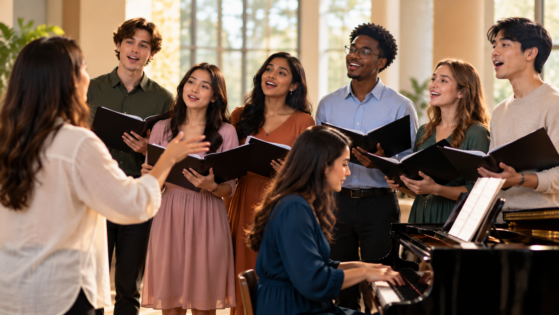
From Rehearsal Room to Performance
The true value of teamwork becomes especially visible during a performance. After weeks of preparation, singers need to rely on the habits they have developed during rehearsals.
Walking onto a performance space with a shared understanding of the music creates confidence. Each singer knows where to enter, how to respond to the conductor, when to support another section, and how to maintain focus throughout the piece.
Even the visual side of a performance benefits from teamwork. Coordinated entrances, posture, movement, expressions, and attention can make the choir appear more connected and professional.
Most importantly, the audience can often sense when performers are genuinely working together. Musical unity creates an energy that goes beyond individual voices.

Teamwork in Choir Helps Handle Mistakes Together
No live performance is completely free from mistakes. A missed note, forgotten lyric, unexpected sound, or slightly late entrance can happen even after extensive preparation.
What matters is how the choir responds. Panicking, reacting visibly, or allowing one mistake to affect the next musical phrase can make a small error much more noticeable. Staying calm and continuing with the ensemble helps maintain the flow of the performance.
This is another reason teamwork matters so much. When singers trust the group, they know that one small mistake does not have to become everyone’s problem. The ensemble can recover, continue, and remain focused on the music.
Teamwork in Choir Builds Confidence
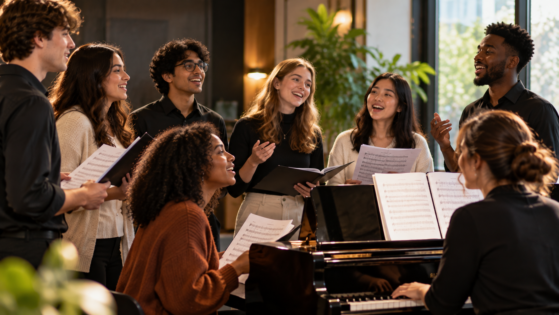
Performing as part of a choir can also build confidence. Standing in front of an audience may feel intimidating when approached individually, but being surrounded by fellow singers creates a sense of support.
That confidence grows through shared preparation. Every rehearsal, correction, successful run-through, and performance contributes to the feeling that the group is ready.
Over time, singers may become more comfortable expressing themselves, taking musical risks, and responding naturally during performances. The confidence is not simply individual—it comes from knowing that everyone around them is contributing to the same goal.

Teamwork Makes Every Performance More Meaningful
Ultimately, choir singing is a powerful example of what can happen when individual talents are brought together with purpose. One voice can carry a melody, but many voices working together can create harmony, contrast, emotion, and atmosphere.
The strongest performances are therefore not necessarily those where individual singers try to stand apart. They are the ones where every member understands their role, listens carefully, supports the ensemble, and contributes to the shared musical vision.
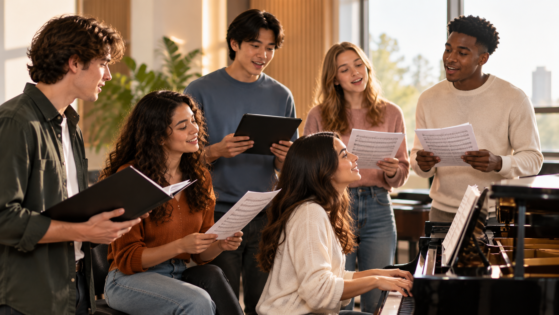
Teamwork turns rehearsal into collaboration and collaboration into musical expression. When singers breathe together, listen together, and perform together, they don’t simply sing the same song—they create something together.
Conclusion
Teamwork is the foundation of a strong choir performance. It shapes how singers listen, communicate, blend, and perform, turning individual voices into one expressive sound.
At The Mystic Keys, music learning focuses not only on technique but also on building confidence, musical awareness, and a deeper connection with music.
For those looking to develop their vocal and instrumental skills from home, Worship Piano & Singing Lessons Online offer a flexible and personalized learning experience.
And that is the beauty of choir: many voices, different parts, one performance, and one shared musical experience.
For more information and exciting resources about learning music, visit our website at The Mystic Keys. For more music content and exciting offers follow us on
Facebook, Instagram, YouTube, LinkedIn, Twitter, Pinterest, and Threads.