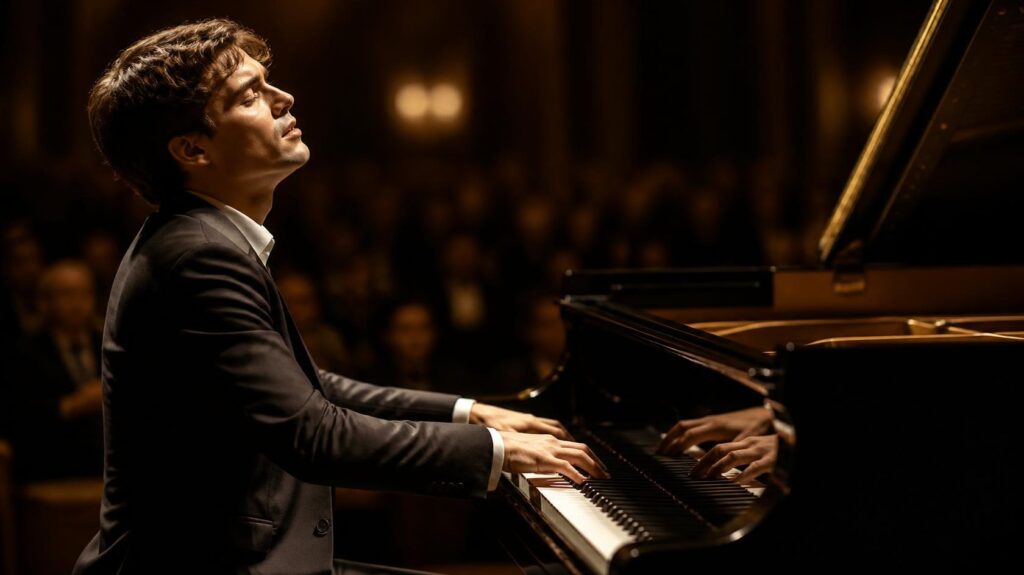
Professional Piano Performances The Secrets to Sound Better
Professional piano performances are not just about playing the right notes. They combine strong technique, accurate rhythm, musical expression, effective practice, confident performance skills, and careful listening. Professional pianists develop these abilities over time to create performances that sound polished, controlled, and expressive.
Whether you are a beginner learning your first songs or an experienced pianist preparing for a performance, understanding these principles can help you improve your playing and perform with greater confidence.
1. Building Strong Technique for Professional Piano Performances
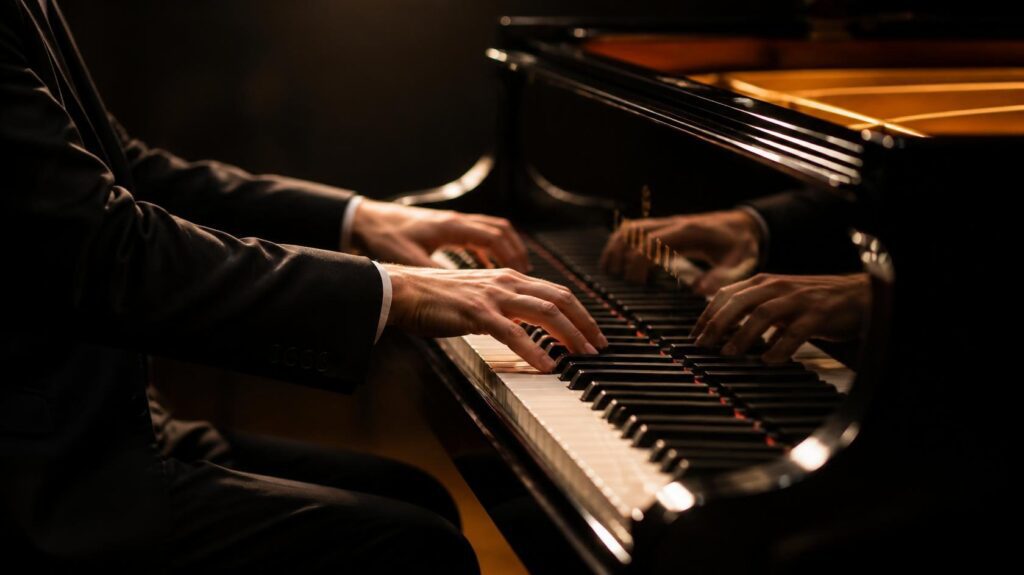
A strong technical foundation is one of the most important elements of professional piano performances. Good technique gives pianists greater control over their fingers, hands, dynamics, articulation, and coordination.
Professional pianists regularly work on:
- Scales and arpeggios
- Finger independence
- Chord changes
- Hand coordination
- Octaves and repeated notes
- Articulation
- Dynamic control
- Pedaling
Good technique is not simply about playing quickly. It is about playing with control, accuracy, consistency, and musical intention.
When a difficult passage feels comfortable technically, the pianist can focus more attention on expression and communication.
2. Developing Rhythm and Timing
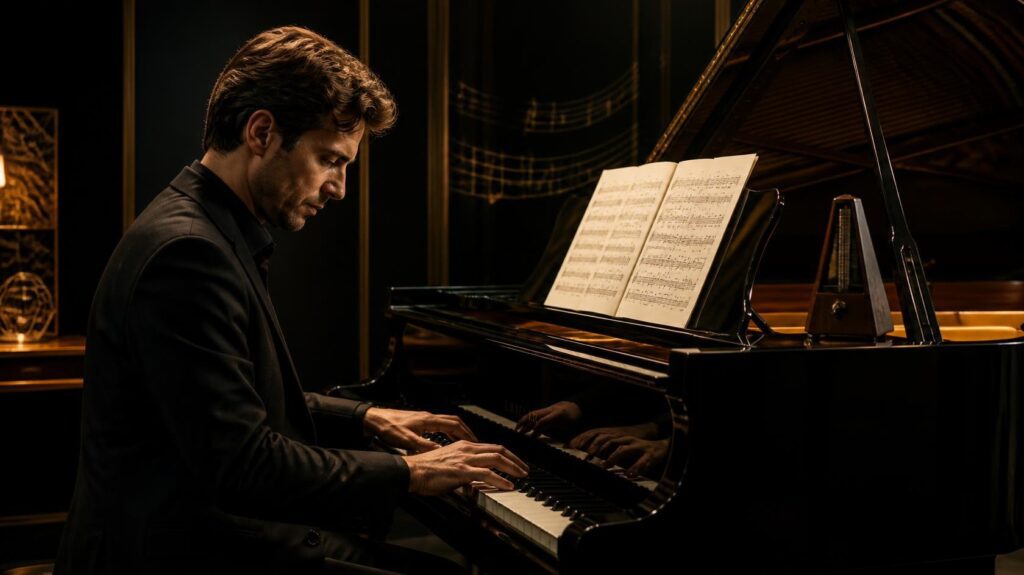
Strong rhythm is another essential part of professional piano performances. Even technically accurate playing can sound uncertain if the tempo is inconsistent.
A metronome can be extremely useful for developing a reliable sense of timing. Start difficult passages at a comfortable speed and gradually increase the tempo as your accuracy improves.
However, rhythm practice should not always mean playing mechanically. Once the rhythm is secure, pianists can introduce natural phrasing and musical flexibility while maintaining a strong underlying pulse.
3. Adding Musical Expression to Piano Performances
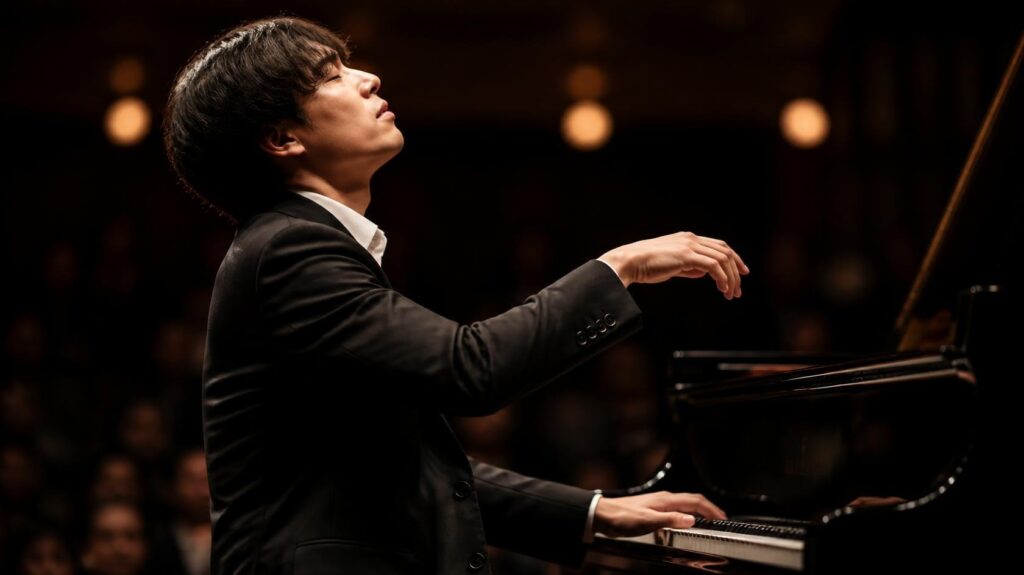
Playing the correct notes is only the beginning. Musical expression is what gives a piano performance personality and emotional depth.
Professional pianists carefully control:
- Dynamics
- Phrasing
- Articulation
- Accents
- Tempo
- Pauses
- Tone quality
For example, a melody can be shaped by gradually increasing its volume toward an important musical point and then relaxing afterward. These subtle changes can make a performance sound much more natural.
Before playing a piece, think about its mood and character. Ask yourself what the music is trying to communicate and how you can express that through your playing.
4. Practicing Effectively for Better Performances
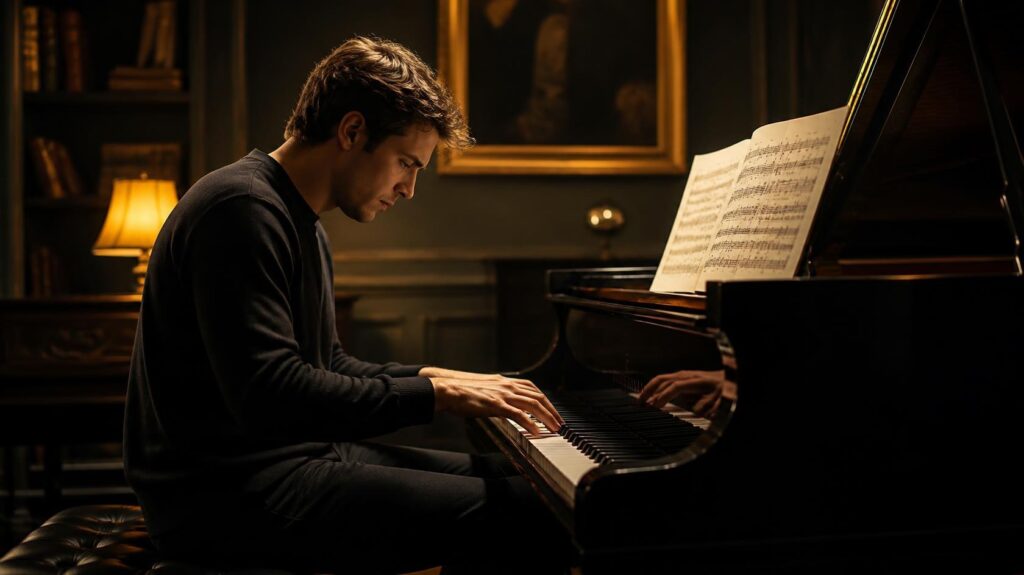
One of the biggest differences between casual practice and professional preparation is the quality of the practice session.
Simply playing a piece from beginning to end repeatedly may not solve technical problems. Instead, identify the sections that require the most attention and practice them deliberately.
An effective practice routine can include:
- Playing the difficult section slowly.
- Identifying technical or rhythmic problems.
- Practicing the section in smaller parts.
- Repeating it accurately several times.
- Gradually increasing the tempo.
- Adding dynamics and expression.
- Connecting it with the surrounding sections.
- Practicing the complete piece.
Focused practice helps pianists make meaningful progress while reducing the risk of repeating mistakes.
5. Preparing for Professional Piano Performances
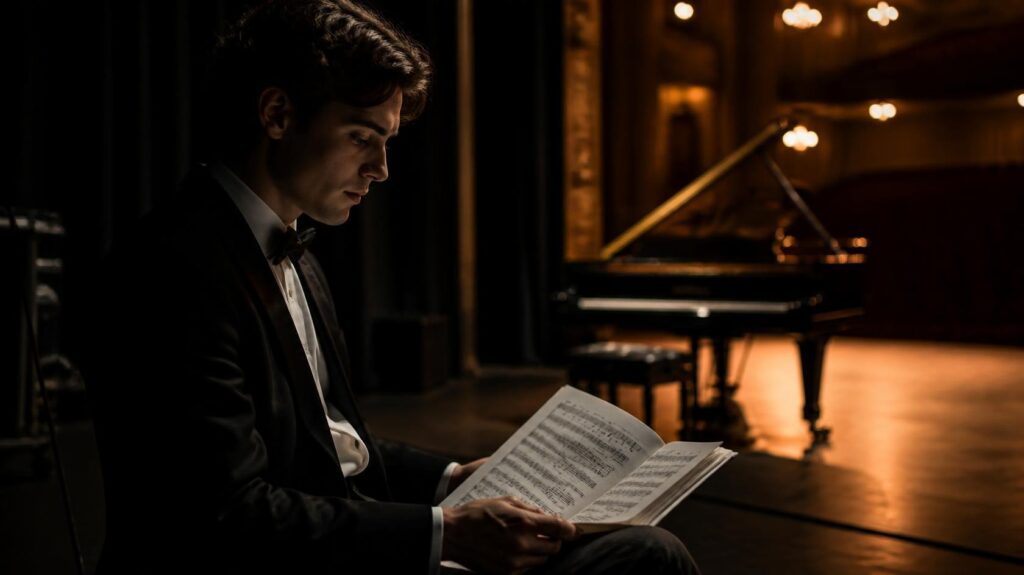
Practicing a piece alone and performing it for an audience are two different experiences.
A pianist can know a piece extremely well but still feel nervous when performing. That is why performance practice is important.
Try creating realistic performance situations during your practice sessions. Sit at the piano, take a moment to prepare, and play the entire piece without stopping.
Recording yourself can also be extremely helpful. When you listen to the recording afterward, you may notice problems that were difficult to recognize while playing.
Pay attention to:
- Tempo consistency
- Melody clarity
- Dynamic changes
- Pedal usage
- Unnecessary pauses
- Uneven passages
- Overall musical expression
This type of self-evaluation can make your practice much more effective.
6. Building Confidence on Stage
Confidence is an important part of professional piano performances, but confidence does not mean never making mistakes.
Even experienced musicians can occasionally play an incorrect note. What matters is knowing how to continue.
If you make a mistake during a performance, try to maintain the rhythm and continue toward the next musical phrase rather than stopping completely. With practice, recovering from mistakes becomes much easier.
Before performing, take a few slow breaths and relax your shoulders and hands. Avoid focusing too much on the possibility of making mistakes. Instead, concentrate on communicating the music.
7. Using Pedaling and Tone Control
Pedaling can have a major influence on the sound of a piano performance.
The sustain pedal can help connect notes and create resonance, but excessive pedal use can make the harmony sound unclear. Professional pianists listen carefully and adjust the pedal according to the music.
Tone control is equally important. The way you touch the keys can affect the character of the sound.
Developing control over touch allows pianists to create contrasts between soft and powerful passages, giving the performance greater depth.
A useful exercise is to play the same phrase at different dynamic levels while maintaining control and clarity.
8. Learning Through Active Listening
Great pianists are also great listeners.
While playing, do not focus only on the notes and finger movements. Listen to how the different parts of the music work together.
When playing a melody with chords, for example, the melody should generally remain clear while the accompaniment supports it without becoming overpowering.
Record your playing and ask yourself:
- Can I clearly hear the melody?
- Is the accompaniment too loud?
- Is my rhythm stable?
- Are the dynamics noticeable?
- Does the phrasing sound natural?
- Does the performance communicate the mood of the piece?
Active listening helps develop musical awareness and can reveal areas for improvement.
9. Understanding Music for Better Piano Performances
Understanding the structure of music can make playing and memorizing pieces easier.
Professional pianists often recognize patterns such as:
- Chord progressions
- Scales
- Repeated sections
- Musical phrases
- Harmonic movement
- Rhythmic patterns
- Song structures
Instead of remembering every note separately, you can begin to understand how the notes relate to one another.
For example, recognizing a familiar chord progression can help you anticipate what comes next. This provides greater security when performing and can also improve your ability to improvise and accompany other musicians.
10. Combining Technique and Emotion
The strongest professional piano performances balance technical control with musical expression.
Excellent technique allows a pianist to play accurately and confidently. Emotion and interpretation allow the pianist to communicate something meaningful to the listener.
If a performance focuses only on technique, it can sound mechanical. If it focuses only on emotion without sufficient technical control, the music may become unclear or inconsistent.
The goal is to bring both elements together.
As your technique becomes stronger, use that freedom to focus more on phrasing, dynamics, tone, and musical storytelling.
The secrets behind professional piano performances are not based on one special trick. They come from developing several skills together: strong technique, reliable rhythm, expressive playing, effective practice, confident performance habits, active listening, and a solid understanding of music.
You do not have to be an advanced pianist to start applying these ideas. Beginners can develop better habits by practicing slowly, listening carefully, understanding the music, and performing regularly. With the right guidance, piano lessons online can help students build these skills through structured practice, personalized instruction, and consistent feedback.
With consistent and focused practice, your playing can become more controlled, expressive, and confident. Professional-quality piano performances are built over time through thoughtful preparation and a genuine connection with the music. If you are ready to improve your technique, musical expression, and performance confidence, enrolling in piano lessons online can be a practical way to learn with guidance from an experienced teacher.
Intersted in learning music with us? Register now
For more information and exciting resources about learning music, visit our website at The Mystic Keys. For more music content and exciting offers follow us on
Facebook, Instagram, YouTube, LinkedIn, Twitter, Pinterest, and Threads.