Practice Piano with The Mystic Keys Recorded Sessions
Learning piano doesn’t end when the lesson finishes. In fact, what a student does between lessons can have a major influence on how confidently they progress. This is where piano recorded sessions can become a valuable part of the learning process.
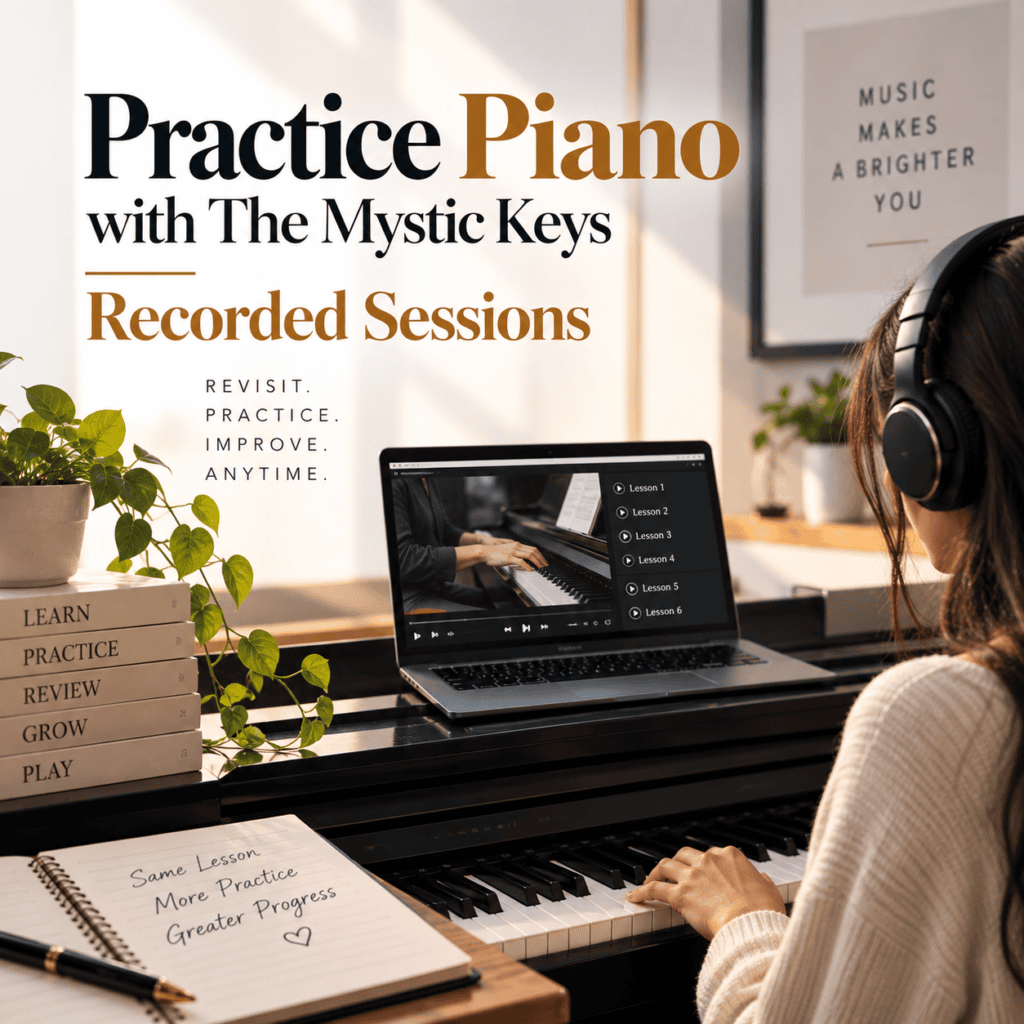
At The Mystic Keys, recorded class sessions give students the opportunity to return to what was taught during their lesson and practise it again in their own time. Instead of trying to remember every instruction, chord, fingering, exercise, or musical detail from memory, students can revisit the lesson while practising.
This creates a useful connection between the live lesson and independent practice.
A student can attend a one-on-one lesson, receive personalised guidance from the teacher, and then use the recording as a reference while working at the piano later in the week. This can be particularly helpful when learning a new piece, developing technique, understanding chords, or working through a difficult section.
Why Recorded Piano Lessons Can Make Practice Easier
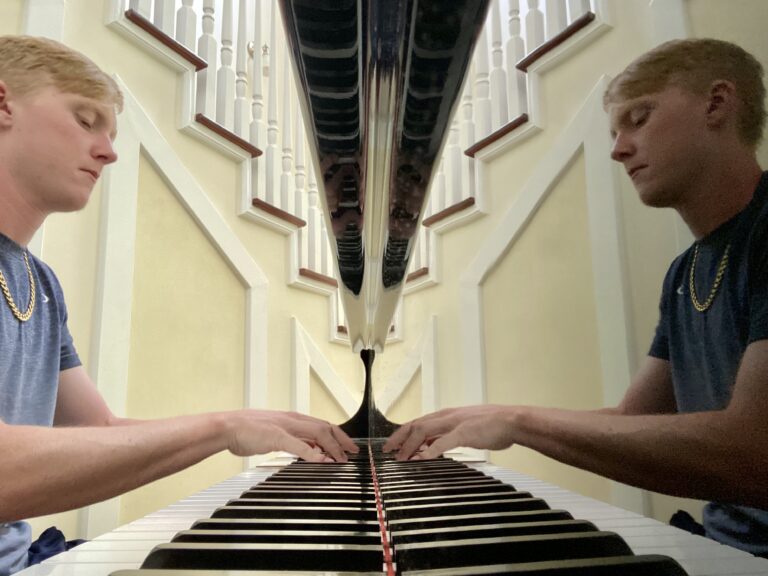
A live piano lesson contains a lot of information.
A teacher may demonstrate a passage, explain fingering, correct posture, discuss rhythm, introduce a chord progression, and then ask the student to practise it.
It is completely normal not to remember every detail afterward.
The recording gives students another opportunity to process the material.
Instead of thinking, “How did my teacher play that section?” a student can revisit the lesson and observe the demonstration again.
Instead of trying to remember which fingering was recommended, they can return to the explanation.
Instead of guessing how a rhythm should sound, they can listen again.
This makes the recording a practical bridge between teacher instruction and home practice.
Review What You Learned After the Lesson
One of the simplest ways to use piano recorded sessions is to review the lesson shortly after it finishes.
You don’t necessarily need to watch the entire recording every time.
Go directly to the sections you found difficult.
For example, perhaps your teacher introduced a new chord progression during the lesson. You understood it while watching the demonstration, but later you can’t remember exactly how the chords connected.
Revisit that portion.
Listen carefully.
Then sit at your piano and try it yourself.
This process reinforces the information while it is still fresh.
Over time, repeated review can help turn newly introduced skills into familiar ones.
Practise Difficult Piano Passages Again
Some piano passages require more than one explanation.
A teacher may demonstrate a difficult section several times during a lesson, but the student may still need additional practice afterward.
This is normal.
With a recording, the student can return to the demonstration without waiting until the next lesson.
You can watch how the teacher approaches the passage and then try it yourself.
If it doesn’t work, stop.
Slow the passage down.
Watch the recording again.
Then practise the movement carefully.
This is particularly useful when working on:
- Difficult chord changes
- Hand coordination
- Finger patterns
- Rhythmic passages
- Melodic phrases
- Scales and arpeggios
- Transitions between sections
- Accompaniment patterns
The recording doesn’t replace practice.
It makes practice more informed.
Don't Rely on Memory Alone
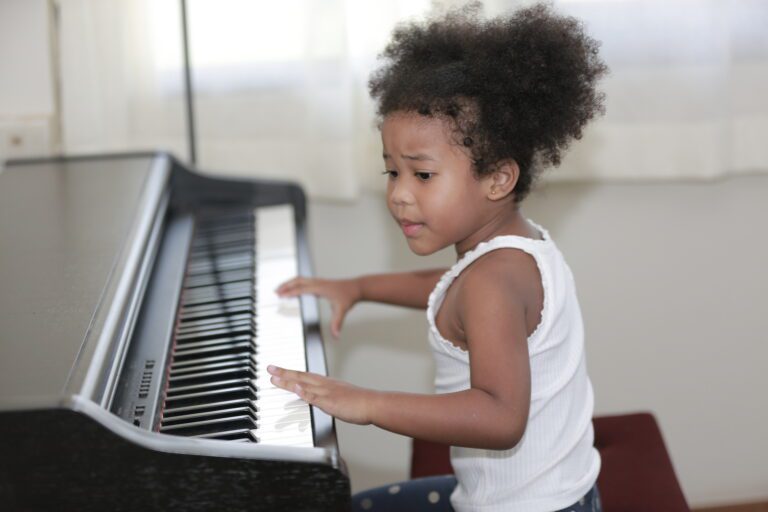
Students often leave a lesson feeling that everything is clear.
Then they sit at the piano a few days later and discover that some details have disappeared.
This happens because learning involves several stages.
Understanding something during a lesson doesn’t automatically mean you will remember it permanently.
Recorded sessions give you another reference point.
Instead of relying entirely on memory, you can revisit the original explanation.
This is especially useful when the teacher has given several instructions at once.
For example:
“Use this fingering, keep the wrist relaxed, play the left hand softly, and bring out the melody.”
Remembering all four instructions while learning a new passage can be difficult.
The recording allows you to return to the explanation and work on one element at a time.
Use Recordings to Improve Your Technique
Piano technique isn’t only about playing notes correctly.
Students need to develop efficient movement, coordination, control, and musical awareness.
A recorded lesson can help you observe technique more carefully.
Watch how the teacher demonstrates a passage.
Notice the hand position.
Listen to the articulation.
Observe how the movement connects from one note or chord to the next.
Then compare that with your own playing.
You may notice that you are using unnecessary movement or tension.
The recording can help remind you of the teacher’s original correction.
This makes it easier to continue working on technical improvements between lessons.
Listen Before You Play
One useful way to use piano recorded sessions is to listen before immediately attempting to play.
Suppose your teacher demonstrated a new accompaniment pattern.
Instead of immediately trying to reproduce it, listen to the demonstration once or twice.
Pay attention to the rhythm.
Listen to the bass.
Notice the chord changes.
Hear where the pattern repeats.
Then sit at the keyboard.
This gives your ears an opportunity to understand the musical idea before your hands attempt to reproduce it.
For many students, this can make learning more efficient.
Create a Practice Routine Around Your Recording
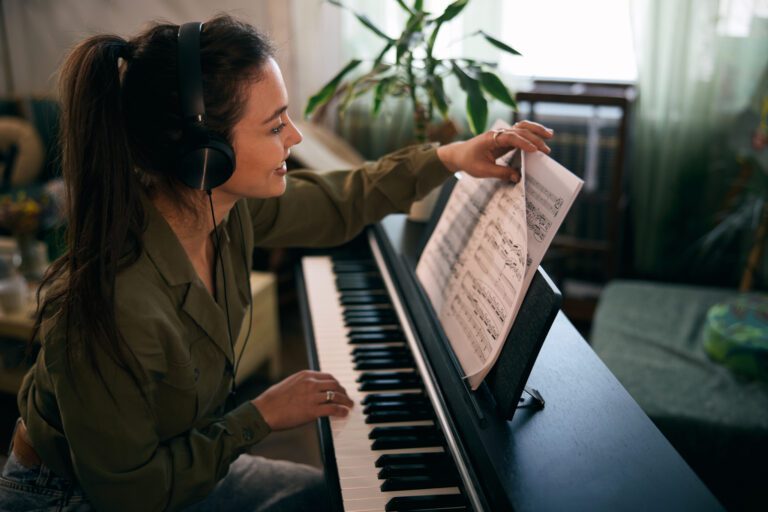
A recorded lesson can become part of a weekly practice routine.
For example:
After the lesson
Review the key concepts and identify what you need to practise.
The next practice session
Revisit the most important section of the recording and work through the assigned material.
During the week
Practise independently and return to the recording whenever you forget an instruction.
Before the next lesson
Review the difficult sections again and make a note of questions or problems you encountered.
This creates continuity between lessons.
Instead of each lesson feeling like a completely separate event, the recording helps connect one session to the next.
Recordings Can Help With Independent Learning
One of the long-term goals of piano education is to help students become increasingly independent.
A teacher won’t always be sitting beside you when you practise.
Eventually, you need to learn how to identify problems, find solutions, and organise your own practice.
Recorded sessions can support that development.
At first, you may frequently return to the teacher’s demonstrations.
Over time, you may need the recording less often because the concepts have become familiar.
You begin to recognise how to practise a difficult passage.
You understand how to slow something down.
You know how to isolate the left hand.
You know when to use a metronome.
You know how to listen for uneven playing.
The recording therefore becomes a support tool while independent practice skills develop.
Parents Can Also Understand What Students Are Learning
For younger piano students, recorded sessions can also help parents understand what their child is currently learning.
Parents may want to encourage practice but aren’t always familiar with piano technique or terminology.
A recorded lesson can provide context.
Instead of simply asking, “Did you practise your piano today?” a parent can better understand what the student has been asked to work on.
This can make practice at home more structured and supportive.
The objective isn’t for parents to become piano teachers.
It is simply to help them understand the learning process.
Make Your Practice More Consistent
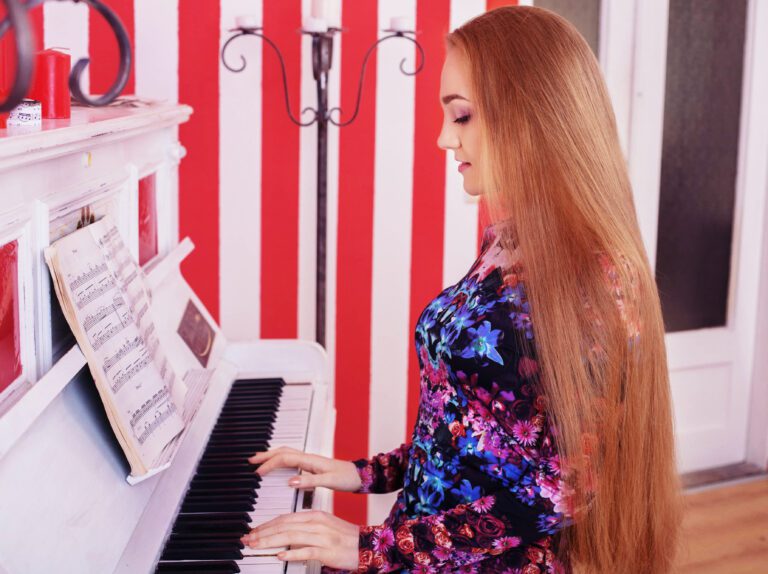
Having access to the lesson recording can also reduce one common practice barrier: uncertainty.
Sometimes students don’t practise because they aren’t sure what to do.
They may remember the song but forget the specific exercise.
They may remember the exercise but forget the fingering.
Or they may not remember how the teacher explained the rhythm.
A recording provides a reference.
You can return to the lesson, identify what you need to work on, and continue.
That can make it easier to maintain a consistent practice routine.
Use Recordings Without Becoming Dependent on Them
Although recordings are useful, students shouldn’t watch the lesson continuously instead of practising.
The goal is not to spend an hour replaying a teacher’s demonstration.
The goal is to use the recording strategically.
A useful cycle is:
Watch → Understand → Play → Listen → Correct → Repeat
Watch the relevant section.
Understand the instruction.
Try it yourself.
Listen to the result.
Identify what needs improvement.
Then repeat.
The actual learning happens through active participation at the keyboard.
Return to Older Lessons When Necessary
Not every concept becomes permanent immediately.
Months later, you may encounter a piece that requires something you learned previously.
If you still have access to the relevant recording, you can return to it as a refresher.
This can be particularly helpful for concepts such as chord inversions, accompaniment patterns, scales, rhythm exercises, or techniques that aren’t used every week.
The value of a lesson can therefore extend beyond the day on which it takes place.
Recorded Sessions and One-on-One Piano Learning
Recorded lessons are especially useful when combined with individual instruction.
In a one-on-one lesson, the teacher can focus directly on the student’s playing.
The teacher may notice a specific technical issue, adjust an exercise, change the difficulty of a piece, or explain a concept according to the student’s level.
The recording preserves that personalised lesson.
This means students don’t receive a generic tutorial that everyone watches in the same way.
They can return to guidance that was specifically given during their own lesson.
That distinction can make recorded sessions much more useful for personalised learning.
How to Get the Most From Your Recorded Session
To use your recording effectively, avoid simply saving it and forgetting about it.
After each lesson, identify three things:
What did I learn?
What do I need to practise?
What do I still find difficult?
Then use the recording to answer those questions.
You can also make brief practice notes such as:
- Practise left hand separately
- Slow down the chorus
- Review chord inversions
- Work on melody balance
- Practise transition between sections
- Check rhythm with metronome
This turns the recording into part of a structured practice system rather than simply an archive of the lesson.
Progress Happens Between Lessons Too
The live lesson provides instruction.
Practice turns instruction into ability.
This is why what happens between lessons matters so much.
A student might understand a technique during a class, but repeated practice is what helps make that technique more natural.
Recorded sessions can strengthen this process by keeping the teacher’s demonstration available while the student works independently.
The combination becomes:
Live instruction + recorded reference + focused practice + feedback
Each part supports the others.
Final Thoughts
Piano recorded sessions can make online piano learning more connected and practical. Instead of relying entirely on memory after a lesson, students can return to demonstrations, explanations, exercises, chord progressions, and practice instructions whenever they need a reminder.
The most important point is that a recording should support active practice rather than replace it. Watch the relevant section, understand the instruction, sit at the piano, and put the idea into practice. When you encounter a problem, return to the recording and try again.
At The Mystic Keys, class recordings are made available after lessons so students can revisit what they learned and use the session as a reference for practice and revision. Combined with one-on-one instruction, personalised guidance, and structured learning, recorded sessions can help students make better use of the time between their lessons.
Because learning piano doesn’t stop when the lesson ends—it continues every time you sit down at the keyboard and practise.
For more information and exciting resources about learning music, visit our website at The Mystic Keys. For more music content and exciting offers follow us on
Facebook, Instagram, YouTube, LinkedIn, Twitter, Pinterest, and Threads.