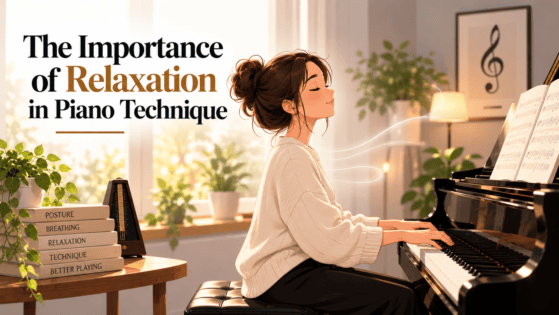
The Importance of Relaxation in Piano Technique
Piano technique relaxation is an essential part of developing comfortable, controlled, and expressive piano playing. When students begin learning, it is natural to concentrate heavily on playing the correct notes. However, technique involves much more than accuracy. The way the hands, wrists, arms, shoulders, and body move can have a major effect on how easily a pianist plays.
Unnecessary tension can make simple movements feel difficult. It can affect speed, coordination, tone, endurance, and even confidence. By learning to recognise tension and release it during practice, students can make their playing more efficient and comfortable.
Relaxation does not mean allowing the hands to become completely loose or uncontrolled. Instead, it means using only the amount of physical effort required for the movement.
What Does Relaxation Mean at the Piano?
Relaxation at the piano is not the absence of movement. Pianists still need controlled muscles to press keys, shape phrases, change positions, and produce different dynamics.
The goal is to avoid unnecessary tension.
A student may unknowingly raise the shoulders, stiffen the wrists, grip the keyboard, or tighten the forearms while playing a difficult passage. These habits can restrict movement and make the passage harder than it needs to be.
Good technique allows the body to remain flexible while the fingers perform precise movements.
How Tension Affects Piano Playing
Physical tension can influence several aspects of performance.
When the hands and arms become tense, finger movements may become less flexible. Fast passages can feel uncomfortable, repeated notes can become tiring, and chord movements may require more effort.
Tension can also affect sound. A student who presses aggressively may produce a harsh or uneven tone when a softer, more controlled movement is required.
Another problem is endurance. If unnecessary muscles remain engaged throughout a practice session, the pianist may become tired much faster.
Developing piano technique relaxation can therefore help students use their energy more efficiently.
Relaxed Hands and Fingers
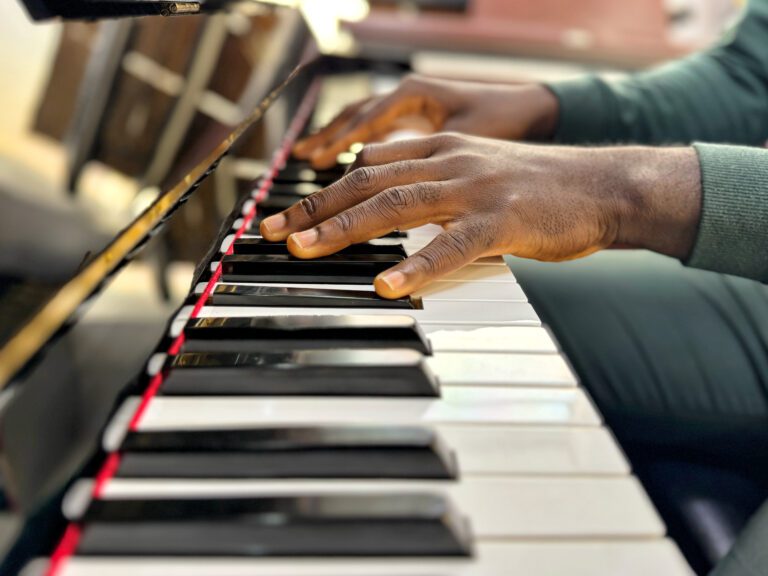
The fingers need to remain active, but they should not be unnecessarily rigid.
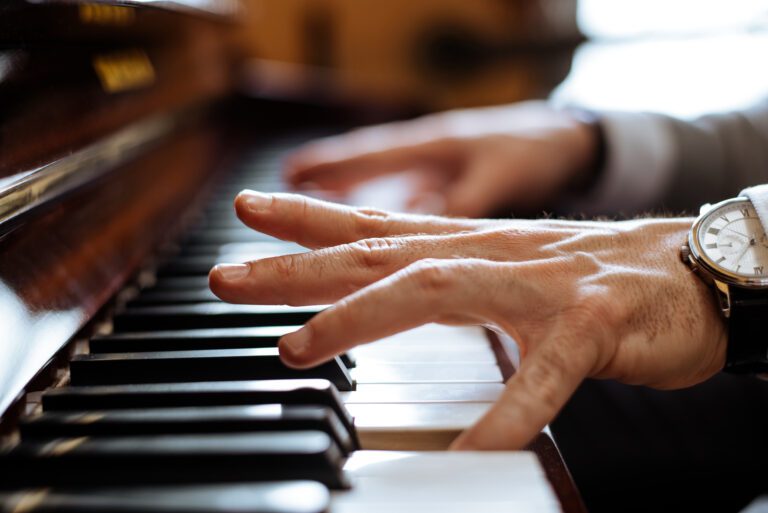
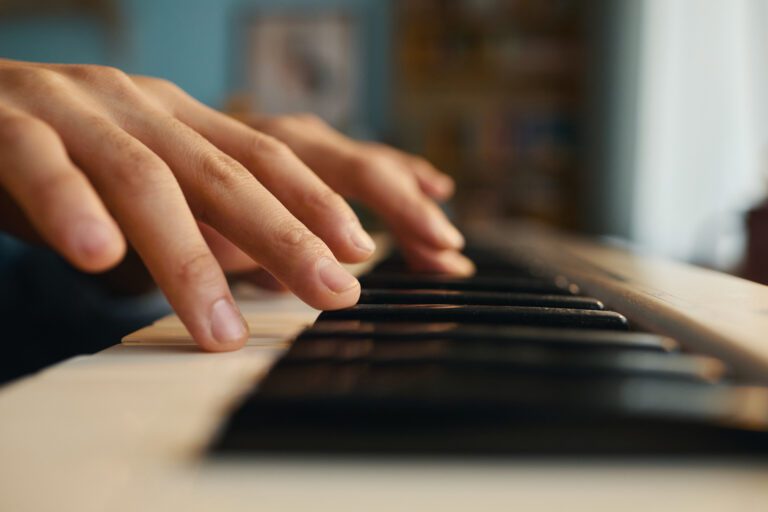
A useful starting point is to allow the hand to adopt a natural shape rather than flattening the fingers or holding them stiffly. The fingers should be prepared to move independently while the hand remains comfortable.
Students can practise simple five-finger patterns slowly while paying attention to how each finger moves.
After playing a short pattern, pause and check:
- Are the fingers overly tense?
- Is the hand comfortable?
- Are the wrists flexible?
- Are the shoulders relaxed?
- Am I using more force than necessary?
These small checks can help students become more aware of their physical habits.
The Role of the Wrist
The wrist plays an important role in comfortable piano technique.
A wrist that is held rigidly can make movement more difficult, particularly when the hands need to move across the keyboard. On the other hand, the wrist should not collapse or become uncontrolled.
The ideal movement depends on the musical situation. The wrist should be flexible enough to support the fingers and allow natural movement between notes and positions.
Students can practise scales, chords, and simple passages slowly while observing whether the wrist remains comfortable rather than locked into one position.
Relaxation in Difficult Passages
Students often become tense precisely when they encounter something difficult.
A challenging chord, fast scale, large leap, or unfamiliar rhythm can cause the body to react by tightening.
Instead of immediately playing the passage faster, slow it down.
Play the movement carefully and notice where tension appears. Stop between repetitions if necessary. Shake the hands gently, relax the shoulders, and try again.
Breaking difficult passages into smaller movements can also help.
As confidence increases, the body may naturally become less tense because the movement becomes more familiar.
Posture and Piano Technique Relaxation
Relaxation begins with the whole body, not just the fingers.
Students should sit at a comfortable distance from the piano and maintain a balanced posture. The shoulders should not be unnecessarily raised, and the arms should be able to move freely.
Good posture does not mean remaining completely still. Pianists naturally move as they play, particularly when shaping phrases or reaching different areas of the keyboard.
The important principle is balance. The body should support the movement rather than restrict it.
Breathing While Playing
Breathing is easy to overlook during piano practice.
Students may unconsciously hold their breath when concentrating on a difficult passage. This can contribute to overall physical tension.
Taking a natural breath before beginning a challenging section can help create a more relaxed physical state. During practice, students can occasionally check whether they are breathing normally.
This is especially useful before performance situations, when nervousness can make physical tension more noticeable.
Relaxation Can Improve Musical Expression
Relaxation is not only about physical comfort. It can also influence musical expression.
When unnecessary tension is reduced, students may find it easier to shape phrases, control dynamics, vary articulation, and move naturally between sections.
A relaxed physical approach can give the pianist greater freedom to respond to the music.
The goal is not simply to play notes efficiently. It is to allow technique to support musical ideas.
How to Practise Relaxation
Relaxation should become part of regular practice rather than something students think about only when their hands become tired.
Begin difficult passages slowly. Play a few measures, stop, and release unnecessary tension. Check the shoulders, arms, wrists, and hands.
Then repeat the passage.
Students can also practise familiar pieces while deliberately monitoring their physical state. Notice which sections create tension and why.
Sometimes the problem is technical. Sometimes the passage is simply too fast. Sometimes the fingering is uncomfortable. Identifying the cause is more useful than simply telling yourself to “relax.”
Avoid Forcing the Keys
Many beginners believe that pressing harder produces a better sound.
The piano responds to the speed and control of the key movement, not simply to how much muscular force the pianist uses.
Students should therefore experiment with producing different dynamics while remaining physically comfortable.
Practising soft playing can be particularly useful because it encourages control rather than excessive force.
Over time, students can learn how much movement is actually necessary to create the desired sound.
Take Breaks During Practice
Long practice sessions without breaks can encourage tension.
When students become physically tired, they may begin compensating by gripping, stiffening, or changing their posture.
Short breaks can help.
Stand up, move away from the piano, relax the arms, and return when the body feels comfortable again.
Quality practice is generally more useful than continuing through fatigue simply to complete a predetermined amount of time.
Building Relaxed Technique Over Time
Developing relaxed piano technique is a gradual process.
Students may not immediately notice every unnecessary movement. Teachers can help identify physical habits that are difficult to recognise independently.
Regular practice, slow repetition, appropriate fingering, balanced posture, and awareness can gradually make relaxed movement more natural.
The objective is not to think about every part of the body while playing. With time, healthy movements can become automatic.
Final Thoughts
Piano technique relaxation allows students to approach the instrument with greater freedom and control. Relaxed hands, flexible wrists, balanced posture, natural breathing, and efficient movement can all contribute to more comfortable playing.
Students should remember that relaxation does not mean removing all muscular activity. Piano playing requires coordination and control. The goal is to remove unnecessary tension so that the body can work efficiently.
With patient practice and appropriate guidance, students can develop technique that feels natural rather than forced. This can support better accuracy, endurance, tone, coordination, and musical expression.
At The Mystic Keys, students can develop their piano technique through personalised online lessons, with guidance suited to their level and goals. Learning correct movement from the beginning can help students build stronger habits and approach the piano with greater confidence.
For anyone looking to develop comfortable, controlled playing, Piano Lessons Online can provide structured guidance while allowing students to build their technique step by step.
For more information and exciting resources about learning music, visit our website at The Mystic Keys. For more music content and exciting offers follow us on
Facebook, Instagram, YouTube, LinkedIn, Twitter, Pinterest, and Threads.