
Piano Lowers Cortisol | Does Playing Piano Really Reduce Stress?
Stress has become an almost constant part of modern life. Work demands, studies, responsibilities, screens, deadlines, and an endless stream of notifications can keep the mind in a state of alertness. While people often turn to exercise, meditation, or entertainment to unwind, music offers another powerful way to slow things down. Among the many musical activities available, playing the piano may provide a unique combination of concentration, emotional expression, and relaxation. This is why the idea that piano lowers cortisol has gained attention, with growing interest in how playing an instrument may influence the body’s stress response while also helping the mind feel calmer and more focused.
But can sitting at a piano actually reduce stress? More specifically, does playing piano lower cortisol, the hormone commonly associated with the body’s stress response?
Research into music and stress suggests that engaging with music can influence physiological and psychological responses to stress. Playing an instrument adds another layer because you are not simply listening—you are actively creating sound, coordinating movement, focusing attention, and expressing yourself. These elements may work together to create a calming experience.
Let’s explore how piano playing may affect stress, cortisol, mood, and overall well-being.

Piano Lowers Cortisol | What Is Cortisol and Why Does It Matter?
Cortisol is a hormone produced by the adrenal glands and is an important part of the body’s stress-response system. It helps regulate several essential processes, including metabolism, blood pressure, immune activity, and the body’s response to challenging situations.
A rise in cortisol is not automatically a bad thing. In fact, the hormone is essential for helping the body respond to short-term demands. The concern arises when stress becomes frequent or prolonged, potentially keeping the body’s stress systems activated for too long.
That is where relaxation activities can become valuable. Practices that help the mind and body move away from a constant state of alertness may contribute to healthier stress regulation. Music is particularly interesting because it can affect both emotional experiences and physiological responses.
So, where does the piano fit into this picture?
Can Playing Piano Actually Reduce Stress?
It can help, but it is important not to oversimplify the science.
Research on music-based interventions has found associations between music engagement and changes in stress-related measures, including cortisol, heart rate, and subjective feelings of stress. However, the effects can vary depending on the individual, the type of music, the circumstances, and whether the person is listening to music or actively making it.
Playing piano may be especially engaging because it requires active participation. Instead of simply hearing a melody, the player has to read or remember notes, coordinate both hands, control rhythm and dynamics, and listen to the result.
That active involvement can shift attention away from everyday worries. As concentration increases, thoughts about unfinished tasks or stressful situations may temporarily become less dominant. In this sense, playing piano can become a form of mindful engagement.

How Piano Lowers Cortisol | Understanding the Connection
The relationship between piano playing and cortisol is not as simple as saying, “Play piano and your cortisol will definitely drop.”
Cortisol naturally fluctuates throughout the day and responds to many factors, including sleep, physical activity, emotional stress, illness, and even the time of day. Because of this, measuring whether a single piano session directly lowers cortisol requires carefully controlled research.
Nevertheless, broader research into music and stress provides an interesting foundation. Music can influence the body’s autonomic nervous system, emotional state, and perception of stress. When an activity helps someone feel calmer, safer, or more emotionally regulated, it may also influence physiological stress responses.
Playing an instrument can therefore be viewed as one possible component of stress management rather than a guaranteed cortisol-lowering treatment.
Why Piano Lowers Cortisol and Can Feel So Calming
One of the biggest reasons piano playing may feel relaxing is attention.
When you play a piece, your mind has something specific to focus on. You might be watching the notes, listening to pitch, maintaining rhythm, remembering the next phrase, or adjusting your hand position. All of this requires mental involvement.
That concentration can create a temporary break from repetitive thoughts. Instead of replaying an argument, worrying about tomorrow, or thinking about a long list of responsibilities, your attention becomes anchored to the music in front of you.
This resembles an important feature of mindfulness: bringing attention to what is happening in the present moment.
The piano does not require you to sit completely still and empty your mind. Instead, it gives your mind something constructive to engage with.
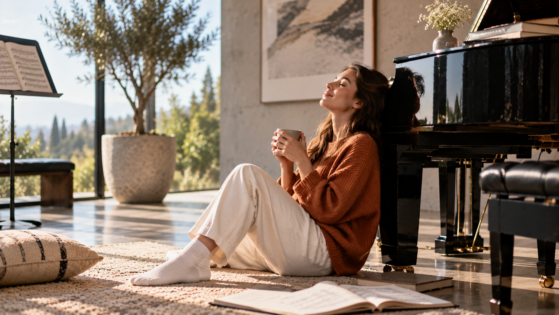
Piano Lowers Cortisol Through Emotional Expression
Stress isn’t always caused by physical exhaustion. Sometimes the mind simply has too many emotions with nowhere to go.
Music can provide a form of emotional expression without requiring words. A slow melody might reflect sadness or reflection, while energetic playing can release tension and frustration. Even repeating a familiar piece can create a feeling of comfort and familiarity.
For beginners, this does not necessarily mean composing an emotional masterpiece. Simply playing a few familiar chords or melodies can provide a satisfying outlet.
As the fingers move across the keys, emotions can become part of the musical experience rather than remaining locked inside a cycle of thoughts. That emotional engagement may be one reason music-making can feel personally rewarding.

Piano Playing Encourages Mindful Focus
Modern life makes sustained attention surprisingly difficult. Notifications, social media, emails, conversations, and multitasking constantly compete for our attention.
Piano practice creates an opportunity to do something different.
For several minutes, the player may focus entirely on one activity. A difficult passage requires attention to timing and accuracy. A familiar song allows the player to focus on expression. Even scales and simple exercises can encourage repetitive, structured concentration.
This type of focused activity can make a practice session feel almost like a mental reset.
The effect can become even stronger when the player avoids treating every practice session as a performance. Instead of worrying about mistakes, the goal can simply be to stay present with the music.
Piano Lowers Cortisol While Boosting Your Mood
Stress reduction isn’t the only potential benefit of piano playing. Learning an instrument provides a sense of progress.
Perhaps you struggled with a chord yesterday but can play it comfortably today. Maybe a melody that once seemed complicated is beginning to feel natural. These small improvements can create a sense of accomplishment.
That matters because stress can sometimes make people feel as though they are constantly dealing with problems without seeing progress. Musical practice offers a different experience: effort can produce a visible and audible result.
Over time, these small successes may contribute to confidence and motivation, making piano practice something to look forward to rather than another obligation.

Does It Matter Whether You’re a Beginner or an Experienced Pianist?
Not necessarily.
You don’t have to be an advanced pianist to enjoy the potential stress-relieving aspects of playing music. Beginners can experience engagement and enjoyment from simple melodies, chords, and exercises.
In fact, keeping the activity approachable may make it more relaxing. Trying to master an extremely difficult piece while constantly worrying about mistakes could have the opposite effect and become another source of pressure.
Experienced musicians may find relaxation through deeper musical expression and immersion, while beginners may enjoy the novelty and satisfaction of learning something new.
Ultimately, the experience depends on the person and how they approach the instrument.
Piano Playing vs. Simply Listening to Music
Listening to music can certainly be relaxing, but playing an instrument involves another level of participation.
When you listen, your brain processes rhythm, melody, harmony, and emotion. When you play, you must additionally coordinate movement, attention, memory, timing, and auditory feedback.
This creates a more active experience.
For some people, that involvement may make piano playing especially effective at redirecting attention away from stress. Others may find that simply listening to calming music works better, particularly after an exhausting day when active concentration feels difficult.
Neither approach needs to replace the other. Listening can help you unwind, while playing can provide an opportunity to actively engage with music.

How Long Should You Play Piano to Feel Less Stressed?
There is no universal number of minutes that guarantees stress reduction.
A short session can still be meaningful if it allows you to become absorbed in the activity. Even 10–20 minutes of relaxed playing may provide a useful mental break from a demanding day, particularly when the session is approached without pressure.
Longer practice sessions can be enjoyable too, but more time does not automatically mean greater relaxation. If you become frustrated, physically tense, or overly focused on perfection, the calming effect may disappear.
Instead of watching the clock, pay attention to how you feel before and after playing. If your breathing feels calmer, your thoughts seem less crowded, or your mood has improved, the practice may already be serving its purpose.
Can Piano Replace Other Stress-Management Methods?
Piano can be a valuable addition to a healthy routine, but it should not be viewed as a replacement for professional treatment or other established approaches to managing significant or persistent stress.
Sleep, physical activity, social connection, relaxation practices, healthy routines, and professional support when needed all have important roles to play.
Music can complement these habits by giving people an enjoyable activity that combines mental focus with emotional expression.
For someone who already loves music, piano may be an especially accessible way to build relaxation into everyday life.
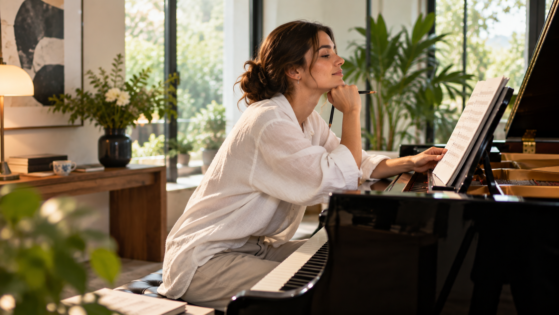
Piano Lowers Cortisol | The Bigger Picture of Self-Care
Perhaps the most important benefit isn’t whether a particular piano session produces a measurable change in cortisol.
The bigger question is whether playing creates a healthier relationship with your time and attention.
For a few minutes, the phone can stay aside. Work can wait. The mind can focus on rhythm, melody, movement, and sound. Instead of consuming another piece of digital content, you are actively creating something.
That shift—from constant stimulation to focused creation—can be meaningful in itself.
And when piano becomes a regular, enjoyable part of someone’s routine, the cumulative experience may contribute to a greater sense of relaxation and emotional well-being.
Creating a Stress-Free Piano Routine
The environment can make a significant difference.
Rather than turning every piano session into a strict practice schedule, consider creating a small period of the day that feels personally enjoyable. It could be after work, before bedtime, or during a quiet afternoon.
Choose music that matches your mood. Some days might call for a gentle melody, while other days may feel better with something energetic. Playing familiar pieces can also reduce the pressure of constantly learning something new.
Most importantly, allow yourself to make mistakes.
A stress-relieving piano session doesn’t have to sound perfect. There is a difference between practising to improve and playing simply to enjoy the experience. Giving yourself permission to do the latter can make the instrument feel like a source of relaxation rather than another performance expectation.

The Connection Between Music and Well-Being
The relationship between music and well-being goes far beyond cortisol.
Music can influence mood, attention, memory, emotional expression, and social connection. Active music-making adds another dimension because the person is not merely receiving music—they are creating it.
That sense of creation can be rewarding in itself.
Learning a new song, finally playing a difficult passage correctly, improvising a melody, or simply completing a few minutes of practice can provide a feeling of accomplishment. Small achievements can build confidence, and confidence can make the learning process more enjoyable.
Over time, piano can become more than an extracurricular activity. It can become a personal space for concentration, creativity, and expression.

So, Does Playing Piano Really Reduce Stress?
Playing piano may help reduce feelings of stress and could influence physiological stress responses, including cortisol, but it should not be presented as a guaranteed cortisol-lowering treatment.
The potential benefit comes from several elements working together: focused attention, emotional expression, creative engagement, sensory feedback, learning, and the simple pleasure of making music.
You don’t need a concert grand piano or advanced technique to begin. A beginner practising a simple melody can experience the same basic principle: for a little while, the mind has somewhere else to go. With Piano Lessons Online, even those with busy schedules can create a dedicated space in their day to learn, play, and reconnect with music.
So the next time a stressful day leaves you feeling mentally exhausted, consider sitting at the piano—not necessarily to practise harder, but simply to play. Through personalised learning and regular practice, The Mystic Keys helps learners make music a meaningful part of their everyday routine.
Sometimes, a few minutes with the keys can give the mind the pause it has been asking for.
For more information and exciting resources about learning music, visit our website at The Mystic Keys. For more music content and exciting offers follow us on
Facebook, Instagram, YouTube, LinkedIn, Twitter, Pinterest, and Threads.