
Why Some Students Learn Piano Faster Than Others
Piano learning speed can vary significantly from one student to another. Two students may begin piano lessons at a similar age, attend the same number of classes, and practise the same piece, yet one may appear to progress much faster. This does not necessarily mean that one student has more talent. Practice quality, consistency, musical background, motivation, listening skills, concentration, coordination, teaching methods, and personal goals can all influence how quickly someone develops on the piano.
Understanding these differences is important because piano learning is not a race. One student may quickly learn songs but take longer to develop sight-reading skills, while another may read music confidently but need more time to coordinate both hands. What matters is not simply how quickly a student reaches the next piece, but whether they are building a strong foundation that supports continued musical growth.
The reality is more complicated. Piano learning speed is influenced by many factors, including practice quality, consistency, previous musical experience, concentration, motivation, learning methods, physical coordination, listening ability, and the way a student responds to challenges. Some students may progress quickly in reading music but take longer to develop rhythm. Another student may have strong natural coordination but need more time to understand music theory. Progress is rarely identical across every skill.
Understanding these differences is important because comparing your progress directly with another pianist can create unnecessary frustration. Instead, it is more useful to understand what affects learning and identify the habits that can make your own practice more productive.
Piano Learning Speed Is Not the Same as Musical Potential
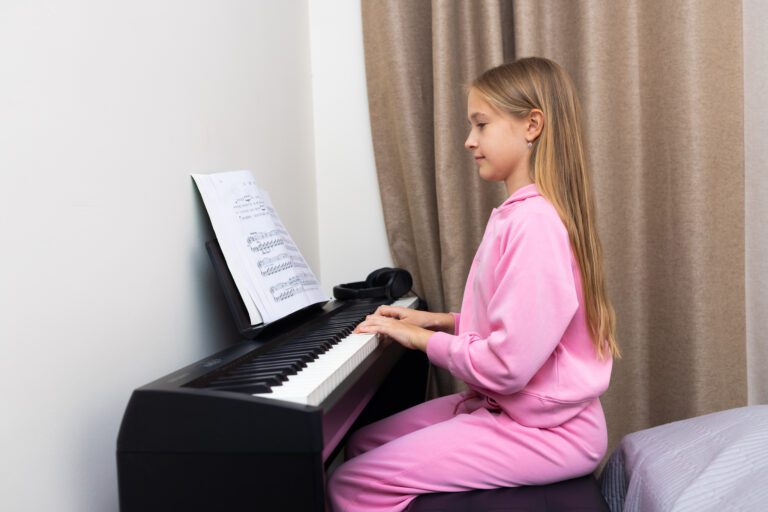
One of the biggest misunderstandings about learning piano is assuming that a student who progresses quickly at the beginning will always become the stronger musician.
Early progress can be influenced by many temporary advantages. A student may already understand rhythm from playing another instrument. Someone who has experience reading music may learn notation faster. Another person may have spent years listening carefully to music and therefore recognise patterns more easily.
These advantages can make the first few months feel easier.
But piano development is long-term. As students progress, they encounter increasingly complex skills: independence between the hands, musical interpretation, advanced rhythm, chord voicings, sight-reading, improvisation, ear training, memorisation, and performance.
A student who appears slower at the beginning may eventually develop excellent musicianship through consistent work.
This is why progress should be viewed as a journey rather than a race.
Practice Quality Has a Major Influence on Piano Learning Speed
The amount of time spent at the piano matters, but what happens during that time matters even more.
A student can spend an hour playing a piece repeatedly without making significant progress if they are repeating the same mistakes. Another student might spend 25 focused minutes identifying difficult sections, practising them slowly, correcting fingering, and checking rhythm.
The second practice session may produce more useful improvement.
Effective practice involves attention.
Instead of simply playing a song from beginning to end several times, break it into manageable sections. Identify where mistakes occur. Slow those passages down. Practise difficult transitions separately. Then gradually reconnect the sections.
This approach allows the brain and hands to work on specific problems rather than repeatedly reinforcing mistakes.
Repetition needs a purpose
Repetition is essential for piano learning, but repetition by itself is not enough.
Ask yourself what you are trying to improve each time you repeat a passage.
Perhaps the goal is smoother chord changes.
Perhaps you’re working on even scales.
Maybe you’re trying to memorise a particular phrase.
Or perhaps you’re focusing on bringing out the melody.
When every repetition has a specific purpose, practice becomes much more productive.
Consistency Often Matters More Than Occasional Long Sessions
Another important factor affecting piano learning speed is consistency.
A student who practises for a short period most days may develop stronger habits than someone who practises for several hours once every week.
Regular practice gives the brain repeated exposure to musical patterns and physical movements.
This doesn’t mean every student needs to practise for hours every day.
A realistic routine might involve a focused session that includes:
- Warm-up exercises
- Technique
- Current repertoire
- Difficult passages
- Sight-reading
- Ear training
- A short review of older pieces
The exact structure can vary according to the student’s level and goals.
The important thing is maintaining continuity.
Missing one practice session is not a disaster. The problem occurs when irregular practice becomes the normal pattern.
Previous Musical Experience Can Create an Early Advantage

Students don’t always begin piano with the same background.
Someone who has previously learned guitar may already understand chords and rhythm.
A singer may have strong pitch awareness and phrasing skills.
A violinist may have developed excellent listening abilities and musical discipline.
A student who has never played an instrument may need to develop these foundations from the beginning.
This can create significant differences in early piano progress.
But previous experience is not a requirement for becoming a good pianist.
It simply means students may begin with different starting points.
A complete beginner might initially spend more time learning concepts that an experienced musician already understands. With consistent practice, those foundations can become increasingly automatic.
Natural Coordination Can Affect Early Progress
Piano requires both hands to perform different movements, sometimes simultaneously.
For a beginner, this can feel surprisingly difficult.
One hand may play a steady accompaniment while the other plays a melody with a different rhythm. Later, students may need to coordinate scales, arpeggios, chord patterns, repeated notes, and independent voices.
Some people seem to develop this coordination quickly.
Others need considerably more repetition.
That doesn’t necessarily indicate musical ability.
Coordination is a skill that can improve through gradual training.
Start slowly enough that both hands remain controlled. Once the movement becomes reliable, increase the tempo gradually.
Trying to force speed too early often creates tension and mistakes.
Listening Skills Can Accelerate Musical Development
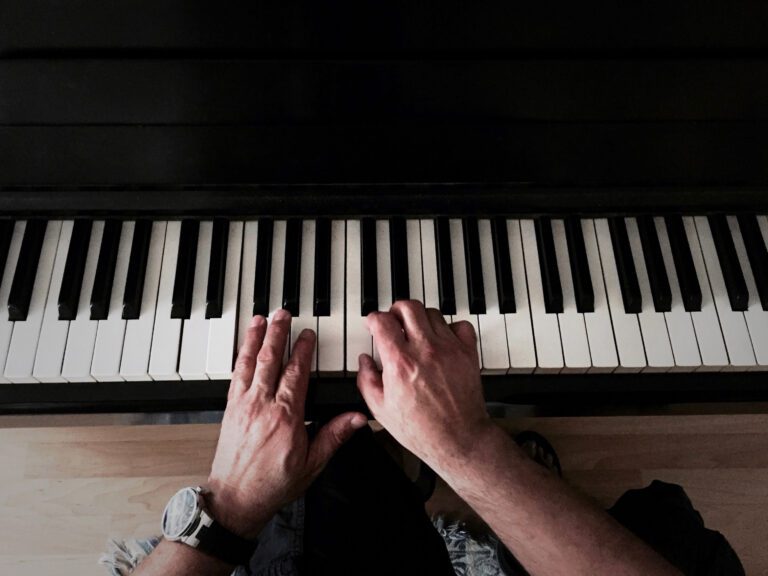
A pianist doesn’t learn only through the fingers.
The ears play a crucial role.
Students with strong listening habits may notice pitch, rhythm, dynamics, phrasing, and musical patterns more easily. They may also identify mistakes without waiting for someone else to point them out.
This can influence piano learning speed because the student becomes more independent during practice.
Listening can be developed deliberately.
When practising, don’t simply ask:
“Did I play the correct notes?”
Also ask:
- Is the rhythm steady?
- Can I hear the melody clearly?
- Are both hands balanced?
- Is the tone appropriate?
- Did the phrase have direction?
- Was the transition smooth?
- Did the dynamics communicate what I intended?
Recording yourself is particularly useful because you can listen from the perspective of an audience member rather than concentrating on your hands.
Motivation Changes How Students Practise
Students learn differently when they genuinely care about what they are learning.
A student who wants to play a favourite song may willingly practise a difficult passage dozens of times because there is a meaningful goal behind the effort.
Another student who is learning material they don’t enjoy may struggle to maintain attention.
Motivation doesn’t mean every lesson needs to be entertaining.
It means the student needs to understand why the work matters.
Teachers can help by connecting technical exercises to musical goals.
For example, instead of practising scales simply because they are part of a curriculum, a student can understand how scales contribute to finger control, key awareness, improvisation, sight-reading, and understanding harmony.
When students see the purpose behind an exercise, it can become easier to stay engaged.
Clear Goals Can Make Progress More Noticeable
The Right Teacher Can Influence the Learning Process
Teaching doesn’t eliminate the need for practice, but good instruction can help students avoid unnecessary confusion.
A teacher can identify problems that a beginner may not recognise.
Perhaps the fingering is making a passage unnecessarily difficult.
Maybe the student is using excessive tension.
Perhaps the rhythm is incorrect even though the notes are right.
Maybe the piece is currently too difficult and should be approached through a simpler arrangement.
Individual feedback can save students from spending weeks practising an inefficient approach.
That personalised approach can make the learning process more efficient.
Students often feel that they are not improving because their goals are too vague.
“Get better at piano” is difficult to measure.
A more useful goal might be:
- Learn the first verse of a song by Friday.
- Play a chord progression without stopping.
- Increase a scale from 60 BPM to 80 BPM while maintaining accuracy.
- Memorise eight bars.
- Improve the balance between melody and accompaniment.
- Sight-read a short piece every day.
Specific goals make progress easier to observe.
They also give practice sessions direction.
Without a clear objective, students can spend considerable time at the piano without knowing whether the session was successful.
Learning Methods Matter
Students absorb information differently.
Some respond strongly to visual demonstrations.
Others learn better by listening.
Some need to physically repeat a movement several times before it becomes comfortable.
Others understand the theory first and then apply it to the keyboard.
Effective piano learning can combine several approaches.
For example, a teacher might demonstrate a passage, explain the rhythm, play it slowly with the student, and then ask the student to practise it independently.
This gives the student multiple ways to understand the same concept.
If one learning method isn’t working, changing the approach can sometimes make a significant difference.
Reading Music Can Affect Early Progress

Sight-reading is another area where students develop at different rates.
A student with strong reading experience may look at a new piece and immediately recognise familiar patterns.
Another beginner may need to identify every note individually.
Reading speed improves through exposure.
Rather than relying entirely on memorisation, students should regularly encounter new music.
Short sight-reading exercises can be especially useful because they encourage students to keep moving instead of stopping after every mistake.
Over time, the brain becomes better at recognising common intervals, rhythms, chord shapes, and patterns.
Understanding Patterns Makes Piano Easier
Piano music contains a huge amount of repetition and structure.
Once students begin recognising patterns, they don’t have to process every note as completely new information.
For example, a chord progression may repeat.
A rhythmic figure may appear in several measures.
A melody may return in a different register.
A section may use the same harmonic structure as another section.
Understanding these relationships reduces the amount of information the brain needs to process independently.
This is one reason music theory can be helpful.
Theory isn’t simply about memorising terminology.
It gives students a framework for recognising what they are already seeing and hearing.
Some Students Spend More Time Fixing Mistakes

There is a major difference between making mistakes and learning from mistakes.
Every pianist makes mistakes.
The more important question is what happens afterward.
A student may repeatedly play the same incorrect fingering because they continue practising the passage at full speed.
Another student stops, identifies the problem, slows down, and rebuilds the movement.
The second approach may feel slower in the moment, but it can prevent the mistake from becoming a habit.
This is why slow practice is so valuable.
Slow practice isn’t a punishment or a sign that you aren’t good enough.
It is a way of giving your brain enough time to control the movement accurately.
Confidence Can Influence Progress
Confidence and learning can affect one another.
When students feel confident, they may be more willing to attempt challenging material.
When they repeatedly struggle without understanding why, they may begin avoiding difficult passages.
This can create a cycle where frustration reduces practice, reduced practice slows progress, and slower progress creates even more frustration.
The solution isn’t to avoid challenges completely.
Instead, challenges should be broken into achievable steps.
A difficult piece might be divided into sections.
A complex chord progression can be simplified.
A fast passage can be practised slowly.
A performance goal can begin with playing for one supportive person.
Small successes provide evidence that improvement is possible.
Progress Is More Than Learning Songs
It can be tempting to measure piano development by counting how many songs you can play.
But musical progress is much broader.
You may be improving even if you are currently working on one piece for several weeks.
Perhaps your rhythm is becoming more consistent.
Maybe your chords are smoother.
Your sight-reading might be improving.
Your hands may be coordinating more naturally.
You may be listening more critically.
You may be able to recognise chord progressions by ear.
These improvements are sometimes less obvious than learning a new song, but they form the foundation for future progress.
The Most Important Difference Is Often the Learning Process
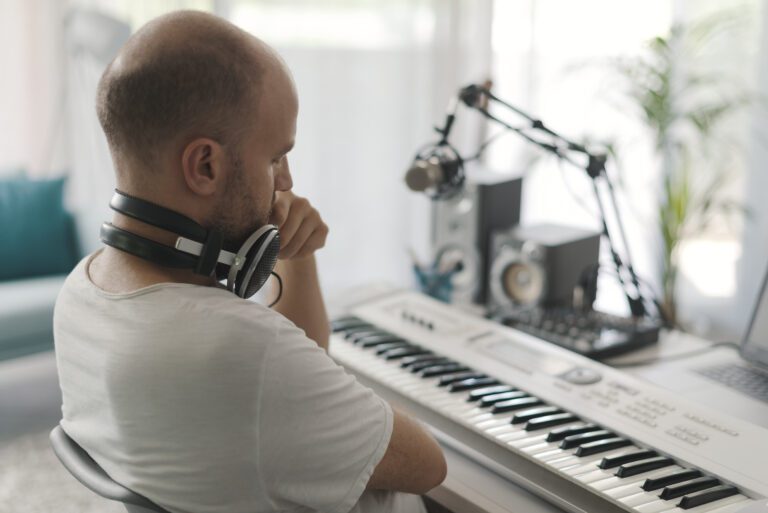
When we ask why one student learns piano faster than another, it is easy to focus on Piano Learning Speed
But learning is influenced by many interacting factors.
Practice habits matter.
Consistency matters.
Listening matters.
Teaching matters.
Motivation matters.
Previous experience matters.
Goals matter.
Concentration matters.
And patience matters.
No single factor determines a student’s future ability.
Someone who progresses slowly through their first few months may simply be building foundations that will become valuable later. Someone who progresses quickly may eventually encounter challenges that require a different approach.
There is no universal timeline for becoming a pianist.
Final Thoughts
Piano learning speed differs from student to student because people don’t begin with the same experiences, skills, habits, goals, or learning environments. Some students may have previous musical knowledge, while others are starting completely from scratch. Some practise consistently, while others have limited time. Some develop coordination quickly, while others need more repetition. These differences are normal.
What matters most is creating a learning process that works for you.
Practise with purpose rather than simply spending time at the keyboard. Listen actively. Set realistic goals. Work on difficult passages slowly. Learn from mistakes. Stay consistent. Most importantly, don’t let someone else’s progress become the measure of your own ability.
Piano is a long-term skill, and progress often becomes more meaningful when you stop treating it as a race.
With structured lessons, personalised feedback, and a practice routine suited to your level, you can build your technique and musical understanding steadily. At The Mystic Keys, personalised Piano Lessons Online can help students develop from their current level while working toward their individual musical goals.
For more information and exciting resources about learning music, visit our website at The Mystic Keys. For more music content and exciting offers follow us on
Facebook, Instagram, YouTube, LinkedIn, Twitter, Pinterest, and Threads.