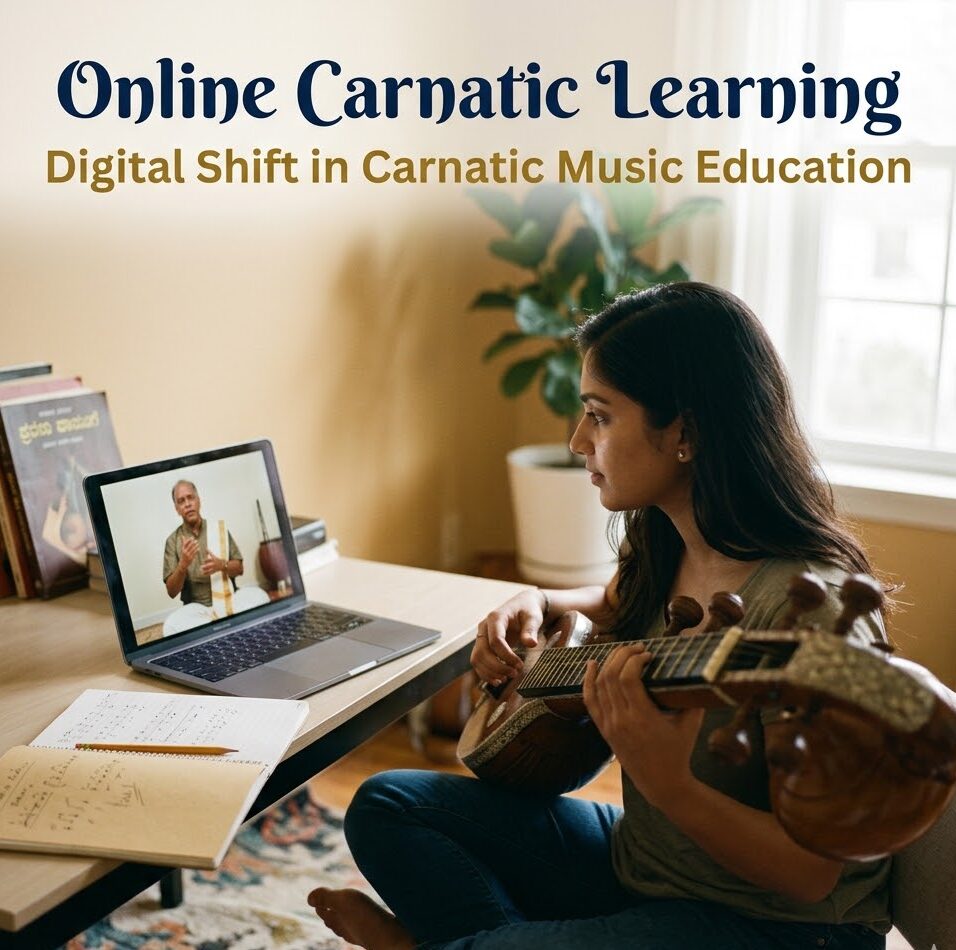
Online Carnatic Learning | Digital Shift in Carnatic Music Education
Carnatic music has long been regarded as one of the most profound and structured classical music traditions in the world. Rooted in centuries of cultural heritage, teachers traditionally passed it down through close interaction with their disciples, extending learning far beyond notes and compositions. For generations, students traveled to their teachers’ homes, attended regular classes, and absorbed the nuances of the art form through direct observation and practice. Today, Online Carnatic Learning brings this rich tradition to students everywhere, connecting them with experienced teachers regardless of geographical boundaries.
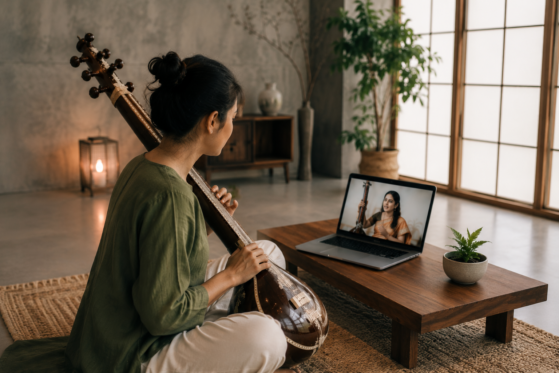
However, the landscape of music education has undergone a remarkable transformation in recent years. Technological advancements, widespread internet access, and changing lifestyles have collectively paved the way for online Carnatic learning. What was once considered a supplementary mode of instruction has now emerged as a powerful and effective alternative to conventional classroom-based training.
Today, students from different parts of the world can connect with experienced teachers, attend live lessons, access learning resources instantly, and continue their musical journey without geographical limitations. This digital shift is not merely a temporary trend; it represents a significant evolution in how Carnatic music is taught, learned, and preserved for future generations.

The Traditional Foundation Behind Online Carnatic Learning
For centuries, Carnatic music flourished through the Guru-Shishya Parampara, a teaching tradition built on personal mentorship and continuous interaction. Under this system, students learned not only musical techniques but also discipline, dedication, and artistic values. Every lesson involved careful observation, repetition, correction, and gradual refinement.
The relationship between teacher and student formed the heart of the learning process. Musical phrases, gamakas, improvisational techniques, and performance practices were often transmitted orally, making personal guidance essential. As a result, many aspiring musicians had to live close to their teachers or travel long distances to receive quality instruction.
Although this method remains highly respected, modern realities have introduced challenges. Busy schedules, relocation, academic commitments, and limited access to qualified teachers have made traditional learning arrangements difficult for many students. Consequently, the need for a more accessible educational model became increasingly evident.
The Emergence of Online Carnatic Learning
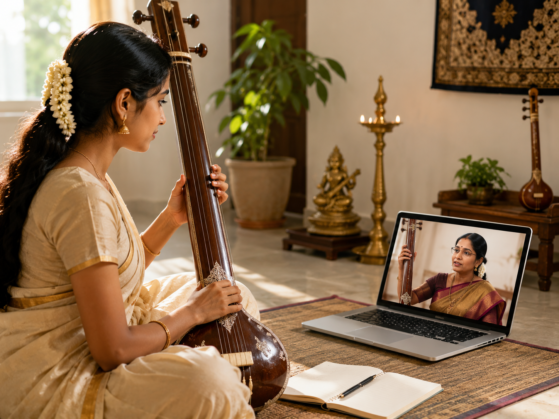
The growth of digital communication technologies has fundamentally changed the way knowledge is shared across the world. Music education has naturally become part of this transformation. With the availability of video conferencing platforms, high-speed internet connections, and digital learning tools, Carnatic music instruction has successfully expanded into virtual spaces.
Initially, online learning was approached with caution. Many questioned whether the subtleties of classical music could be effectively taught through a screen. Yet as teachers and students gained experience with virtual platforms, those concerns gradually diminished. Interactive lessons, real-time demonstrations, screen sharing, and recorded sessions helped recreate many aspects of traditional instruction.
Over time, online Carnatic classes evolved from a convenient alternative into a preferred choice for numerous learners. The ability to connect with skilled instructors regardless of location opened new opportunities for students who previously had limited access to quality training.

How Online Carnatic Learning Breaks Geographical Barriers
One of the most significant advantages of online Carnatic learning is its ability to eliminate geographical constraints. In the past, students often selected teachers based on proximity rather than expertise. Distance could become a major obstacle, especially for learners living in regions where qualified Carnatic music instructors were scarce.
Digital learning has dramatically changed this situation. A student residing in a small town can now learn from a respected teacher located hundreds or even thousands of miles away. Likewise, members of the Indian diaspora across North America, Europe, Australia, the Middle East, and other parts of the world can pursue authentic Carnatic music education without relocating or compromising on quality.
As a result, access to specialized instruction has expanded considerably. Students are no longer restricted by physical boundaries and can choose teachers whose teaching styles align with their goals and aspirations.

Online Carnatic Learning and Flexibility for Modern Learners
Contemporary lifestyles often involve demanding academic schedules, professional commitments, and family responsibilities. Finding time for regular travel to music classes can be challenging, particularly in urban environments where commuting consumes significant portions of the day.
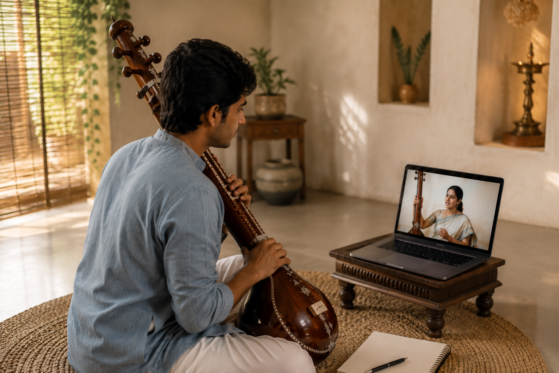
Online Carnatic learning addresses this challenge by offering greater flexibility. Students can attend lessons from the comfort of their homes while reducing travel-related stress and time constraints. Scheduling options also tend to be more adaptable, allowing learners to coordinate classes around their existing commitments.
This flexibility has encouraged consistent learning among students who might otherwise struggle to maintain regular attendance. Rather than discontinuing music education due to logistical challenges, many learners can now sustain long-term progress through convenient virtual instruction.
The Role of Technology in Enhancing Online Carnatic Learning
Technology has contributed much more than simple connectivity. Modern digital tools have enhanced the overall learning experience in several meaningful ways. Recorded lessons allow students to revisit complex concepts repeatedly, reinforcing understanding and improving retention.
In traditional classroom settings, students often relied on handwritten notes and memory. By contrast, online learners can maintain organized digital archives of lessons, practice materials, notation sheets, and reference recordings. These resources provide valuable support during independent practice sessions.
Furthermore, audio and video sharing enables teachers to review student performances outside scheduled class hours. Constructive feedback can be delivered efficiently, helping learners identify areas for improvement and refine their technique with greater precision.
Such technological support systems create a more comprehensive and continuous learning environment, extending education beyond the duration of individual lessons.

Maintaining the Essence of the Guru-Shishya Relationship
Despite the digital format, the core values of Carnatic music education remain intact. Effective online teaching continues to emphasize personal guidance, mentorship, and individualized attention. Skilled instructors adapt their methods to ensure that students receive detailed corrections, encouragement, and artistic direction.
Virtual classes often include one-on-one interactions that closely resemble traditional lessons. Through regular communication, teachers can monitor progress, address challenges, and guide students through increasingly advanced concepts.
While the physical environment may differ, the essence of the teacher-student relationship continues to thrive. Commitment, discipline, and mutual respect remain central to the learning journey, demonstrating that meaningful musical connections can transcend physical distance.
Opportunities for Global Musical Communities
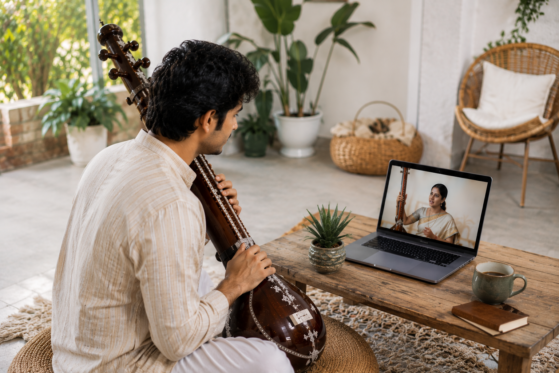
The digital shift has also fostered the growth of vibrant global communities centered around Carnatic music. Students from diverse cultural backgrounds can now learn together, participate in workshops, attend virtual concerts, and engage in collaborative musical activities.
These interactions create valuable opportunities for cultural exchange and collective learning. Exposure to fellow students from different regions often broadens perspectives and enriches the educational experience. In many cases, virtual platforms have strengthened connections among Carnatic music enthusiasts worldwide, creating a truly international learning ecosystem.
Consequently, the reach and influence of Carnatic music continue to expand, attracting new audiences while preserving its traditional foundations.
Challenges and Adaptations in Online Carnatic Learning
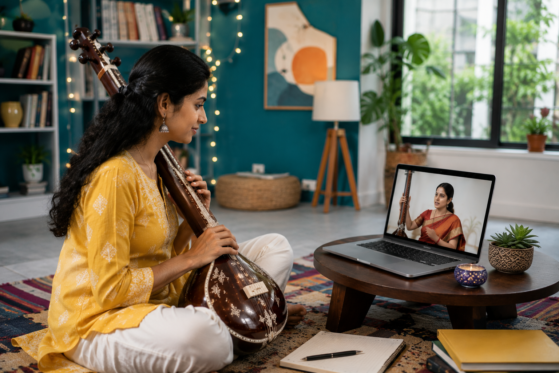
Like any educational model, online learning presents certain challenges. Internet connectivity issues, audio quality limitations, and occasional technical disruptions can affect lesson delivery. Additionally, teachers must develop strategies to demonstrate intricate techniques effectively through digital platforms.
Nevertheless, educators have adapted remarkably well. High-quality microphones, improved video technology, specialized software, and innovative teaching methods have significantly enhanced the effectiveness of virtual instruction. Many teachers now incorporate multiple camera angles, visual demonstrations, and customized digital materials to ensure clarity and engagement.
These adaptations demonstrate the resilience and creativity of the Carnatic music community in embracing new modes of teaching while maintaining educational standards.
The Future of Carnatic Music Education
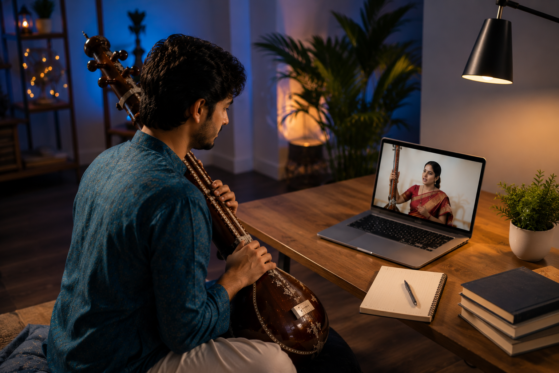
As technology continues to evolve, the future of Carnatic music education appears increasingly dynamic and inclusive. Hybrid learning models that combine in-person instruction with virtual support are becoming more common. Such approaches offer the best of both worlds, blending traditional mentorship with modern convenience.
Emerging technologies may further enrich the learning experience through advanced practice tools, interactive educational resources, and enhanced digital collaboration. At the same time, the fundamental principles of dedication, consistent practice, and artistic expression will remain unchanged.
Rather than replacing tradition, digital learning is helping preserve and extend it. By making quality instruction accessible to a wider audience, online education is ensuring that Carnatic music continues to flourish across generations and geographical boundaries.
Conclusion
The rise of online Carnatic learning represents a significant milestone in the evolution of music education. Through technology, students can now access expert guidance, flexible learning opportunities, and global musical communities without sacrificing the depth and richness of traditional training. Institutions like The Mystic Keys have embraced this digital transformation, making quality music education accessible to learners across the world.
Although the methods of delivery have changed, the heart of Carnatic music education remains firmly rooted in mentorship, discipline, and a lifelong passion for learning. The digital shift has not diminished the value of this classical art form; instead, it has created new pathways for growth, accessibility, and preservation. Through well-structured Carnatic Vocal Lessons Online, students can continue to develop their skills while staying connected to the traditions that define this timeless art form.
As more learners embrace virtual instruction, online Carnatic education is poised to play an increasingly important role in carrying this rich musical heritage into the future.
For more information and exciting resources about learning music, visit our website at The Mystic Keys. For more music content and exciting offers follow us on
Facebook, Instagram, YouTube, LinkedIn, Twitter, Pinterest, and Threads.