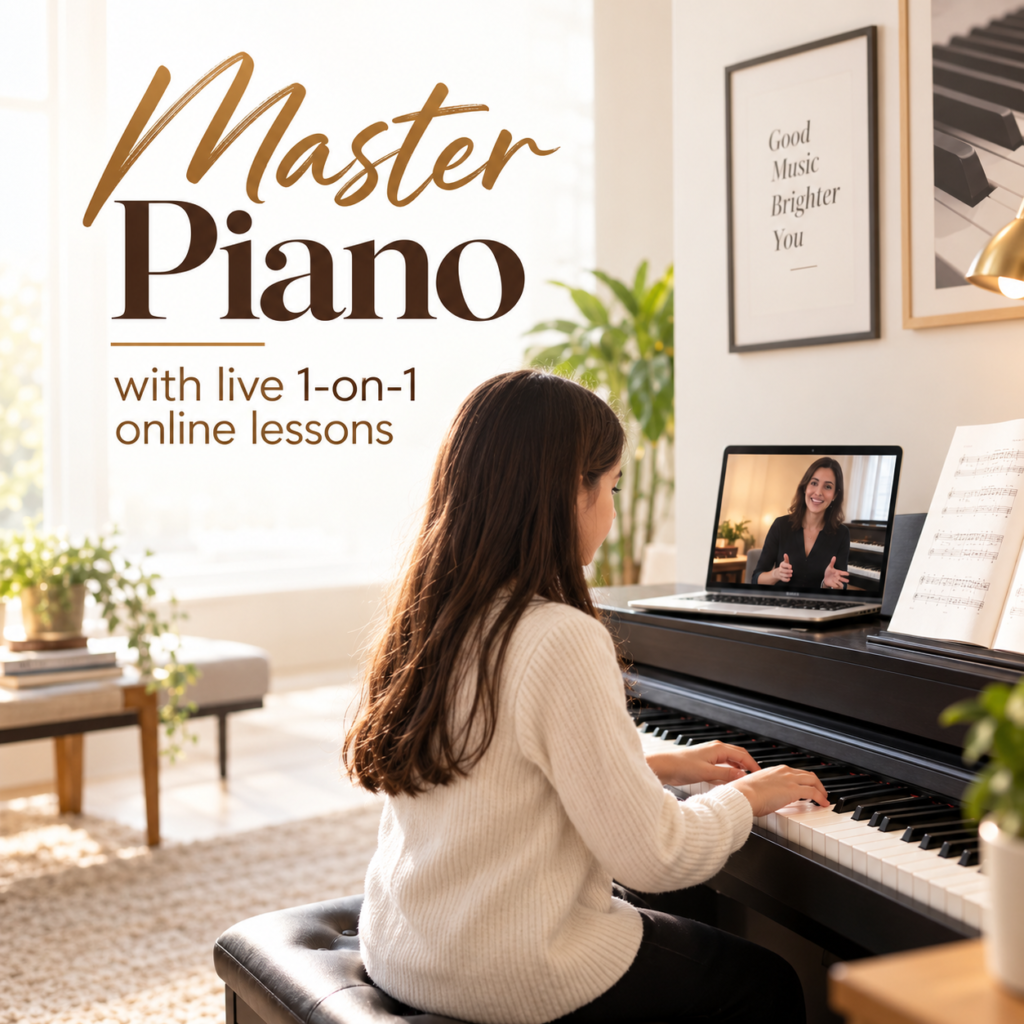
Master piano with live 1-on-1 online lessons
Learning the piano is more than learning where to place your fingers. It is about developing coordination, understanding music, building strong technique, and gradually gaining the confidence to express yourself through every note. With the right guidance and consistent practice, students can master piano skills step by step and develop a deeper understanding of the instrument. While traditional piano lessons have long been associated with sitting beside a teacher in a physical classroom, technology has made personalised music education accessible from almost anywhere.
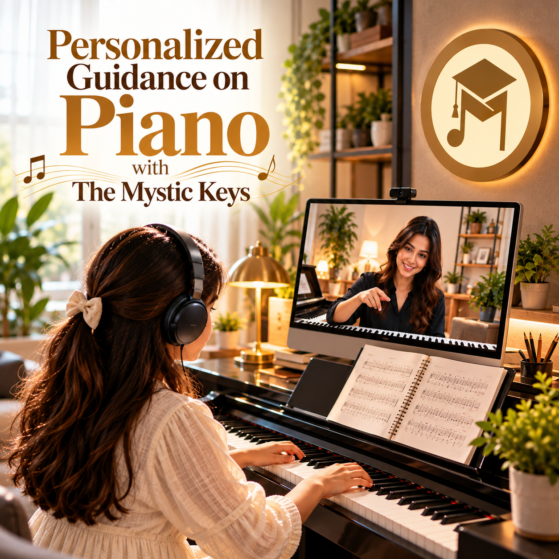
With live 1-on-1 online piano lessons, students can learn directly from an experienced instructor through real-time interaction, personalised guidance, and structured practice. Every lesson can be adapted to the learner’s current level, goals, pace, and musical interests. For beginners taking their first steps at the keyboard as well as experienced players working towards greater fluency, this personalised approach can make the learning journey more focused and engaging.
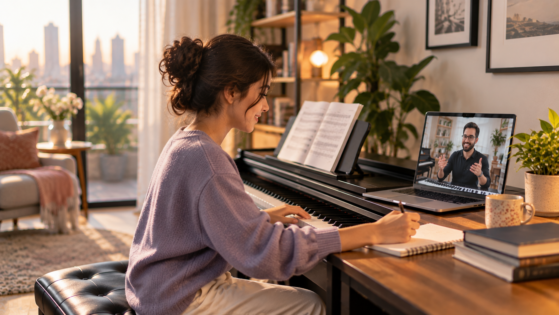
Master Piano with Live 1-on-1 Lessons
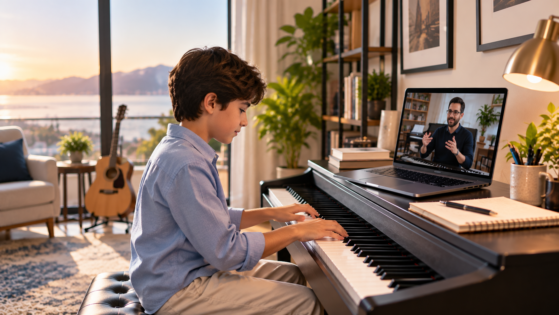
One of the biggest advantages of individual piano lessons is the attention a student receives throughout the session. In a group setting, a teacher has to divide attention among several learners, each with different abilities and challenges. A one-on-one lesson creates an environment where the entire session is centred on one student.
This allows the instructor to observe technique closely, identify areas that need improvement, and adjust the lesson accordingly. If a student struggles with finger coordination, more time can be spent developing that skill. If sight-reading comes naturally, the lesson can progress to more challenging material. This flexibility helps prevent students from feeling either rushed or held back.
More importantly, live interaction means students can ask questions as they arise. Instead of simply following a pre-recorded video, they can receive immediate explanations, demonstrations, and corrections. That ongoing exchange between teacher and student becomes an important part of building musical understanding.
Learn at Your Own Pace
Every student approaches the piano differently. Some may pick up melodies quickly but need more work on rhythm and notation. Others may understand theory easily while requiring additional practice to develop finger independence. A personalised lesson can accommodate these differences rather than forcing every learner through exactly the same progression.
For a beginner, lessons may begin with posture, hand position, basic notation, rhythm, and simple melodies. As these foundations become comfortable, the student can gradually move towards chords, scales, musical interpretation, sight-reading, and more complex pieces.
At the same time, learners who already have some piano experience can work on more specific areas such as technique, repertoire, improvisation, accompaniment, or examination preparation. This personalised progression keeps lessons relevant and gives students a clearer sense of development.
Master Piano Technique from the Beginning
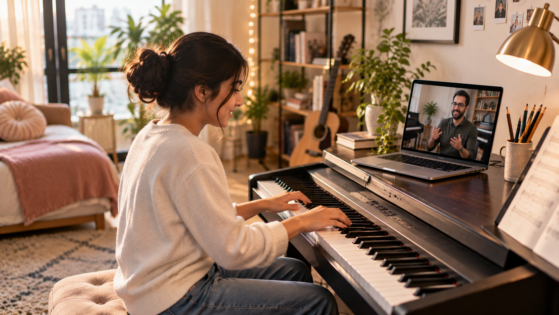
Good piano playing is built on technique. While it can be tempting for beginners to focus only on learning songs, developing proper habits early can make a significant difference as the repertoire becomes more challenging.
During live lessons, an instructor can guide students on hand position, posture, finger movement, articulation, dynamics, rhythm, and coordination. Small technical issues can also be addressed before they become difficult habits to change later.
As students progress, these foundations support more advanced skills. Finger independence makes intricate passages easier to manage, while a stronger understanding of rhythm helps maintain musical accuracy. Gradually, technical exercises stop feeling like isolated practice and begin contributing directly to expressive and confident playing.
Master Piano Beyond Simply Playing the Notes
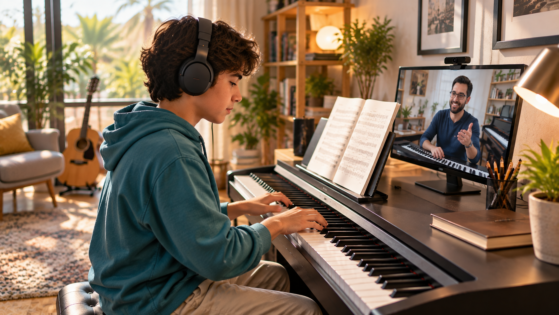
Mastering the piano involves much more than pressing the correct keys in the correct order. Music has character, emotion, phrasing, dynamics, and structure, and understanding these elements allows a performance to sound musical rather than mechanical.
A live teacher can help students understand why a particular passage should be played softly or strongly, where a musical phrase should breathe, and how articulation can change its character. These details often transform a technically correct performance into one that communicates something to the listener.
This is also where personalised feedback becomes particularly valuable. A teacher can listen to how a student approaches a piece and suggest specific ways to improve expression, rather than simply assigning another song to practise.
Develop Sight-Reading and Music Theory
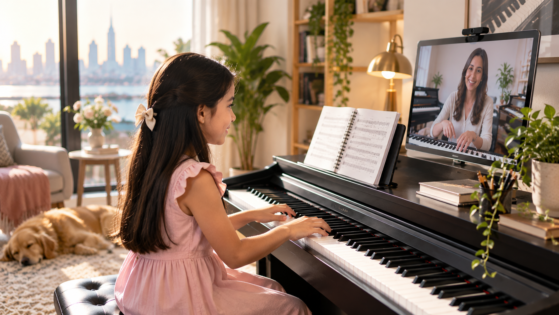
Piano lessons can also provide an opportunity to develop a broader understanding of music. Reading notation, recognising rhythms, understanding scales and chords, and learning basic music theory can make students more independent musicians.
Sight-reading, for instance, allows learners to approach unfamiliar music with greater confidence instead of relying entirely on memorisation. Music theory helps them understand the patterns behind what they are playing, making it easier to recognise chord progressions, scales, intervals, and musical structures.
As these skills develop together, students begin to understand the piano as an instrument within a larger musical language. That knowledge can support everything from classical repertoire and examination pieces to contemporary music, accompaniment, and improvisation.
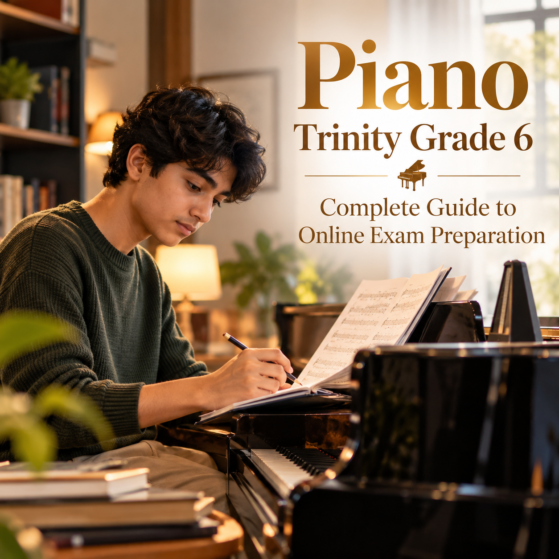
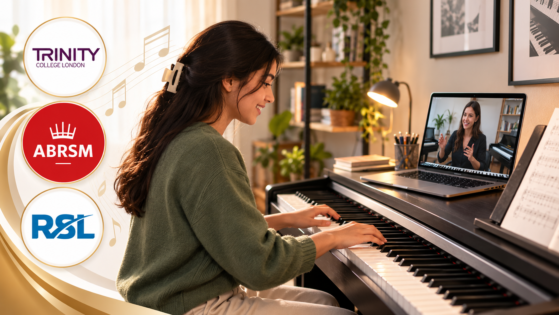
Prepare for Trinity, ABRSM and Rockschool Examinations
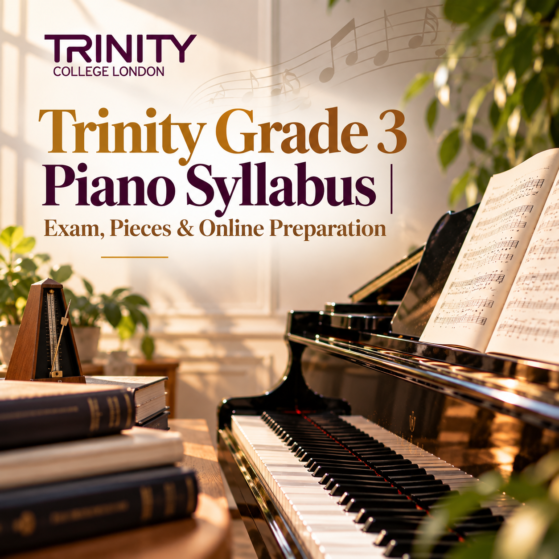
For students interested in structured musical progression, piano lessons can also be tailored towards recognised music examinations. Preparation for Trinity College London, ABRSM, and Rockschool can involve more than simply learning the required pieces.
Students may need to develop sight-reading, scales, technical exercises, aural skills, musical interpretation, and theoretical understanding depending on the examination and grade. Regular guidance can help learners understand these requirements and approach their preparation systematically.
With consistent practice and teacher feedback, students can identify areas that require additional attention well before an examination. This can make preparation more organised while helping learners build skills that remain useful beyond the examination itself.
Master Piano with the Convenience of Online Learning
One of the most practical benefits of online piano lessons is flexibility. Students do not have to spend time travelling to a physical music school for every lesson. Instead, they can learn from a suitable space at home using a keyboard or piano and a stable internet connection.
This can be especially useful for students with busy school schedules, working adults, or families managing multiple activities. A lesson can fit more naturally into the day without the additional travel involved in attending a physical class.
Online learning also makes personalised music education accessible to students who may not have a suitable piano teacher nearby. Through live video platforms, learners can connect with instructors beyond their immediate location while continuing to receive real-time guidance.
A Personalised Approach at The Mystic Keys
The Mystic Keys is an online music academy offering live, one-on-one music lessons designed around individual learners. Its online piano classes provide students with personalised instruction while allowing them to learn from the comfort of their own surroundings.
Rather than following a single approach for every learner, lessons can take into account the student’s level, goals, interests, and learning pace. Students can work towards building fundamental piano skills, improving their existing technique, learning repertoire, or preparing for recognised music examinations.
The academy also offers lessons across a range of musical disciplines, making it possible for learners and families to explore different areas of music through online education. Live classes, supplementary learning materials, and lesson recordings can further support practice between sessions.
Master Piano Through More Meaningful Practice
Progress on the piano does not happen only during the lesson. Practice between classes plays an equally important role, but effective practice is not simply about spending a certain number of minutes at the keyboard.
Students benefit when they understand what they are practising and why. A teacher can break a challenging passage into manageable sections, suggest specific exercises, and explain how to approach difficult rhythms or finger patterns. This gives practice sessions greater direction.
Over time, consistent and focused practice can turn unfamiliar movements into natural ones. Pieces that initially seem difficult begin to feel more manageable, and students can recognise their own improvement. That sense of progress can become an important source of motivation.
Piano Learning for Different Ages and Goals
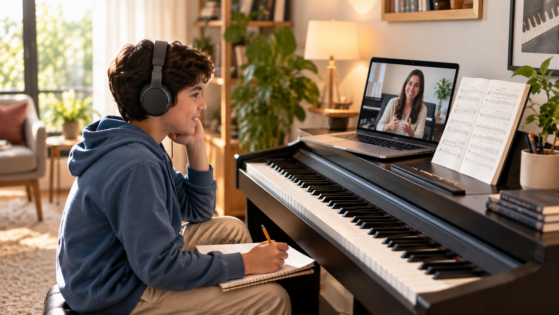
There is no single age or reason to begin learning piano. Children may start to develop musical foundations and coordination, while teenagers might want to explore contemporary repertoire or prepare for examinations. Adults, meanwhile, may return to an instrument they studied years ago or begin learning piano for the first time.
Individual lessons make it easier to adapt the learning experience to these different goals. A student learning purely for personal enjoyment does not necessarily need the same lesson structure as someone preparing for a graded examination. Similarly, an experienced player may require targeted technical development rather than basic instruction.
The ability to personalise the learning journey helps keep piano education meaningful at different stages of life.
Master Piano from Learning Notes to Making Music
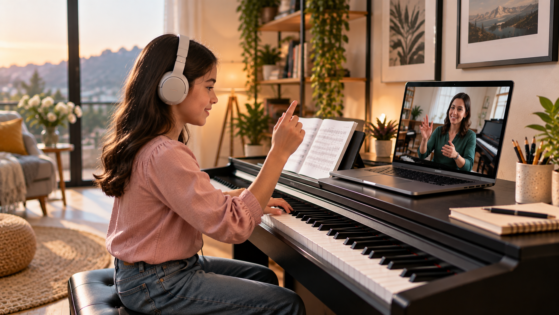
The ultimate goal of piano education is not simply to complete a list of exercises or learn a collection of pieces. It is to become increasingly comfortable with the instrument and develop the ability to make musical choices independently.
As technique, theory, listening skills, and musical understanding come together, students can begin to approach music with greater freedom. They can interpret pieces more confidently, experiment with chords, accompany songs, explore different styles, and eventually develop their own musical voice.
That transformation takes time, but each lesson and practice session contributes to it. With the right guidance, the piano can gradually become more than an instrument being studied—it can become a natural means of musical expression.
Start Your Piano Journey Online
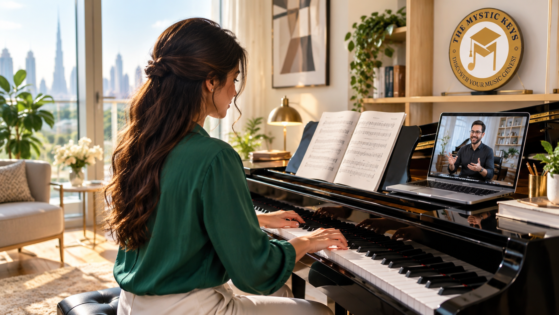
Piano Lessons Online offer the flexibility of learning from home while still receiving live, personalised instruction. Students can benefit from real-time guidance, targeted feedback, structured learning, and a lesson approach that adapts to their individual level and goals.
Whether the aim is to learn piano from the beginning, strengthen existing skills, prepare for Trinity, ABRSM or Rockschool, or simply become a more confident musician, personalised instruction can provide a clear path forward.
At The Mystic Keys, students can develop their piano skills through live, individual lessons with guidance tailored to their musical journey. With regular practice, focused learning, and consistent support, every session can bring students one step closer to mastering the keys.
For more information and exciting resources about learning music, visit our website at The Mystic Keys. For more music content and exciting offers follow us on
Facebook, Instagram, YouTube, LinkedIn, Twitter, Pinterest, and Threads.