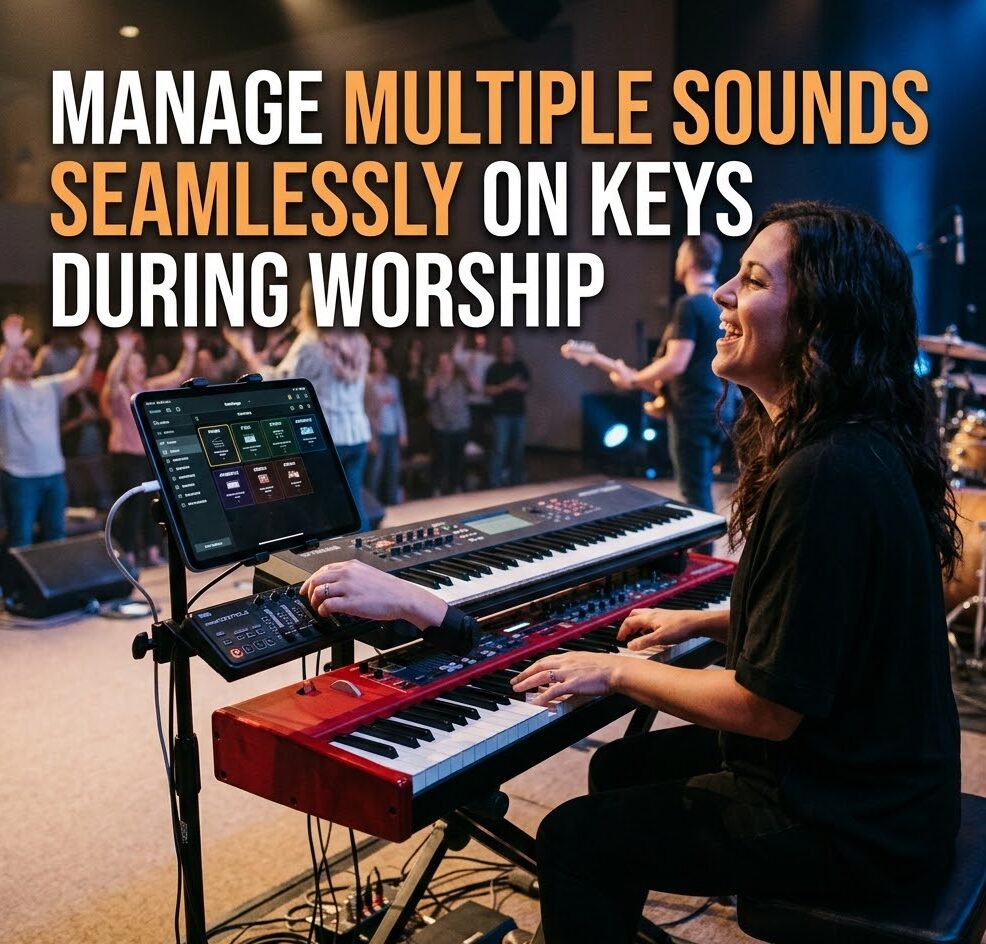
Manage Multiple Sounds Seamlessly on Keys During Worship
Modern worship keyboardists are expected to do far more than simply play chords and melodies. In many churches, the keyboard has become one of the most versatile instruments on stage, requiring players to manage multiple sounds while creating atmospheric pads, supporting pianos, triggering strings, introducing synth textures, and sometimes even covering parts that would traditionally be played by an entire orchestra. As worship arrangements become increasingly layered and dynamic, the ability to switch between or combine different sounds seamlessly has become an essential skill for modern keyboardists.
As worship music continues to evolve, keyboard players often find themselves switching between multiple sounds within a single song. One moment calls for a warm piano, the next requires lush strings, and before long, a bright synth lead is needed to drive the chorus. Managing these transitions smoothly can make the difference between a worship set that feels seamless and one that feels distracting.
The good news is that handling multiple sounds during worship does not have to be stressful. With proper preparation, thoughtful programming, and a clear understanding of your instrument, it becomes possible to move between sounds effortlessly while staying focused on leading people into worship rather than worrying about technology.

Why Managing Multiple Sounds Matters in Worship
Every sound serves a purpose in worship music. A piano may establish the foundation of a song, while a soft pad creates an atmosphere of reflection. Strings often add emotional depth, whereas synth textures can build energy and excitement during powerful moments.
Because each sound contributes differently to the musical experience, abrupt or poorly timed transitions can interrupt the flow of worship. Congregations may not always identify what went wrong, but they can certainly feel when something disrupts the musical journey.
Smooth transitions, on the other hand, help maintain continuity. Rather than drawing attention to the keyboard player, they allow the music to support the message and create an environment where people can remain engaged without distraction.
Consequently, mastering sound management is not merely a technical skill. It is an important part of serving the worship experience effectively.
Understanding Layers, Splits, and Patches
Before attempting to manage multiple sounds during a worship set, it is important to understand how modern keyboards organize sounds.
A patch is a single programmed sound or combination of sounds. Many worship keyboardists build custom patches that include multiple instruments working together. For example, a piano may be layered with a subtle pad to create a fuller texture without requiring any additional switching during performance.
Layers allow two or more sounds to play simultaneously across the keyboard. This approach is particularly useful during worship because it enables players to add depth without increasing complexity. A simple chord progression can sound significantly richer when supported by carefully blended strings or ambient pads.
Splits offer another valuable tool. By assigning different sounds to separate areas of the keyboard, a player can perform bass notes with the left hand while playing piano, organ, or synth parts with the right hand. Such flexibility reduces the need for constant patch changes and helps cover multiple musical roles when a worship team has limited instrumentation.
Understanding these foundational concepts creates a strong starting point for managing complex worship arrangements.

Preparing to Manage Multiple Sounds Before the Service
Many keyboardists experience difficulties with sound changes because preparation begins too late. Attempting to organize patches during rehearsal often creates unnecessary pressure and increases the likelihood of mistakes.
Effective worship players typically prepare well before arriving at church. They listen carefully to every song in the setlist, identify the required sounds, and determine where transitions will occur. This process allows them to create a logical sequence of patches that follows the flow of the service.
Preparation also helps uncover potential challenges. Certain songs may require rapid changes between sounds, while others might benefit from layered patches that eliminate switching altogether. Discovering these situations ahead of time allows adequate time for experimentation and refinement.
As a result, the actual worship service feels significantly more relaxed because the technical work has already been completed.

Organizing Multiple Sounds for Maximum Efficiency
A well-organized patch layout can dramatically reduce stress during live worship.
Rather than storing sounds randomly throughout the keyboard’s memory, many experienced players arrange patches according to the worship setlist. Each patch is placed in the exact order in which it will be used, making navigation simple and intuitive.
This method minimizes confusion during transitions. Instead of searching through hundreds of presets, the player only needs to advance to the next programmed sound.
Additionally, naming patches clearly can prevent mistakes. Labels such as “Opening Song Verse,” “Bridge Pad,” or “Prayer Piano” provide immediate clarity and make it easier to identify the correct sound under pressure.
Even small organizational improvements can have a significant impact on confidence and performance quality.
Manage Multiple Sounds Through Strategic Layering
One of the most effective strategies for seamless worship playing is reducing the number of sound changes required in the first place.
Layering allows keyboardists to create versatile sounds capable of serving multiple sections within a song. A piano combined with a soft ambient pad, for instance, can work effectively during verses, choruses, and quieter moments without requiring any changes.
This approach simplifies performance while maintaining a rich musical texture. Instead of focusing on technology, the player remains engaged with the worship team and congregation.
Careful layering also creates consistency throughout a set. Since the underlying pad remains present, transitions between sections feel more connected and natural.
For many worship environments, fewer well-designed patches often produce better results than dozens of highly specialized sounds.
Manage Multiple Sound Changes in Real Time
Despite thorough preparation, certain worship arrangements require live sound changes. In these situations, timing becomes critical.
The best moments for patch changes often occur during sustained chords, spoken transitions, instrumental breaks, or periods when other musicians are carrying the musical texture. Planning these moments in advance reduces the likelihood of audible interruptions.
Foot controllers can be particularly valuable because they allow patch changes without removing hands from the keyboard. This capability helps maintain musical continuity and prevents awkward gaps.
Furthermore, practicing sound transitions should become part of regular rehearsal. Many musicians rehearse songs repeatedly but neglect the technical actions that occur between sections. Since transitions are part of the performance, they deserve the same level of attention as the notes themselves.
Consistent practice eventually makes these changes feel automatic.

Manage Multiple Sounds Without Losing Musicality
While technology offers incredible flexibility, it can also become a distraction if not managed carefully.
Some keyboardists become so focused on programming and switching sounds that they lose sight of their primary responsibility: supporting worship. An impressive collection of patches means little if the musical foundation becomes inconsistent.
The most effective worship players use technology strategically rather than excessively. Every sound is chosen with intention, serving the song rather than showcasing technical capabilities.
Musical sensitivity remains more important than having the latest workstation or the most elaborate programming setup. A simple piano sound played with conviction often contributes more to worship than a complex patch used without purpose.
Therefore, technology should always enhance musical expression rather than compete with it.

Building Confidence While Managing Multiple Sounds
Confidence does not come from owning advanced equipment. Instead, it develops through familiarity and repetition.
The more often a keyboardist practices patch navigation, layering techniques, and sound transitions, the more natural these skills become. Eventually, managing multiple sounds requires little conscious thought, allowing full attention to remain on worship and musical interaction.
Rehearsing complete sets exactly as they will be performed is particularly beneficial. This approach exposes weak points, highlights programming issues, and provides valuable opportunities to refine transitions before the service begins.
Over time, what once felt complicated becomes second nature.

Conclusion
Managing multiple sounds seamlessly during worship combines both artistry and technical skill. Worship keyboardists achieve this through thoughtful preparation, effective patch organization, strategic layering, and consistent practice. Although modern keyboards offer countless possibilities, successful players focus on using the right sounds at the right moments rather than trying to use every available feature.
When keyboardists execute transitions smoothly and choose sounds intentionally, they strengthen the overall worship experience. Instead of drawing attention to technical processes, they create a cohesive and inspiring musical atmosphere that supports the congregation’s engagement in worship.
The most effective worship keyboardists prepare thoroughly, simplify their setups whenever possible, and use technology to enhance the music rather than dominate it. By developing these habits, they confidently manage multiple sounds and serve their worship teams more effectively. At The Mystic Keys’ Worship Piano & Singing Lessons Online, students develop both the musical and technical skills needed to navigate modern worship arrangements with confidence and excellence.
For more information and exciting resources about learning music, visit our website at The Mystic Keys. For more music content and exciting offers follow us on
Facebook, Instagram, YouTube, LinkedIn, Twitter, Pinterest, and Threads.