Why Violin Is One of the Most Rewarding Instruments
Learning a musical instrument can be a life-changing experience, and learning the violin offers a particularly rewarding journey. From its expressive sound to the discipline required to master its technique, the violin provides opportunities for creativity, personal growth, and musical fulfilment. Whether you are a child beginning your first lessons, a teenager exploring a new passion, or an adult fulfilling a long-held dream, the violin offers something meaningful at every stage of learning.
Unlike instruments that produce a sound at the press of a key, the violin requires players to develop precise control over their fingers, bow movements, posture, and listening skills. At first, producing a clear tone may feel challenging. However, each improvement brings a sense of achievement that encourages students to continue. Over time, simple exercises develop into melodies, melodies become complete pieces, and practice becomes an opportunity to express emotion through music.
The rewards extend beyond performance. Learning the violin can encourage patience, strengthen concentration, support disciplined practice, and create opportunities to connect with other musicians. With consistent effort and suitable guidance, students can discover that the process of learning is just as satisfying as the music they eventually create.
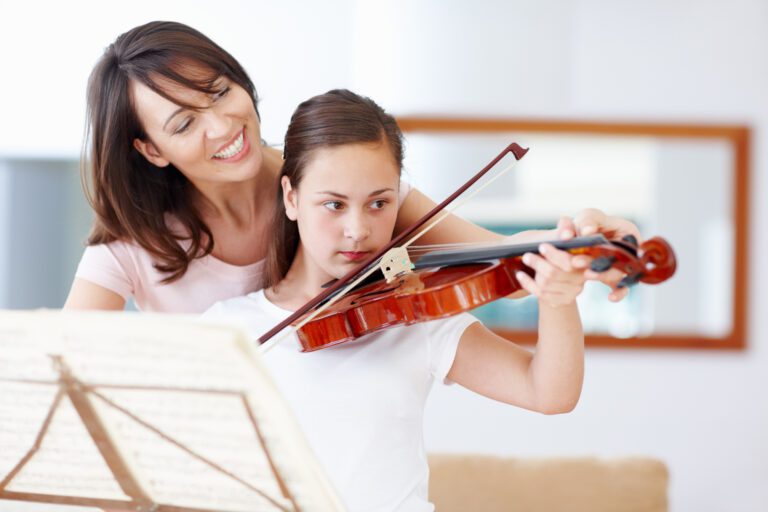
Learning the Violin Develops Patience and Discipline
One of the most valuable aspects of learning the violin is discovering that progress takes time. Beginners often need to practise holding the instrument correctly, controlling the bow, placing their fingers accurately, and producing a consistent tone. These skills require repetition and careful attention.
Unlike an instrument that produces a fixed pitch when a key is pressed, the violin allows players to adjust pitch and tone through their movements. This makes it expressive, but it also means that students must develop their listening and physical coordination gradually.
Why Small Improvements Matter
A student might spend several practice sessions improving a short musical phrase. At first, the notes may sound uneven, but with patient repetition, the phrase can become smoother and more expressive.
These small improvements teach an important lesson: meaningful progress does not always happen immediately. Students learn to break difficult tasks into manageable steps, accept mistakes as part of learning, and keep working towards their goals.
A consistent practice routine also encourages self-discipline. Rather than waiting until they feel motivated, students learn to set aside time for music and follow a plan. Over time, this habit can make the learning process more organised and rewarding.
Learning the Violin Strengthens Listening Skills
The violin is an instrument that rewards careful listening. Players must pay attention to pitch, rhythm, tone quality, articulation, and the relationship between their melody and the music around them.
For beginners, developing accurate intonation is an important part of the journey. Because the violin has no frets, students need to learn where to place their fingers to produce the desired notes. Listening closely and making small adjustments help them develop greater control.
Becoming More Musically Aware
As students progress, they begin to recognise differences between musical phrases and understand how changes in bow pressure, speed, and contact point affect the sound.
They also learn to listen to recordings, follow a teacher’s demonstrations, and notice details that may not be obvious when first reading a score. These experiences deepen their understanding of music and help them become more independent performers.
A 2026 systematic review of violin education highlights the value of personalised instruction, reflective practice, and engaging teaching methods in supporting student learning and motivation.
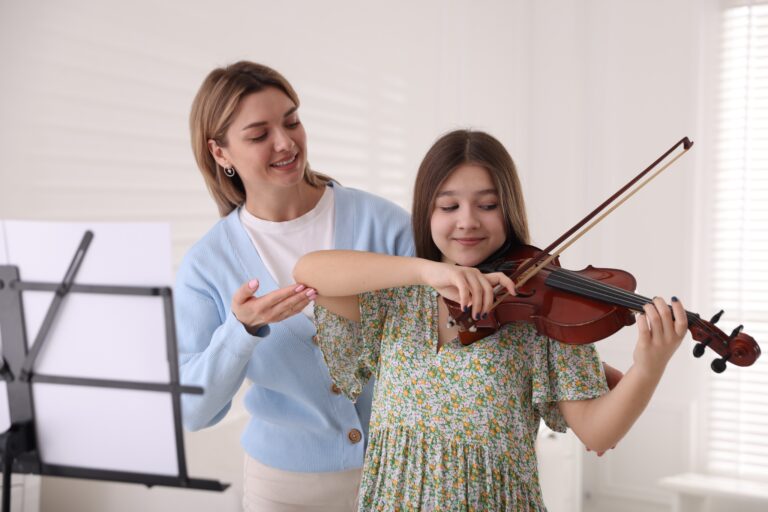
Learning the Violin Offers a Powerful Way to Express Emotions
One of the reasons the violin remains so appealing is its ability to communicate a wide range of emotions. Its expressive tone can convey tenderness, excitement, sadness, hope, and dramatic intensity.
Students gradually learn that playing music involves more than reproducing notes correctly. They must consider how a phrase should sound, where the melody should grow or soften, and how the musical character can be communicated to a listener.
Discovering Your Own Musical Voice
A slow, lyrical melody may require smooth bow movements and careful phrasing, while a lively folk tune may call for rhythmic energy and crisp articulation. Exploring these differences helps students understand how musical choices influence the listener’s experience.
As their technique improves, students can experiment with dynamics, tone colour, and phrasing to develop their own interpretations. This gives them a creative outlet and allows them to connect personally with the music they play.
The emotional rewards of learning the violin are not limited to advanced performers. Even a beginner playing a short melody can experience the satisfaction of bringing music to life.
Learning the Violin Creates Opportunities for Musical Connection
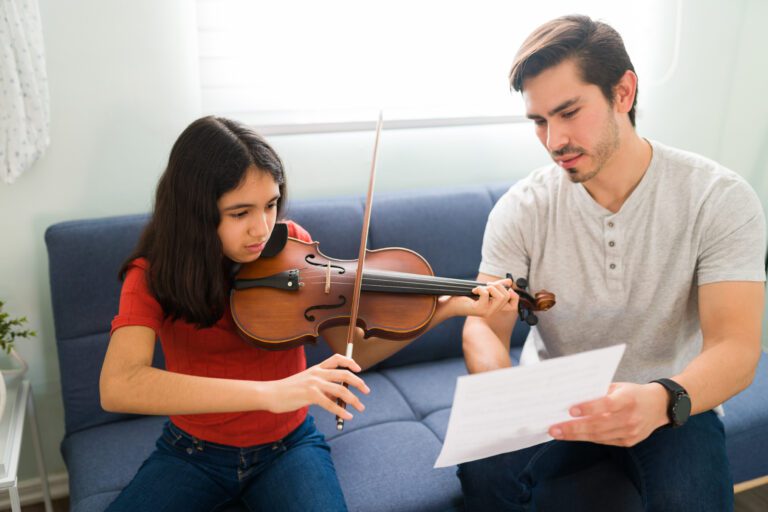
Although violin practice often takes place individually, the instrument has a rich tradition of group performance. Violinists can play in orchestras, string ensembles, chamber groups, folk bands, and community music groups.
Playing with others introduces a different set of musical skills. Students must listen carefully, maintain a shared tempo, follow a conductor or ensemble leader when applicable, and balance their sound with the other instruments.
From Individual Practice to Ensemble Performance
Group music-making encourages cooperation and shared responsibility. Each player contributes to the overall performance, and even a small rhythmic or timing difference can affect how the ensemble sounds.
Students also have opportunities to learn from other musicians, experience different interpretations, and build friendships through a shared interest.
For learners who enjoy social activities, ensemble playing can make the violin journey even more rewarding. It transforms individual practice into a way of participating in a larger musical community.
Learning the Violin Builds Confidence Through Achievement
Mastering a new skill can be a powerful source of confidence. For violin students, this might mean playing their first complete song, performing for family members, joining a school concert, or preparing for a graded examination.
Each milestone offers an opportunity to recognise progress and develop trust in one’s abilities.
Celebrating Progress at Every Level
Confidence grows when goals are realistic and achievements are acknowledged. Beginners should not feel that they need to perform complicated pieces to experience success.
Learning to produce a clear sound, maintain a steady rhythm, or play a short passage smoothly can be a meaningful accomplishment. More experienced students may find satisfaction in improving difficult repertoire or performing with greater expression.
Teachers can support this process by providing constructive feedback and helping students understand what they have improved and what to practise next.
Research on instrumental music education suggests that structured training can support learning, although broader cognitive and academic benefits vary and should not be treated as guaranteed outcomes.
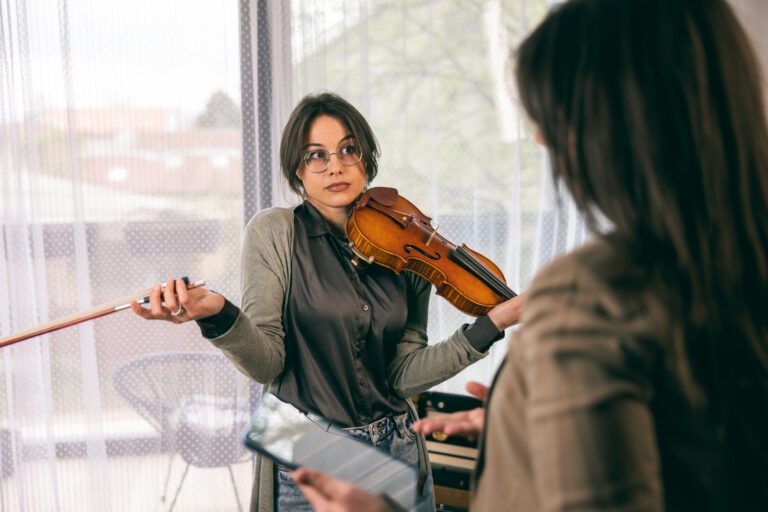
Is the Violin a Good Instrument for Beginners?
The violin can be a rewarding instrument for beginners, but it requires patience and appropriate instruction. Students usually need time to become comfortable with posture, bow control, finger placement, and intonation.
The initial stages may feel challenging, particularly when producing a clear sound consistently. However, a suitable instrument, a supportive teacher, and manageable practice goals can make the process more enjoyable.
Children can benefit from age-appropriate teaching and short, focused practice sessions. Teenagers and adults can also begin learning the violin, even without previous musical experience.
The best time to start is when the student is interested, willing to practise, and able to access suitable guidance. There is no single age at which everyone must begin.
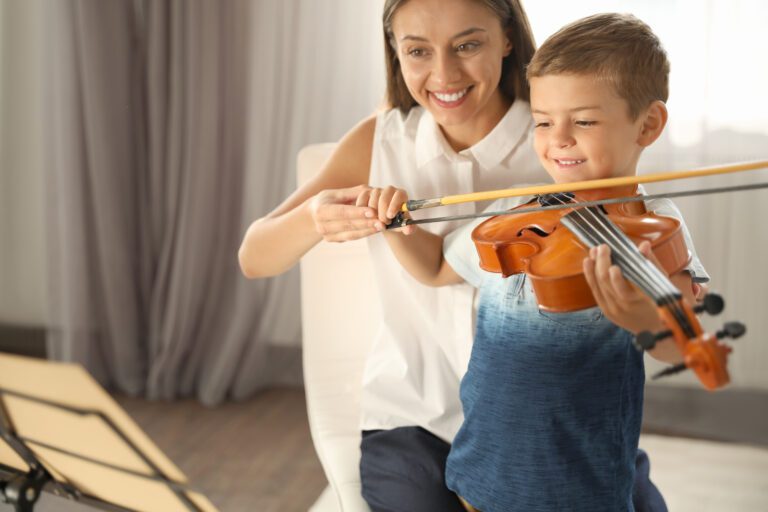
How to Make Learning the Violin More Rewarding
The experience becomes more enjoyable when students can see their progress and connect practice with music they genuinely like.
Here are a few ways to maintain motivation:
Set achievable goals, such as learning a short melody or improving one technical skill.
Practise regularly in manageable sessions rather than relying on occasional long sessions.
Record your playing occasionally to notice improvements over time.
Ask your teacher for specific feedback when a passage feels difficult.
Explore ensemble opportunities when you are ready to play with others.
A balanced approach combines technique, creativity, and enjoyment. Students need exercises to develop control, but they also need opportunities to experience the pleasure of making music.
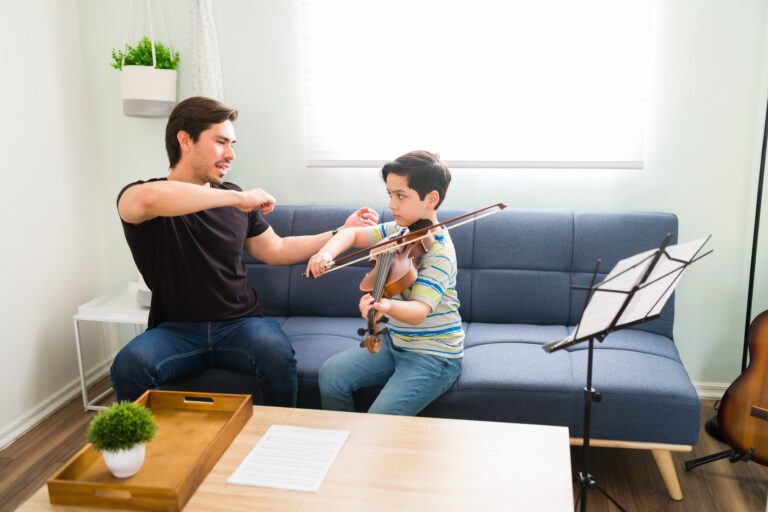
Start Your Musical Journey With The Mystic Keys
Learning the violin can become a fulfilling part of life when students receive the right guidance and develop a consistent approach to practice. From building technique and listening skills to discovering musical expression and performing with others, the instrument offers many opportunities for growth.
At The Mystic Keys, students can explore online music education with personalised lessons designed around their interests and learning levels. Whether you are a beginner or looking to develop existing skills, structured guidance can help you work towards realistic goals and enjoy the learning process.
Explore Violin Lessons Online to learn more about available courses and find an approach that suits your musical ambitions.
Conclusion: Why Learning the Violin Is Worth the Effort
Learning the violin is rewarding because it brings together creativity, challenge, and personal achievement. Students develop the ability to shape beautiful melodies while gradually improving their technique, listening, discipline, and musical understanding.
The journey may include difficult practice sessions and moments of frustration, but these are balanced by the satisfaction of mastering a new passage, performing a favourite piece, or sharing music with others.
Whether you want to play for enjoyment, join an ensemble, or pursue formal music education, the violin offers opportunities to keep learning throughout life. With patience, regular practice, and suitable teaching, every stage of the journey can bring a new reason to love making music.
For more information and exciting resources about learning music, visit our website at The Mystic Keys. For more music content and exciting offers follow us on
Facebook, Instagram, YouTube, LinkedIn, Twitter, Pinterest, and Threads.