Improvisation in Carnatic Music Understanding Alapana, Neraval, and Kalpana Swaras
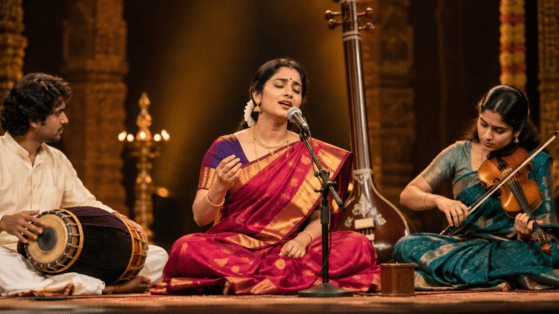
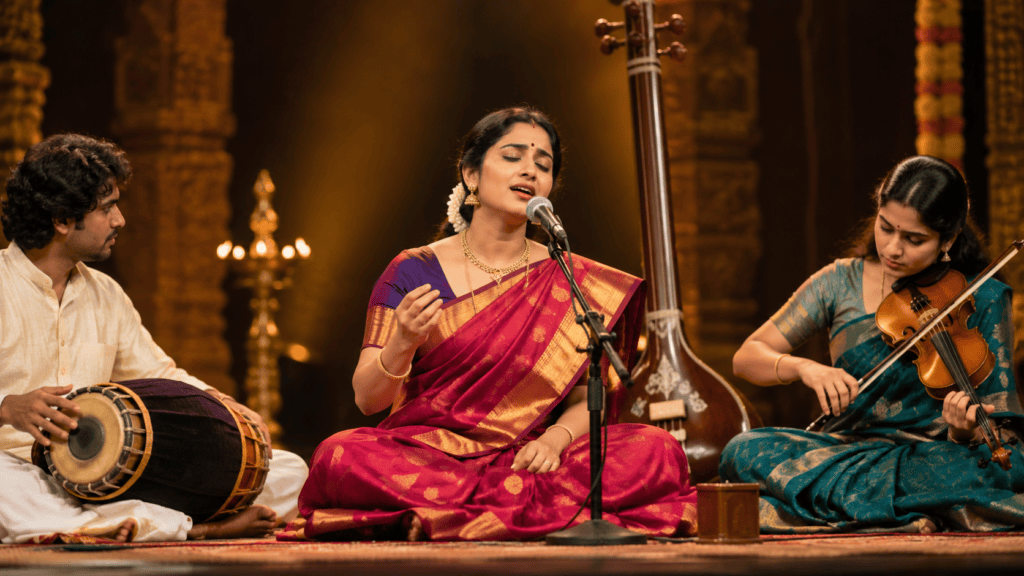
Carnatic music is one of the oldest and most expressive classical music traditions of South India. It combines melody, rhythm, devotion, and intricate musical patterns to create performances that are both structured and creative. One of its most fascinating features is improvisation in Carnatic music, which allows musicians to express their understanding of a raga while adding their own artistic interpretation.
Improvisation in Carnatic music is not simply about singing or playing whatever comes to mind. It requires a strong understanding of ragas, swaras, rhythm, and traditional musical principles. Artists learn to create new musical phrases while respecting the structure and character of the composition.
Three important techniques are Alapana, Neraval, and Kalpana Swaras. Each has a distinct purpose and gives musicians a different way to explore melody, rhythm, and creativity.
What Is Improvisation in Carnatic Music?
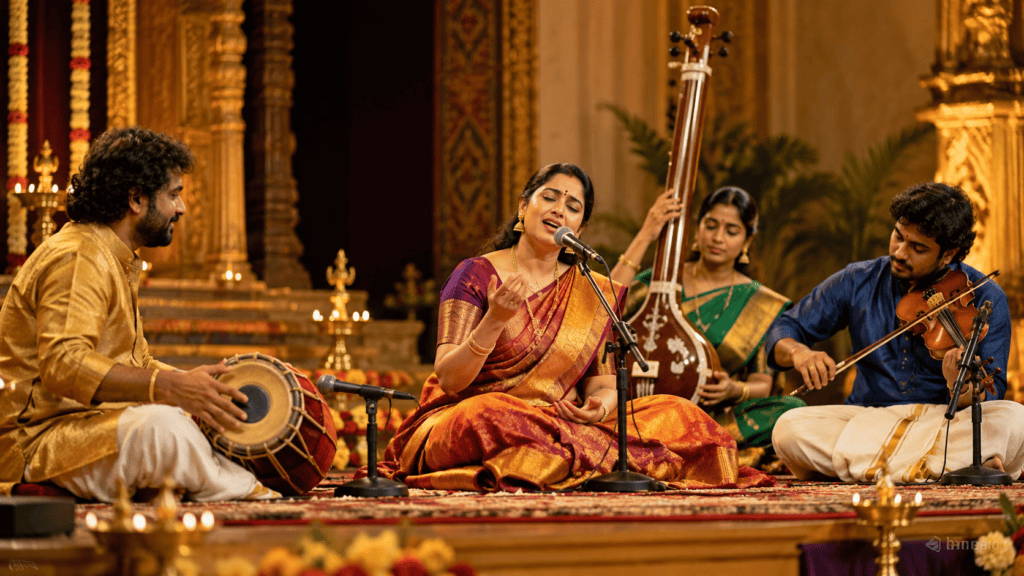
Improvisation is the process of creating musical phrases spontaneously during a performance. In Carnatic music, it allows singers and instrumentalists to explore the possibilities of a raga while maintaining its identity.
A raga is more than a collection of notes. It has characteristic phrases, ascending and descending patterns, and specific movements that give it a unique emotional character. Through improvisation, musicians explore these elements and communicate the mood of the raga to their audience.
Unlike a fully composed piece, an improvised passage is created in the moment. However, this creativity is supported by years of practice, listening, and understanding musical traditions.
Improvisation also helps musicians develop several essential skills:
A deeper understanding of ragas and their distinctive phrases.
Better control over pitch, rhythm, and musical expression.
The ability to think creatively while performing.
Greater confidence in solo performances and musical collaboration.
Three major forms of improvisation help musicians develop these skills in different ways.
1. Alapana: Exploring the Beauty of a Raga
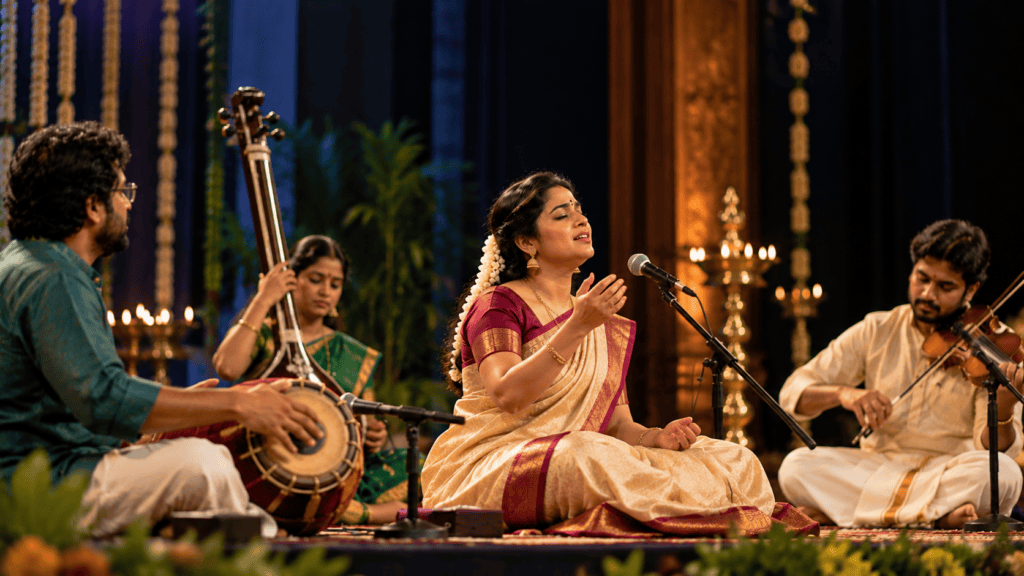
Alapana is a melodic exploration of a raga without a fixed composition or rhythmic cycle. It allows the musician to introduce the raga, reveal its character, and gradually develop its musical possibilities.
In vocal Carnatic music, Alapana is generally performed without percussion accompaniment. Instrumentalists, such as violinists, can also present Alapana to explore the same melodic depth.
How Does Alapana Work?
During Alapana, musicians use characteristic phrases, note transitions, and variations in pitch to bring out the identity of a raga. They usually begin with simpler phrases and gradually move towards more elaborate musical ideas.
For example, an artist presenting Raga Kalyani may explore its distinctive melodic movements, emphasizing the phrases that make it recognizable. The musician does not merely sing the notes of the scale but uses traditional phrases and ornamentation to reveal the raga’s personality.
Alapana does not follow a fixed beat structure. Instead, the musician develops the melody naturally, using musical intuition and a deep understanding of the raga.
Why Is Alapana Important?
Alapana gives listeners an opportunity to experience a raga before hearing the main composition. It also allows performers to demonstrate their musical imagination, voice control, and knowledge of classical traditions.
For students, practising Alapana helps improve pitch accuracy, phrase development, breath control, and familiarity with ragas.
2. Neraval: Creating Variations Around a Musical Line
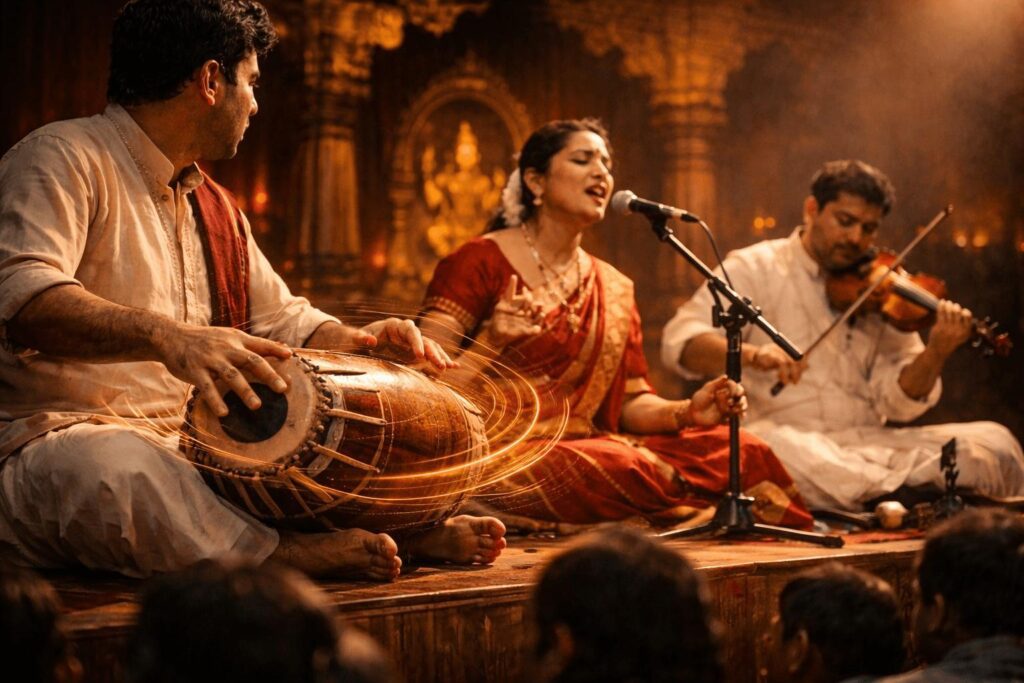
Neraval is a form of improvisation in which a musician selects a particular line from a composition and develops different melodic variations around it.
Unlike Alapana, Neraval is connected to the lyrics and rhythmic structure of an existing composition. The chosen line is usually one that has musical and lyrical significance.
How Is Neraval Performed?
The performer repeats the selected line while creating new melodic variations. The words remain the same, but the musical treatment changes with each variation.
Neraval requires careful attention to both melody and rhythm. The musician must preserve the meaning of the lyrics, maintain the correct rhythmic placement, and explore the raga without losing the identity of the original phrase.
For example, if a singer selects a line from a kriti in Raga Kalyani, they may present that line through different melodic patterns while keeping the words and rhythmic alignment intact.
The challenge is to create variety without making the passage sound disconnected from the composition.
Why Is Neraval Important?
Neraval develops a musician’s ability to balance creativity with musical discipline. It encourages performers to explore the emotional meaning of lyrics while maintaining rhythmic accuracy.
Practising Neraval can help students improve their sense of rhythm, melodic phrasing, lyrical expression, and coordination with accompanying musicians.
3. Kalpana Swaras: Improvising with Musical Notes
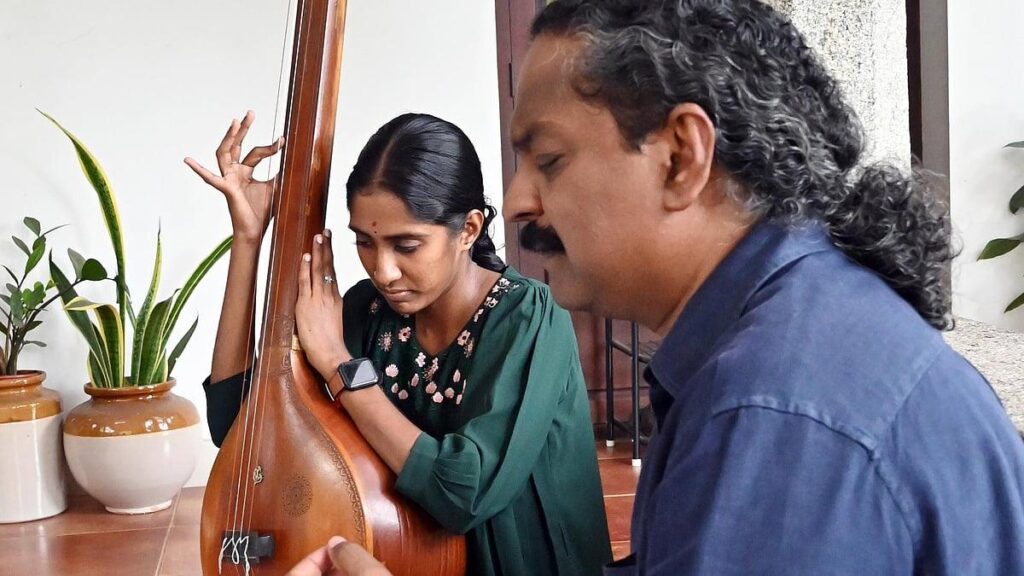
Kalpana Swaras are improvised passages created using swaras, the musical notes of Carnatic music. Unlike Neraval, which develops a lyrical line, Kalpana Swaras focus on combinations and patterns of notes.
This technique allows musicians to demonstrate their understanding of a raga while exploring rhythmic possibilities.
In Carnatic music, the seven basic swaras are Sa, Ri, Ga, Ma, Pa, Da, and Ni. These notes are used in different combinations according to the rules and characteristics of a raga.
During Kalpana Swaras, a musician creates new note patterns and connects them to the composition’s melodic and rhythmic framework. The phrases may become increasingly complex as the performance develops.
For example, a performer improvising in Raga Mohanam might create phrases using its characteristic notes while respecting the raga’s melodic grammar. The musician can explore different phrase lengths and rhythmic groupings, eventually concluding at an appropriate point in the composition.
Kalpana Swaras are commonly performed in relation to the rhythmic cycle, known as tala. Musicians must understand where each phrase begins and how it resolves, often coordinating closely with the percussionist.
Why Are Kalpana Swaras Important?
Kalpana Swaras strengthen a musician’s understanding of swara combinations, rhythmic precision, and creative thinking.
They also help performers develop the ability to construct musical phrases quickly while staying within the boundaries of a raga. For students, regular practice builds confidence and improves coordination between melodic imagination and rhythmic awareness.
Alapana vs Neraval vs Kalpana Swaras
Although all three techniques are forms of improvisation, they differ in their musical approach.
| Technique | Main Focus | Key Characteristic |
|---|---|---|
| Alapana | Exploring a raga | Free-flowing melodic improvisation without a fixed tala cycle |
| Neraval | Developing a composition’s lyrical line | Repeated lyrics with changing melodic variations |
| Kalpana Swaras | Exploring musical notes | Improvised swara patterns developed within a rhythmic framework |
Together, these techniques allow a performer to explore a raga from different perspectives. Alapana introduces its melodic character, Neraval develops an existing lyrical phrase, and Kalpana Swaras explores the creative possibilities of its notes and rhythmic structure.
How Can Beginners Learn Carnatic Music Improvisation?
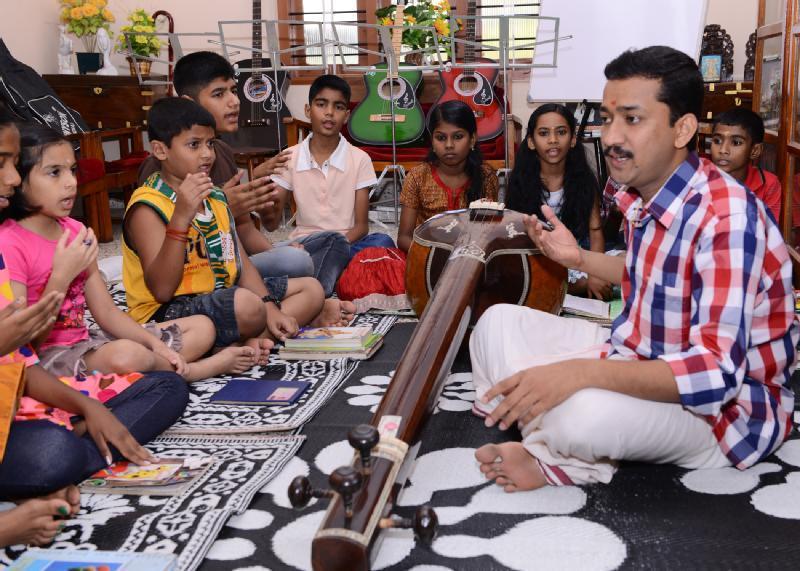
Learning improvisation takes time, patience, and consistent practice. Beginners should first develop a strong foundation in Carnatic music before attempting complex improvised passages.
Here are some practical ways to get started.
Begin by learning the basic swaras and practising them with a shruti reference. Accurate pitch and clear note transitions are essential for developing good musical habits.
2. Practise Simple Ragas
Start with familiar ragas such as Mohanam or Shankarabharanam under the guidance of a teacher. Learn their characteristic phrases rather than relying only on ascending and descending scales.
3. Listen to Experienced Musicians
Listening to established Carnatic musicians helps students understand how improvisation develops during a performance. Pay attention to their phrase choices, note transitions, rhythmic patterns, and use of silence.
4. Begin with Short Alapana Phrases
Try creating short melodic phrases using the raga you are studying. Focus on maintaining its identity rather than making the phrases complicated.
5. Practise Neraval with a Familiar Composition
Once you understand a composition well, work with your teacher to select a suitable line for Neraval. Practise keeping the lyrics clear and the rhythmic placement consistent.
6. Develop Kalpana Swaras Gradually
Start with simple note combinations and practise resolving them at the correct point in the tala cycle. Increase the complexity only when you can maintain rhythmic accuracy.
7. Practise Consistently
Regular practice is more useful than occasional long sessions. Even 15–20 minutes of focused work on swaras, raga phrases, or rhythmic exercises can help you build a stronger foundation over time.
A knowledgeable teacher can identify mistakes, suggest suitable exercises, and help you develop improvisational skills at a pace that matches your experience.
Common Mistakes to Avoid When Learning Improvisation
Beginners sometimes believe that improvisation means creating as many notes or complicated phrases as possible. In Carnatic music, however, musical clarity and understanding are more important than complexity.
Avoid these common mistakes:
Ignoring raga identity: Every phrase should reflect the character and grammar of the raga.
Neglecting rhythm: Especially in Neraval and Kalpana Swaras, rhythmic accuracy is essential.
Rushing into advanced techniques: A strong foundation in swaras, ragas, and compositions makes improvisation easier to understand.
Copying without understanding: Listening to experienced artists is valuable, but students should also learn why particular phrases work.
Practising without feedback: Guidance from a qualified teacher can help correct pitch, phrasing, and rhythmic mistakes before they become habits.
The goal is not simply to produce more notes. It is to create meaningful music that expresses the raga while respecting Carnatic musical traditions.
Improvisation in Carnatic music brings together knowledge, creativity, and expression. Alapana allows musicians to explore a raga freely, Neraval develops the melodic possibilities of a lyrical line, and Kalpana Swaras transforms musical notes into creative patterns within a rhythmic framework.
Although these techniques may seem challenging at first, beginners can gradually understand them through regular practice, attentive listening, and proper guidance.
At The Mystic Keys, we believe that music education should help learners build strong fundamentals while discovering their own musical expression. With structured lessons and consistent practice, students can develop the skills and confidence needed to appreciate and perform music more meaningfully.
Ready to develop your musical skills? Explore The Mystic Keys and discover online music lessons designed to support learners at different levels of experience. If you want to develop your instrumental skills, our online guitar lessons offer an opportunity to learn guitar with expert guidance, structured lessons, and flexible online classes. Whether you are a beginner or looking to improve your existing skills, start building your musical foundation with The Mystic Keys.
Intersted in learning music with us? Register now
For more information and exciting resources about learning music, visit our website at The Mystic Keys. For more music content and exciting offers follow us on
Facebook, Instagram, YouTube, LinkedIn, Twitter, Pinterest, and Threads.