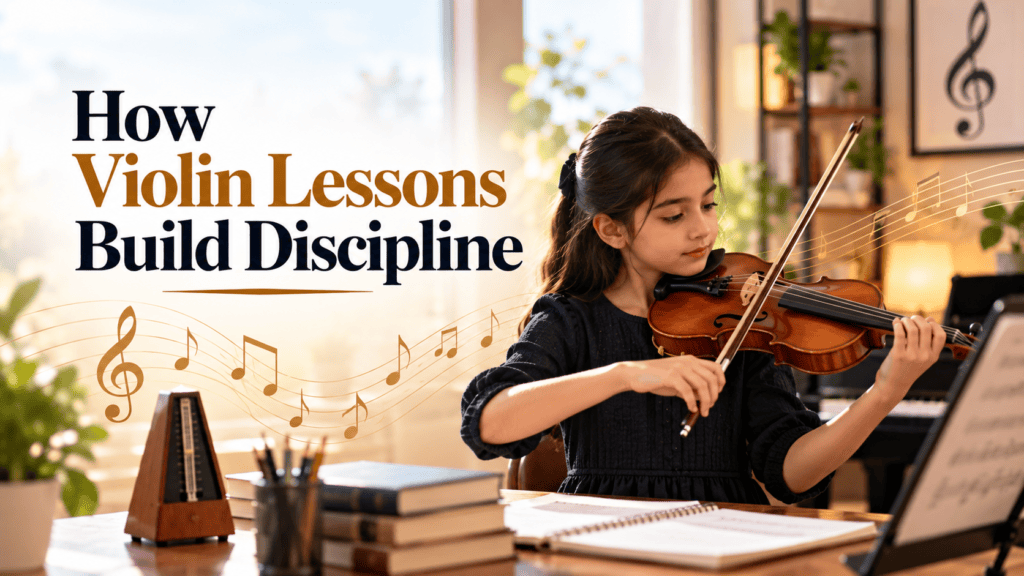
How Violin Lessons Build Discipline
Learning an instrument is about much more than producing beautiful music. Violin lessons help students develop discipline, patience, concentration, and a sense of responsibility that can benefit many areas of life. From practising scales to mastering a challenging musical passage, every stage of learning the violin encourages students to build positive habits through consistent effort.
Unlike activities that offer immediate results, playing the violin requires time and commitment. Beginners must learn how to hold the instrument, position the bow, coordinate both hands, recognise notes, and produce a clear sound. These skills rarely develop overnight. Students gradually improve by following instructions, correcting mistakes, and practising regularly.
This process makes violin lessons valuable not only for musical development but also for personal growth. Children can learn the importance of following routines and completing tasks, while teenagers and adults can strengthen their focus, perseverance, and ability to work towards long-term goals. With appropriate guidance and realistic expectations, learning the violin can become a rewarding way to develop discipline through music.
How Violin Lessons Build Discipline Through Daily Practice
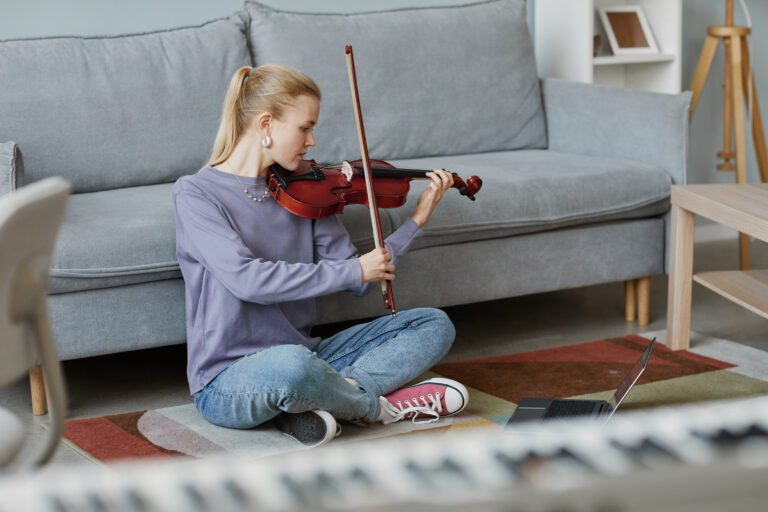
One of the first habits students develop when learning the violin is regular practice. Attending a lesson once a week is rarely enough to master an instrument. Students need to revisit what they have learned, repeat exercises, and gradually improve their technique between classes.
A regular practice routine teaches students that progress depends on consistent effort rather than occasional bursts of activity. Even a short, focused practice session can be productive when it has a clear purpose.
For example, a beginner might spend a few minutes practising the correct bow movement, followed by an exercise on finger placement and a short musical passage. Over time, these small efforts help develop greater control and confidence.
Creating a Consistent Violin Practice Routine
A structured routine makes practice easier to maintain. Students can choose a suitable time each day, prepare their instrument and music in advance, and work through a simple checklist of activities.
A practice routine might include:
Warming up with open strings and controlled bow movements.
Reviewing scales or exercises assigned by the teacher.
Practising difficult sections of a musical piece.
Playing a familiar piece to develop confidence.
Reviewing feedback and setting a goal for the next session.
The routine does not need to be lengthy to be effective. The duration should match the student’s age, experience, concentration, and teacher’s recommendations. Consistency is more important than forcing a beginner to practise for long periods.
By following a routine, students begin to understand that meaningful progress comes from showing up regularly and completing manageable tasks.
Violin Lessons Teach Patience and Perseverance
The violin can be challenging for beginners because several skills must develop together. Students need to coordinate their fingers, control the bow, listen carefully to pitch, and maintain a steady rhythm. At first, producing a clear and consistent sound may require considerable effort.
These challenges create opportunities to develop patience. Students learn that making mistakes is a normal part of the learning process and that improvement often happens gradually.
A student may struggle to play a scale smoothly or find that a passage sounds different each time. Rather than becoming discouraged, the student learns to slow down, identify the problem, and try again with greater awareness.
Learning From Mistakes Instead of Giving Up
Violin lessons encourage students to treat mistakes as useful feedback. A note that sounds out of tune may indicate that a finger needs adjusting. An uneven sound may suggest that the bow needs better control. A rushed passage may require slower practice with a metronome.
Instead of repeating the same mistake without thinking, students learn to examine what went wrong and make a specific correction.
This approach builds perseverance because students begin to recognise that difficulty does not necessarily mean failure. It often means that a skill needs more time and attention.
The same attitude can help students with schoolwork, sports, creative activities, and other responsibilities. They become more willing to work through challenges rather than abandoning a task when it becomes difficult.
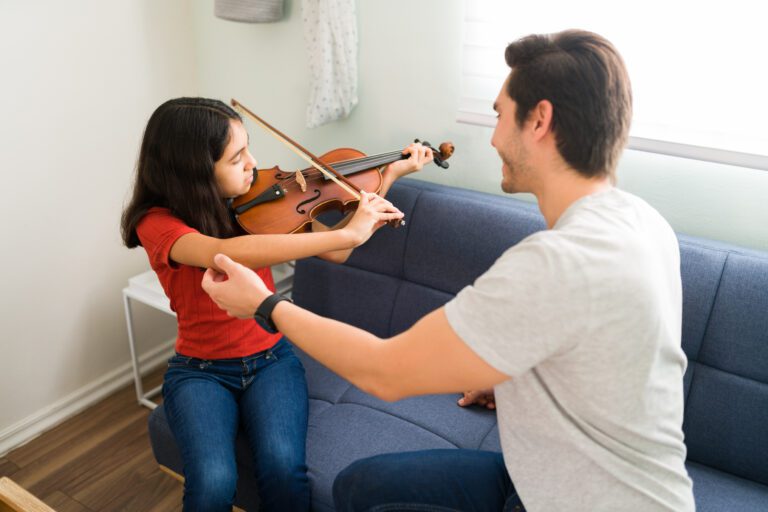
How Violin Lessons Improve Concentration
Playing the violin requires careful listening and attention to detail. Students must read musical notation, observe rhythm, coordinate their hands, and listen to the sound they produce. They also need to follow instructions while remaining aware of their posture and bow movement.
These demands encourage students to focus on the task in front of them. During practice, even a brief distraction can lead to a missed note, an incorrect rhythm, or a loss of coordination.
Developing the Ability to Focus on One Task
A useful practice technique is to work on one specific goal at a time. Instead of attempting to perfect an entire piece in one session, students can concentrate on a few measures, a particular rhythm, or a difficult bowing pattern.
Once that section becomes more reliable, they can move on to the next challenge. This approach makes practice more manageable and gives students a clear purpose for each session.
Teachers can also encourage active listening by asking students to notice differences in tone, pitch, rhythm, and musical expression. These activities help students become more attentive to details that they might otherwise overlook.
Although music lessons do not guarantee improvements in every area of concentration, they provide regular opportunities to practise focused attention in a meaningful and enjoyable setting.
Violin Lessons Encourage Time Management
Balancing school, homework, hobbies, family activities, and music practice can be challenging, especially for children and teenagers. Learning the violin gives students an opportunity to understand how to organise their time and make room for a long-term commitment.
Students who want to improve must find ways to practise consistently without allowing music to interfere with their other responsibilities.
Balancing Music Practice With Everyday Responsibilities
A weekly timetable can help students plan their activities. For example, a student might complete homework before practising the violin in the evening, while another might prefer a short morning session before school.
The ideal schedule depends on the student’s routine. What matters is having a realistic plan that can be followed regularly.
Parents can support younger learners by helping them establish a practice time and keeping the instrument accessible. As children grow more independent, they can take greater responsibility for planning their own sessions.
Over time, students learn to break larger goals into smaller tasks, estimate how much time they need, and prepare for upcoming lessons or performances. These habits can also support better organisation in academic and personal life.
How Violin Lessons Build Responsibility
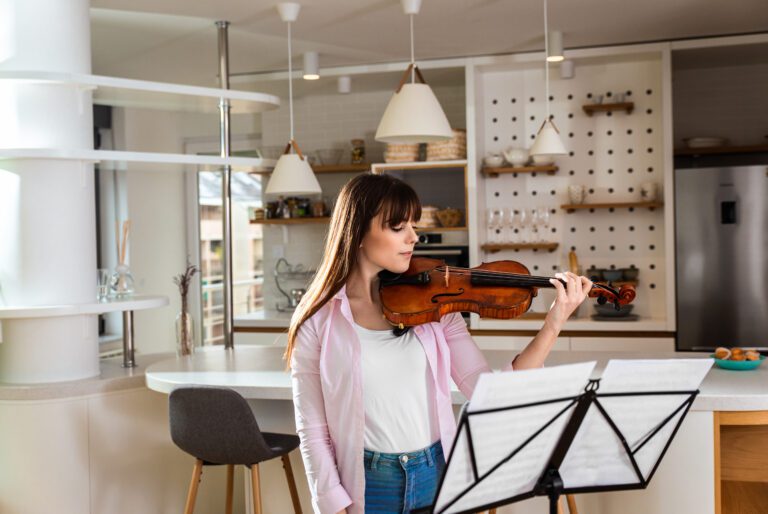
Learning an instrument involves several responsibilities beyond playing the notes correctly. Students need to care for their instrument, bring their music to lessons, follow practice instructions, and prepare for upcoming performances.
These expectations encourage students to become more accountable for their progress.
Taking Care of the Instrument
The violin requires appropriate handling and maintenance. Students learn to put the instrument away safely, protect it from accidental damage, keep the bow in good condition, and follow their teacher’s guidance on basic care.
They also learn to prepare for lessons by checking their sheet music, organising their materials, and remembering the exercises assigned during the previous session.
These small responsibilities reinforce the idea that preparation matters. Being ready for a lesson allows students to use their time effectively and focus on learning.
Taking Ownership of Musical Progress
A teacher can demonstrate techniques and provide guidance, but students must participate actively in their own development. They need to practise, listen to feedback, and apply corrections.
When students begin recognising their own mistakes and taking steps to correct them, they become more independent learners.
This sense of responsibility can be particularly valuable for children. Instead of relying entirely on parents or teachers to remind them of every task, they gradually learn to manage their commitments and recognise the role their own effort plays in achieving results.
Violin Lessons Help Students Set Goals and Measure Progress
Discipline becomes easier to maintain when students know what they are working towards. A clear goal gives practice a purpose and helps learners recognise improvements that might otherwise go unnoticed.
For beginners, a goal might be to hold the bow comfortably, play a short melody, or move between two notes accurately. More experienced students may work towards playing a complete piece, improving intonation, or preparing for a recital.
Breaking Big Goals Into Smaller Achievements
A challenging piece can feel overwhelming when students try to master it all at once. Dividing it into manageable sections creates a clear path forward.
For example, a student learning a new piece might follow this sequence:
Read the notes and understand the rhythm.
Practise the first section slowly.
Correct difficult finger movements and bow changes.
Gradually increase the tempo where appropriate.
Perform the complete piece with attention to expression.
Each completed stage provides a sense of progress and encourages the student to continue.
Teachers can help students set realistic goals based on their current ability. Celebrating improvements in technique, consistency, and confidence can be more motivating than focusing only on perfect performances or examination results.
How Violin Lessons Build Confidence Through Discipline
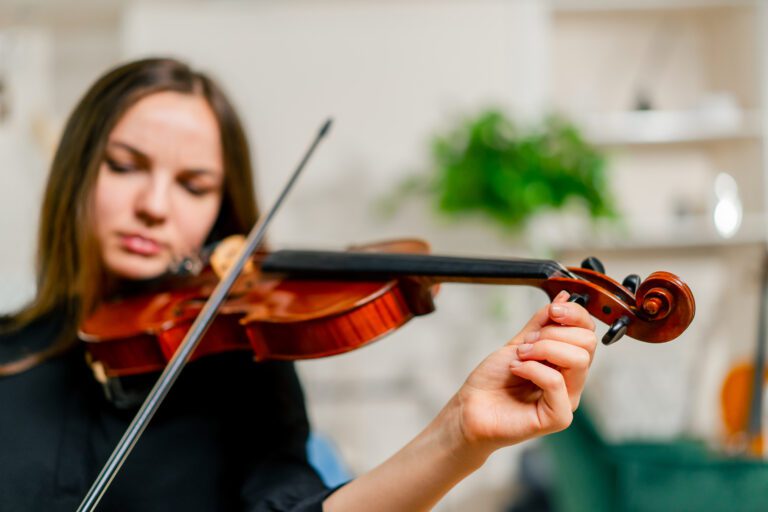
Discipline and confidence often develop together. When students practise regularly and see their skills improve, they begin to trust their preparation.
A passage that once seemed impossible may eventually become familiar. A student who initially struggles to perform in front of others may gradually feel more comfortable playing for a teacher, family member, or audience.
These experiences help students understand that confidence does not always appear before taking action. It can develop through preparation, experience, and repeated effort.
Preparing for Performances and Examinations
Recitals, school performances, and graded music examinations can give students meaningful goals to work towards. Preparing for these events requires planning, regular practice, and attention to detail.
Students learn to organise their preparation, review difficult sections, and continue practising even when they feel nervous.
It is important, however, to keep expectations appropriate. Not every student needs to pursue examinations or public performances to benefit from violin lessons. Personal milestones, informal performances, and the satisfaction of learning a favourite piece can be equally valuable.
The main lesson is that preparation creates opportunities for students to experience their progress and become more comfortable with challenges.
Violin Lessons Teach Students to Accept Feedback
Constructive feedback is an essential part of learning the violin. A teacher may ask a student to adjust finger placement, improve bow control, change the tempo, or listen more carefully to a particular phrase.
Learning to respond positively to these suggestions encourages students to remain open to improvement.
Instead of viewing correction as criticism, students can begin to see it as a practical way to improve their skills. They learn to listen, ask questions, try a different approach, and evaluate the result.
This process also teaches humility. Musical development requires recognising that there is always something new to learn, regardless of how much progress a student has made.
Parents can reinforce this attitude by praising effort, careful listening, and persistence rather than expecting every practice session to be perfect.
The Role of Parents and Teachers in Building Discipline
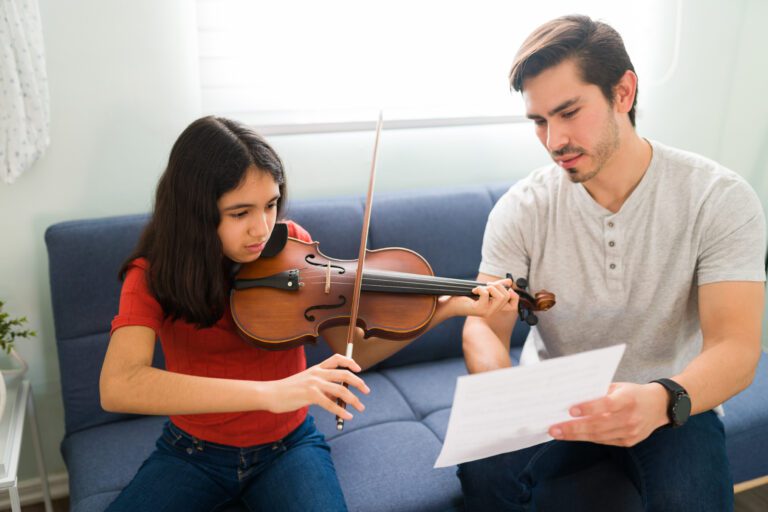
Children are more likely to develop healthy practice habits when the adults around them provide encouragement, structure, and realistic expectations.
Parents can help by establishing a regular practice time, creating a comfortable space for music, and recognising consistent effort. They should avoid turning every session into a source of pressure, as excessive demands may reduce a child’s enjoyment of learning.
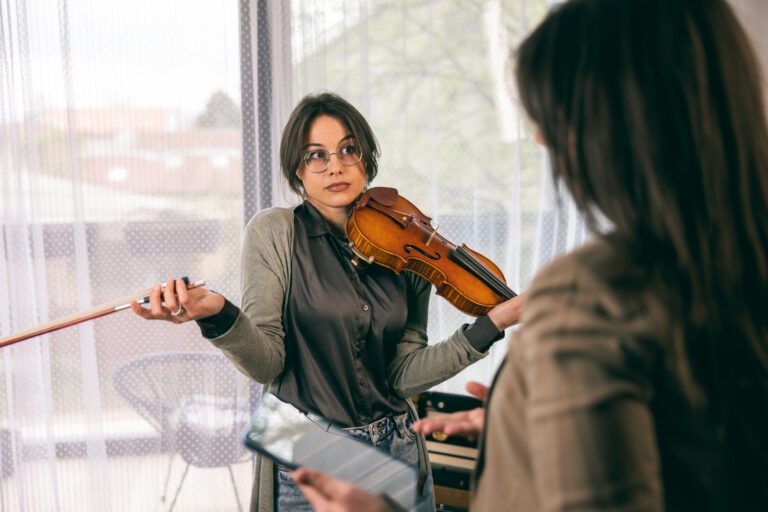
Teachers play an equally important role. A good violin teacher understands that every student learns at a different pace and adapts the lessons accordingly. Clear instructions, achievable goals, constructive feedback, and engaging musical activities help students remain motivated.
For younger learners, shorter practice sessions with specific objectives may be more productive than long sessions that lead to frustration. Older students may gradually take responsibility for planning their own practice and monitoring their progress.
The aim is not simply to make students practise more. It is to help them understand why practice matters and develop the independence to continue learning.
A Simple Weekly Plan to Develop Discipline Through Violin Practice
Students can use the following example as a starting point, adjusting the duration and activities to their teacher’s recommendations.
Day | Practice focus |
|---|---|
Monday | Review the previous lesson and practise basic technique |
Tuesday | Work on scales, finger placement, and intonation |
Wednesday | Practise difficult passages slowly |
Thursday | Review rhythm, bow control, and musical expression |
Friday | Combine sections and practise transitions |
Saturday | Play the complete piece and identify areas for improvement |
Sunday | Take a rest or enjoy a relaxed review, depending on the practice plan |
A weekly plan should be flexible enough to accommodate schoolwork, family commitments, and rest. Students do not need to make every session identical. The objective is to maintain a manageable rhythm of learning and improvement.
After each practice session, students can briefly reflect on three questions: What did I practise? What improved? What should I work on next time?
This simple habit encourages self-awareness and helps students take greater ownership of their development.
Choosing the Right Violin Lessons for Your Child or Yourself
If you want violin lessons to support both musical learning and personal development, look for a teacher who values consistent progress rather than speed alone.
A suitable programme should provide structured guidance, clear practice goals, regular feedback, and repertoire appropriate to the student’s level. Beginners need patient instruction in posture, bowing, fingering, and basic musical understanding. More experienced learners may need help with expression, technique, repertoire development, or examination preparation.
Online violin lessons can also provide a convenient way to learn from home. Before enrolling, check that the teacher can observe your playing clearly, demonstrate techniques effectively, and give feedback on posture and bow movement.
At The Mystic Keys, students can explore online music education with personalised instruction and guidance suited to their learning goals. If you are interested in developing your violin skills, you can learn more about Violin Lessons Online and enquire about the available learning options.
Conclusion: Building Lifelong Habits Through Violin Lessons
Violin lessons offer much more than an opportunity to learn an instrument. They provide regular opportunities to develop patience, concentration, time management, responsibility, perseverance, and confidence.
Through consistent practice, students discover that meaningful progress takes time. They learn to approach mistakes constructively, break challenging tasks into manageable steps, and work towards goals with greater independence.
These habits develop gradually, supported by effective teaching, realistic expectations, and a positive learning environment. Every student progresses differently, but the process of learning the violin can provide valuable experiences in commitment and self-improvement.
Whether a child is beginning their first musical journey or an adult is returning to an instrument, violin lessons can make discipline a practical part of everyday life. With the right guidance and a consistent approach, students can build musical skills while developing habits that support their growth both inside and outside the music room.
For more information and exciting resources about learning music, visit our website at The Mystic Keys. For more music content and exciting offers follow us on
Facebook, Instagram, YouTube, LinkedIn, Twitter, Pinterest, and Threads.