How to Build a Daily Guitar Routine That Actually Sticks
Learning the guitar is an exciting experience, but many students struggle with one common challenge—staying consistent with practice. That is why understanding how to build a daily guitar routine that actually sticks is essential for long-term progress. While motivation may be high in the beginning, it often fades after a few weeks when practice starts feeling repetitive or difficult.
Whether you are a beginner learning your first chords or an intermediate player looking to improve technique, a structured guitar practice routine can make your practice sessions more productive and enjoyable.
In this guide, you will learn how to build a daily guitar routine that actually sticks, along with practical strategies used by successful musicians.
Why Learning How to Build a Daily Guitar Routine Is Important
Consistency is the most important factor in mastering any musical instrument. When you practice the guitar regularly, your brain gradually develops muscle memory, coordination, and musical awareness.
A consistent daily guitar practice routine helps you:
Many beginners believe that long practice sessions lead to faster improvement. However, short daily practice sessions are often more effective than occasional long sessions.
For example:
Practicing 20–30 minutes every day can produce better results than practicing three hours once a week.
Regular practice helps your brain absorb information gradually, making learning easier and more natural.
Step 1: Set a Realistic Daily Practice Time
One of the biggest mistakes guitar learners make is setting unrealistic practice goals. When practice sessions are too long or demanding, they can quickly become overwhelming.
Instead, start with a manageable daily guitar practice schedule.
Choosing the right time of day also helps maintain consistency. Many musicians prefer practising at the same time every day because it builds a habit.
Common practice times include:
• Morning practice to start the day creatively • Afternoon practice during study breaks • Evening practice for relaxation
When practice becomes part of your daily routine, it feels less like a task and more like a natural activity.
Step 2: Structure Your Guitar Practice Session
A well-organised daily guitar routine should include different types of practice. This ensures balanced skill development and prevents boredom.
A typical guitar practice session should include four main sections:
Warm-up exercises
Technique training
Song practice
Creative exploration
Each section focuses on different aspects of guitar playing.
Warm-Up Exercises (5 Minutes)
Just like athletes warm up before exercise, guitarists should prepare their fingers before playing.
Warm-ups improve flexibility, coordination, and control.
Common guitar warm-up exercises include:
• Chromatic exercises across the fretboard • Finger stretching drills • Simple scale runs • Slow alternate picking patterns
Starting your daily guitar practice routine with warm-ups reduces tension in your hands and improves finger accuracy.
Technique Practice (10–15 Minutes)
Technique practice is where real improvement happens. This section focuses on developing the physical skills needed to play guitar efficiently.
Important technique areas include:
Chord transitions Strumming patterns Fingerpicking techniques Scale practice Alternate picking
Practicing slowly is extremely important during this stage. Speed will naturally increase as your accuracy improves.
Using a metronome during technique practice can also improve timing and rhythm control.
Song Practice (10–20 Minutes)
Learning songs is one of the most enjoyable parts of playing guitar. Songs help apply technical skills in a musical context.
During song practice, focus on:
• Playing clean chord transitions • Maintaining steady rhythm • Following the song structure • Playing along with recordings
Start with songs that match your current skill level. As your confidence grows, gradually explore more complex pieces.
Song practice also helps develop musical expression and performance skills.
Creative Practice and Improvisation in How to Build a Daily Guitar Routine (5–10 Minutes)
Creativity is an important part of musicianship. While technique builds control, creativity helps you express musical ideas.
During this section of your daily guitar routine, you can:
• Experiment with chord progressions • Improvise melodies using scales • Create simple riffs • Write your own songs
Creative practice strengthens your musical ear and understanding of harmony.
Even a few minutes of creative exploration each day can significantly improve musical confidence.
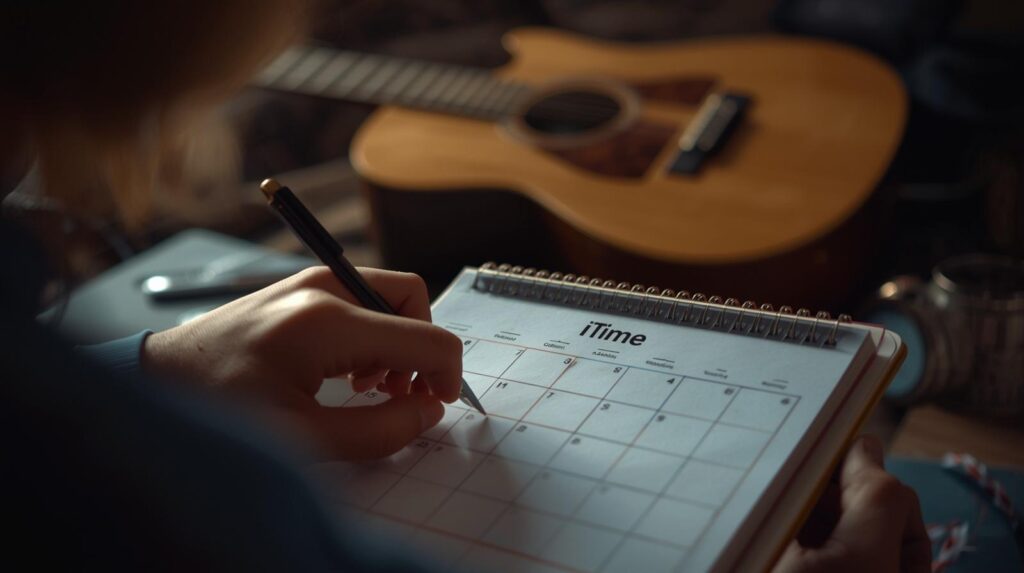
Step 3: Use a Practice Journal
Tracking progress helps maintain motivation and discipline.
A practice journal allows you to record:
• What you practiced each day • Songs you are currently learning • Techniques that need improvement • Weekly practice goals
Reviewing your progress regularly helps you identify strengths and areas that need more attention.
Many musicians find that keeping a practice log encourages consistent practice.
Step 4: Create a Dedicated Practice Environment
Your practice environment can strongly influence your motivation.
Make sure your practice space is comfortable and distraction-free.
Helpful tips include:
• Keep your guitar on a stand for easy access • Use good lighting for reading music or tabs • Keep your tuner and metronome nearby • Organize sheet music or learning materials
When your practice setup is ready, it becomes much easier to maintain your daily guitar practice routine.
Step 5: Stay Motivated With Clear Goals
Motivation is easier to maintain when you have clear and achievable goals.
Performing a full song confidently Improving improvisation skills Writing original music
Setting realistic goals keeps your guitar practice routine focused and purposeful.
Example 30-Minute Daily Guitar Routine
Here is an effective daily guitar practice plan for beginners and intermediate players that reflects the principles discussed in How to Build a Daily Guitar Routine That Actually Sticks.
Warm-up exercises – 5 minutes Technique practice – 10 minutes Song practice – 10 minutes Creative exploration – 5 minutes
This structure balances technical training, musical learning, and creativity, helping guitarists develop consistency and maintain a daily guitar routine that actually sticks.
Common Mistakes to Avoid When Learning How to Build a Daily Guitar Routine
Many guitar learners struggle because of ineffective practice habits.
Avoid these common mistakes:
Practising without clear goals Skipping warm-ups Practicing inconsistently Trying to learn too many things at once Ignoring rhythm and timing
Consistent and focused practice leads to better results than random practice sessions.
Final Thoughts
Building a daily guitar routine that actually sticks requires discipline, organisation, and enjoyment. When practice becomes part of your daily schedule, improvement happens naturally.
By dividing your practice time into structured sections, setting achievable goals, and tracking your progress, you can create a routine that supports steady musical growth.
Over time, your daily guitar practice routine will not only improve your technical ability but also strengthen your creativity and confidence as a musician. If you want guided learning and structured practice methods, you can also learn guitar online with The Mystic Keys to develop strong musical skills with expert support.
Remember, every great guitarist started with small daily practice sessions. Consistency is the key to mastering the instrument
For more information and exciting resources about learning music, visit our website at The Mystic Keys. For more music content and exciting offers follow us on