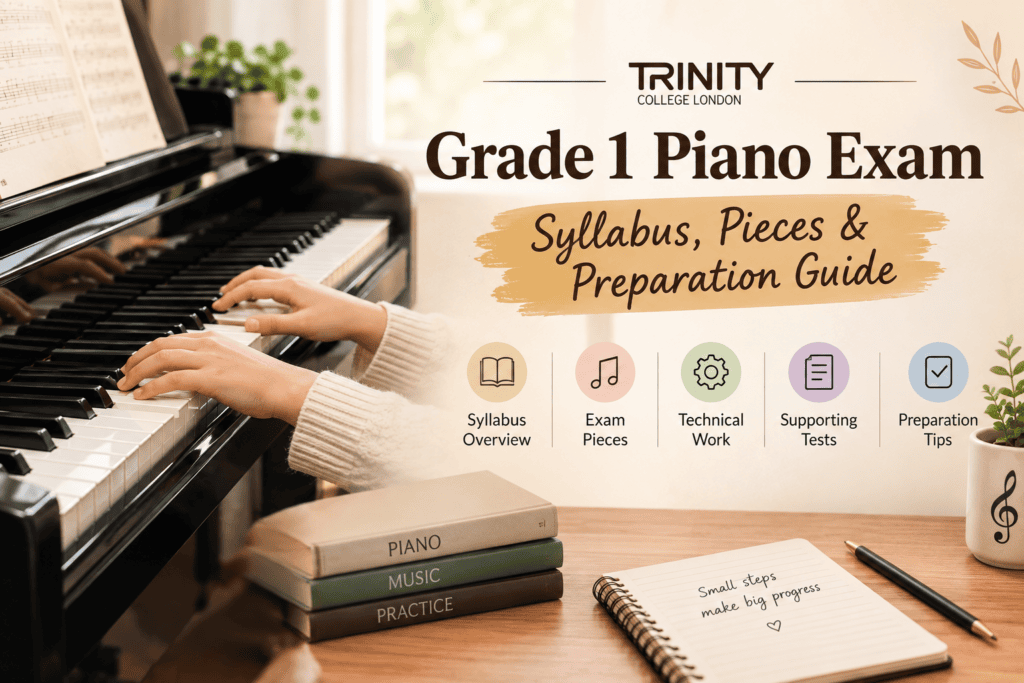
Trinity Grade 1 Piano Exam: Syllabus, Pieces & Preparation Guide
Introduction
The Grade 1 piano exam is an important first milestone for beginner pianists. It introduces students to structured performance, basic technique, and musical expression while building confidence.
Understanding the syllabus, choosing the right pieces, and following a clear preparation plan will help students perform successfully.
Grade 1 Piano Exam: Syllabus Overview
The Grade 1 piano exam syllabus is designed to test a balanced set of beginner-level skills.
The exam includes:
- 3 performance pieces
- Technical work (scales, arpeggios, exercises)
- Supporting tests (choose 2)
- Sight reading / aural / improvisation / musical knowledge
The exam typically lasts around 11 minutes and is marked out of 100.
Grade 1 Piano Exam Pieces
For the Grade 1 piano music exam, students must:
- Play 3 pieces
- Choose from an official repertoire list
- Perform a balanced programme
- Option to include one duet or own composition
Unlike some exam boards, Trinity provides a large pool of pieces, allowing flexibility in selection.
Examples of Grade 1 Piano Pieces
The piano exam repertoire includes beginner-friendly pieces from different styles.
Examples include:
- Russian Folk Song – Beethoven
- King William’s March – Clarke
- Bagatelle – Diabelli
- I’m Happy – Joyce Grill
- Walking (and Talking) – Charlton
The repertoire covers:
- Classical
- Folk
- Contemporary
- Popular arrangements
This helps students explore different musical styles early on.
Technical Work Requirements
Technical work is a key part of the piano exam syllabus.
Students must prepare:
- Scales (e.g., F major, G major)
- Minor scales
- Simple arpeggios
- Exercises from the syllabus
This builds:
- Finger strength
- Coordination
- Accuracy
Supporting Tests
Students must choose two supporting tests from:
- Sight reading
- Aural tests
- Improvisation
- Musical knowledge
These tests evaluate musical understanding beyond performance.
Marking Structure
The piano exam is marked as follows:
- Pieces → major portion
- Technical work → smaller portion
- Supporting tests → significant marks
Each section contributes to the final score, encouraging balanced preparation.
Preparation Strategy for Beginners
To succeed in the piano exam, follow a simple plan:
✔ Daily Practice
- Practice 20–30 minutes daily
- Divide time between pieces and technique
✔ Learn Pieces Slowly
- Start hands separately
- Focus on accuracy before speed
✔ Use a Metronome
- Helps maintain steady rhythm
- Builds timing confidence
Practice Tips for Grade 1 Students
- Repeat small sections
- Practice difficult bars slowly
- Listen to recordings
- Focus on clean playing
Consistency matters more than long practice hours.
Common Mistakes to Avoid
❌ Playing too fast
❌ Ignoring technical work
❌ Poor rhythm control
❌ Lack of dynamics
Avoiding these improves performance quality.
How The Mystic Keys Helps Students
At The Mystic Keys, we help students prepare for the Grade 1 piano exam through:
- Beginner-friendly lessons
- Structured practice plans
- Repertoire guidance
- Mock exams
This builds confidence and strong fundamentals.
👉 Visit our page, Piano Lessons Online to explore more about our piano curriculum
Conclusion
The Grade 1 piano exam is the perfect starting point for a pianist’s journey. With the right preparation, consistent practice, and understanding of the syllabus, students can perform confidently and enjoy the experience.
👉 Strong basics today lead to advanced skills tomorrow.
For more information and exciting resources about learning music, visit our website at The Mystic Keys. For more music content and exciting offers follow us on
Facebook, Instagram, YouTube, LinkedIn, Twitter, Pinterest, and Threads.