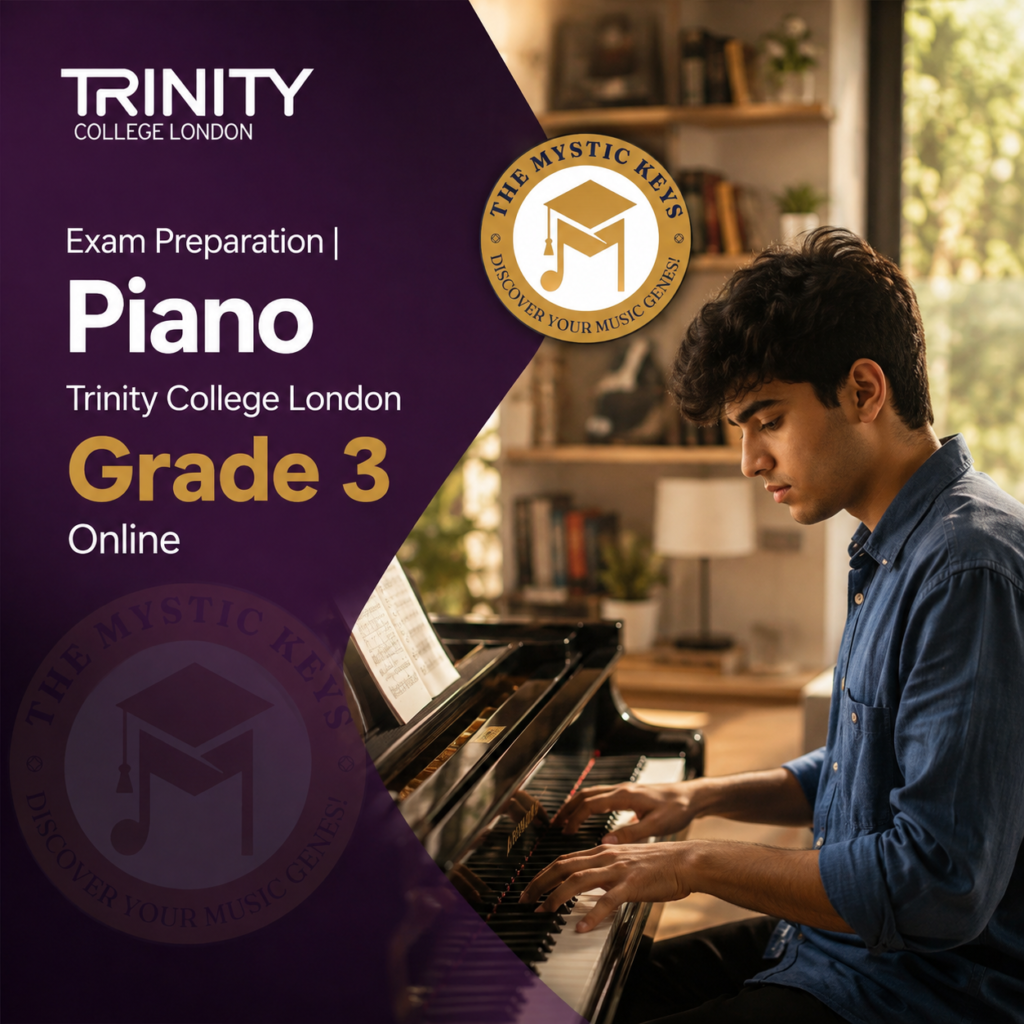
Exam Preparation | Piano Trinity College London Grade 3 Online
Exam Preparation for a piano examination is about much more than learning a few pieces and playing them from beginning to end. As students progress to Trinity College London Grade 3, their preparation becomes more structured, with greater emphasis on musical understanding, technical control, and confident performance. At this level, pianists are expected to demonstrate not only accuracy and technical ability but also musical expression, interpretation, rhythm, and a strong understanding of the fundamentals of piano playing.
With online piano lessons becoming increasingly popular, students can now prepare for their Trinity College London Grade 3 Piano exam online with structured guidance from the comfort of home. With the right preparation plan, regular practice, and consistent feedback, online learning can provide a flexible and effective way to work towards the examination.
Understanding the Trinity College London Grade 3 Piano Exam
The Trinity College London Grade 3 Piano examination is designed to help developing pianists build upon the skills they have acquired at earlier grades. At this stage, students are expected to become more confident in handling musical pieces, interpreting notation, maintaining rhythm, and expressing musical ideas.
Moving from Grade 2 to Grade 3 can feel like an important step because the student begins to encounter greater musical and technical demands. Pieces may require more control, coordination, dynamic variation, rhythmic accuracy, and attention to musical detail. Therefore, preparation should not focus solely on memorising the repertoire.
Instead, students benefit from understanding why a piece should be played in a particular way. Learning how phrasing, articulation, dynamics, tempo, and rhythm contribute to a performance allows a pianist to move beyond simply playing the correct notes.

Why Start Piano Grade 3 Preparation Online?
Online piano exam preparation offers a practical alternative to traditional in-person lessons, particularly for students who need flexibility in their schedules. A student can attend a live lesson from home without spending additional time travelling to and from a music school.
More importantly, online lessons can be structured specifically around the student’s examination goals. The teacher can observe the student’s technique, listen carefully to their playing, identify areas that require improvement, and provide immediate feedback during the lesson.
Regular online classes also make it easier to establish a consistent learning routine. Since exam preparation requires steady progress over time, having lessons at fixed intervals can help students remain accountable and motivated. Alongside this, recorded lesson material can be useful for revisiting explanations and practising specific sections between classes.
Exam Preparation | Choosing and Learning the Right Repertoire
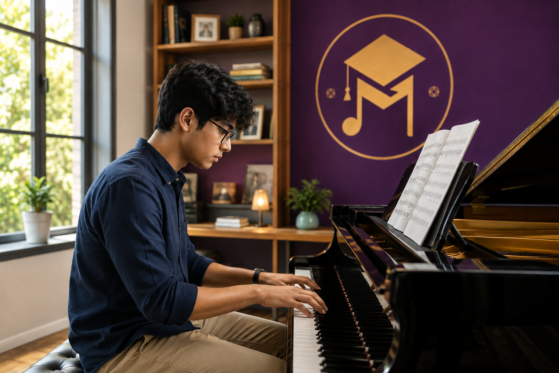
One of the most important parts of Trinity Grade 3 piano preparation is learning the examination repertoire thoroughly. Students need to become comfortable with their selected pieces rather than simply memorising the notes.
At the beginning, the focus may be on reading the score accurately and understanding the structure of each piece. As familiarity increases, attention can gradually shift towards musical interpretation. Dynamics, articulation, phrasing, tempo, balance between the hands, and changes in musical character all contribute to creating a convincing performance.
A teacher can also help students identify challenging passages early. Instead of repeatedly playing an entire piece and hoping difficult sections improve, students can learn how to isolate those passages and practise them strategically. Consequently, practice becomes more productive and less frustrating.
Exam Preparation | Developing Stronger Piano Technique
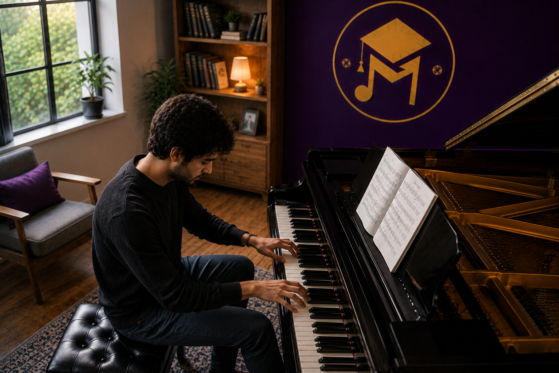
By Grade 3, technical development becomes increasingly important. Students need greater control over their fingers and hands while maintaining relaxed and efficient movement. Scales, exercises, and technical practice can support this development and help improve coordination, accuracy, and fluency.
However, technical practice should not become a completely separate activity from musical playing. The skills developed through technical exercises should eventually appear in the student’s repertoire. For example, improved finger control can help with faster passages, while better coordination can make complex rhythms easier to manage.
With regular guidance, students can also learn to recognise inefficient playing habits before they become deeply established. Small adjustments in posture, hand position, fingering, and movement can make a noticeable difference to both comfort and performance.
Building Musical Expression and Interpretation
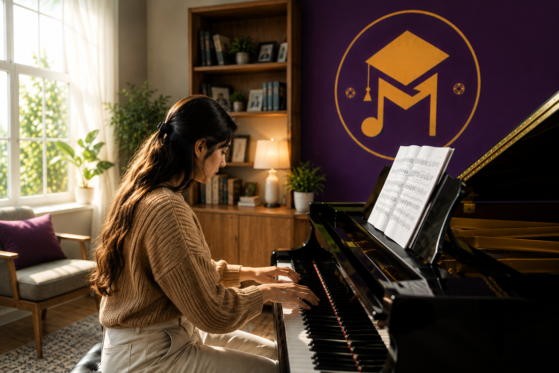
Playing the right notes is only one part of a successful piano performance. As students progress through the grades, they are expected to develop a stronger sense of musical expression and communicate the character of the music through their playing.
A lively piece may require energy and rhythmic clarity, while a slower composition might depend more heavily on phrasing, tone, dynamics, and careful control of tempo. Understanding these differences helps students approach each piece as music rather than treating it as a sequence of notes.
During online lessons, teachers can demonstrate different approaches and explain how particular markings in the score influence the performance. Students can then experiment with those ideas and gradually develop their own musical interpretation. This process helps build confidence while also encouraging the pianist to listen critically to their own playing.
Improving Sight-Reading and Musical Understanding
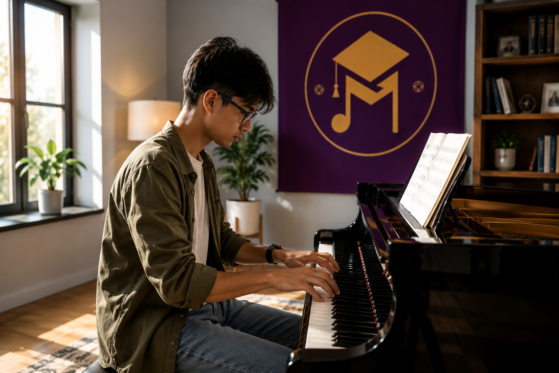
Sight-reading is another valuable skill that should receive regular attention during Grade 3 preparation. Rather than waiting until the weeks immediately before the exam, students should incorporate short sight-reading exercises into their normal practice routine.
The goal is not to play a new piece perfectly at first sight. Instead, students learn to look ahead, identify rhythms and patterns, recognise notes more efficiently, and maintain a steady pulse even when they encounter unfamiliar passages.
Over time, this practice can make students more comfortable with new music. Furthermore, stronger sight-reading skills can benefit their overall musicianship because they become less dependent on memorisation and more capable of understanding and responding to written music.
Exam Preparation | The Importance of Consistent Practice
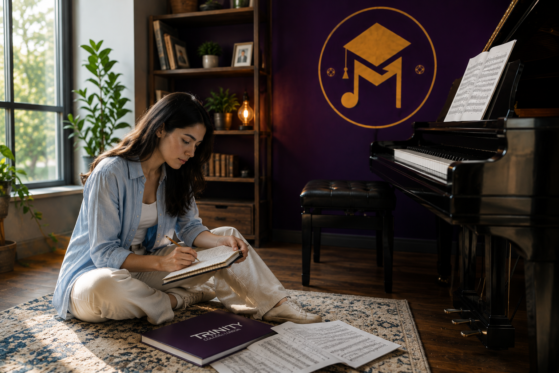
Even the most effective piano lessons cannot replace individual practice. Progress between lessons largely depends on how consistently students apply what they have learned.
Rather than spending a long time playing pieces from beginning to end, students can divide practice into smaller, purposeful sections. One session might focus on a difficult passage, while another could concentrate on rhythm, dynamics, or bringing the complete performance together.
Consistency is particularly important as the examination approaches. Gradually building confidence is much more effective than attempting to prepare everything during the final few weeks. A well-paced practice routine allows students to identify weaknesses early and gives them enough time to correct them.
Learning How to Perform Under Exam Conditions
Knowing the music well is important, but students should also learn how to perform confidently when they are being assessed. Exam conditions can feel different from ordinary practice, and some students may become nervous when they know they are being observed.
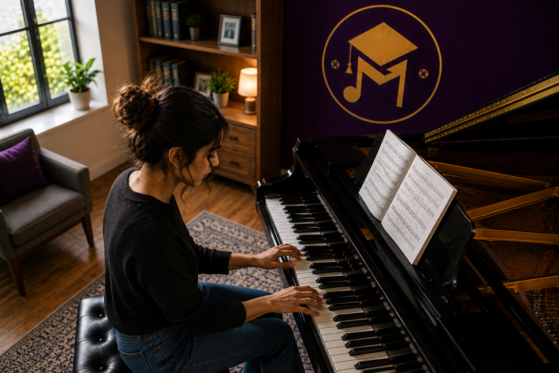
For this reason, mock performances can become an important part of online Grade 3 preparation. Students can practise playing their repertoire without interruptions and receive feedback afterwards. Gradually, they become more comfortable starting a piece confidently, recovering from small mistakes, and continuing without losing concentration.
Simulating the examination experience can also help students understand how they should manage their time and attention. With repeated practice, the actual examination environment can feel more familiar and less intimidating.
How Online Teachers Support Grade 3 Exam Preparation
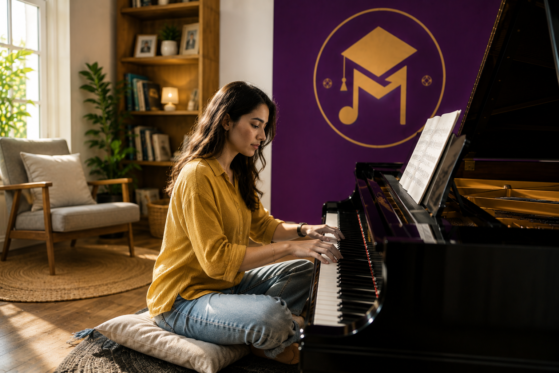
A structured online piano programme can provide students with guidance throughout the different stages of exam preparation. Rather than focusing only on repertoire, an experienced teacher can help create a balanced learning plan covering technique, musical interpretation, sight-reading, rhythm, and performance skills.
As preparation progresses, lessons can become increasingly focused on refinement. Small inaccuracies can be corrected, musical details can be developed, and individual pieces can be polished to a higher performance standard.
At the same time, personalised feedback allows the teacher to adjust the pace according to the student’s needs. A student who is progressing quickly may be able to move forward sooner, while someone struggling with a particular technique can spend additional time strengthening that area.
Exam Preparation | Preparing for the Digital Examination Experience
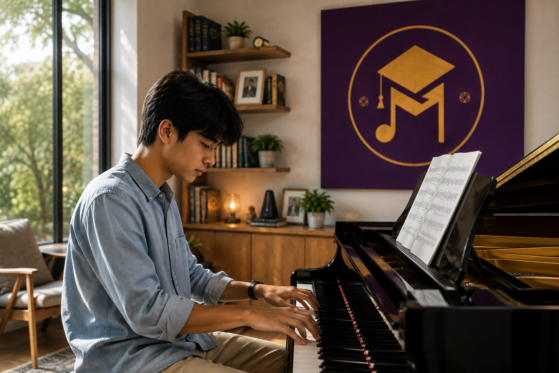
For students taking a digital Trinity examination, preparation should also include familiarity with the recording process. Performing for an examination camera can feel different from playing during a regular lesson, so students should have opportunities to practise in a similar setting.
Recording practice performances can help students become comfortable with positioning, starting confidently, maintaining concentration, and completing their performance without unnecessary interruptions. Listening back to recordings can also reveal details that may not be obvious while playing.
As a result, recording can become more than simply an examination requirement. It can be a useful learning tool that encourages students to evaluate their own performance and recognise areas for improvement.
Common Challenges Students May Face at Grade 3
Grade 3 preparation can bring several challenges, particularly when students are moving beyond the foundations they developed in the earlier grades. Some may struggle with maintaining an even rhythm, while others may find it difficult to coordinate both hands during technically demanding sections.
Performance confidence can also become an issue. A student might play a passage accurately during practice but become hesitant when performing for someone else. Similarly, rushing, stopping after mistakes, or losing concentration can affect an otherwise well-prepared performance.
These challenges are normal parts of learning. With patient guidance, targeted practice, and regular performance opportunities, students can gradually turn these weaknesses into strengths.
Creating a Personalised Grade 3 Preparation Plan
Every student learns at a different pace, so an effective preparation plan should take individual needs into account. Someone who already has strong technical skills may need more attention on musical interpretation, while another student may benefit from spending additional time on sight-reading or rhythm.
A personalised plan can begin with an assessment of the student’s current level. From there, the teacher can establish realistic goals for repertoire, technique, musicianship, and performance. As the student progresses, those goals can be adjusted according to their development.
This approach makes exam preparation more manageable because students always have a clear idea of what they are working towards. Instead of feeling overwhelmed by the entire examination, they can focus on improving one skill or section at a time.
How Parents Can Support Young Piano Learners
For younger students, parental support can make a meaningful difference during exam preparation. Parents do not necessarily need to teach the piano themselves; simply helping the child maintain a regular practice routine can be valuable.
A quiet practice environment, encouragement after lessons, and gentle reminders can help children stay consistent. At the same time, allowing the teacher to guide the musical and technical aspects of preparation ensures that practice remains focused and productive.
Most importantly, exam preparation should remain a positive learning experience. Encouraging progress rather than focusing only on mistakes can help children develop confidence and a healthier attitude towards practice.
When Should You Start Preparing for Trinity Grade 3?
There is no single preparation timeline that works for every student. The ideal starting point depends on the student’s existing piano skills, familiarity with the Trinity examination format, practice routine, and ability to learn the required material.
Starting early generally provides more flexibility. Students have time to learn their repertoire carefully, strengthen technical skills, work on sight-reading, and develop confidence without feeling pressured by an approaching examination date.
Once the repertoire is learned, the focus can gradually shift from learning notes to refining the overall performance. Therefore, early and consistent preparation can make the final stage of exam practice considerably smoother.
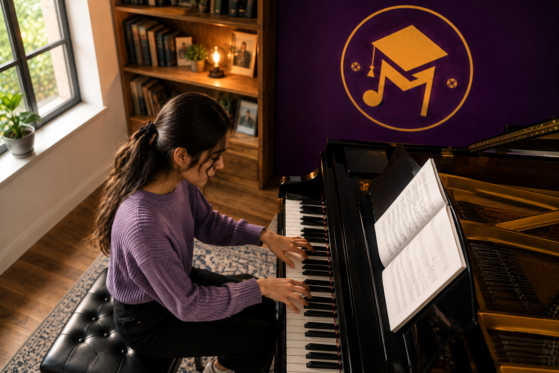
Exam Preparation | Why Structured Guidance Matters
Preparing independently can sometimes leave students unsure about whether they are practising correctly or focusing on the right areas. A structured programme provides direction and helps ensure that important examination skills are not overlooked.
Regular feedback also prevents small problems from becoming long-term habits. Whether the issue involves fingering, rhythm, articulation, dynamics, or posture, identifying it early makes correction easier.
Most importantly, professional guidance can help students understand that an examination is not simply about achieving a grade. It is an opportunity to develop discipline, musical awareness, performance confidence, and a deeper appreciation for playing the piano.
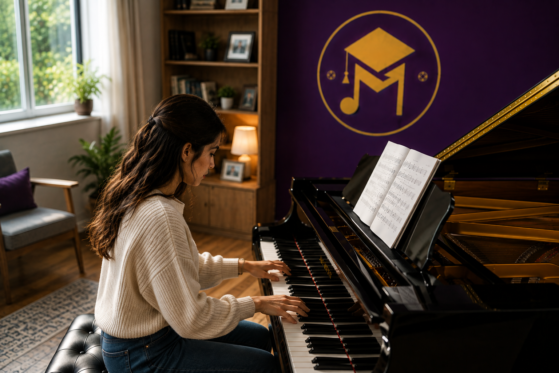
Start Your Piano Grade 3 Journey Online
Preparing for the Trinity College London Grade 3 Piano exam is an exciting step in a student’s musical journey. With the right repertoire, regular practice, and focused guidance, students can build confidence and develop strong musical skills.
Through Piano Lessons Online, learners receive personalised instruction and feedback from the comfort of home. At The Mystic Keys, structured guidance helps students prepare for their Grade 3 exam with confidence.
Start your Grade 3 preparation today and take the next step in your piano journey!
For more information and exciting resources about learning music, visit our website at The Mystic Keys. For more music content and exciting offers follow us on
Facebook, Instagram, YouTube, LinkedIn, Twitter, Pinterest, and Threads.