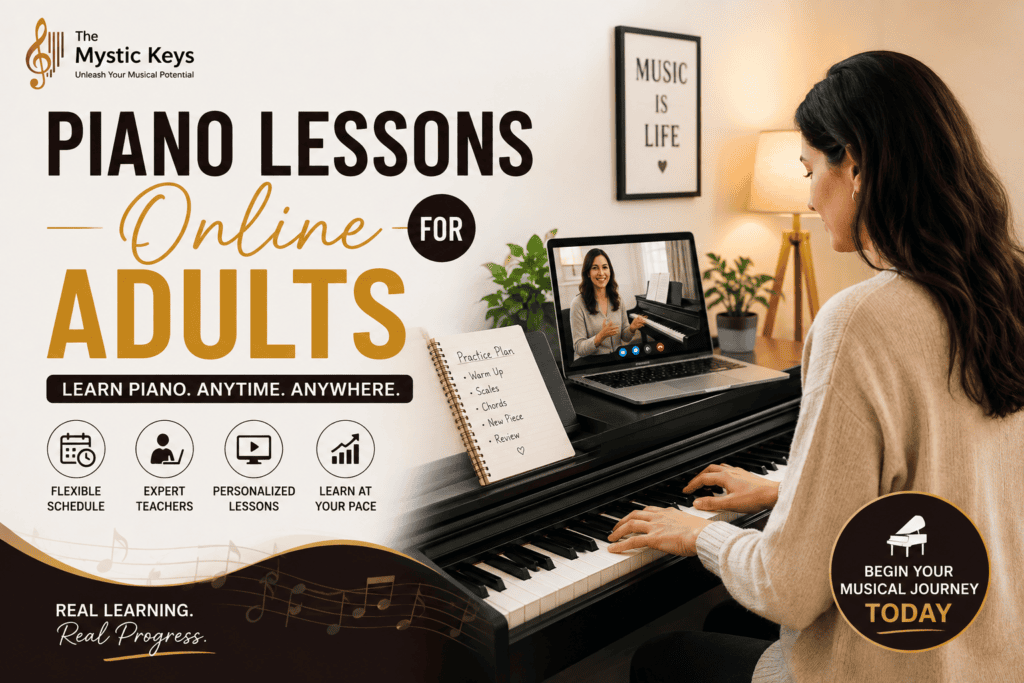
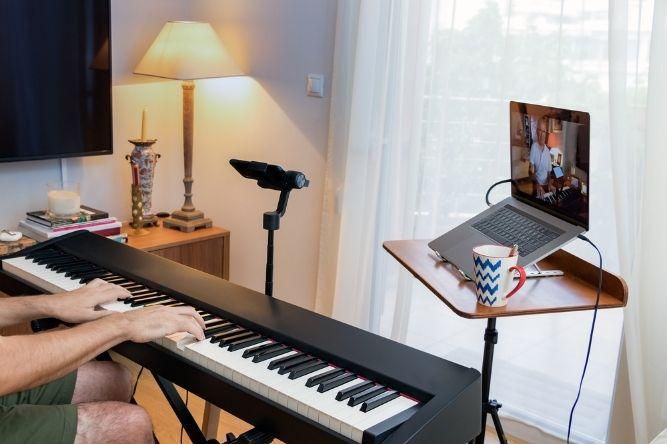
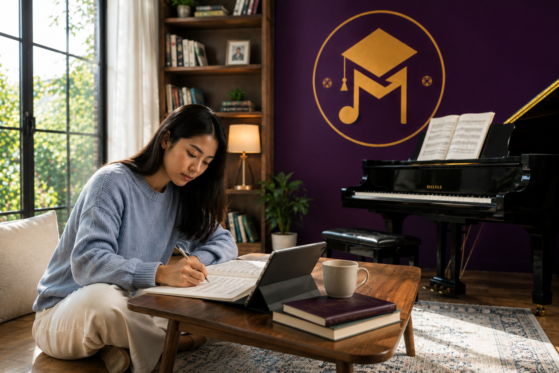
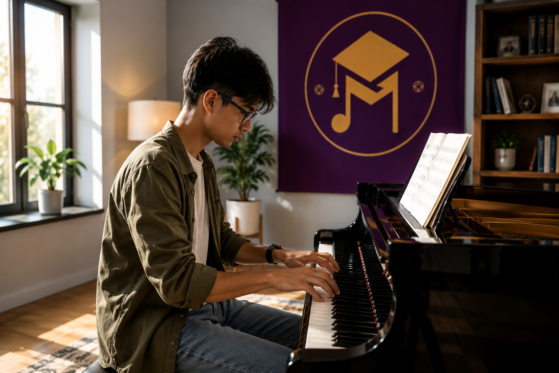
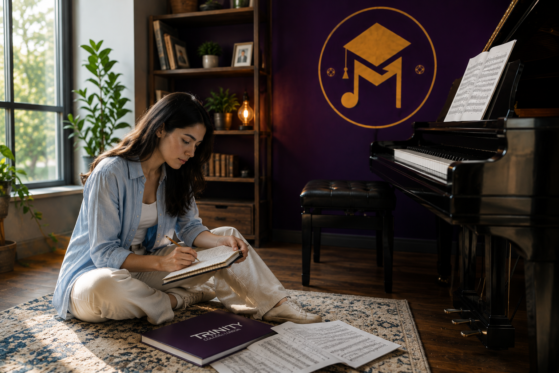
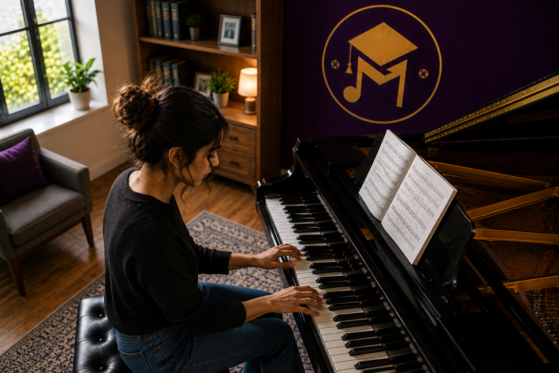
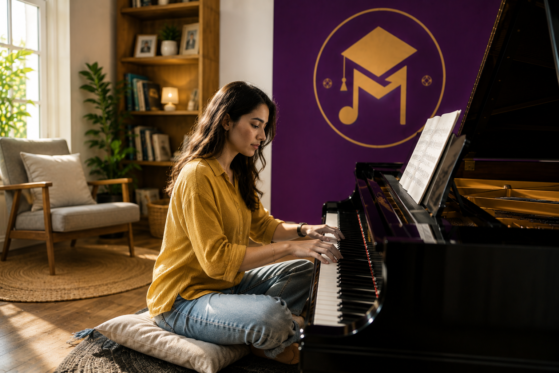
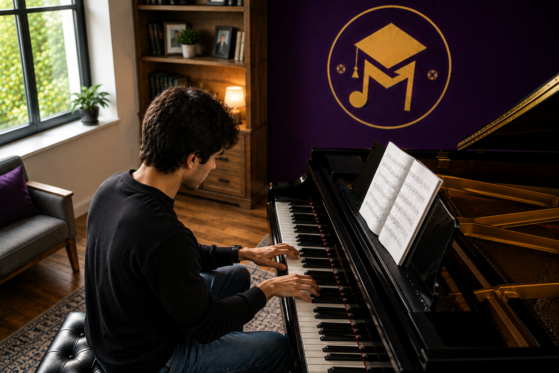
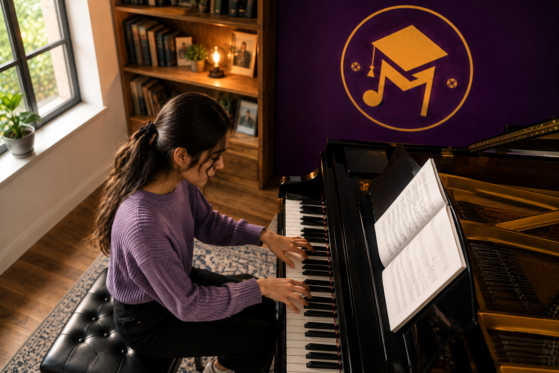
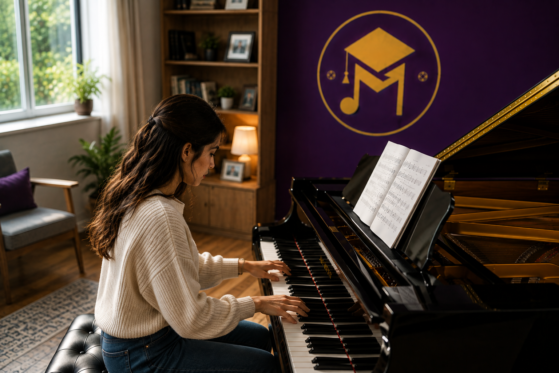
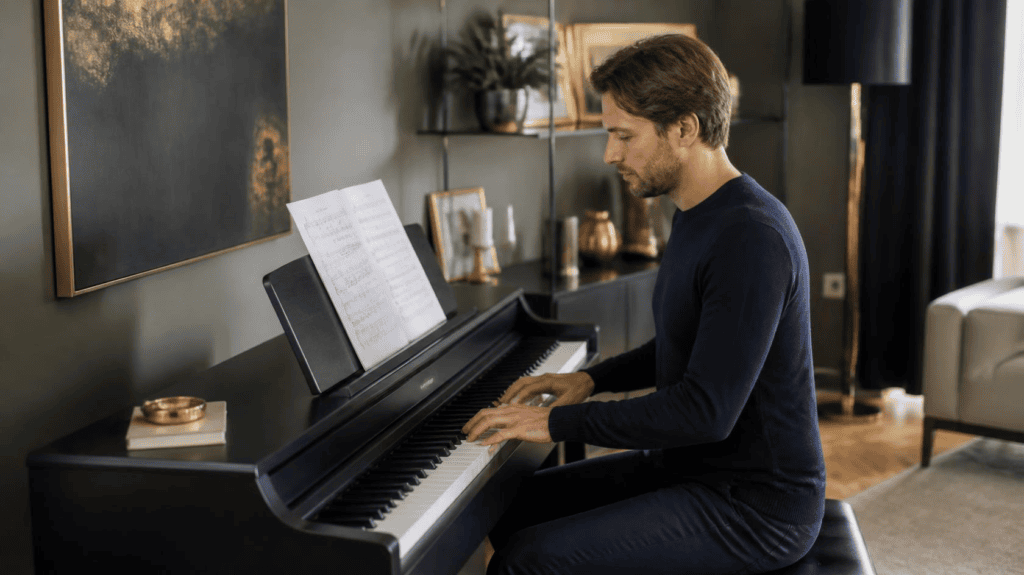
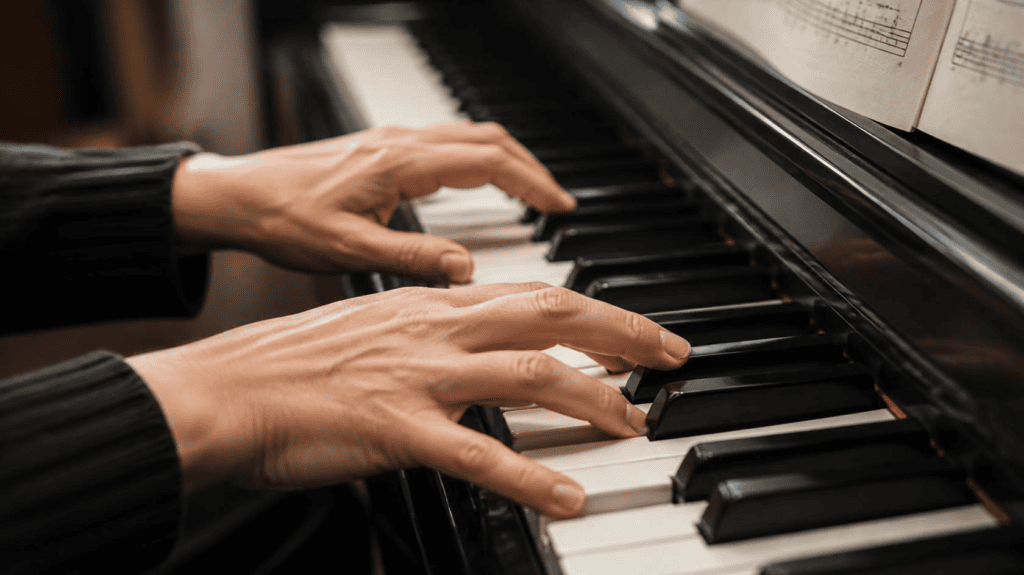
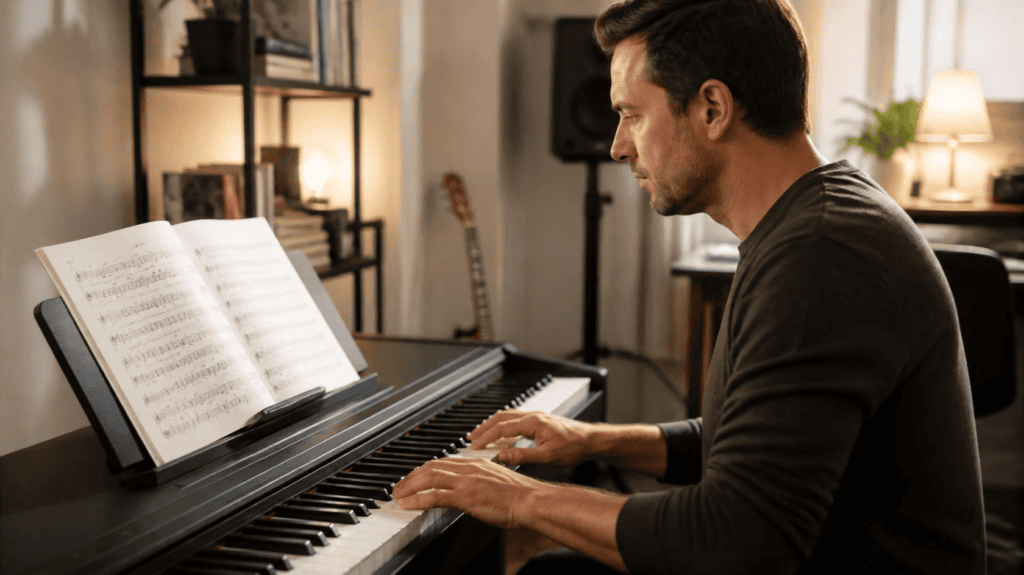
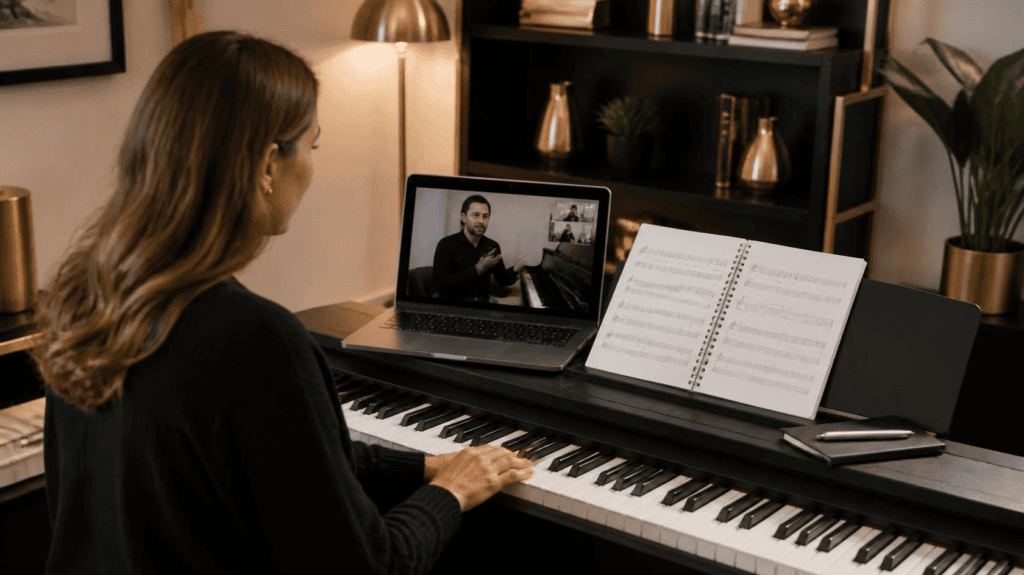
Learning music is not limited by age, and piano lessons online for adults have made it easier than ever to start or continue your musical journey. Whether you are a complete beginner or someone returning after years, online piano lessons offer flexibility, convenience, and personalized learning.
With the right approach, adults can learn piano efficiently while balancing work, family, and other responsibilities.
Piano Lessons Online for Adults: Why They Are Popular
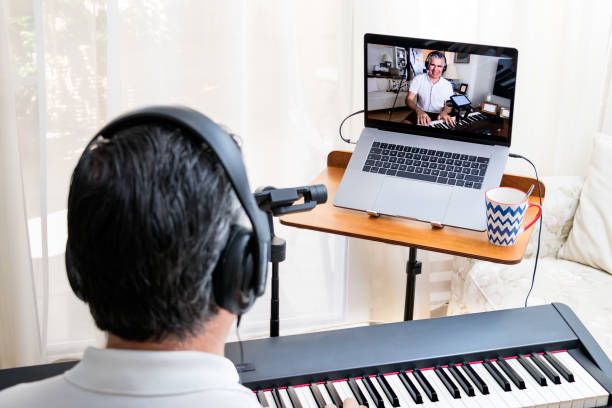
The rise of piano lessons online for adults is driven by convenience and accessibility. Adults often have busy schedules, making it difficult to attend in-person classes.
Online lessons allow you to:
Learn from home
Choose flexible timings
Access recorded sessions
Learn at your own pace
This makes learning more comfortable and stress-free.
Benefits of Piano Lessons Online for Adults
There are several advantages to choosing online learning.
🎯 Flexibility
You can schedule lessons around your daily routine without disrupting work or personal commitments.
🧠 Personalized Learning
Lessons can be tailored to your goals, whether it’s playing for relaxation, performance, or skill development.
🎧 Access to Resources
Online platforms provide:
Practice materials
Recorded lessons
Interactive tools
This enhances learning efficiency.
Getting Started as an Adult Beginner
Starting piano as an adult may feel challenging, but it is absolutely achievable.
This ensures adults learn comfortably at their own pace.
👉 Explore more music courses at The Mystic Keys to start your piano journey with the right foundation.
Conclusion
Piano lessons online for adults provide a convenient and effective way to learn music at any stage of life. With dedication, consistency, and the right guidance, adults can successfully develop piano skills and enjoy the learning process.
👉 It’s never too late to start learning piano.
For more information and exciting resources about learning music, visit our website at The Mystic Keys. For more music content and exciting offers follow us on
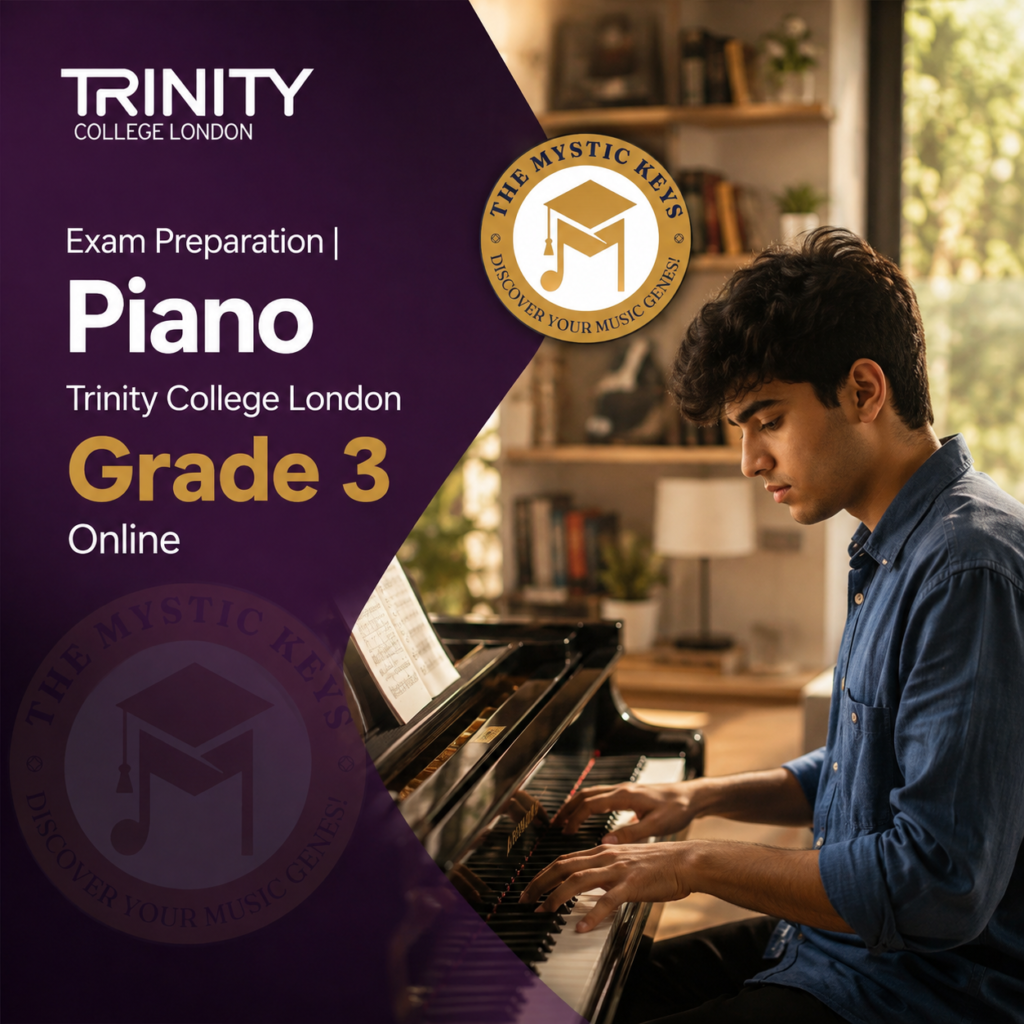
Exam Preparation | Piano Trinity College London Grade 3 Online
Exam Preparation for a piano examination is about much more than learning a few pieces and playing them from beginning to end. As students progress to Trinity College London Grade 3, their preparation becomes more structured, with greater emphasis on musical understanding, technical control, and confident performance. At this level, pianists are expected to demonstrate not only accuracy and technical ability but also musical expression, interpretation, rhythm, and a strong understanding of the fundamentals of piano playing.
With online piano lessons becoming increasingly popular, students can now prepare for their Trinity College London Grade 3 Piano exam online with structured guidance from the comfort of home. With the right preparation plan, regular practice, and consistent feedback, online learning can provide a flexible and effective way to work towards the examination.
Understanding the Trinity College London Grade 3 Piano Exam
The Trinity College London Grade 3 Piano examination is designed to help developing pianists build upon the skills they have acquired at earlier grades. At this stage, students are expected to become more confident in handling musical pieces, interpreting notation, maintaining rhythm, and expressing musical ideas.
Moving from Grade 2 to Grade 3 can feel like an important step because the student begins to encounter greater musical and technical demands. Pieces may require more control, coordination, dynamic variation, rhythmic accuracy, and attention to musical detail. Therefore, preparation should not focus solely on memorising the repertoire.
Instead, students benefit from understanding why a piece should be played in a particular way. Learning how phrasing, articulation, dynamics, tempo, and rhythm contribute to a performance allows a pianist to move beyond simply playing the correct notes.
Why Start Piano Grade 3 Preparation Online?
Online piano exam preparation offers a practical alternative to traditional in-person lessons, particularly for students who need flexibility in their schedules. A student can attend a live lesson from home without spending additional time travelling to and from a music school.
More importantly, online lessons can be structured specifically around the student’s examination goals. The teacher can observe the student’s technique, listen carefully to their playing, identify areas that require improvement, and provide immediate feedback during the lesson.
Regular online classes also make it easier to establish a consistent learning routine. Since exam preparation requires steady progress over time, having lessons at fixed intervals can help students remain accountable and motivated. Alongside this, recorded lesson material can be useful for revisiting explanations and practising specific sections between classes.
Exam Preparation | Choosing and Learning the Right Repertoire
One of the most important parts of Trinity Grade 3 piano preparation is learning the examination repertoire thoroughly. Students need to become comfortable with their selected pieces rather than simply memorising the notes.
At the beginning, the focus may be on reading the score accurately and understanding the structure of each piece. As familiarity increases, attention can gradually shift towards musical interpretation. Dynamics, articulation, phrasing, tempo, balance between the hands, and changes in musical character all contribute to creating a convincing performance.
A teacher can also help students identify challenging passages early. Instead of repeatedly playing an entire piece and hoping difficult sections improve, students can learn how to isolate those passages and practise them strategically. Consequently, practice becomes more productive and less frustrating.
Exam Preparation | Developing Stronger Piano Technique
By Grade 3, technical development becomes increasingly important. Students need greater control over their fingers and hands while maintaining relaxed and efficient movement. Scales, exercises, and technical practice can support this development and help improve coordination, accuracy, and fluency.
However, technical practice should not become a completely separate activity from musical playing. The skills developed through technical exercises should eventually appear in the student’s repertoire. For example, improved finger control can help with faster passages, while better coordination can make complex rhythms easier to manage.
With regular guidance, students can also learn to recognise inefficient playing habits before they become deeply established. Small adjustments in posture, hand position, fingering, and movement can make a noticeable difference to both comfort and performance.
Building Musical Expression and Interpretation
Playing the right notes is only one part of a successful piano performance. As students progress through the grades, they are expected to develop a stronger sense of musical expression and communicate the character of the music through their playing.
A lively piece may require energy and rhythmic clarity, while a slower composition might depend more heavily on phrasing, tone, dynamics, and careful control of tempo. Understanding these differences helps students approach each piece as music rather than treating it as a sequence of notes.
During online lessons, teachers can demonstrate different approaches and explain how particular markings in the score influence the performance. Students can then experiment with those ideas and gradually develop their own musical interpretation. This process helps build confidence while also encouraging the pianist to listen critically to their own playing.
Improving Sight-Reading and Musical Understanding
Sight-reading is another valuable skill that should receive regular attention during Grade 3 preparation. Rather than waiting until the weeks immediately before the exam, students should incorporate short sight-reading exercises into their normal practice routine.
The goal is not to play a new piece perfectly at first sight. Instead, students learn to look ahead, identify rhythms and patterns, recognise notes more efficiently, and maintain a steady pulse even when they encounter unfamiliar passages.
Over time, this practice can make students more comfortable with new music. Furthermore, stronger sight-reading skills can benefit their overall musicianship because they become less dependent on memorisation and more capable of understanding and responding to written music.
Exam Preparation | The Importance of Consistent Practice
Even the most effective piano lessons cannot replace individual practice. Progress between lessons largely depends on how consistently students apply what they have learned.
Rather than spending a long time playing pieces from beginning to end, students can divide practice into smaller, purposeful sections. One session might focus on a difficult passage, while another could concentrate on rhythm, dynamics, or bringing the complete performance together.
Consistency is particularly important as the examination approaches. Gradually building confidence is much more effective than attempting to prepare everything during the final few weeks. A well-paced practice routine allows students to identify weaknesses early and gives them enough time to correct them.
Learning How to Perform Under Exam Conditions
Knowing the music well is important, but students should also learn how to perform confidently when they are being assessed. Exam conditions can feel different from ordinary practice, and some students may become nervous when they know they are being observed.
For this reason, mock performances can become an important part of online Grade 3 preparation. Students can practise playing their repertoire without interruptions and receive feedback afterwards. Gradually, they become more comfortable starting a piece confidently, recovering from small mistakes, and continuing without losing concentration.
Simulating the examination experience can also help students understand how they should manage their time and attention. With repeated practice, the actual examination environment can feel more familiar and less intimidating.
How Online Teachers Support Grade 3 Exam Preparation
A structured online piano programme can provide students with guidance throughout the different stages of exam preparation. Rather than focusing only on repertoire, an experienced teacher can help create a balanced learning plan covering technique, musical interpretation, sight-reading, rhythm, and performance skills.
As preparation progresses, lessons can become increasingly focused on refinement. Small inaccuracies can be corrected, musical details can be developed, and individual pieces can be polished to a higher performance standard.
At the same time, personalised feedback allows the teacher to adjust the pace according to the student’s needs. A student who is progressing quickly may be able to move forward sooner, while someone struggling with a particular technique can spend additional time strengthening that area.
Exam Preparation | Preparing for the Digital Examination Experience
For students taking a digital Trinity examination, preparation should also include familiarity with the recording process. Performing for an examination camera can feel different from playing during a regular lesson, so students should have opportunities to practise in a similar setting.
Recording practice performances can help students become comfortable with positioning, starting confidently, maintaining concentration, and completing their performance without unnecessary interruptions. Listening back to recordings can also reveal details that may not be obvious while playing.
As a result, recording can become more than simply an examination requirement. It can be a useful learning tool that encourages students to evaluate their own performance and recognise areas for improvement.
Common Challenges Students May Face at Grade 3
Grade 3 preparation can bring several challenges, particularly when students are moving beyond the foundations they developed in the earlier grades. Some may struggle with maintaining an even rhythm, while others may find it difficult to coordinate both hands during technically demanding sections.
Performance confidence can also become an issue. A student might play a passage accurately during practice but become hesitant when performing for someone else. Similarly, rushing, stopping after mistakes, or losing concentration can affect an otherwise well-prepared performance.
These challenges are normal parts of learning. With patient guidance, targeted practice, and regular performance opportunities, students can gradually turn these weaknesses into strengths.
Creating a Personalised Grade 3 Preparation Plan
Every student learns at a different pace, so an effective preparation plan should take individual needs into account. Someone who already has strong technical skills may need more attention on musical interpretation, while another student may benefit from spending additional time on sight-reading or rhythm.
A personalised plan can begin with an assessment of the student’s current level. From there, the teacher can establish realistic goals for repertoire, technique, musicianship, and performance. As the student progresses, those goals can be adjusted according to their development.
This approach makes exam preparation more manageable because students always have a clear idea of what they are working towards. Instead of feeling overwhelmed by the entire examination, they can focus on improving one skill or section at a time.
How Parents Can Support Young Piano Learners
For younger students, parental support can make a meaningful difference during exam preparation. Parents do not necessarily need to teach the piano themselves; simply helping the child maintain a regular practice routine can be valuable.
A quiet practice environment, encouragement after lessons, and gentle reminders can help children stay consistent. At the same time, allowing the teacher to guide the musical and technical aspects of preparation ensures that practice remains focused and productive.
Most importantly, exam preparation should remain a positive learning experience. Encouraging progress rather than focusing only on mistakes can help children develop confidence and a healthier attitude towards practice.
When Should You Start Preparing for Trinity Grade 3?
There is no single preparation timeline that works for every student. The ideal starting point depends on the student’s existing piano skills, familiarity with the Trinity examination format, practice routine, and ability to learn the required material.
Starting early generally provides more flexibility. Students have time to learn their repertoire carefully, strengthen technical skills, work on sight-reading, and develop confidence without feeling pressured by an approaching examination date.
Once the repertoire is learned, the focus can gradually shift from learning notes to refining the overall performance. Therefore, early and consistent preparation can make the final stage of exam practice considerably smoother.
Preparing independently can sometimes leave students unsure about whether they are practising correctly or focusing on the right areas. A structured programme provides direction and helps ensure that important examination skills are not overlooked.
Regular feedback also prevents small problems from becoming long-term habits. Whether the issue involves fingering, rhythm, articulation, dynamics, or posture, identifying it early makes correction easier.
Most importantly, professional guidance can help students understand that an examination is not simply about achieving a grade. It is an opportunity to develop discipline, musical awareness, performance confidence, and a deeper appreciation for playing the piano.
Start Your Piano Grade 3 Journey Online
Preparing for theTrinity College London Grade 3 Piano examis an exciting step in a student’s musical journey. With the right repertoire, regular practice, and focused guidance, students can build confidence and develop strong musical skills.
Through Piano Lessons Online, learners receive personalised instruction and feedback from the comfort of home. At The Mystic Keys, structured guidance helps students prepare for their Grade 3 exam with confidence.
Start your Grade 3 preparation today and take the next step in your piano journey!
For more information and exciting resources about learning music, visit our website at The Mystic Keys. For more music content and exciting offers follow us on
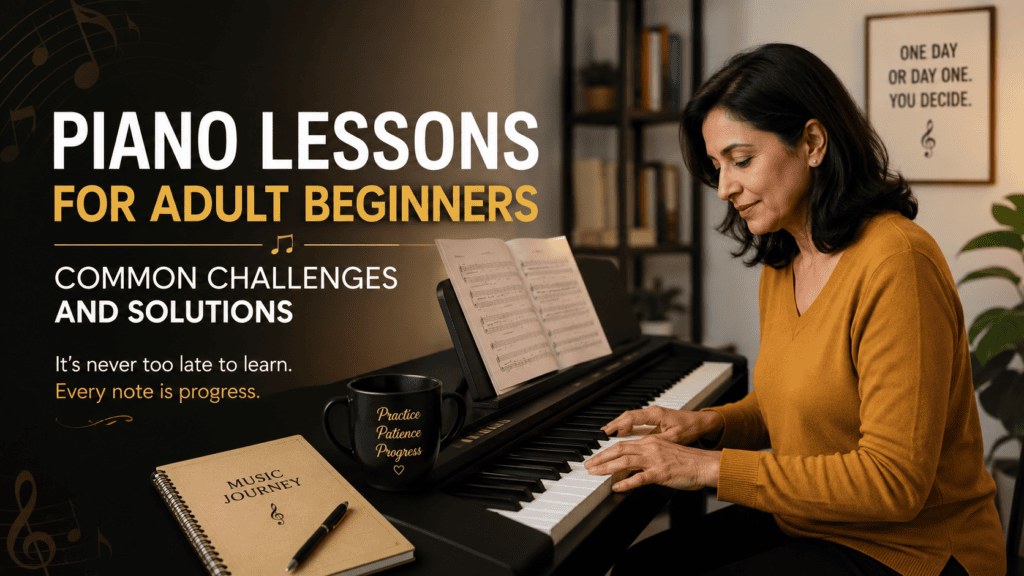
Piano Lessons for Adult Beginners Common Challenges and Solutions
Learning the piano as an adult can be an exciting and rewarding experience. Many adults want to learn piano but hesitate because they believe they are too old, have limited time, or may struggle to develop the coordination required to play. The truth is that adults can learn piano effectively with the right approach, consistent practice, and structured guidance. Piano lessons for adult beginners are designed to help new learners build their skills step by step while working around their schedules, goals, and learning pace.
Whether you want to play your favorite songs, accompany yourself while singing, improve your musical knowledge, or simply develop a new skill, starting piano lessons as an adult is completely achievable. Understanding the most common challenges can help you approach your learning with realistic expectations and confidence.
How Piano Lessons for Adult Beginners Can Fit Into a Busy Schedule
One of the biggest challenges for adults learning piano is finding enough time to practice. Unlike children, adults often have work responsibilities, family commitments, household tasks, and other priorities. This can make it difficult to dedicate long hours to piano practice.
However, effective piano practice does not necessarily require several hours every day. Consistency is more important than the length of a single practice session. Even 20 to 30 minutes of focused practice can make a significant difference when done regularly.
Try creating a realistic practice schedule that fits naturally into your daily routine. You could practice before work, during a lunch break, or in the evening. Setting small goals for each session can also make practice more productive.
For example, one day you might focus on scales and finger exercises, while another session could concentrate on chords or a particular section of a song. With piano lessons for adult beginners, a teacher can help you create a practice routine that fits your available time.
Building Hand Coordination Through Piano Lessons for Adult Beginners
Another common difficulty for adult beginners is coordinating both hands. Playing the piano requires each hand to perform different movements while maintaining rhythm and timing. Initially, this can feel confusing and uncomfortable.
The best solution is to progress gradually. Start by learning simple exercises with each hand separately before combining them. Practice slowly and focus on accuracy rather than speed.
Finger exercises, scales, simple melodies, and basic chord patterns can help develop coordination over time. As your brain and fingers become more familiar with the movements, playing with both hands will gradually feel more natural.
Patience is essential. Coordination is a skill that develops through repetition, so struggling during the first few lessons does not mean you are unable to learn piano
Learning to Read Music During Piano Lessons for Adult Beginners
Many adult beginners feel intimidated by sheet music. Seeing multiple lines, notes, symbols, rhythms, and other musical markings can seem overwhelming at first.
Fortunately, you do not need to understand everything immediately. A good teacher introduces music reading progressively, starting with basic notes and rhythms before moving to more advanced concepts.
You can also combine music reading with practical playing. Instead of memorizing large amounts of information, learn a few notes and immediately use them in simple exercises or songs. This makes the learning process more meaningful and easier to remember.
Over time, you will become more comfortable recognizing notes and rhythms without having to consciously think about every symbol.
Overcoming the Fear of Making Mistakes When Learning Piano
Adults sometimes put a lot of pressure on themselves to perform perfectly. This can make learning piano more stressful than it needs to be.
Mistakes are a natural part of learning any musical instrument. Playing the wrong note, losing the rhythm, or forgetting a chord does not mean that you are failing. These mistakes provide useful information about what you need to practice.
During piano lessons for adult beginners, focus on improvement rather than perfection. Record your playing occasionally so you can compare your progress over several weeks or months. You may notice improvements that are difficult to recognize from one practice session to the next.
A supportive teacher can also create an environment where mistakes are treated as learning opportunities rather than failures.
Understanding Chords and Music Theory as an Adult Beginner
Music theory can sometimes seem complicated to adults who have never studied music before. Concepts such as scales, intervals, chords, key signatures, and chord progressions may initially feel unfamiliar.
Instead of trying to learn every theory concept at once, connect theory directly to the piano. For example, when learning a C major chord, understand which notes create the chord and where those notes appear on the keyboard.
Learning theory through practical examples makes it easier to understand how music is constructed. It also helps you recognize patterns when learning new songs.
Basic theory can eventually make learning faster because you begin to understand why certain notes and chords work together rather than simply memorizing them.
Staying Motivated During Piano Lessons for Adult Beginners
Motivation can naturally go up and down when learning piano. Adults may feel highly motivated at the beginning but become discouraged when progress seems slower than expected.
One effective way to maintain motivation is to choose music that you genuinely enjoy. Learning songs that match your interests gives you a reason to practice and allows you to see the practical results of your lessons.
Set short-term goals instead of focusing only on a distant goal such as becoming an advanced pianist. Your goals might include learning a particular song, playing a chord progression smoothly, reading a simple piece, or performing for friends and family.
Every small achievement represents progress.
Avoiding Comparisons During Piano Lessons for Adult Beginners
Another challenge adult learners may face is comparing themselves with experienced musicians or other students. Watching someone play a difficult piece online can make your own progress seem slow.
Remember that every pianist has a different starting point, practice routine, musical background, and learning pace. Someone who has been playing for years will naturally have skills that a beginner does not yet possess.
Instead of comparing your playing with someone else’s, compare your current ability with where you were a month ago. Personal progress is a much more useful measure of success.
Structured piano lessons for adult beginners can help you follow a learning path that matches your individual ability rather than trying to keep up with someone else’s
Choosing the Right Approach to Piano Lessons for Adult Beginners
Adults have different reasons for learning piano. Some want to play classical music, while others are interested in pop songs, worship music, jazz, film music, or songwriting. Choosing an approach that matches your goals can make the learning experience more enjoyable.
One-on-one lessons can be particularly useful for adult beginners because the teacher can adjust the pace, exercises, repertoire, and practice routine according to the student’s needs.
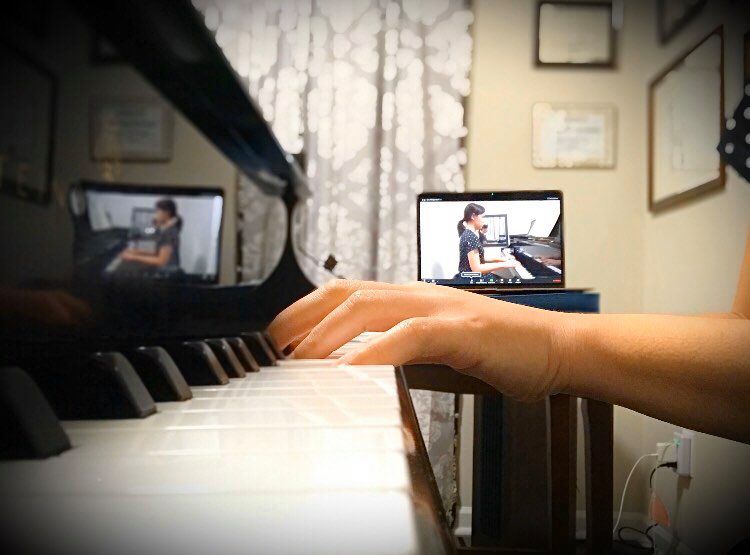
Online piano lessons can also be a convenient option for adults with busy schedules. Live online classes allow students to receive direct feedback from a teacher without having to travel to a physical music school.
The most important factor is finding a structured learning method that keeps you engaged and helps you progress consistently.
How to Make the Most of Piano Lessons as an Adult
If you are beginning piano as an adult, keep your expectations realistic and give yourself enough time to develop your skills. Start with manageable goals and gradually increase the difficulty of your repertoire.
A few simple habits can make your learning more effective:
Ask your teacher questions whenever something is unclear.
Keep track of your progress.
Choose songs that genuinely interest you.
Be patient when learning new techniques.
Most importantly, enjoy the process. Learning piano is not a race. The goal is to build skills that allow you to express yourself through music.
Start Your Piano Learning Journey as an Adult
Age should never be a reason to avoid learning piano. Adults can develop strong musical skills when they have appropriate guidance, realistic goals, and consistent practice. The challenges that come with starting later in life—such as limited practice time, coordination difficulties, music reading, and maintaining motivation—can all be managed with the right learning strategy.
If you are looking for structured piano lessons online for adult beginners, The Mystic Keys offers personalized online music education designed for learners at different skill levels. With live one-on-one instruction and a structured approach, adult learners can develop their technique, musical understanding, and confidence while learning at a comfortable pace.
Whether your goal is to play your favorite songs or develop a deeper understanding of the piano, starting today can be the first step toward becoming the pianist you want to be.
Intersted in learning music with us? Register now
For more information and exciting resources about learning music, visit our website at The Mystic Keys. For more music content and exciting offers follow us on