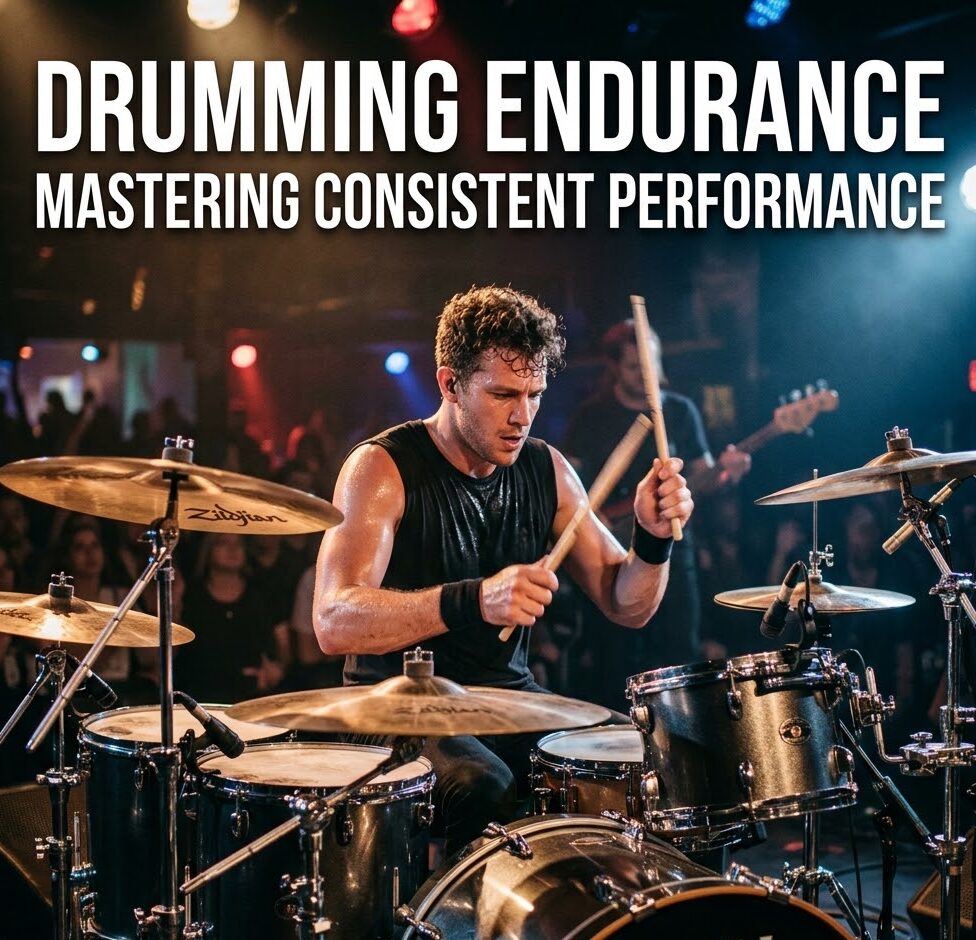
Drumming Endurance | Mastering Consistent Performance
When people watch a drummer perform, they often notice the speed, energy, and technical complexity of the playing. Fast fills, explosive cymbal crashes, and powerful grooves naturally attract attention. However, behind every impressive performance lies a skill that is often overlooked — drumming endurance.
Endurance is what allows a drummer to maintain control, accuracy, and musical expression throughout an entire performance. Whether playing a short live set, a long concert, a recording session, or simply practicing for extended periods, stamina determines how consistently a drummer can deliver their best.
A drummer may have excellent technique and creativity, but without endurance, even the most skilled player can struggle when fatigue begins to affect timing, coordination, and confidence. Building endurance is not only about playing longer; it is about learning how to play efficiently, intelligently, and with complete control.
Mastering consistent performance requires a combination of physical preparation, mental focus, proper technique, and disciplined practice. Once endurance becomes a natural part of a drummer’s skill set, playing feels less exhausting and much more expressive.

Understanding Drumming Endurance More Than Just Playing Longer
Drumming endurance is often misunderstood as simply having strong muscles or being able to play for hours without stopping. While physical strength plays a role, true endurance involves much more than stamina alone.
A drummer with good endurance can maintain steady timing, balanced dynamics, and relaxed movements even after extended playing. The goal is not to force the body to continue working harder but to develop efficiency so that unnecessary energy is not wasted.
Every movement behind the drum kit requires coordination between the hands, feet, eyes, and mind. When technique is inefficient, tension builds quickly. Tight shoulders, stiff wrists, and excessive force can drain energy within minutes. On the other hand, a relaxed and controlled approach allows a drummer to perform longer while maintaining quality.
This is why professional drummers often appear calm and effortless during demanding performances. Their endurance comes from years of developing smart movement patterns rather than relying only on physical power.

The Importance of Consistency in Drumming Performance
A great drummer is not only someone who can create exciting moments; they are someone who can maintain a strong musical foundation from beginning to end.
Consistency is the bridge between practice and performance. During practice, a drummer may successfully play a challenging rhythm once or twice. However, performing that same pattern repeatedly with accuracy requires a deeper level of control.
Endurance supports consistency because it helps prevent small mistakes caused by fatigue. As a performance continues, tiredness can affect timing, volume control, and coordination. A drummer who has developed stamina can keep the groove stable even during the most demanding sections.
The ability to maintain the same level of performance throughout a song or set is what separates a prepared drummer from someone who relies only on short bursts of ability.

Building Physical Stamina Through Smart Technique
Developing endurance begins with understanding how the body moves while playing. Drumming is a physical activity, but excessive effort often creates unnecessary challenges.
Many beginners believe that hitting harder automatically creates a stronger sound. In reality, power comes from controlled movement, proper technique, and efficient use of the body. A relaxed grip, balanced posture, and smooth motion allow energy to flow naturally through each stroke.
The wrists, fingers, arms, and shoulders all have important roles in drumming. When one area carries too much responsibility, fatigue appears quickly. Learning how to distribute movement properly reduces strain and improves overall playing ability.
Warm-ups also play an important role in developing endurance. Just as athletes prepare their bodies before intense activity, drummers benefit from gradually increasing speed and complexity. Simple exercises with a focus on control can prepare the muscles and improve coordination before more demanding practice begins.

The Role of Practice Structure in Developing Drumming Endurance
Endurance does not develop through random repetition. Practicing for long periods without a clear approach can actually create tension and poor habits.
A well-designed practice routine combines focused exercises with musical application. Spending time on basic patterns, rudiments, grooves, and fills helps build the foundation needed for longer performances.
Gradual progression is essential. Instead of immediately attempting difficult patterns at high speeds, drummers should slowly increase duration and intensity. This allows the body and mind to adapt without creating unnecessary fatigue.
Short, consistent practice sessions are often more effective than occasional marathon sessions. Regular training builds familiarity, strengthens coordination, and teaches the body how to perform efficiently over time.

Developing Mental Endurance Behind the Drum Kit
Physical stamina is only one part of lasting performance. Drumming also requires strong mental endurance.
During long performances, concentration becomes increasingly important. A drummer must listen carefully, maintain timing, follow musical changes, and stay connected with other musicians. Mental fatigue can affect performance just as much as physical exhaustion.
One way to strengthen mental endurance is through mindful practice. Instead of simply repeating patterns, drummers can focus on awareness — listening to every note, noticing tension in the body, and maintaining control throughout the exercise.
Visualization is another valuable tool. Imagining a successful performance helps train the mind to remain calm and focused under pressure. Many experienced musicians use mental preparation to improve confidence before stepping onto the stage.
A strong mindset allows a drummer to stay composed even when a performance becomes physically challenging.
Breathing, Relaxation, and Energy Management
Although drumming involves constant movement, many players forget the importance of breathing. Holding the breath or becoming tense during difficult sections can quickly reduce endurance.
Natural breathing helps maintain relaxation and prevents unnecessary strain. When the body remains relaxed, movements become smoother and more efficient.
Energy management is equally important. Great drummers understand when to use power and when to conserve energy. Not every section of a song requires maximum intensity. Controlling dynamics and choosing when to increase power allows a drummer to deliver stronger performances without becoming exhausted.
This balance between intensity and control is a major part of professional-level drumming.

Improving Drumming Endurance Through Rudiments and Repetition
Rudiments are among the most effective tools for developing drumming endurance. These fundamental patterns improve coordination, control, and muscle memory.
Practicing rudiments slowly and accurately creates a strong technical foundation. As control improves, speed and duration can gradually increase. The focus should always remain on clean execution rather than simply playing faster.
Repetition also teaches the body efficiency. When a movement becomes natural, less energy is required to perform it. Over time, this allows drummers to play complex patterns for longer periods without excessive effort.
The key is patience. Endurance is built through consistent improvement, not through forcing immediate results.

Avoiding Common Mistakes That Limit Drumming Endurance
Many endurance problems come from habits that develop during early learning stages. Playing with excessive tension, ignoring posture, or practicing only at maximum intensity can slow progress.
Another common mistake is focusing only on speed. While speed is exciting, endurance requires control. A drummer who can play extremely fast for a few seconds may still struggle to maintain a steady groove for several minutes.
Rest and recovery should also be part of training. Muscles need time to adapt and strengthen. Overtraining can lead to discomfort, reduced performance quality, and frustration.
A balanced approach creates sustainable improvement and keeps drumming enjoyable.

Applying Drumming Endurance Skills to Real Performances
Practice endurance becomes meaningful when it translates into confident performances. Playing with other musicians, recording tracks, and performing live all create situations where stamina is tested.
A live performance involves more than physical playing. There is excitement, pressure, movement, and emotional energy involved. Endurance training prepares a drummer to handle these challenges while staying focused on the music.
The best performances feel effortless to the audience because the drummer has already built the strength and control needed behind the scenes.
With consistent preparation, longer sets become less intimidating and more enjoyable.

Conclusion | The Journey Toward Effortless Performance
Drumming endurance is not developed overnight. It grows through thoughtful practice, proper technique, patience, and dedication. With structured guidance from The Mystic Keys, drummers can build the skills needed to improve control, stamina, and confidence.
A drummer who focuses on efficiency rather than force, and consistency rather than occasional brilliance, can develop stronger performance skills over time.
Through Drums Lessons Online, students can learn how to train effectively, maintain technique, and build the endurance required for long-lasting performances.
True endurance gives drummers the freedom to express creativity without being limited by fatigue — helping them become more complete musicians who not only play harder but play better for longer.
For more information and exciting resources about learning music, visit our website at The Mystic Keys. For more music content and exciting offers follow us on
Facebook, Instagram, YouTube, LinkedIn, Twitter, Pinterest, and Threads.