
Daily Drum Practice Routine for Beginners
Starting your drumming journey can feel exciting, but without structure, progress can be slow and inconsistent. A well-planned daily drum practice routine for beginners helps you build strong fundamentals, improve timing, and develop confidence step by step. Instead of practicing randomly, a structured routine ensures that every minute you spend on drums contributes to real improvement.
Many beginners struggle because they focus only on playing songs without developing technique and control. A balanced routine includes warm-ups, technique exercises, rhythm training, and creative practice. At The Mystic Keys, students follow guided routines that help them grow steadily without feeling overwhelmed.
In this blog, you will learn a simple yet effective daily practice routine designed specifically for beginner drummers.
Daily Drum Practice Routine for Beginners: Step-by-Step Plan

A good routine should be simple, consistent, and balanced. Beginners do not need long hours; even 30–40 minutes daily can produce great results.
Warm-Up Exercises to Start Your Practice
Warming up prepares your hands and improves control.
Spend 5–10 minutes on:
- Single strokes (R L R L)
- Double strokes (R R L L)
- Slow stick control exercises
Start slowly and focus on accuracy rather than speed.
Basic Technique Development for Better Control
Technique is the foundation of good drumming.
Practice for 10 minutes:
- Stick grip and control
- Hand movement consistency
- Basic rudiments
Good technique helps prevent bad habits and improves playing quality.

Practicing Rhythm and Timing
Timing is one of the most important skills for any drummer.
To improve rhythm:
- Practice with a metronome
- Play simple beat patterns
- Count beats aloud
This step is essential in a daily drum practice routine for beginners.
Learning Basic Drum Grooves
Grooves are the core of drumming.
Spend 10–15 minutes practicing:
- Basic rock beat
- Simple hi-hat patterns
- Snare and bass coordination
Start slow and gradually increase speed.

Coordination Between Hands and Feet
Drumming requires independence between hands and feet.
Practice:
- Right hand on hi-hat
- Left hand on snare
- Foot on bass drum
Slow practice improves coordination over time.
Playing Along with Music
Once you are comfortable with basic beats, try playing along with songs.
This helps you:
- Understand real musical timing
- Improve groove
- Build confidence
Choose simple songs with steady rhythm.

Short Creative Practice Session
Spend a few minutes exploring creativity.
You can:
- Create your own beat
- Experiment with rhythm variations
- Try simple fills
Creative practice keeps learning fun and engaging.
Cool Down and Review
End your session by reviewing what you practiced.
Ask yourself:
- Did I maintain steady timing?
- Were my movements controlled?
- What needs improvement?
This reflection helps you improve faster.

Weekly Practice Structure for Beginners
Consistency is more important than intensity.
A weekly plan can look like:
- Day 1–3: Focus on technique and rhythm
- Day 4–5: Practice grooves and coordination
- Day 6: Play along with songs
- Day 7: Light practice or rest
This keeps learning balanced and effective.
Common Mistakes Beginners Should Avoid
While following a daily drum practice routine for beginners, avoid these mistakes:
- Practicing without a plan
- Ignoring timing and rhythm
- Playing too fast too soon
- Skipping warm-ups
- Practicing inconsistently
Avoiding these helps you progress faster.

How to Stay Consistent with Practice
Consistency is the key to improvement.
To stay motivated:
- Set small daily goals
- Keep practice sessions short and focused
- Track your progress
- Enjoy the process
Even 20 minutes daily is better than long irregular sessions.
Benefits of a Daily Drum Practice Routine
Following a structured routine helps you:
- Improve timing and coordination
- Build muscle memory
- Develop confidence
- Learn faster and more efficiently
A good routine creates long-term progress.
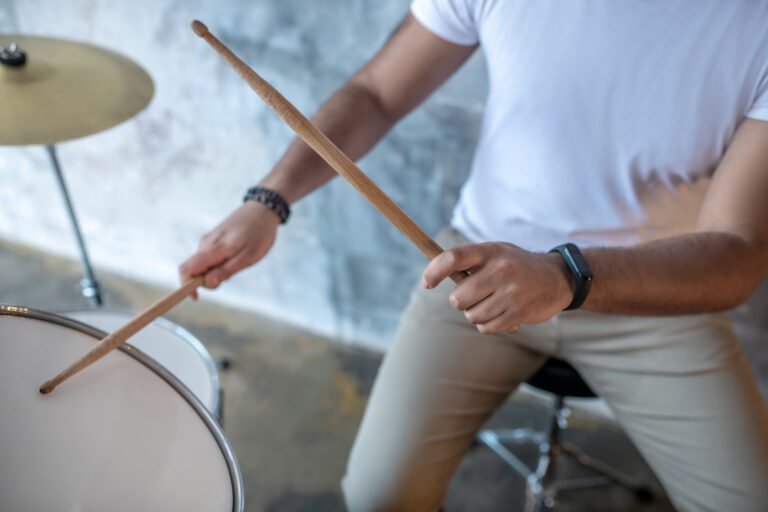
How Structured Learning Helps Beginners
Learning on your own can sometimes feel confusing. Structured lessons provide:
- Step-by-step guidance
- Proper technique correction
- Personalized feedback
- Faster improvement
At The Mystic Keys, beginners follow guided practice routines that ensure steady and effective learning.
Conclusion
A daily drum practice routine for beginners is the key to building strong fundamentals and becoming a confident drummer. By focusing on warm-ups, technique, rhythm, and creative practice, you can make consistent progress without feeling overwhelmed.
With patience, discipline, and the right guidance, drumming becomes both enjoyable and rewarding. At The Mystic Keys, structured learning helps students develop skills efficiently while building confidence and musical understanding.
If you are ready to improve your drumming skills, structured guidance through Guitar Lessons Online can help you build a strong foundation and grow as a musician.
For more information and exciting resources about learning music, visit our website at The Mystic Keys. For more music content and exciting offers follow us on
Facebook, Instagram, YouTube, LinkedIn, Twitter, Pinterest, and Threads.