Can AI Replace Musicians? The Future of Music and AI
Can AI replace musicians? This is one of the biggest questions emerging as artificial intelligence continues to transform the music industry. From generating melodies and creating beats to assisting with songwriting, mixing, and mastering, AI tools are becoming increasingly powerful.
For musicians, music teachers, producers, and listeners, this development raises an important question: Can AI really replace musicians?
The answer is more complicated than a simple yes or no. AI can perform many musical and technical tasks, but music is not only about producing sounds. Human musicians bring emotion, interpretation, creativity, experience, and personal expression to every performance.
The future of music may not be about AI replacing musicians. Instead, it may be about musicians learning how to use AI as a powerful creative tool.
How Is AI Changing the Music Industry?

AI is already being used in many areas of music production and education. Modern AI systems can analyze large amounts of musical information and use those patterns to generate new material.
Musicians and producers can use AI to help with:
- Melody and chord ideas
- Beat and rhythm generation
- Song arrangement
- Vocal and instrument separation
- Noise reduction
- Mixing and mastering
- Sound design
- Music recommendations
- Practice and learning assistance
These tools can reduce the time required for repetitive tasks and allow musicians to focus more on creative decisions.
For example, a producer may use AI to separate vocals from an instrumental track, while the final arrangement and artistic direction remain under human control.
Can AI Create Original Music?

AI can generate music that sounds remarkably convincing. It can create melodies, harmonies, rhythms, arrangements, and even complete musical compositions based on patterns learned from existing data.
However, generating music and being a musician are not necessarily the same thing.
A human musician can decide why a particular melody should be played softly, why a chord should create tension, or why a performance should suddenly become more powerful.
Those decisions are connected to musical understanding, personal taste, experience, and artistic intention.
AI can produce musical possibilities, but humans still play an important role in deciding which possibilities are meaningful.
What Makes Human Musicians Different?

Music is a form of human communication.
When a musician performs a song, the performance can be influenced by their emotions, memories, experiences, culture, and relationship with the audience.
Consider two pianists playing exactly the same composition. Both may play the correct notes, but their performances can still sound completely different.
One might emphasize certain phrases. Another might use different dynamics or timing. A third might add subtle improvisation.
These differences are part of what makes music personal.
Human musicians contribute qualities such as:
- Emotional expression
- Musical interpretation
- Personal style
- Improvisation
- Creativity
- Cultural understanding
- Live interaction
- Artistic intention
Technology can assist these qualities, but it does not automatically replace them.
Can AI Replace Live Musicians?

Live music presents a different challenge for AI.
A live performance is not simply a sequence of notes. Musicians respond to the audience, other performers, the acoustics of the room, and the energy of the moment.
A drummer might change their rhythm based on the guitarist. A singer might extend a phrase because the audience is responding strongly. A pianist might change the dynamics of a performance depending on the atmosphere.
These spontaneous interactions are difficult to reproduce perfectly because every live performance is different.
AI may become increasingly useful in live music, but the human connection between performer and audience will continue to have significant value.
AI Can Be a Tool for Musicians

Instead of asking whether AI will replace musicians, it may be more useful to ask:
How can musicians use AI to become better at what they do?
AI can act as a creative assistant.
A songwriter could use it to explore different chord progressions. A producer could experiment with arrangements. A musician could use AI-powered tools to analyze a recording or improve audio quality.
The musician remains responsible for the creative direction.
This is similar to how musicians have adopted technology throughout history. Recording software, synthesizers, digital audio workstations, drum machines, and other technologies changed music without eliminating the need for human creativity.
AI is another technological development that can expand the creative possibilities available to musicians.
Will AI Replace Some Music Jobs?
Although AI may not completely replace musicians, it could change certain jobs within the music industry.
Tasks that are repetitive, highly technical, or based heavily on predictable patterns are more likely to become automated.
For example, AI may increasingly assist with:
- Basic audio editing
- Noise removal
- Track organization
- Some mixing processes
- Background music generation
- Music tagging and categorization
- Routine production tasks
This does not necessarily mean that musicians will disappear.
Instead, the skills expected from musicians and music professionals may change. People who understand both music and technology may have new opportunities.
Why Learning Music Still Matters
With AI becoming capable of generating music, some people may wonder whether learning an instrument is still worthwhile.
The answer is yes.
Learning piano, guitar, vocals, drums, violin, or another instrument develops skills that technology cannot simply replace.
- Rhythm and timing
- Listening skills
- Coordination
- Discipline
- Creativity
- Musical understanding
- Confidence
- Performance ability
More importantly, learning music gives you the ability to express your own ideas.
AI can generate a chord progression, but understanding harmony helps you decide whether that progression actually works for your song.
AI can generate a melody, but musicianship helps you interpret and transform that melody.
The Future of Music and AI
The future will likely involve greater collaboration between musicians and artificial intelligence.
AI may become an everyday part of songwriting, production, education, and performance. Musicians who understand how to use these tools effectively may be able to experiment faster and explore ideas that would previously have taken much more time.
At the same time, fundamental musical skills will remain important.
Understanding rhythm, harmony, melody, technique, dynamics, and musical expression gives musicians the knowledge required to make meaningful creative decisions.
The most successful musicians of the future may not be those who avoid AI or depend entirely on it. They may be the musicians who understand when to use AI and when human creativity matters most.
Can AI Replace Musicians? The Final Answer
So, can AI replace musicians?
AI can replace or automate certain musical tasks, and it will undoubtedly change how music is created and produced. Some roles may evolve as AI becomes more capable.
But completely replacing human musicians is a different matter.
Music is more than notes, chords, rhythms, and sounds. It is also expression, interpretation, communication, and connection.
AI can generate music, but musicians give music personality and meaning.
The future is therefore more likely to be AI working alongside musicians rather than AI replacing musicians completely.
The musicians who continue developing their creativity, musical knowledge, performance skills, and ability to use new technology will be well positioned for the changing music industry.
Learn Music for the Future
Technology will continue to evolve, but strong musical foundations will always be valuable.
Whether you want to learn piano, guitar, vocals, keyboard, drums, violin, or music theory, developing real musical skills can help you become a more confident and creative musician.
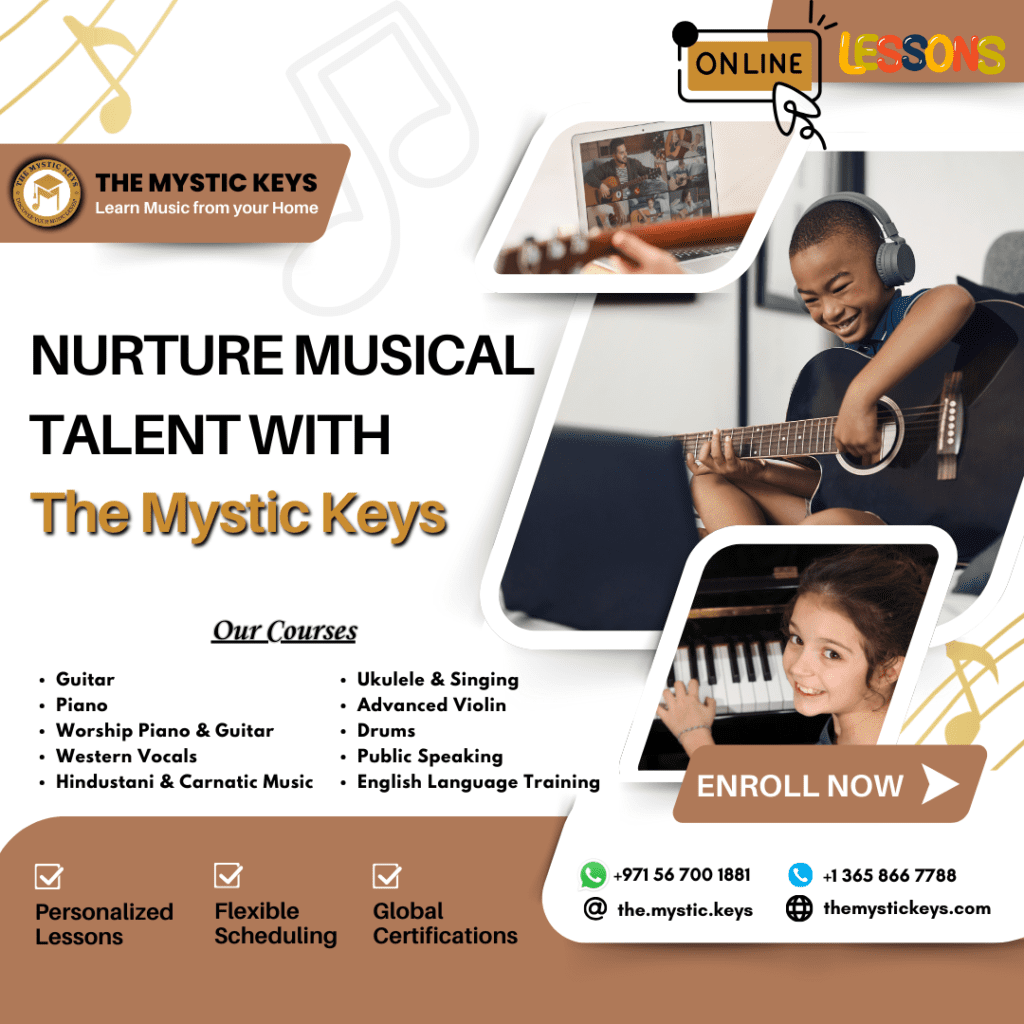
The Mystic Keys provides live online music lessons for learners at different levels, with personalized guidance and structured training.
Start developing your musical skills today and learn how to create, understand, and perform music in a world where technology and creativity work together.
Intersted in learning music with us? Register now
For more information and exciting resources about learning music, visit our website at The Mystic Keys. For more music content and exciting offers follow us on
Facebook, Instagram, YouTube, LinkedIn, Twitter, Pinterest, and Threads.