
Billy Joel Piano Techniques | What Every Pianist Can Learn
Billy Joel is widely recognised not only as a singer-songwriter, but also as a pianist whose playing has helped define some of the most memorable songs in popular music. His piano parts can sound effortless, yet they often contain a thoughtful combination of rhythm, harmony, dynamics, phrasing, and musical storytelling. Studying Billy Joel Piano Techniques offers pianists an opportunity to look beyond the notes and understand how these elements work together to create expressive, memorable performances.
For pianists, studying Billy Joel is particularly valuable because his playing demonstrates an important lesson: technical ability becomes much more powerful when it serves the song. Rather than relying on complexity for its own sake, his piano work shows how chords, rhythm, accents, fills, and dynamics can create a distinctive musical identity.
Whether you are a beginner learning your first pop song or an experienced pianist looking to develop a stronger musical voice, there is plenty to learn from his approach.
Billy Joel Piano Techniques for Understanding Rhythm
One of the most noticeable aspects of Billy Joel’s piano playing is his strong sense of rhythm. His parts often feel firmly connected to the pulse of the song, giving the music energy and forward movement.
A pianist can play technically correct notes and still make a performance feel flat if the rhythm lacks confidence. Joel’s playing demonstrates how important it is to understand where each note sits within the beat. The left hand may establish a steady rhythmic foundation while the right hand adds chords, melodies, or accents that interact with it.
This is especially useful for pianists learning pop and rock styles. Instead of simply concentrating on playing the correct chord at the correct moment, listen to how the chord is played. Is it sustained? Short and percussive? Accented? Does it arrive exactly on the beat, or does it create movement around the beat?
That attention to rhythmic character can transform a basic accompaniment into something much more expressive.

Building Strong Left-Hand Patterns
The left hand plays an important role in creating the weight and movement behind many of Joel’s piano arrangements. Rather than treating the left hand as something that simply plays bass notes, pianists can study how bass movement contributes to the overall character of a song.
A strong left hand provides stability while leaving enough space for the right hand to communicate the musical idea. Depending on the song, this might involve repeated rhythmic figures, bass-note movement, octave patterns, or chord-based accompaniment.
For developing pianists, this offers a useful practice approach. Start by playing the left-hand part alone until the rhythm feels natural. Once that foundation becomes comfortable, introduce the right hand gradually. This helps develop independence between the hands instead of allowing one hand to simply follow the other.
The result is greater control, particularly when playing energetic pop and rock arrangements.
Billy Joel Piano Techniques and Chord Voicings
Billy Joel’s music also provides an excellent opportunity to explore chord voicings. A chord is not defined only by the notes it contains; the way those notes are arranged can dramatically change its sound.
Two pianists can play the same chord progression and produce very different results simply by using different inversions, spacing, or registers.
Studying Joel’s songs can therefore encourage pianists to move beyond basic root-position chords. Try experimenting with inversions and keeping common tones between neighbouring chords. This can make chord changes smoother while also creating a more polished accompaniment.
Extended chords can add another layer of colour. Major sevenths, minor sevenths, suspended chords, and other harmonic variations can bring sophistication to an otherwise familiar progression.
However, the key lesson is not to add complicated chords simply because they are available. The most effective voicing is usually the one that supports the emotion and direction of the music.

Playing With Dynamics Instead of Playing Every Note the Same Way
Another important lesson comes from the way Joel uses dynamics. A performance becomes much more engaging when the volume, intensity, and articulation change according to the musical moment.
Imagine playing a song with exactly the same force from beginning to end. Even if every note is accurate, the result can feel predictable. Dynamics create contrast, allowing important sections to feel bigger while quieter moments have room to breathe.
Pianists can practise this by deliberately exaggerating dynamic differences during rehearsal. Play a verse softly and controlled, then gradually increase intensity as the arrangement develops. Pay attention to how the emotional impact changes when the same notes are played with different levels of energy.
This approach is particularly useful for pianists who tend to focus heavily on accuracy. Once the notes become secure, expression should become part of the practice rather than something added at the very end.
Learning to Make the Piano Part Support the Vocal
Billy Joel’s music also demonstrates the relationship between piano and voice. In a singer-songwriter arrangement, the piano is rarely competing with the vocalist. Instead, it helps establish the harmony, rhythm, atmosphere, and emotional direction of the song.
That means pianists need to develop the ability to listen beyond their own instrument.
When accompanying a singer, avoid automatically filling every space with additional notes. A short musical response can sometimes be more effective than a busy passage. Leaving space allows the vocal line to remain clear while the piano continues to provide support underneath.
This principle applies even when playing solo arrangements. A pianist can think of the right hand as carrying some of the vocal character while the left hand establishes the foundation. Such thinking helps the performance feel like a complete musical conversation rather than simply a sequence of notes.
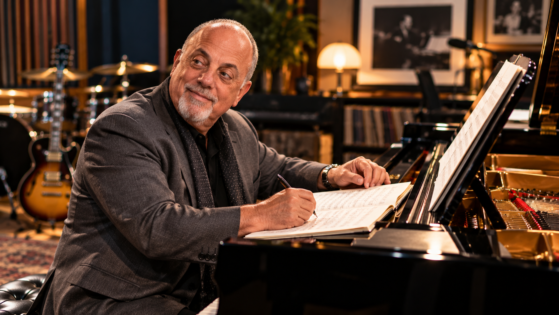
Billy Joel Piano Techniques for Using Fills
Piano fills are another valuable area to study. A well-placed fill can connect vocal phrases, build anticipation, or provide a transition into another section.
The temptation for many developing pianists is to add too many fills. Once a player learns a few impressive runs, it can be difficult to resist using them everywhere. Yet musical maturity often comes from knowing when not to play.
Study where a fill occurs and, more importantly, why it occurs. Does it answer the vocal phrase? Does it lead into a chorus? Does it increase energy before an important section?
Thinking about function makes improvisation more musical. Instead of memorising isolated runs, pianists begin to understand how short ideas can be shaped around the structure of a song.
Developing Independence Between the Hands
Billy Joel’s style can also encourage pianists to develop greater coordination between the left and right hands. Different rhythmic patterns can occur simultaneously, creating movement and texture without making the music feel cluttered.
This independence does not develop overnight. It comes from practising each component separately before combining them.
One effective method is to simplify the right hand while establishing the left-hand rhythm. Once the left hand becomes automatic, add the right-hand chords or melodic figure. Gradually increase the complexity rather than attempting the entire arrangement immediately.
This approach is useful well beyond Billy Joel’s music. Strong hand independence supports jazz, blues, classical, gospel, pop, rock, and many other piano styles.

Billy Joel Piano Techniques and Musical Phrasing
Phrasing is what makes a sequence of notes sound like a musical thought rather than an exercise. Billy Joel’s piano parts provide many opportunities to study this concept because the piano frequently interacts with the vocal melody and overall structure.
A phrase needs direction. Some notes may need emphasis, while others function as connecting points. Certain chords can be allowed to ring, whereas others may benefit from a shorter articulation.
Try singing or humming the musical phrase before playing it. Then reproduce that sense of movement on the piano. This simple exercise can help pianists develop a more natural understanding of musical expression.
Eventually, phrasing becomes less about consciously deciding what to emphasise and more about instinctively shaping the music.
Blending Technique With Emotion
Perhaps the biggest lesson pianists can take from Billy Joel is that technique should serve expression.
Fast playing, complicated chords, large jumps, and impressive fills can demonstrate skill, but they do not automatically create a memorable performance. What makes a piano part effective is how those techniques contribute to the identity of the song.
A pianist who understands this principle can approach practice differently. Instead of asking only, “Can I play this?” it becomes useful to ask, “What is this part trying to communicate?”
That change in perspective can make practice more purposeful. Accuracy remains important, but it becomes one part of a larger musical goal.
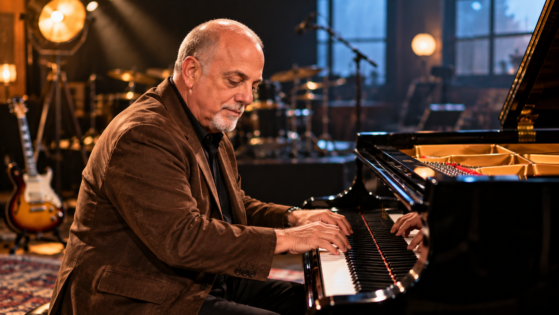
What Beginners Can Learn From Billy Joel
Beginners do not need to reproduce every detail of a professional arrangement to benefit from studying Billy Joel. In fact, starting with the basic structure can be more productive.
Choose a song and identify its chord progression first. Work on keeping a steady pulse, then practise simple left-hand bass notes and right-hand chords. Once the foundation is comfortable, gradually introduce rhythm variations, inversions, fills, and dynamic changes.
This creates a natural progression from playing the notes to understanding the music.
Beginners can also learn an important confidence-building lesson: a simple arrangement played with good rhythm and expression can sound far more musical than a complicated arrangement played without control.
What Advanced Pianists Can Explore
More experienced players can take the study further by analysing harmony, voicing, rhythmic placement, accompaniment patterns, and arrangement choices.
Transcribing short sections by ear can be particularly valuable. Rather than immediately searching for a complete transcription, choose a few measures and try to identify the bass movement, chord quality, rhythm, and melodic details yourself.
That process develops listening skills alongside technique. Over time, pianists become better at recognising musical patterns and reproducing them in unfamiliar songs.
Improvisation is another natural extension. Once you understand the harmonic structure, experiment with creating your own fills and transitions while maintaining the original groove. This turns imitation into a pathway toward developing your own musical vocabulary.

The Bigger Lesson | Play for the Song
Billy Joel’s piano playing shows that great technique is about more than playing the right notes. Rhythm creates movement, chord voicings add colour, dynamics bring contrast, and phrasing turns technique into expression.
For pianists, the goal is not to fill every moment with complexity, but to understand how each note supports the song.
With Piano Lessons Online from The Mystic Keys, students can develop these skills through personalised one-on-one guidance, building technique while learning to play with greater confidence, control, and musical expression.
The bigger lesson is simple: don’t just play the notes—make them meaningful.
For more information and exciting resources about learning music, visit our website at The Mystic Keys. For more music content and exciting offers follow us on
Facebook, Instagram, YouTube, LinkedIn, Twitter, Pinterest, and Threads.