Beginner Piano Lessons Online A Complete Guide to Starting Your Piano Journey
Learning to play the piano has never been more accessible. With beginner piano lessons online, students can learn from experienced teachers from the comfort of their homes, without needing to travel to a music school. Online piano lessons provide flexibility, personalized instruction, and a structured way to develop essential piano skills from the very beginning.
Whether you are an adult learning piano for the first time, a parent looking for lessons for your child, or someone who simply wants to develop a new musical skill, online piano lessons can provide a convenient and effective learning experience.
What Are Beginner Piano Lessons Online?
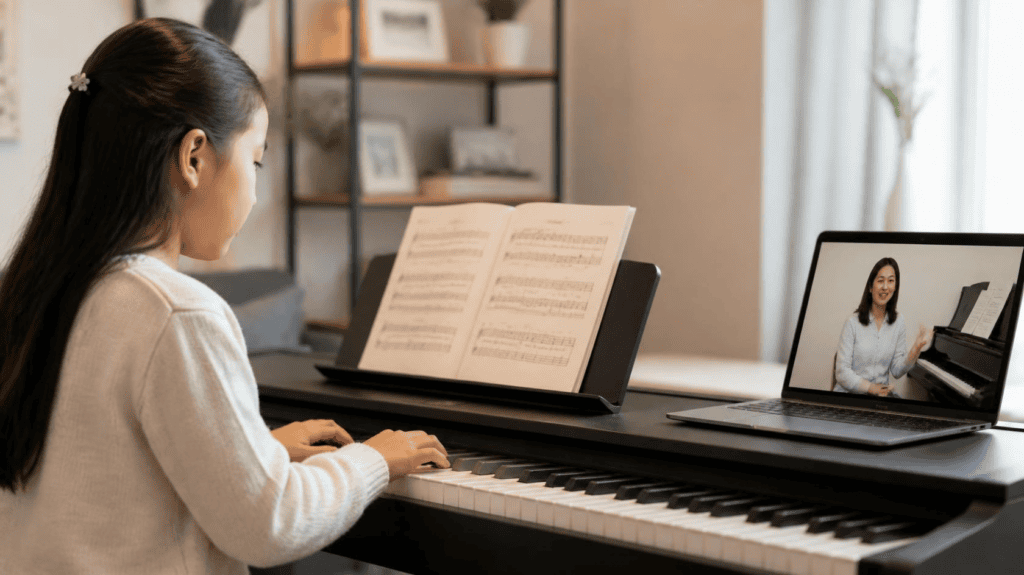
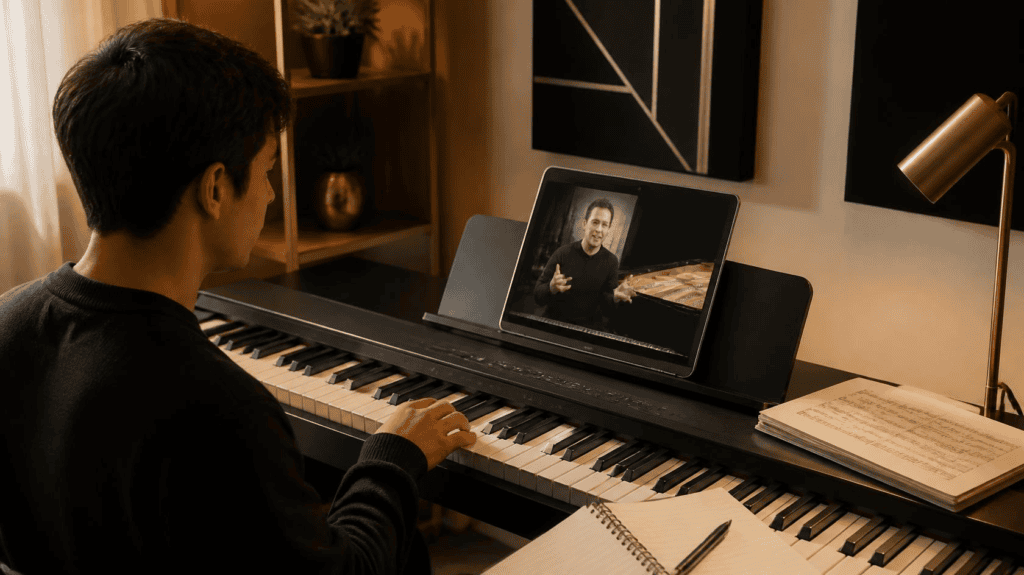
Beginner piano lessons online are live or structured piano classes delivered through the internet. Students typically learn through video lessons, one-on-one classes, practice assignments, digital learning materials, and feedback from a piano teacher.
Unlike self-learning through random online videos, professional online piano lessons follow a progressive learning structure. Students can develop their skills step by step while receiving guidance based on their individual abilities.
A good beginner program may cover:
- Piano and keyboard orientation
- Correct sitting posture
- Hand and finger positioning
- Basic music notation
- Reading notes
- Rhythm and counting
- Scales and simple exercises
- Chords
- Basic music theory
- Playing simple songs
- Ear training
- Sight-reading
- Performance skills
What Will You Learn in Your First Piano Lessons?
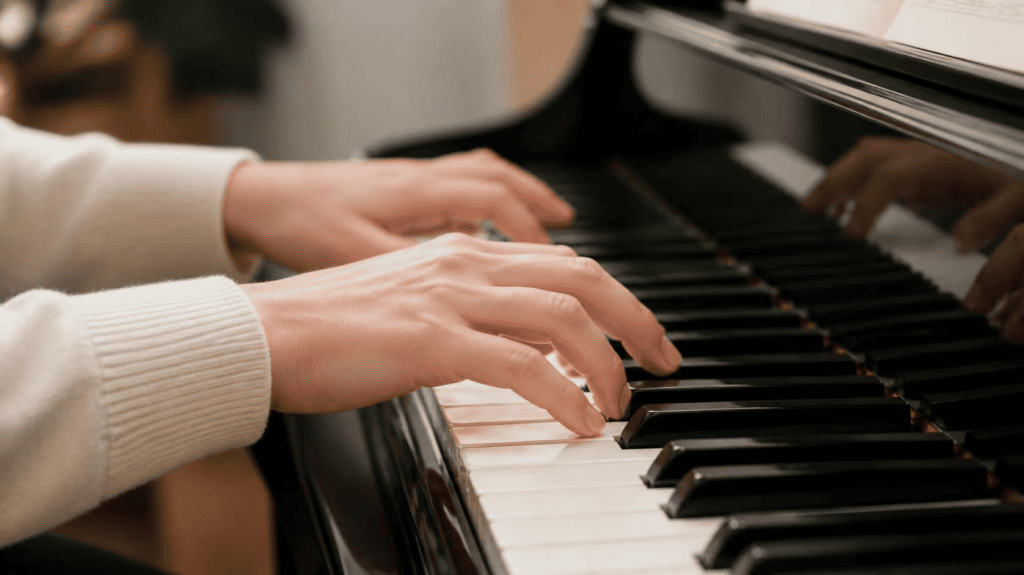
Online piano learning has become increasingly popular because it offers flexibility without removing the benefits of teacher-led instruction.
1. Learn From Home
One of the biggest advantages of beginner piano lessons online is convenience. Students can attend their lessons from home without spending time travelling to a physical music school.
All you need is a suitable piano or keyboard, a stable internet connection, and a quiet space for your lesson.
2. One-on-One Personalized Learning
Private online lessons allow the teacher to focus directly on the student’s needs. Beginners can ask questions, receive immediate corrections, and learn at a pace that feels comfortable.
This is especially helpful when developing finger technique, rhythm, posture, and note-reading skills.
3. Flexible Scheduling
Online lessons can be easier to fit into busy schedules. Students may be able to choose lesson times that work around school, work, family commitments, or other activities.
This flexibility can make it easier to maintain a consistent practice routine.
4. Learn From Experienced Teachers
Online learning removes geographical limitations. Students are not restricted to teachers available in their local area.
They can potentially learn from experienced instructors who specialize in piano education, beginner training, music theory, performance, or specific musical styles.
5. Structured Progress
Professional piano lessons should follow a clear progression rather than teaching random songs without developing fundamental skills.
A structured course can help students move from basic exercises toward more advanced pieces as their technique and musical understanding improve.
What Do You Learn in Beginner Piano Lessons?
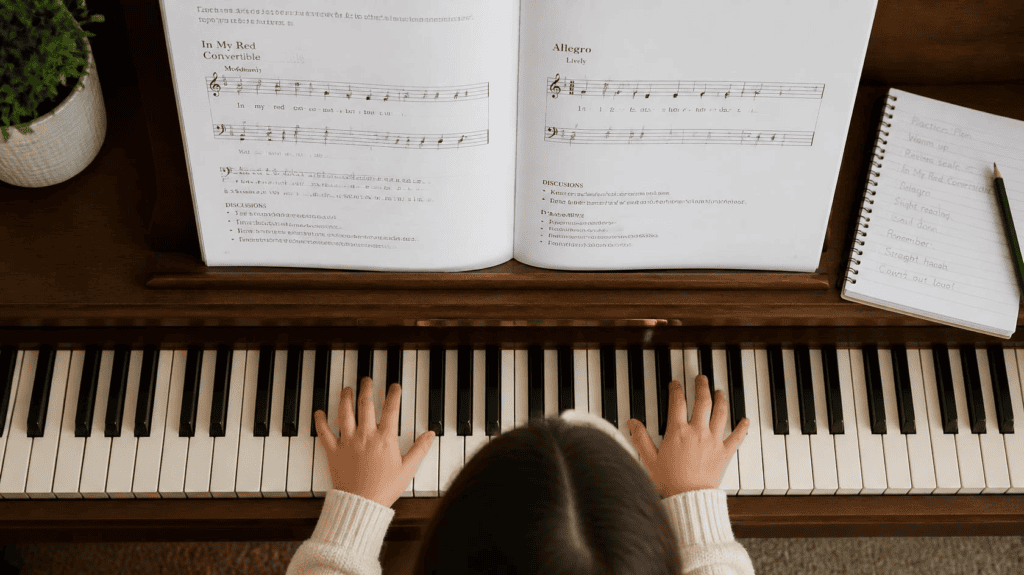
A beginner piano course should establish strong fundamentals before moving toward more difficult pieces.
Understanding the Piano Keyboard
The first step is becoming familiar with the keyboard. Students learn how the keys are arranged and how patterns can help them identify different notes.
Beginners also learn basic terminology such as:
- Octaves
- Middle C
- White keys
- Black keys
- Sharps
- Flats
- Semitones
Understanding the keyboard gives students a foundation for everything they learn later.
Proper Hand and Finger Position
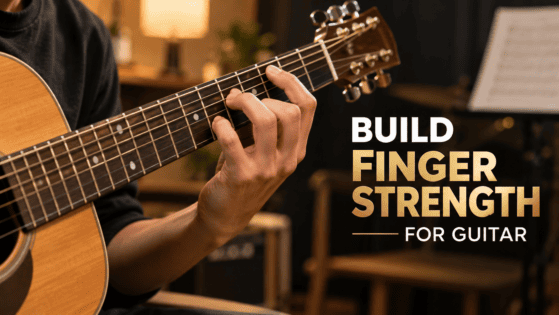
Good technique starts with proper positioning. Beginners learn how to sit comfortably, position their hands, and use their fingers efficiently.
Developing these habits early can make future playing easier and more comfortable.
Reading Music
Learning to read music is an important part of piano education. Students gradually learn staff notation, treble clef, bass clef, note values, rests, and basic musical symbols.
Music reading allows students to learn new pieces independently instead of relying entirely on memorization.
Rhythm and Timing
Piano playing is not only about pressing the correct keys. Timing and rhythm are equally important.
Beginners may learn:
- Whole notes
- Half notes
- Quarter notes
- Eighth notes
- Rests
- Time signatures
- Counting patterns
Rhythm exercises help students develop a reliable sense of timing.
Scales and Finger Exercises
Simple scales and technical exercises help beginners become more comfortable moving around the keyboard.
These exercises can improve coordination, finger control, and familiarity with different keys.
Chords
Chords introduce beginners to harmony and allow them to accompany melodies and songs.
Students may begin with basic major and minor chords before progressing to more complex chord patterns.
Playing Simple Songs
One of the most motivating parts of learning piano is playing recognizable songs.
A good teacher can choose pieces that match the student’s current ability while gradually introducing new techniques and musical concepts.
How Online Piano Lessons Work
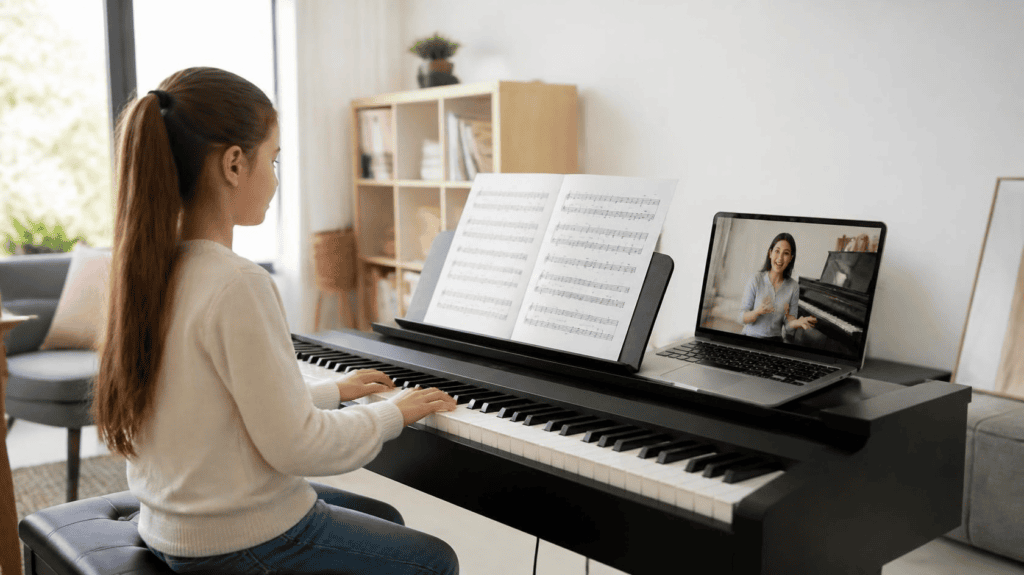
The exact format varies between music schools and teachers, but a typical online lesson may include several stages.
Step 1: Warm-Up
The lesson may begin with finger exercises, scales, or simple technical activities.
Step 2: Review
The teacher reviews material from the previous lesson and identifies areas that need improvement.
Step 3: New Concept
The student learns a new technique, musical concept, scale, chord, or piece.
Step 4: Guided Practice
The teacher demonstrates the technique and guides the student while they practice.
Step 5: Feedback
The teacher identifies mistakes and provides corrections to improve technique and accuracy.
Step 6: Practice Assignment
The student receives specific exercises or pieces to practice before the next class.
This structure helps create consistent progress over time.
Are Beginner Piano Lessons Online Suitable for Children?
Yes. Online piano lessons can work well for children when the lessons are designed to be interactive and age-appropriate.
Children generally benefit from:
- Short and engaging activities
- Simple musical exercises
- Familiar songs
- Interactive teaching
- Regular encouragement
- Clear practice goals
- Positive feedback
Parents can also support their child’s progress by creating a regular practice schedule and providing a suitable keyboard or piano at home.
Are Online Piano Lessons Suitable for Adults?
Absolutely. Adults can begin learning piano at any age.
Many adult beginners worry that they are “too old” to learn an instrument. In reality, adults can learn effectively when they have consistent lessons and regular practice.
Online lessons can be particularly convenient for adults because they can fit around professional and personal commitments.
A teacher can also adapt the course according to the student’s goals, whether they want to play casually, accompany singing, understand music theory, or prepare for graded examinations.
How Much Should You Practice Between Lessons?
Consistency is generally more important than practicing for long hours occasionally.
For beginners, a short and focused daily practice session can be more useful than a single long session once a week.
A practice session might include:
- Five minutes of warm-up
- Ten minutes of technical exercises
- Ten minutes of music reading
- Fifteen minutes of song practice
- Five minutes reviewing difficult sections
The exact amount depends on the student’s age, goals, schedule, and experience.
How to Choose the Right Beginner Piano Lessons Online
Not every online piano course provides the same learning experience. Before enrolling, consider the following factors.
Qualified and Experienced Teachers
Look for teachers who have relevant musical qualifications, teaching experience, and a strong understanding of beginner piano education.
One-on-One or Small Group Classes
For students who want personalized attention, one-on-one lessons can be particularly beneficial. The teacher can identify mistakes immediately and adjust the lesson to the student’s pace.
Structured Curriculum
Check whether the course has a clear syllabus. A structured curriculum should cover technique, music reading, rhythm, theory, repertoire, and progressive skill development.
Trial or Demo Class
A trial lesson can help students understand the teacher’s teaching style before committing to a course.
Lesson Recordings
If recordings are provided, students can review their lessons later. This can be useful when practicing difficult concepts or remembering teacher instructions.
Exam and Certification Support
Students interested in formal music examinations should check whether the teacher or institution provides guidance for recognized graded examinations.
Suitable Equipment
Before starting, make sure you have an appropriate piano or keyboard. Beginners do not necessarily need the most expensive instrument, but the keyboard should provide a comfortable playing experience and enough keys for the course.
Common Mistakes Beginners Should Avoid
Learning piano can be rewarding, but beginners sometimes develop habits that slow their progress.
Simply playing random notes for an extended period does not necessarily lead to improvement.
Follow a practice routine based on the teacher’s instructions.
Ignoring Technique
Beginners sometimes focus entirely on learning songs and overlook posture, hand position, and finger technique.
Strong fundamentals become increasingly important as the music becomes more difficult.
Playing Too Fast
Trying to play a piece at full speed before learning the notes accurately can lead to repeated mistakes.
Start slowly and gradually increase the tempo.
Skipping Practice
Inconsistent practice can make it difficult to remember previously learned skills.
Even a short practice session can help maintain progress.
Comparing Your Progress With Others
Every student learns at a different pace. Focus on your own improvement rather than comparing yourself with another learner.
How Long Does It Take to Learn Piano as a Beginner?
There is no single timeline for learning piano. Progress depends on several factors, including:
- Practice frequency
- Lesson quality
- Previous musical experience
- Age
- Learning goals
- Practice technique
- Individual learning pace
With consistent lessons and practice, beginners can gradually develop the ability to read music, play simple pieces, understand basic chords, and perform confidently.
The goal should not be to rush through the beginner stage. Building strong fundamentals creates a better foundation for long-term development.
Beginner Piano Lessons Online at The Mystic Keys
The Mystic Keys provides online music education for learners who want structured and personalized music lessons from home.
For beginners, online piano lessons can provide a practical starting point for learning keyboard fundamentals, music reading, technique, chords, rhythm, and repertoire.
With one-on-one live sessions, students can receive direct guidance and feedback from their teacher while progressing according to their individual level.
Students can also work toward developing their skills from beginner to more advanced levels through a structured learning approach.
Frequently Asked Questions
Can a complete beginner learn piano online?
Yes. Online piano lessons can be suitable for students who have never played an instrument before. A qualified teacher can introduce the fundamentals step by step.
Do I need a piano at home?
You need access to a piano or keyboard for effective practice. A suitable digital keyboard can be sufficient for many beginners, depending on the course requirements.
Are online piano lessons better than learning from YouTube?
YouTube can be useful for supplementary learning, but teacher-led lessons provide personalized feedback, structured progression, and correction of mistakes.
How often should beginners have piano lessons?
Many students benefit from having a regular weekly lesson combined with consistent practice between classes. The ideal schedule depends on the student’s goals and availability.
Can children take piano lessons online?
Yes. Children can learn effectively online when lessons are interactive, appropriately paced, and supported by regular practice.
Can adults start piano lessons with no musical experience?
Yes. Adults can begin piano at any age and without previous musical training.
Can I learn different styles of music?
Depending on the teacher and course, students may learn different styles such as classical, pop, contemporary, worship, or other forms of music.
Starting piano does not have to be complicated. With the right teacher, structured lessons, suitable equipment, and regular practice, beginners can steadily develop their musical skills.
Beginner piano lessons online offer the flexibility of learning from home while still providing the personal guidance and feedback that can make a major difference in a student’s progress.
Whether your goal is to play your favorite songs, understand music theory, accompany singing, prepare for graded examinations, or simply develop a lifelong musical skill, starting with strong fundamentals is the best way to build confidence at the piano.
Intersted in learning music with us? Register now
For more information and exciting resources about learning music, visit our website at The Mystic Keys. For more music content and exciting offers follow us on
Facebook, Instagram, YouTube, LinkedIn, Twitter, Pinterest, and Threads.