
Piano Learning for Advanced Learners
Learning piano does not stop when a student becomes technically proficient. In many ways, reaching an advanced level opens the door to a completely different stage of musical development. At this point, the focus gradually moves beyond simply playing the correct notes and toward interpretation, tone, phrasing, musical independence, improvisation, repertoire depth, and individual expression. Piano Learning for Advanced Learners requires a more thoughtful approach because advanced students often need highly specific guidance rather than a general sequence of exercises.
An advanced pianist may already be comfortable with scales, arpeggios, chords, sight-reading, and demanding repertoire. However, technical ability alone does not automatically produce a mature performance. Two pianists can play exactly the same notes and create completely different musical experiences. The difference often comes from touch, timing, articulation, pedaling, dynamics, phrasing, harmonic awareness, and the ability to understand the character of the music. Advanced learning is therefore about transforming technical control into meaningful musical communication.
What Changes at the Advanced Level?
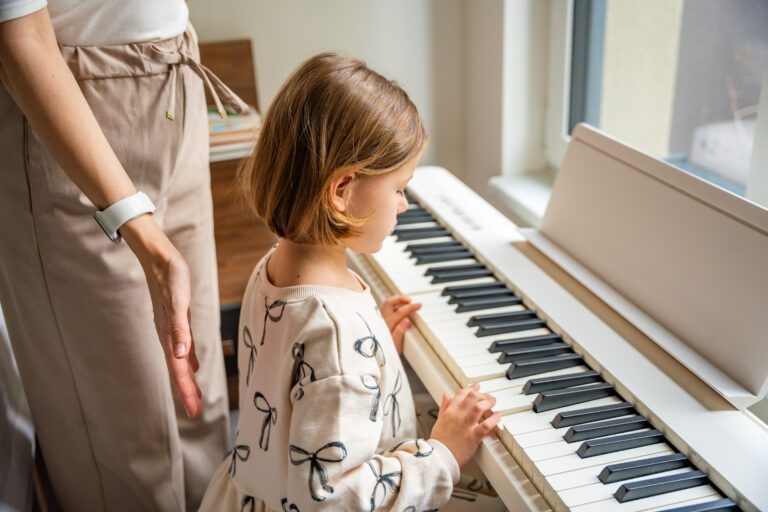
At beginner and intermediate levels, much of piano learning involves acquiring fundamental skills. Students learn how to read music, coordinate both hands, develop finger technique, understand basic theory, and play increasingly challenging pieces.
At an advanced level, these foundations should already be reasonably secure. The challenge becomes using them with greater freedom and control.
Technique Becomes a Tool for Expression
An advanced pianist should not practice technique simply to become faster.
Technique should make musical expression easier.
A pianist may need exceptional finger control for a rapid passage, but the ultimate purpose is to make that passage sound effortless and musical. Technical exercises become more meaningful when they are connected to actual repertoire and expressive goals.
Advanced Pianists Need Deeper Musical Understanding
Playing difficult notes accurately is only one part of advanced musicianship.
Students need to understand how a composition is constructed.
They should be able to identify phrases, themes, harmonic movement, cadences, modulations, recurring patterns, and structural sections.
Analyze Before You Perform
Before spending hours repeating a difficult passage, take time to understand what is happening musically.
Ask why the composer wrote a particular harmonic progression.
Identify where a phrase begins and ends.
Look for repeated ideas.
Notice where the music changes character.
This analysis can influence decisions about dynamics, articulation, tempo, and phrasing.
Developing Individual Interpretation
One of the most important goals of advanced piano study is developing an individual interpretation.
A technically correct performance can still sound emotionally flat if every phrase is played in exactly the same manner.
Advanced pianists need to make thoughtful choices about how they want the music to communicate.
Don’t Simply Copy Recordings
Listening to great pianists can be extremely educational, but copying another musician’s interpretation completely can prevent you from developing your own musical voice.
Listen to different performances.
Notice how they differ in tempo, articulation, dynamics, pedaling, and phrasing.
Then consider what interpretation feels convincing to you and why.
Advanced Piano Learning Requires Refined Touch
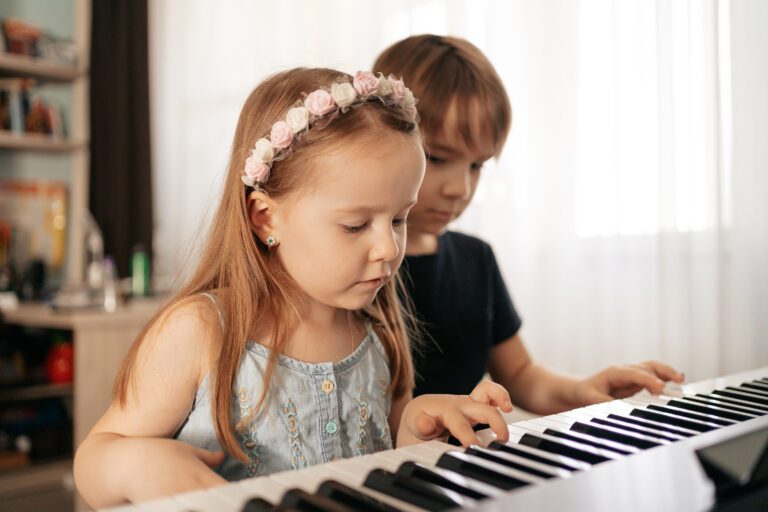
Touch becomes increasingly important as pianists progress.
At an advanced level, simply playing a note correctly is not enough.
The pianist needs to control how that note begins, how long it speaks, how it connects to neighboring notes, and how it balances with everything else.
Learn to Control Different Types of Touch
Different musical situations may require different approaches.
A passage might need a light, delicate touch.
Another may require weight and depth.
A melody may need a singing quality while the accompaniment remains soft and understated.
Developing these differences allows the piano to become much more expressive.
Dynamics Are More Than Loud and Soft
Advanced dynamics involve much more than simply following markings such as piano and forte.
The pianist needs to shape the direction of a phrase.
A crescendo may need to begin subtly and grow gradually.
A diminuendo may need to release tension rather than simply become quieter.
Shape the Entire Musical Sentence
Think of a phrase as something that moves toward a destination.
Where is its emotional peak?
Where does the tension increase?
Where does it resolve?
These questions help create natural musical phrasing.
Pedaling Requires Precision
Pedaling can dramatically affect the sound of advanced piano repertoire.
Too little pedal can make music sound dry or disconnected.
Too much pedal can blur harmony and articulation.
The goal is not simply to follow pedal markings mechanically.
Listen to the Harmony
Pedaling should respond to harmonic movement and the acoustic environment.
Change the pedal when necessary to keep the harmony clear.
In some passages, partial or carefully timed pedal changes may produce a cleaner result than simply holding the pedal continuously.
The ear should ultimately guide the decision.
Advanced Students Should Practice Slowly
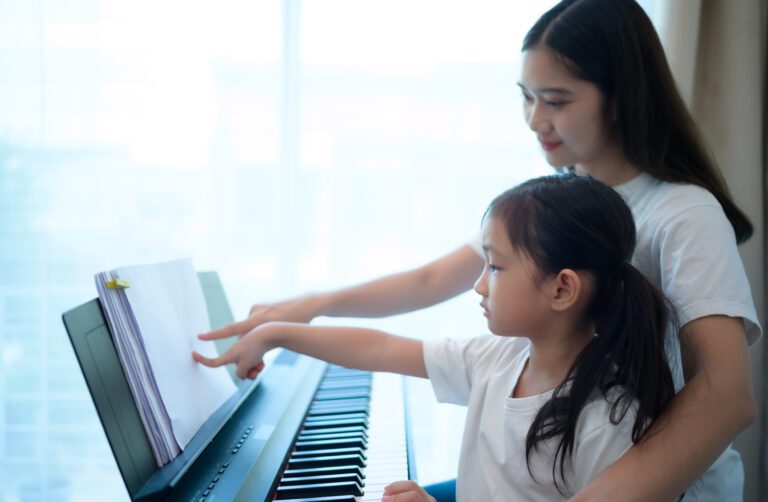
Even experienced pianists benefit enormously from slow practice.
When playing at performance speed, mistakes can sometimes pass unnoticed because everything happens so quickly.
Slow practice exposes unnecessary tension, unevenness, inaccurate rhythm, and weak finger control.
Slow Practice Reveals Details Piano Learning Advanced
Practice difficult passages slowly enough that you can hear every note.
Pay attention to balance between the hands.
Listen to articulation.
Observe tension in the wrists and shoulders.
Then gradually return to faster tempos.
Work on Difficult Passages Separately
Advanced repertoire can contain extremely demanding sections.
Playing the entire piece repeatedly is not always the most efficient way to improve.
Isolate the Technical Problem
If one arpeggio passage is causing difficulty, practice that passage separately.
If a leap is unreliable, work specifically on the movement between the two positions.
If a rhythm is difficult, practice the rhythm independently.
Targeted practice allows you to solve the actual problem instead of repeatedly running into it during full performances.
Develop Greater Hand Independence
At an advanced level, the two hands often have completely different musical roles.
One hand may carry a melody while the other provides a delicate accompaniment.
Sometimes both hands may contain independent melodic lines.
Listen to Each Layer
Practice each musical layer separately.
Identify which voice should be prominent.
Then combine the parts while maintaining that balance.
This is particularly important in contrapuntal music, where several independent voices need to remain clear.
Learn to Bring Out Inner Voices

Advanced repertoire frequently contains important musical information that is not located in the highest note.
An inner voice may contain a secondary melody or harmonic movement.
Practice Voices Separately
Try playing the inner melody alone.
Then add the surrounding material quietly.
This teaches your hands to distribute weight between different fingers and voices.
The result is a more sophisticated and transparent performance.
Expand Your Repertoire
Advanced pianists benefit from exploring different composers, periods, and musical styles.
Playing only one type of repertoire can limit musical development.
Explore Baroque counterpoint, Classical forms, Romantic expression, Impressionistic textures, contemporary compositions, jazz, popular music, worship music, or other styles that interest you.
Different Styles Develop Different Skills
Baroque music can strengthen articulation and independence.
Classical repertoire develops structural awareness and clarity.
Romantic music challenges phrasing and expressive control.
Jazz can develop harmony, rhythm, and improvisation.
Contemporary music can introduce different textures and rhythmic approaches.
A broad repertoire can make you a more versatile musician.
Improvisation Can Take Advanced Playing Further
Improvisation is an excellent way to develop musical independence.
When reading a score, the pianist follows decisions already made by the composer.
During improvisation, the pianist must make musical decisions in real time.
Experiment Without Fear
Try improvising over a simple chord progression.
Change the rhythm.
Create variations of a familiar melody.
Move the melody into a different register.
Experiment with different harmonic colors.
Improvisation can help pianists become more comfortable making creative choices.
Advanced Pianists Should Strengthen Their Ear

At higher levels, the ear becomes increasingly important.
A pianist should be able to hear when something is rhythmically uneven, harmonically unclear, or poorly balanced.
Listen Before You Correct
Instead of immediately looking at the score after making a mistake, listen to what sounded wrong.
Can you identify the problem?
Was the note too loud?
Was the rhythm late?
Was the phrase disconnected?
Was the harmony unclear?
Developing this awareness makes you more independent as a musician.
Memorization Should Go Beyond Finger Memory
Advanced pianists often perform from memory, but relying only on muscle memory can be risky.
A strong memory system includes several layers.
You should understand the harmonic progression, structure, melodic patterns, fingering, and physical movements.
Know the Music Away From the Piano
Try mentally reviewing the piece without playing it.
Can you visualize the opening?
Can you identify the chord progression?
Can you hear the melody internally?
Can you describe the structure?
Mental practice can strengthen your understanding and provide additional security during performance.
Performance Practice Becomes Essential
Advanced musicians need to prepare not only the notes but also the performance experience.
Play complete pieces without stopping.
Practice entering the piece confidently.
Practice recovering after mistakes.
Learn to Continue Through Errors
A professional performance does not require absolute perfection.
Mistakes may happen.
What matters is whether you can recover without losing the musical flow.
Practice continuing after small errors rather than immediately stopping and restarting.
Record Your Performances

Recording is one of the most effective tools available to advanced pianists.
When you are playing, your attention is divided between technique, reading, expression, and memory.
Listening afterward provides a different perspective.
Listen Like an Audience Member
Ask yourself:
Is the melody clear?
Does the phrasing make sense?
Are the dynamics convincing?
Is the tempo stable?
Does the performance communicate the intended character?
This kind of critical listening can reveal details that are difficult to notice while playing.
Develop Your Own Practice Strategy
Advanced students should gradually become independent learners.
Rather than relying entirely on a teacher to decide what needs to be practiced, you should learn to diagnose your own weaknesses.
Ask Better Practice Questions
Instead of saying, “I can’t play this passage,” ask:
What exactly is going wrong?
Is it technical?
Rhythmic?
Memory-related?
A fingering problem?
A coordination issue?
Once you identify the cause, you can choose a more effective solution.
Avoid Practicing on Autopilot
Advanced pianists can sometimes become trapped in repetitive practice.
Playing the same passage dozens of times without actively listening may reinforce mistakes instead of correcting them.
Every Repetition Should Have a Purpose Piano Learning Advanced
Before repeating a passage, know what you are trying to improve.
You might focus on evenness during one repetition and dynamics during another.
Intentional practice keeps the brain engaged.
Work With an Experienced Teacher
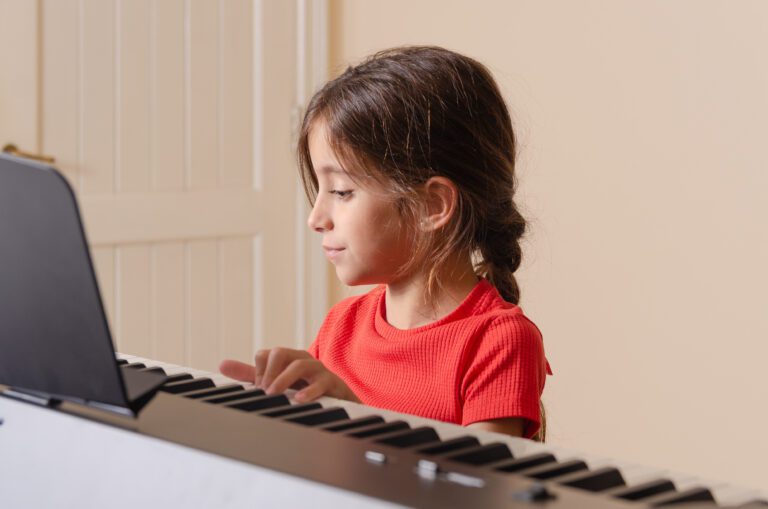
At an advanced level, personalized feedback becomes particularly valuable.
Small technical or musical problems can be difficult to identify independently.
A skilled teacher can listen closely, offer alternative interpretations, suggest efficient practice methods, and challenge the student appropriately.
Piano Learning Advanced
There is no single curriculum that suits every advanced pianist.
One student may need to develop technique.
Another may need greater expressive freedom.
Another may be preparing for an examination, competition, audition, or performance.
Individualized instruction allows lessons to respond to those needs.
Become Your Own Teacher
A strong teacher eventually helps you develop the ability to evaluate your own playing.
You learn what good technique feels like.
You learn how to identify tension.
You learn how to hear balance.
You learn how to structure practice.
This independence can continue benefiting you for the rest of your musical life.
Conclusion
Piano Learning for Advanced Learners is ultimately about going beyond technical accuracy and developing a deeper understanding of music. Advanced pianists need to refine their touch, phrasing, dynamics, pedaling, rhythm, interpretation, listening, memory, and ability to communicate emotion. They also need to become increasingly independent in the way they practice and solve musical problems.
At this stage, progress often comes from paying attention to details that may have been overlooked earlier. A single phrase can require careful analysis. A few measures may need hours of focused work. A familiar piece may reveal entirely new possibilities after deeper study. Advanced learning is therefore less about simply playing harder music and more about understanding music at a deeper level.
The strongest advanced pianists continue to remain curious. They listen to different interpretations, explore new repertoire, experiment with improvisation, refine their technique, and regularly question how they can communicate more effectively. Technical mastery provides the tools, but musical understanding gives those tools purpose.
At The Mystic Keys, personalized Piano Lessons Online can support advanced learners with focused guidance in repertoire, technique, interpretation, improvisation, music theory, performance preparation, and musical expression. One-on-one instruction allows lessons to be adapted to each pianist’s level and goals, helping advanced students continue developing their individual sound and musicianship.
For more information and exciting resources about learning music, visit our website at The Mystic Keys. For more music content and exciting offers follow us on
Facebook, Instagram, YouTube, LinkedIn, Twitter, Pinterest, and Threads.