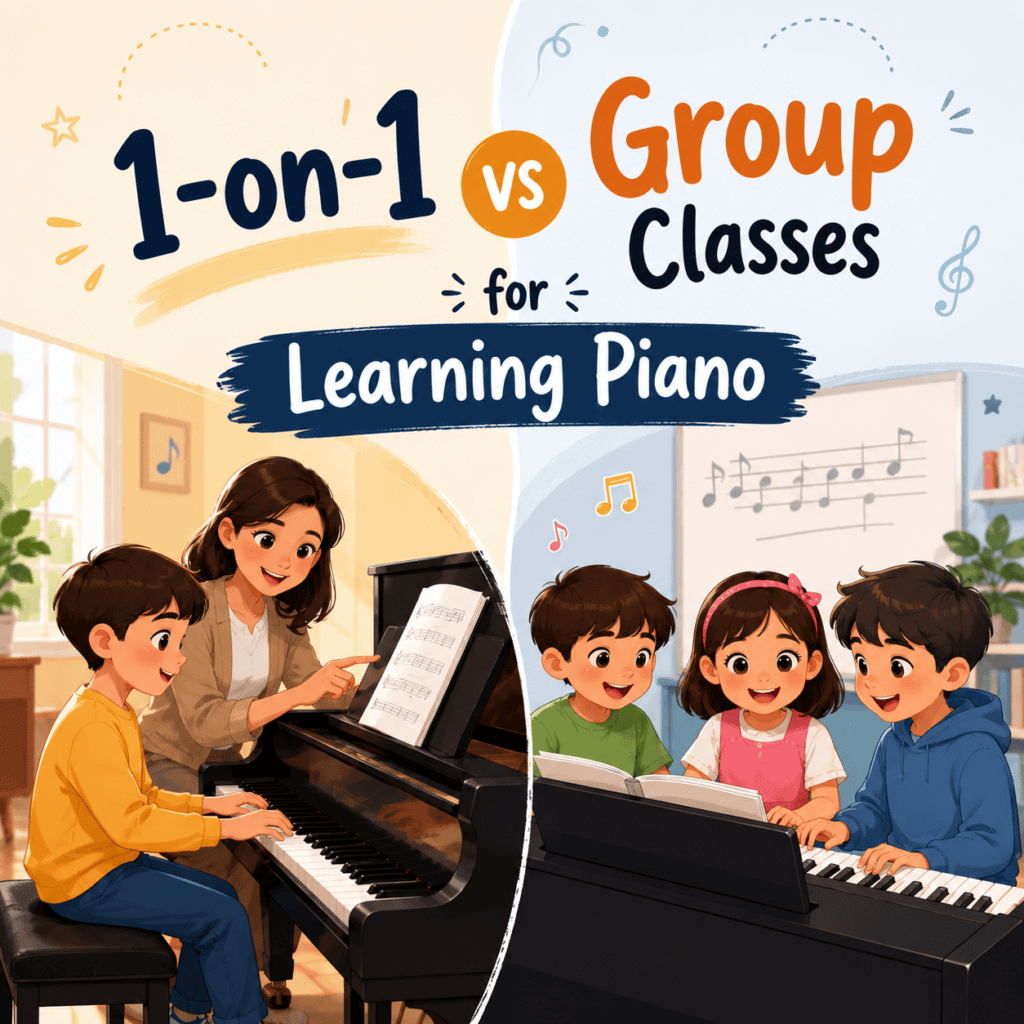
1-on-1 classes vs group classes for learning piano
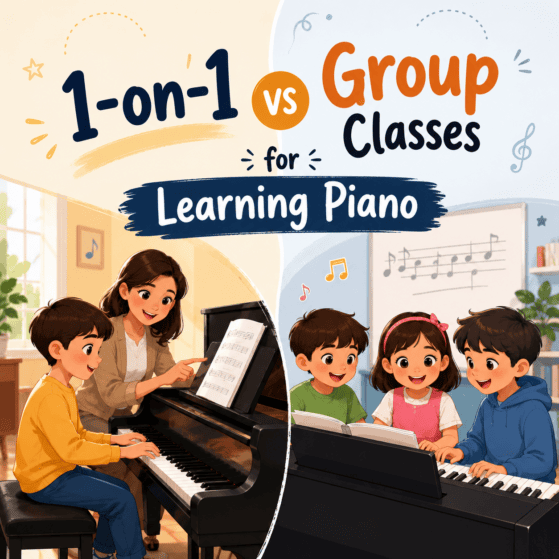
Learning piano can be an exciting and rewarding experience, but choosing the right type of lesson can make a significant difference in how comfortably and consistently a student progresses. Two common options are 1-on-1 vs Group Piano Classes and group piano classes. Both approaches can introduce students to technique, music theory, rhythm, sight-reading, and repertoire, but they create very different learning experiences. Understanding the differences can help students and parents decide which format is better suited to their goals, personality, schedule, and current ability.
A group class can provide a social and collaborative environment where students learn alongside others. It can be enjoyable for learners who like interacting with their peers and may also make music feel like a shared activity. A 1-on-1 lesson, on the other hand, gives the teacher the opportunity to concentrate entirely on one student. The lesson can move at the student’s pace, with the teacher spending more time on specific difficulties and adapting the material according to the student’s progress. Neither format is automatically right for everyone, but understanding what each offers makes the decision much easier.
What Are 1-on-1 Piano Classes?
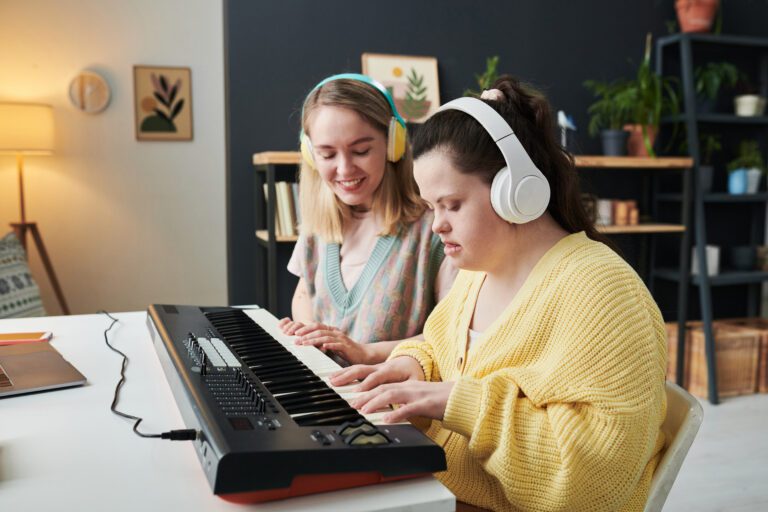
A 1-on-1 piano class involves one student and one teacher working together throughout the lesson. The teacher can observe the student’s playing closely, identify technical issues, answer questions immediately, and adjust the lesson according to the student’s needs.
This format creates a highly personalized learning experience. A beginner who needs additional time to understand rhythm can spend more time on it, while a student who learns quickly can move ahead rather than waiting for the rest of a group.
Personalized Attention
One of the biggest advantages of private piano instruction is individual attention. The teacher can listen carefully to every passage and notice details that might otherwise be missed.
Finger position, posture, hand coordination, rhythm, articulation, dynamics, and pedaling can all be addressed specifically for that student.
What Are Group Piano Classes?
Group piano classes involve several students learning together under the guidance of one teacher. Depending on the class structure, students may work on similar exercises, learn songs together, participate in rhythm activities, or take turns performing for one another.
Group lessons can create a lively environment and introduce students to the social side of music.
Learning With Other Students
For some learners, seeing another student attempt a similar exercise can make learning feel less intimidating.
Students may also become motivated by watching their classmates progress and can develop confidence through playing in front of others.
Individual Pace Is a Major Difference
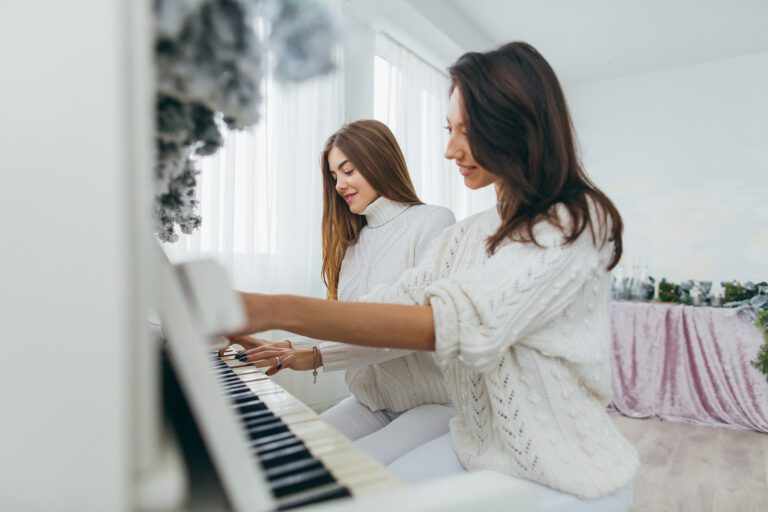
One of the clearest differences between private and group learning is the speed of instruction.
In a group class, the teacher has to balance the needs of multiple students. Some learners may understand a concept quickly, while others may need additional explanation.
1-on-1 vs Group Piano Classes Adapt to the Student
In an individual lesson, the teacher does not need to follow a pace designed for several learners.
If a student is struggling with a particular skill, the teacher can spend additional time on it.
If the student has already mastered the material, the lesson can progress to something more challenging.
This flexibility can be particularly useful when students have different levels of previous musical experience.
Feedback Is More Immediate in Private Lessons
Feedback is essential when learning piano because small technical problems can become habits if they are not corrected.
In a group, a teacher has to divide attention among several students.
Teachers Can Correct Problems Immediately
During a 1-on-1 lesson, the teacher can notice exactly what is happening when a student plays.
If the wrist is tense, the fingering is inefficient, or the rhythm is inconsistent, the teacher can address the issue immediately.
The student can then try the movement again with the correction.
This continuous feedback can make learning more efficient.
Group Classes Encourage Social Learning
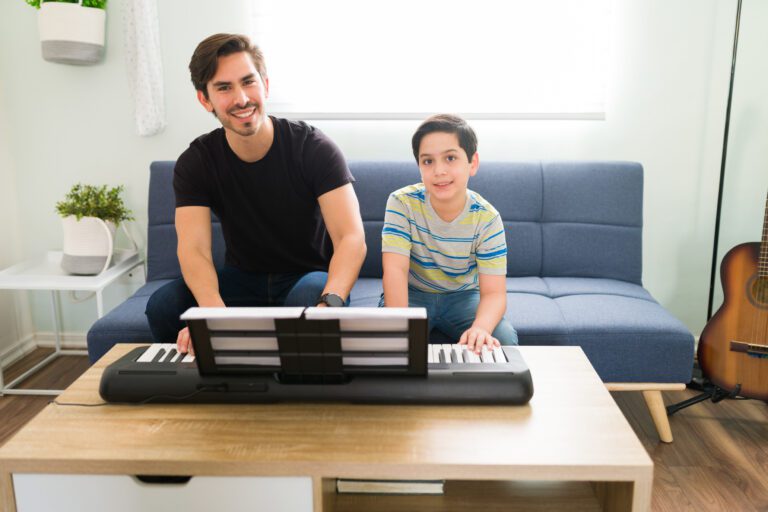
One of the strongest benefits of group classes is interaction.
Students can listen to one another, perform together, participate in rhythm activities, and experience music as a collaborative activity.
Playing With Others Builds Confidence
Some students become more comfortable performing when they regularly play in front of peers.
Group environments can also introduce learners to ensemble skills and teach them to listen while other musicians are playing.
These experiences can be valuable for students who eventually want to perform in bands, ensembles, or other collaborative settings.
1-on-1 Lessons Can Be More Flexible
Private lessons can often be structured around the student’s specific needs.
A student interested in classical piano may follow one learning path, while another interested in pop, worship music, film music, or improvisation may follow another.
Lessons Can Reflect Individual Goals
A student preparing for an examination may need focused work on scales, sight-reading, and repertoire.
Another student may simply want to play favorite songs.
In a 1-on-1 setting, the teacher can balance foundational skills with the student’s personal interests.
Group Classes Can Make Learning More Affordable

Cost is another factor to consider.
Group classes often allow the cost of instruction to be shared among several students, which can make them more accessible for some families.
Consider Value, Not Only Price
Although private lessons may cost more per session, students receive dedicated teacher attention throughout the lesson.
The best choice therefore depends not only on the price of the class but also on the student’s learning needs and goals.
Beginners Can Benefit From Both Formats
There is no rule saying that beginners must learn through one particular format.
A complete beginner can succeed in a group class if the teaching is well structured and the class level is appropriate.
A beginner can also benefit greatly from private instruction because foundational technique can be established from the beginning.
Early Technique Matters
Posture, hand position, fingering, rhythm, and basic coordination are easier to develop correctly when students receive regular feedback.
This is one reason individual instruction can be particularly useful during the early stages of learning.
Advanced Students Often Need More Individual Attention
As students progress, their musical challenges become increasingly specific.
They may be working on advanced repertoire, interpretation, improvisation, technical passages, performance preparation, or examination requirements.
Complex Skills Need Focused Guidance
An advanced pianist may spend an entire lesson refining a few measures of music.
A group class may not always provide enough time for that level of detailed attention.
Private lessons can allow the teacher and student to focus deeply on specific musical problems.
Which Format Is Better for Children?
The answer depends on the child.
Some children thrive in a social environment and enjoy learning alongside friends.
Others become distracted in groups and benefit from having the teacher’s full attention.
Consider the Child’s Personality
Parents can think about whether their child:
- Enjoys group activities.
- Is comfortable performing in front of others.
- Gets distracted easily.
- Needs frequent individual feedback.
- Learns quickly or needs more repetition.
- Has specific musical interests.
These factors can help determine which format is more suitable.
How to Decide Between 1-on-1 and Group Classes
There is no universal answer.
Consider your goals, personality, budget, schedule, learning speed, and preferred environment.
If you want highly personalized instruction and detailed feedback, 1-on-1 piano classes may be the stronger choice.
If you enjoy social interaction, shared learning, and performing with peers, group classes may be a better fit.
Think About Your Long-Term Goal
Ask yourself what you ultimately want to achieve.
If your goal is simply to enjoy playing piano, either format may work.
If you want to prepare for examinations, competitions, auditions, advanced repertoire, or a specific performance, individualized instruction may offer greater flexibility.
Can Students Combine Both Formats?
Students do not necessarily have to choose one format permanently.
A pianist might take private lessons while participating in group workshops, ensemble sessions, or performances.
Different Formats Can Complement Each Other
Private instruction can provide technical development and personalized feedback.
Group experiences can develop listening, collaboration, and performance confidence.
Combining the two can provide a broader musical education when circumstances allow.
Conclusion
Choosing between 1-on-1 vs Group ultimately depends on what the student needs from their learning experience. Group classes can provide social interaction, collaborative learning, shared motivation, and opportunities to become comfortable playing alongside others. They can be enjoyable and encouraging, particularly for students who thrive in a social environment.
1-on-1 classes offer a different advantage: complete individual attention. The teacher can adapt the pace, repertoire, exercises, and explanations according to one student’s needs. Technical issues can be addressed immediately, difficult passages can receive additional attention, and lessons can be shaped around personal musical goals. For students who want a highly personalized learning experience, this flexibility can be especially valuable.
There is no single format that guarantees success. The most important factors are the quality of teaching, consistency of practice, appropriate goals, and the student’s enjoyment of learning. When students receive the right guidance and remain engaged with their instrument, either format can become a meaningful part of their musical journey.
At The Mystic Keys, personalized Piano Lessons Online give students the opportunity to learn through one-on-one instruction tailored to their level, interests, and goals. Whether you are a complete beginner, a returning pianist, a child, or an advanced learner, structured individual guidance can help you develop technique, musical understanding, confidence, and a sustainable practice routine.
For more information and exciting resources about learning music, visit our website at The Mystic Keys. For more music content and exciting offers follow us on
Facebook, Instagram, YouTube, LinkedIn, Twitter, Pinterest, and Threads.