
Before You Quit Learning Music, Watch This
There comes a point in almost every musician’s journey when learning music stops feeling exciting and starts feeling frustrating. You may practice the same passage repeatedly without seeing improvement. A song that seemed easy when you first heard it may suddenly feel impossible to play. You might compare yourself with other musicians and wonder why they seem to progress faster. At that moment, you may seriously consider whether you should quit learning music.
Before making that decision, take a step back. Struggling does not necessarily mean that you are failing. In many cases, frustration is simply a normal part of learning something deeply. Musical progress is rarely a straight line. There are periods when improvement is obvious and periods when you feel as though nothing is changing. Both are part of the process.
The musician you want to become is often built during the moments when progress feels slowest. Instead of immediately giving up, it can be worth changing your approach, reducing the pressure you place on yourself, and remembering why you started learning music in the first place.
Why Learning Music Sometimes Feels Difficult

Music combines several skills at the same time.
You may need to read notation, remember notes, coordinate your hands, maintain rhythm, listen carefully, control your technique, and express emotion.
At the beginning, every one of these skills requires conscious attention.
Over time, many of them become automatic.
Difficulty Does Not Mean Lack of Talent
If something feels difficult, it does not automatically mean you are not musical.
It may simply mean that your brain and body have not developed the necessary coordination yet.
Think about learning to ride a bicycle. The first attempts require concentration and can feel uncomfortable. Eventually, the movements become natural.
Music works in a similar way.
Progress Is Not Always Visible
One of the most frustrating parts of learning an instrument is that progress can sometimes happen beneath the surface.
You may practice a difficult passage for several days without noticing a major improvement.
Then, suddenly, something clicks.
Your fingers move more naturally.
Your rhythm becomes steadier.
You remember the notes more easily.
Your Brain Is Still Learning Dont Quit Learning Music
Even when improvement is not immediately obvious, repetition is helping your brain build stronger connections.
This is why abandoning practice too quickly can be frustrating.
Sometimes you are closer to a breakthrough than you realize.
Stop Comparing Your Journey to Someone Else's
Social media makes comparison particularly difficult.
You may watch a skilled pianist perform a complicated piece, a guitarist play an impressive solo, or a singer hit difficult high notes and wonder why you cannot do the same.
Remember that you are seeing the result, not the process.
You are not seeing all the hours of practice, mistakes, lessons, failed performances, and repetition that came before that performance.
Compare Yourself With Your Past Self
A healthier question is:
“Can I do something today that I could not do three months ago?”
Maybe you can now play a song.
Maybe you can change chords more smoothly.
Maybe you can maintain rhythm for longer.
Maybe you feel less nervous when performing.
Those improvements matter.
The Plateau Is Part of Learning

Many musicians experience periods where progress appears to stop.
This is often called a learning plateau.
You continue practicing, but your playing seems almost unchanged.
It can be tempting to assume that you have reached your limit.
You probably have not.
Plateaus Often Come Before New Growth
A plateau may mean that your current practice routine needs adjustment.
You may need new exercises, different repertoire, better technique, or feedback from a teacher.
Instead of interpreting a plateau as failure, treat it as a signal to reassess your approach.
You May Not Need to Quit—You May Need to Change How You Practice
ometimes the problem is not music itself.
It is the way you are learning.
If you repeat the same mistake every day, frustration will naturally increase.
Instead, identify exactly what is causing difficulty.
Is the tempo too fast?
Is the fingering uncomfortable?
Are you struggling with rhythm?
Do you understand the theory behind the passage?
Are you practicing for too long and becoming mentally tired?
Change the Method Before Giving Up
A small change in practice strategy can completely change your experience.
Slow down.
Break the piece into smaller sections.
Practice each hand separately.
Use a metronome.
Record yourself.
Ask for feedback.
Sometimes a different approach is all you need.
Don't Expect Every Practice Session to Be Amazing

Not every practice session will feel productive.
Some days you will play beautifully.
Other days you may make mistakes you thought you had already overcome.
This is completely normal.
Your energy, concentration, sleep, mood, and environment can all affect how you play.
One Bad Session Does Not Define Your Ability
Do not judge your entire musical journey based on one difficult day.
Step away if necessary.
Come back later.
Often, a short break allows your mind and body to reset.
Remember Why You Started
When learning becomes frustrating, return to your original reason for starting.
Maybe you always wanted to play piano.
Maybe you dreamed of singing confidently.
Maybe you wanted to play guitar with friends.
Maybe music helped you relax.
Maybe you wanted to perform for your family.
Your Original Reason Still Matters
Technical progress is important, but enjoyment is also a valid reason to make music.
You do not need to become a professional musician for learning music to have value.
Music can simply be something that brings meaning and enjoyment to your life.
Focus on One Small Goal

Large goals can feel overwhelming.
“I want to become an excellent pianist” is inspiring but difficult to measure.
Instead, create smaller goals.
Learn one song.
Master one chord progression.
Improve one scale.
Memorize eight measures.
Practice one rhythm.
Small Goals Create Momentum
Every completed goal provides evidence that you are moving forward.
These small achievements can restore motivation when the larger journey feels overwhelming.
Give Yourself Permission to Learn Slowly
There is no universal timeline for learning music.
Some people progress quickly in the beginning.
Others need more time.
Your learning speed can also change depending on your schedule and circumstances.
Slow Progress Is Still Progress
Taking longer does not make your achievement less valuable.
In fact, musicians who learn patiently often develop a deeper understanding of technique and musicality.
The important thing is to continue moving forward.
Mistakes Are Not the Enemy
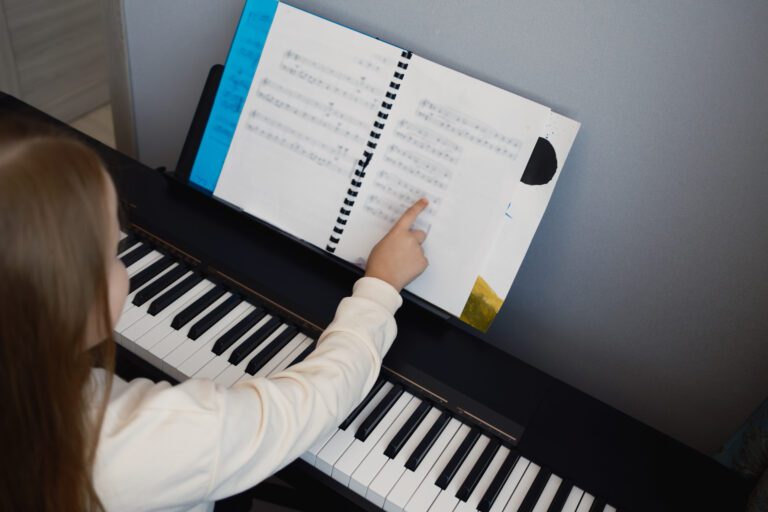
Every musician makes mistakes.
Professional performers miss notes.
Experienced singers occasionally sing out of tune.
Advanced guitarists make timing errors.
Skilled pianists sometimes forget passages.
The difference is that experienced musicians have learned how to recover.
Learn to Continue After a Mistake Without Quit Learning Music
One of the most valuable performance skills is learning not to stop every time something goes wrong.
Keep the rhythm moving.
Listen.
Recover.
Continue.
This ability develops through experience.
Rest Can Be Part of Progress
Sometimes you do not need to practice more.
You need to rest.
Physical and mental fatigue can make practice feel unnecessarily difficult.
If your hands are tense or your concentration has disappeared, continuing for another hour may not be productive.
Dont Quit Learning Music Rest Without Feeling Guilty
A short break does not mean you are abandoning your musical journey.
Rest can help your body recover and give your brain time to process what you have practiced.
Return when you feel ready to focus again.
A Good Teacher Can Change Your Experience

Learning alone can sometimes make musical problems feel much bigger than they actually are.
A teacher can identify what is holding you back and provide a more effective way forward.
Perhaps your posture needs adjustment.
Maybe your fingering is creating unnecessary difficulty.
You may be practicing at the wrong tempo.
Or you might simply need a different exercise.
Feedback Prevents Unnecessary Frustration
Personalized guidance can help you solve problems faster and make your practice more purposeful.
Sometimes what feels like a major obstacle can be corrected with one small technical adjustment.
Music Is Not a Race dont
There is no finish line that determines when you have officially become a musician.
You do not need to reach an advanced level before you are allowed to call yourself a musician.
If you play an instrument, sing, create music, listen deeply, practice, and continue learning, you are already part of the musical journey.
Enjoy the Person You Are Becoming
Instead of constantly asking how far you still have to go, occasionally look back at how far you have already come.
That perspective can completely change the way you experience learning.
What to Do Instead of Quitting

If you are seriously considering giving up, take a short pause and ask yourself a few questions.
What exactly is frustrating me?
Is the music too difficult?
Am I practicing effectively?
Do I need a different teacher or learning method?
Have I chosen music that I actually enjoy?
Am I expecting progress too quickly?
Would a short break help?
Identify the Real Problem on Quit Learning Music
Once you understand the reason behind your frustration, you can make a better decision.
You may discover that you do not actually want to quit music.
You simply want learning to feel enjoyable again.
Give Yourself Another Thirty Days
Instead of making a permanent decision during a frustrating period, create a short-term experiment.
Give yourself another month.
Change your practice routine.
Choose easier repertoire.
Work with a teacher.
Set smaller goals.
Record your progress.
Then evaluate how you feel.
A Month Can Change Your Perspective
Sometimes a small amount of consistent effort is enough to move past a frustrating stage.
You may discover that the problem you were ready to quit over is no longer a problem.
Conclusion
If you are thinking about quitting learning music, remember that frustration does not mean your journey is over. Difficult passages, slow progress, mistakes, plateaus, and moments of self-doubt are normal parts of becoming a musician. You do not have to master everything immediately, and you certainly do not have to compare your progress with someone else’s.
Before you give up, consider changing your approach. Slow down. Set smaller goals. Practice consistently. Take breaks when necessary. Choose music you genuinely enjoy. Listen to your progress instead of focusing only on your weaknesses. Most importantly, remember why you started.
Sometimes the moment when you feel like quitting is the moment when you need patience rather than a permanent decision. The skill you are struggling with today may eventually become the part of music you enjoy the most.
At The Mystic Keys, our personalized Music Lessons Online provide students with one-on-one guidance, structured learning, recordings for practice and revision, and experienced teachers who can adapt lessons to individual goals and abilities. Whether you are a complete beginner or have been learning for years, the right support can make your musical journey more enjoyable, focused, and rewarding.
For more information and exciting resources about learning music, visit our website at The Mystic Keys. For more music content and exciting offers follow us on
Facebook, Instagram, YouTube, LinkedIn, Twitter, Pinterest, and Threads.