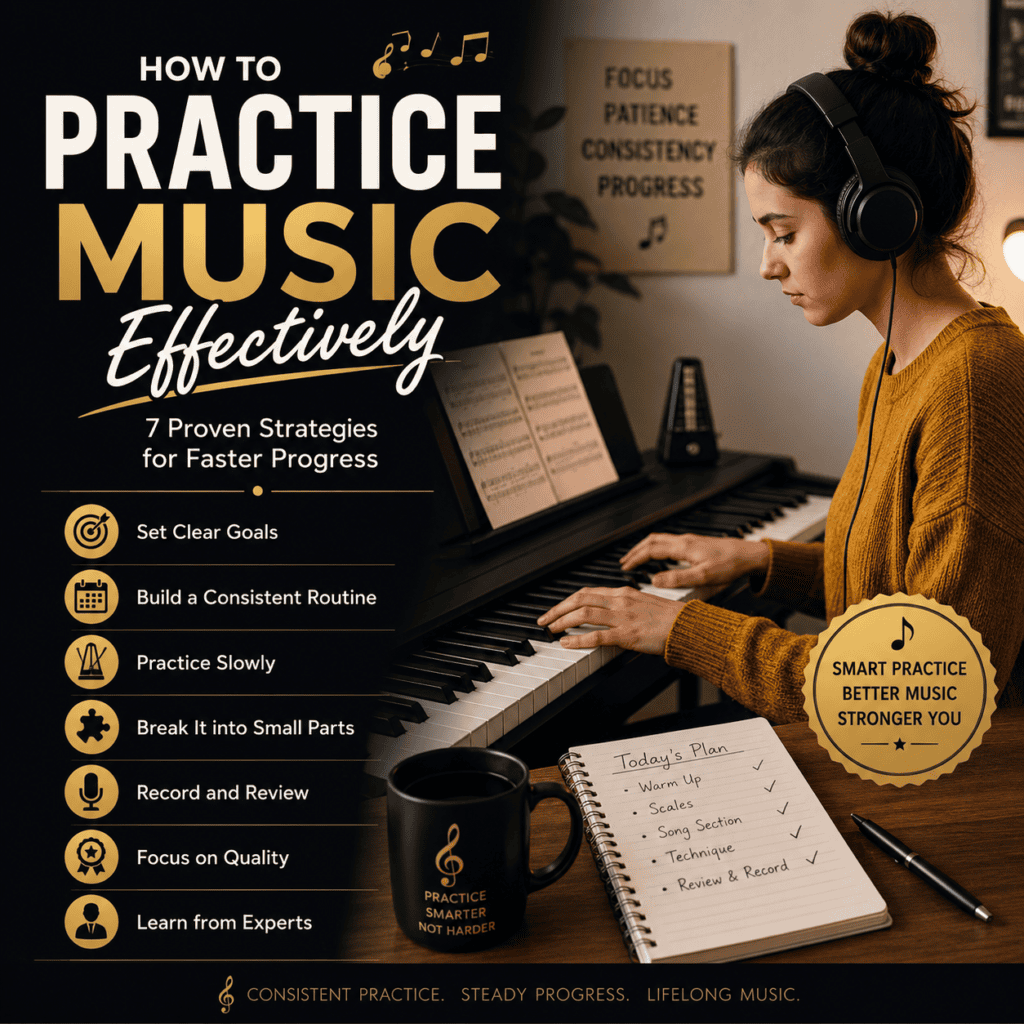
How to Practice Music Effectively
Whether you’re learning the piano, guitar, violin, drums, vocals, or any other instrument, knowing how to practice music effectively is one of the most important factors in achieving long-term success. Many students assume that practicing for several hours every day automatically leads to improvement. However, effective practice is not measured by the amount of time you spend with your instrument—it is measured by the quality of your practice. A focused, well-planned session will always produce better results than long hours of distracted repetition.
Every successful musician develops a practice routine that encourages steady growth, builds confidence, and strengthens both technical and musical skills. Instead of simply repeating songs from beginning to end, effective practice involves setting goals, correcting mistakes, and constantly challenging yourself in a structured way. At The Mystic Keys, our experienced instructors teach students how to practice smarter rather than harder through personalized one-on-one online music lessons. Here are seven proven strategies that can help musicians of all ages make faster and more enjoyable progress.
1. How to Practice Music Effectively by Setting Clear Goals

Every productive practice session begins with a clear objective. Sitting down with your instrument and simply playing whatever comes to mind often results in very little improvement because there is no direction or purpose. Before you begin, spend a few minutes deciding exactly what you want to accomplish during that session. Having a specific goal keeps you focused and helps you measure your progress more effectively.
For example, your goal could be learning a new section of a song, improving difficult chord transitions, strengthening finger independence, developing better breath control, or increasing tempo while maintaining accuracy. When each practice session has a purpose, you naturally spend less time repeating things you already know and more time working on areas that truly need improvement. Over weeks and months, these small daily goals build into significant musical progress.
2. Build a Consistent Routine to Practice Music Effectively
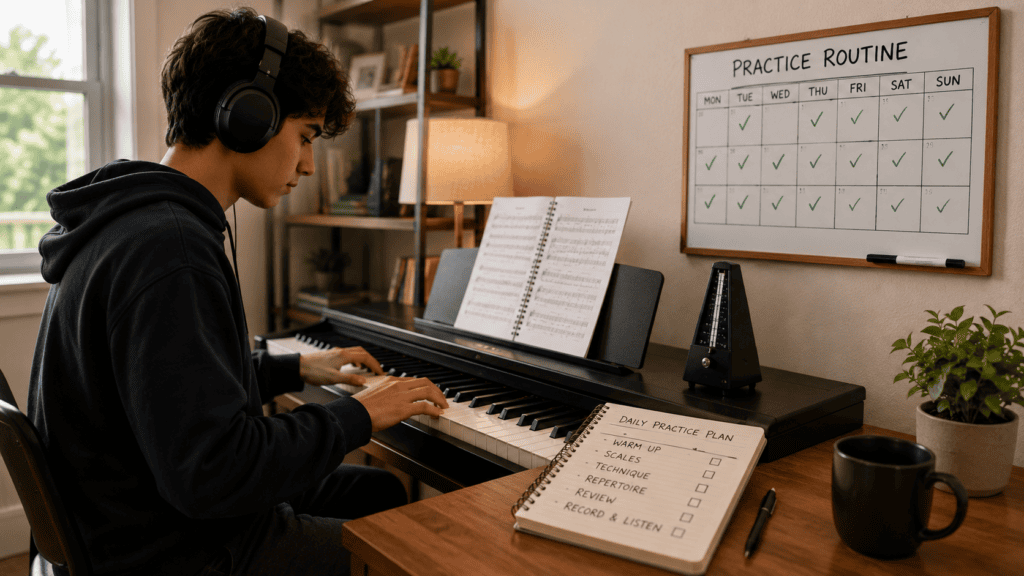
Consistency is one of the most powerful habits a musician can develop. Practicing for twenty to thirty minutes every day is generally far more beneficial than practicing several hours only once or twice a week. Frequent practice helps your brain and muscles retain what you’ve learned, making each session feel more natural and productive than if you take long breaks between practice days.
Creating a regular schedule also helps transform practice into a daily habit rather than an occasional activity. Choose a time when you can concentrate without distractions, prepare your instrument before you begin, and follow a routine that includes warm-ups, technical exercises, repertoire, and review. Even on busy days, a short but focused practice session helps maintain momentum and keeps your musical development moving forward.
3. Practice Slowly Before Increasing Speed
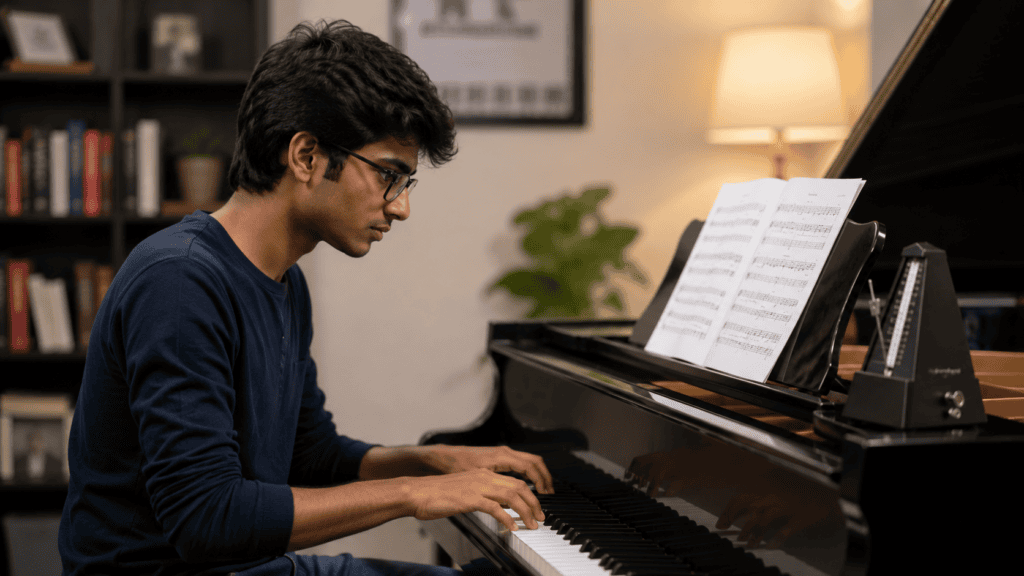
One of the most common mistakes musicians make is trying to perform difficult passages at full speed before they have mastered the notes and rhythm. While it may feel exciting to play quickly, rushing often leads to incorrect finger movements, inconsistent timing, and mistakes that become difficult to correct later. Learning slowly allows your brain to build accurate muscle memory from the very beginning.
Start each new exercise or piece at a comfortable tempo where you can play every note correctly and confidently. A metronome is an excellent tool for maintaining consistent timing while gradually increasing speed. Once you can perform the passage accurately several times in a row, raise the tempo in small increments. This patient approach develops precision, confidence, and control, making it much easier to perform the music smoothly at its intended speed.
4. How to Practice Music Effectively by Breaking Difficult Sections into Smaller Parts
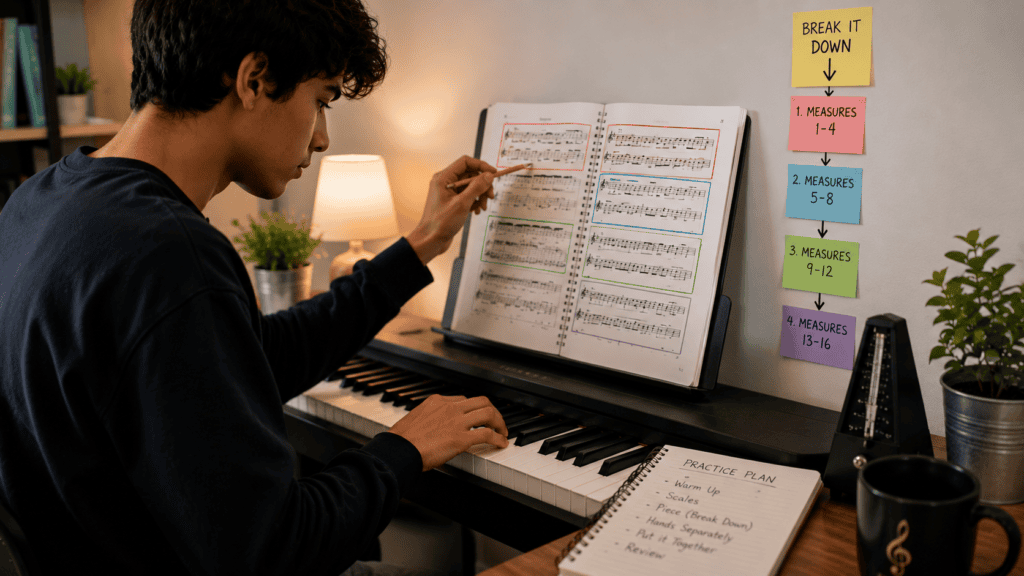
Many students become frustrated because they repeatedly play an entire song while struggling with only one or two challenging sections. Instead of practicing everything equally, focus your attention on the parts that need the most improvement. Dividing difficult music into smaller sections makes learning much more manageable and prevents you from feeling overwhelmed.
Work on one measure, one phrase, or even a single transition until it becomes comfortable before moving to the next section. Once each small part is secure, gradually connect them together until the complete piece flows naturally. This method not only saves time but also increases confidence because you are solving problems step by step rather than hoping they disappear through repetition. Professional musicians regularly use this approach because it produces faster and more reliable results.
5. Record Your Practice and Listen Carefully

Recording yourself is one of the most valuable yet underused practice techniques. While you are performing, it can be difficult to notice every detail because your attention is divided between reading music, controlling technique, and maintaining rhythm. Listening to a recording afterward allows you to hear your performance from the audience’s perspective and identify areas that need improvement.
Pay close attention to rhythm, pitch, tone quality, dynamics, articulation, and overall musical expression. You may discover habits that you were completely unaware of during practice. Recording your sessions regularly also creates a record of your progress, allowing you to compare performances over weeks or months. Hearing your own improvement can be highly motivating and reminds you that consistent effort truly pays off.
6. Focus on Quality Practice Instead of Simply Practising Longer
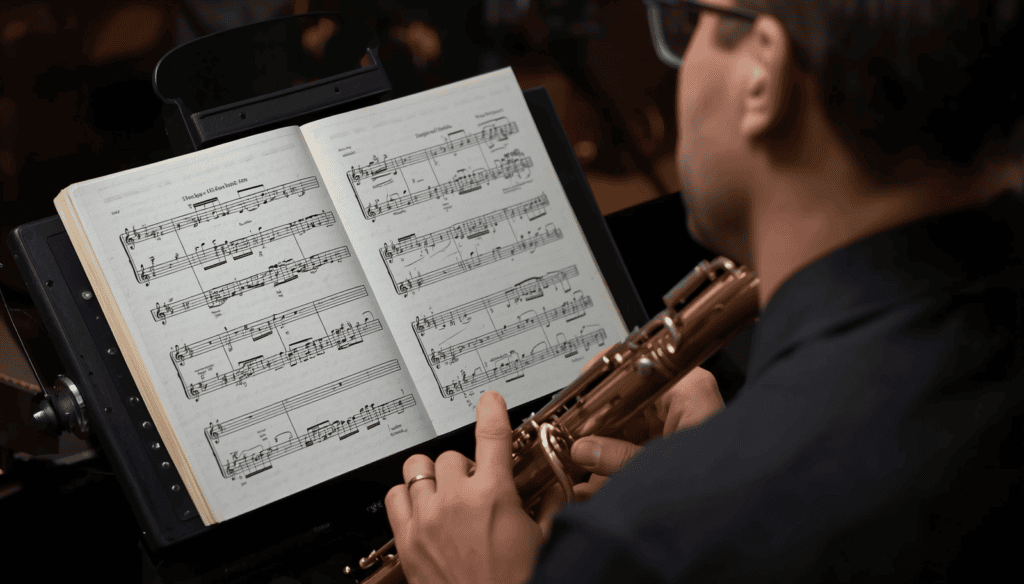
Many musicians believe that spending more hours practicing automatically leads to better results, but this is rarely true. Practicing while tired, distracted, or repeating the same mistakes can actually slow your progress. Effective practice is built on concentration, awareness, and purposeful repetition rather than the total amount of time spent with your instrument.
During each session, eliminate distractions by putting away your phone, maintaining good posture, and focusing completely on one task at a time. Take short breaks whenever your concentration begins to fade so that your mind remains fresh. It is far more productive to complete thirty minutes of focused practice than two hours of unfocused playing. Developing this habit ensures that every minute you spend practicing contributes to meaningful improvement.
7. Learn from Experienced Teachers and Accept Regular Feedback
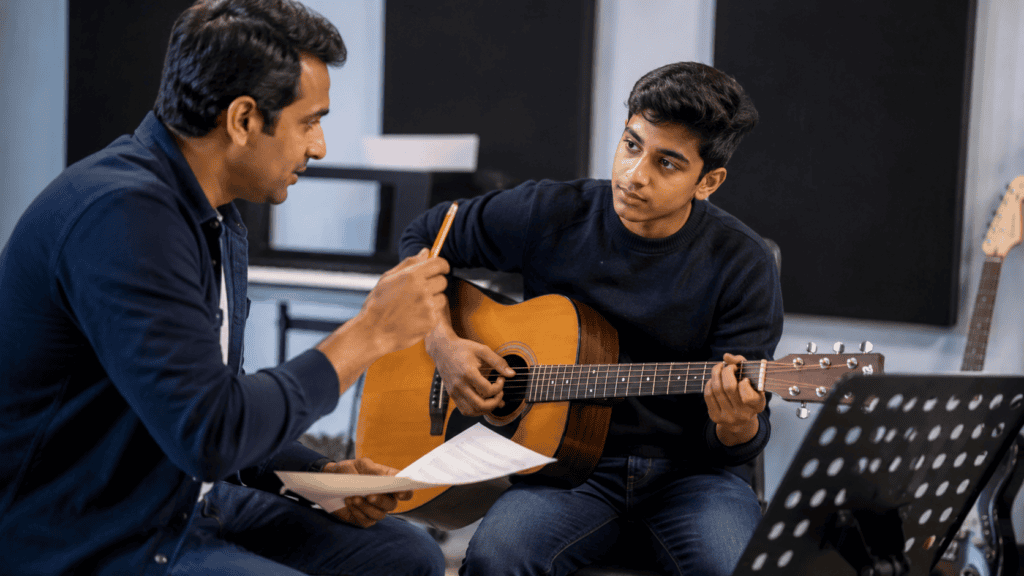
Although independent practice is essential, regular guidance from an experienced music teacher can significantly accelerate your progress. Teachers often notice technical problems, posture issues, timing mistakes, or inefficient practice habits long before students recognize them. Correcting these issues early prevents them from becoming permanent habits that are much harder to fix later.
Professional instruction also provides structure, accountability, and motivation. A teacher can design personalized exercises based on your strengths and weaknesses, introduce new techniques at the right pace, and help you overcome challenges with confidence. At The Mystic Keys, our one-on-one online music lessons are designed to help students develop effective practice habits, improve consistently, and achieve their musical goals through personalized instruction and continuous feedback.
Final Thoughts
Learning how to practice music effectively is one of the most valuable skills every musician can develop, regardless of age, instrument, or experience level. Understanding how to practice music effectively helps you build strong technical skills, improve your confidence, and make steady progress with every practice session. Great musicians are not simply those who spend the most hours practicing—they are the ones who approach every session with focus, patience, and purpose. By setting clear goals, maintaining a consistent routine, practicing slowly, breaking difficult passages into smaller sections, recording your performances, prioritizing quality over quantity, and learning from experienced instructors, you create a practice routine that leads to lasting improvement.
Musical growth does not happen overnight, but learning how to practice music effectively ensures that every focused practice session brings you one step closer to becoming the musician you want to be. Stay consistent, celebrate small victories along the way, and remember that steady progress is always more valuable than rushing toward perfection. With the right mindset and effective practice techniques, every session becomes an opportunity to build confidence, refine your skills, and enjoy the lifelong journey of making music. Whether you’re a beginner or an advanced musician, mastering how to practice music effectively will help you achieve your musical goals faster and enjoy continuous improvement throughout your musical journey.
For more information and exciting resources about learning music, visit our website at The Mystic Keys. For more music content and exciting offers follow us on
Facebook, Instagram, YouTube, LinkedIn, Twitter, Pinterest, and Threads.