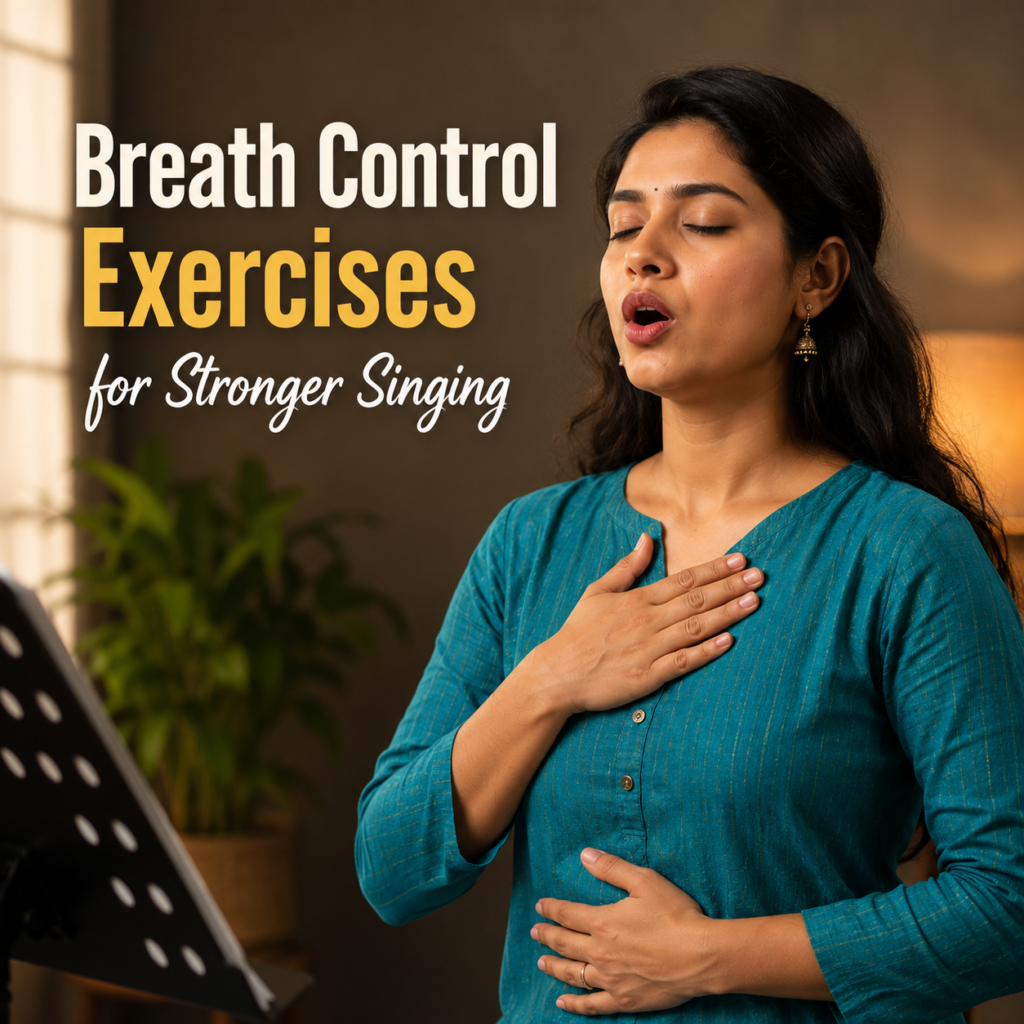
Breath Control Exercises for Stronger Singing
Breath Control Exercises for Stronger Singing
Breath is the foundation of every great vocal performance. Whether you are singing a heartfelt ballad, a worship song, or an energetic pop anthem, your voice depends on steady and controlled airflow. While many beginners focus on learning lyrics or reaching higher notes, experienced singers understand that breath control is what truly supports tone, pitch, and vocal endurance. Regular breath control exercises help strengthen this essential skill, allowing singers to develop better vocal stability, sustain longer phrases, and perform with greater confidence.
Without proper breath management, even a naturally beautiful voice can sound strained or inconsistent. On the other hand, developing good breathing habits allows singers to perform with greater confidence, sustain longer phrases, and produce a richer, more balanced sound.
Fortunately, breath control is not an inborn talent reserved for professional vocalists. Like any other musical skill, it can be strengthened through regular practice and the right exercises. By dedicating a few minutes each day to breathing techniques, singers can gradually improve vocal stability and overall performance.
In this guide, we will explore why breath control matters, common breathing mistakes, and effective exercises that help build stronger singing technique.

Why Breath Control Is Essential for Singing
Every sung note begins with breath. Although vocal cords create sound, the breath provides the energy that keeps the voice stable and expressive. As a result, singers who learn to manage their airflow can produce clearer tones with less effort.
Strong breath control offers several important benefits. It helps maintain consistent pitch throughout a song, supports smoother transitions between notes, and reduces unnecessary strain on the throat. Furthermore, controlled breathing enables singers to deliver emotional performances because they can focus on expression rather than struggling for air.
Another significant advantage is vocal endurance. Long rehearsals, performances, and recording sessions become much easier when the voice is supported properly. Instead of feeling exhausted after a few songs, singers can maintain vocal quality throughout an entire performance.
Moreover, good breath control contributes to confidence. Knowing that your breathing will support every phrase allows you to perform with greater freedom and less anxiety.

Understanding Proper Breathing Technique
Many people naturally breathe in a way that is suitable for everyday activities but not ideal for singing. Shallow chest breathing often limits the amount of air available, making sustained singing more difficult.
Instead, singers should develop diaphragmatic breathing, also known as belly breathing. During this technique, the diaphragm contracts and moves downward, allowing the lungs to expand more fully. Consequently, the abdomen gently rises while the shoulders remain relaxed.
When inhaling correctly, there should be minimal movement in the shoulders or upper chest. Rather than lifting the chest dramatically, focus on allowing the ribs and lower torso to expand naturally. This creates a larger air supply and encourages smoother airflow during singing.
Equally important is controlling how the breath leaves the body. Releasing air gradually instead of all at once helps maintain steady vocal support and prevents unnecessary tension.

Common Breathing Mistakes That Affect Singing
Many singers unknowingly develop habits that reduce vocal efficiency. Recognizing these mistakes is the first step toward improving breath control.
One common issue is raising the shoulders while inhaling. Although this feels like taking a deeper breath, it actually encourages shallow breathing and creates unnecessary tension in the neck.
Another frequent mistake is releasing too much air at the beginning of a phrase. As a result, singers often run out of breath before reaching the end of a sentence, causing notes to weaken or become unstable.
Some vocalists also hold excessive tension in their jaw, neck, or throat. Instead of allowing the diaphragm to support the voice, they force the sound with muscular effort. Over time, this habit can lead to vocal fatigue and discomfort.
In addition, many beginners forget to plan their breathing while singing. Taking random breaths instead of breathing at natural musical pauses disrupts phrasing and affects overall performance.

Diaphragmatic Exercises for Better Vocal Support
Before singing any vocal exercises, it is important to train the body to breathe correctly.
Begin by lying comfortably on your back or standing with relaxed posture. Place one hand on your chest and the other on your abdomen. Slowly inhale through your nose, aiming to make the lower hand rise while keeping the upper hand relatively still.
Next, exhale gently through slightly parted lips while allowing the abdomen to relax naturally. Continue breathing in this controlled manner for several minutes without rushing the process.
As the exercise becomes easier, practice the same technique while standing, since this better reflects actual singing posture. Eventually, diaphragmatic breathing will become more natural during performances.

Controlled Hissing Breath Control Exercises to Improve Airflow
One of the simplest ways to strengthen breath control is through a steady hissing exercise.
Start by inhaling deeply using diaphragmatic breathing. Afterward, release the air slowly while producing a continuous “sss” sound. The objective is to maintain consistent volume and airflow from beginning to end.
Initially, aim to sustain the hiss for around fifteen seconds. As your breathing muscles become stronger, gradually increase the duration to twenty, thirty, or even forty seconds without forcing the breath.
Besides improving breath endurance, this exercise develops awareness of controlled airflow, which directly benefits singing.

Lip Trill Breath Control Exercises for Stronger Breath Support
Lip trills are widely used by vocal coaches because they encourage relaxed singing while strengthening breath management.
Take a comfortable breath and gently blow air through relaxed lips, creating a vibrating “brrr” sound. Once the lips vibrate smoothly, begin singing simple scales while maintaining the trill.
If the airflow becomes inconsistent, the trill will stop. Therefore, this exercise provides immediate feedback about your breath support.
Over time, lip trills improve coordination between breathing and vocal production while reducing unnecessary tension throughout the vocal mechanism.

Sustained Vowel Breath Control Exercises for Vocal Stability
Holding vowel sounds helps singers develop consistent airflow during longer musical phrases.
Choose a comfortable pitch and sing a sustained vowel such as “Ah,” “Ee,” or “Oo.” Instead of focusing on volume, concentrate on producing an even, stable tone from beginning to end.
Pay attention to the quality of the sound throughout the exercise. Ideally, the note should remain steady without sudden drops in volume or pitch.
Repeating this exercise daily gradually strengthens both breath control and vocal stability.

Counting Breath Control Exercises to Increase Breath Capacity
This practical exercise combines breathing control with speech, making it highly beneficial for singers.
Take a deep diaphragmatic breath and begin counting aloud at a natural pace using a comfortable speaking voice. Continue counting until you naturally need another breath.
Rather than trying to reach an impressive number immediately, focus on maintaining even airflow throughout the exercise. With consistent practice, your counting range will gradually increase, demonstrating improved breath capacity.
Eventually, the same control will transfer into longer vocal phrases during singing.

Applying Breath Control Exercises While Singing Songs
Once basic breathing exercises become comfortable, it is time to apply them directly to music.
Choose a familiar song and identify natural breathing points before singing. Then practice performing each phrase while maintaining steady airflow from beginning to end.
Instead of breathing whenever you feel short of air, learn to manage your breath more efficiently throughout each musical sentence. Consequently, your phrasing will sound smoother and more professional.
As songs become more challenging, thoughtful breath planning becomes an essential performance skill.

Strengthening Breath Support Beyond Vocal Exercises
Although breathing exercises play an important role, overall physical fitness also influences vocal performance.
Regular cardiovascular activities such as walking, swimming, or cycling improve lung efficiency over time. Likewise, exercises that strengthen the core muscles contribute to better diaphragmatic support.
Maintaining good posture is equally important. Standing with an aligned spine allows the lungs to expand fully and encourages efficient airflow during singing.
Hydration also deserves attention because well-hydrated vocal cords function more effectively. Drinking sufficient water throughout the day helps maintain vocal flexibility while reducing unnecessary dryness.
Additionally, getting enough sleep allows the body to recover and supports consistent vocal performance during practice sessions.

How Often Should You Practice Breath Control?
Consistency produces better results than long but infrequent practice sessions.
Spending just ten to fifteen minutes each day on breathing exercises can produce noticeable improvements over several weeks. Beginning each vocal practice session with breath-focused warm-ups prepares both the body and the voice for singing.
As your control improves, gradually increase the difficulty of the exercises rather than rushing the process. Building breath support requires patience, and steady progress is far more beneficial than forcing rapid improvement.
Remember that even professional singers continue practicing breathing techniques throughout their careers because breath control remains the foundation of healthy vocal production.

Signs Your Breath Control Is Improving
Progress often appears gradually, making it helpful to recognize the positive changes along the way.
You may notice that long notes become easier to sustain without strain. Songs that once left you breathless may begin to feel more comfortable, and transitions between phrases often become smoother. In addition, maintaining accurate pitch typically requires less effort because your airflow remains more consistent.
Many singers also experience greater vocal stamina during rehearsals. Instead of feeling tired after only a few songs, they can sing for longer periods while preserving tone quality. Over time, increased confidence naturally follows because reliable breath support allows greater focus on musical expression rather than simply reaching the end of each phrase.

Final Thoughts
Strong singing begins with strong breathing. Regardless of your musical style or experience level, learning to control your breath will significantly improve tone, endurance, pitch stability, and vocal confidence.
Developing this skill takes time, but every practice session brings measurable progress. By combining diaphragmatic breathing, controlled airflow exercises, and thoughtful song practice, singers build a reliable foundation for healthier and more expressive performances. If you’re looking to refine your technique further, Western Vocal Lessons Online can provide expert guidance, personalized feedback, and structured exercises that accelerate your progress.
Ultimately, breath control is more than just taking deep breaths—it is the art of managing airflow with precision and purpose. As this ability grows, your voice becomes stronger, more flexible, and better equipped to communicate every emotion through music. At The Mystic Keys, we encourage singers to develop healthy vocal habits through consistent practice and proper technique, helping them sing with greater confidence and freedom for years to come.
For more information and exciting resources about learning music, visit our website at The Mystic Keys. For more music content and exciting offers follow us on
Facebook, Instagram, YouTube, LinkedIn, Twitter, Pinterest, and Threads.