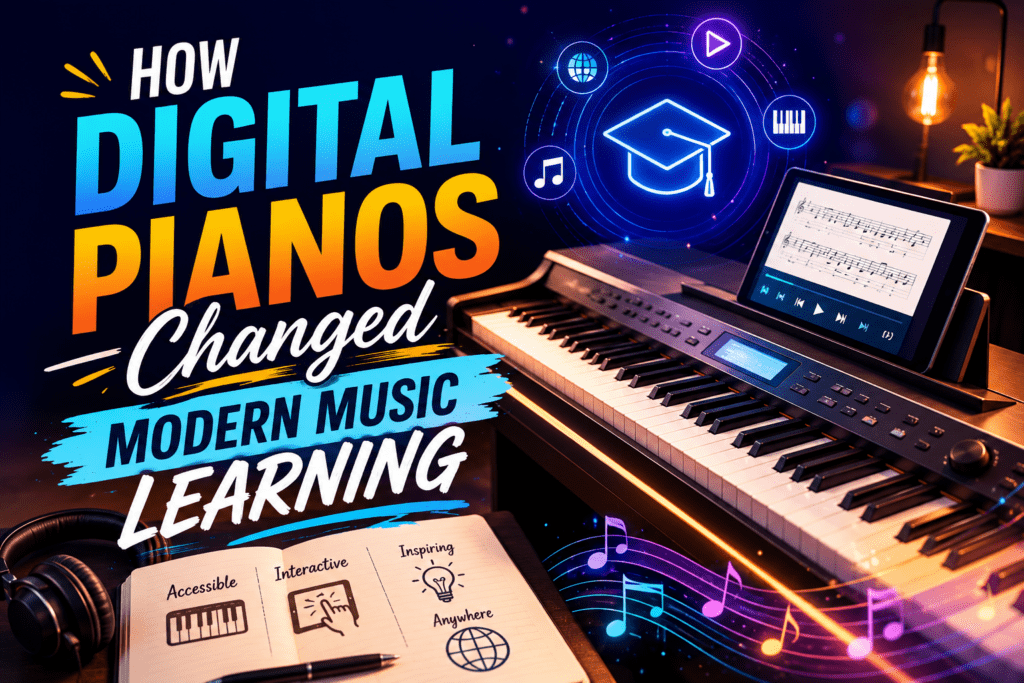
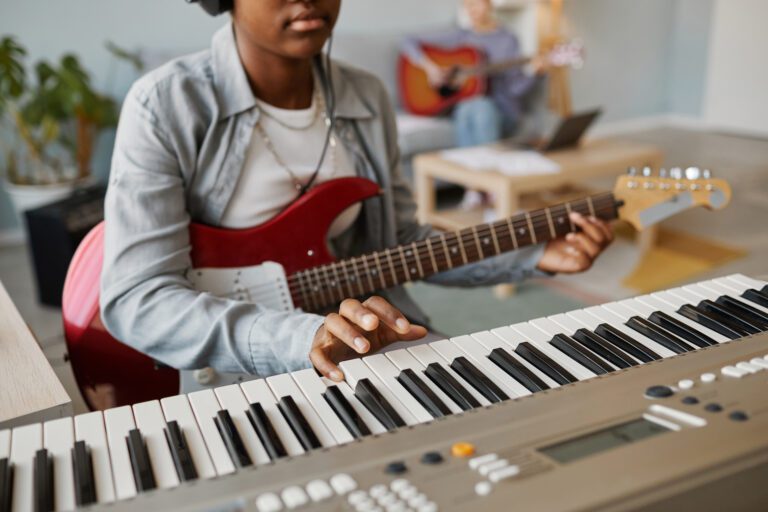
The way students learn music has transformed dramatically over the past few decades. One of the biggest contributors to this change has been the rise of digital pianos. The fact that digital pianos changed modern music learning is evident in classrooms, homes, online lessons, and music studios around the world. What was once limited to expensive acoustic instruments and in-person lessons has now become accessible to learners of all ages and skill levels.
Digital pianos combine traditional piano-playing experiences with modern technology, creating new opportunities for learning, practice, and musical development. Features such as built-in learning tools, headphone connectivity, recording functions, and online integration have made music education more convenient and engaging than ever before.
At The Mystic Keys, digital pianos have played an important role in helping students learn effectively through online music lessons. In this blog, we explore how digital pianos revolutionized music education and why they continue to shape the future of learning.
How Digital Pianos Changed Modern Music Learning
The introduction of digital pianos removed many barriers that once prevented students from learning music.
Start learning without owning a large acoustic piano
This flexibility makes music education more available than ever before.
Making Piano Learning More Affordable
Traditional acoustic pianos often require:
Significant financial investment
Regular maintenance
Professional tuning
Digital pianos provide an affordable alternative while still offering realistic playing experiences.
This has encouraged more families to introduce music into their homes.
Supporting Online Music Education
Online music learning has grown rapidly in recent years.
Digital pianos support virtual lessons through:
USB and MIDI connectivity
High-quality sound output
Easy integration with learning software
Recording and playback features
These tools help teachers provide effective instruction regardless of location.
Interactive Learning Features
Modern digital pianos often include built-in educational tools.
Examples include:
Metronomes
Lesson modes
Rhythm accompaniments
Practice exercises
These features encourage independent learning and improve student engagement.
The Role of Headphone Practice
One challenge of traditional pianos is volume control.
Digital pianos solve this problem by allowing:
Silent practice
Late-night practice sessions
Focused listening
Students can practice more frequently without disturbing others.
How Digital Pianos Improved Practice Efficiency
Effective practice is essential for progress.
Digital pianos help students:
Track tempo accurately
Record performances
Identify mistakes
Monitor improvement over time
These features create a more productive learning environment.
Encouraging Consistent Practice Habits
Convenience often leads to consistency.
Because digital pianos are:
Easy to use
Low maintenance
Ready to play instantly
students are more likely to practice regularly.
Consistent practice remains one of the most important factors in musical success.
Better Integration with Technology
Technology has become an important part of music education.
Digital pianos connect with:
Mobile apps
Learning platforms
Music notation software
Recording programs
This integration expands learning opportunities and supports modern teaching methods.
Helping Beginners Learn Faster
Many beginner-friendly features simplify the learning process.
Examples include:
Key lighting systems
Interactive lessons
Adjustable sensitivity settings
Built-in tutorials
These tools make learning more approachable for new students.
How Digital Pianos Changed Modern Music Learning for Children
Children often benefit from interactive learning experiences.
Digital pianos provide:
Engaging sounds
Learning games
Immediate feedback
Fun practice tools
These elements help maintain motivation and interest.
Supporting Adult Learners
Adult students often have limited time for practice.
Digital pianos accommodate busy schedules through:
Flexible practice times
Compact designs
Convenient setup
This flexibility makes it easier for adults to pursue musical goals.
Realistic Playing Experiences
Modern digital pianos have improved significantly.
Many now offer:
Weighted keys
Touch-sensitive action
High-quality sound samples
Authentic piano feel
These features help students develop proper technique.
Environmental and Maintenance Advantages
Unlike acoustic pianos, digital pianos do not require:
Regular tuning
Humidity control
Extensive maintenance
This makes ownership simpler and more cost-effective.
Preparing Students for Modern Music Production
Music creation has become increasingly digital.
Digital pianos help students explore:
MIDI technology
Music production software
Home recording
Composition tools
These skills are valuable in today’s music industry.
Challenges of Digital Pianos
While digital pianos offer many benefits, students should also consider:
Differences from acoustic resonance
Dependence on electronics
Variations in key quality
Choosing a high-quality instrument is important for long-term development.
Why Teachers Embrace Digital Piano Technology
Music educators increasingly use digital pianos because they:
Enhance lesson delivery
Support remote learning
Improve student engagement
Provide useful practice tools
Technology has become a valuable partner in music education.
How The Mystic Keys Uses Modern Learning Technology
At The Mystic Keys, technology is combined with expert instruction to create effective learning experiences.
Students benefit from:
Live one-on-one lessons
Personalized learning plans
Interactive practice methods
Global access to professional instructors
Digital pianos help make this modern learning approach possible.
The Future of Digital Piano Learning
As technology continues to evolve, digital pianos are likely to become even more advanced.
Future developments may include:
Artificial intelligence learning assistance
Enhanced interactive lessons
Improved virtual collaboration
More realistic sound modeling
The future of music education is closely connected to technological innovation.
Conclusion
There is no doubt that digital pianos changed modern music learning by making music education more accessible, affordable, interactive, and flexible. From supporting online lessons to providing powerful practice tools, digital pianos have transformed how students develop their musical skills.
While traditional acoustic pianos continue to hold an important place in music, digital pianos have expanded opportunities for learners around the world. At The Mystic Keys, students benefit from the best of both worlds—expert instruction combined with modern learning technology that supports steady growth and long-term success.
If you are ready to begin your musical journey, explore Piano Lessons Online and discover how modern technology can help you learn with confidence and convenience.
For more information and exciting resources about learning music, visit our website at The Mystic Keys. For more music content and exciting offers follow us on