
Violin Intonation | The Biggest Challenge Every Student Faces
Learning the violin is often described as a beautiful journey filled with expression, discipline, and artistry. Yet, every violin student eventually encounters one obstacle that seems to follow them through every stage of their development: intonation. While mastering bow control, rhythm, and posture certainly requires dedication, playing consistently in tune remains one of the most demanding aspects of violin playing.
Unlike many other instruments that provide visual guides for pitch, the violin demands remarkable precision from the player. Every note must be placed accurately by ear and muscle memory alone. As a result, intonation becomes an ongoing challenge that beginners struggle to understand and advanced players continue to refine throughout their musical lives.
Understanding why intonation is so difficult—and how it can be improved—helps students approach their practice more effectively and develop greater confidence in their playing.

What Is Violin Intonation?
Intonation measures how accurately a violinist plays a note’s pitch. In simple terms, it determines whether a note sounds in tune, sharp, or flat. Because the violin does not have frets like a guitar, players cannot rely on fixed markers to guide finger placement. Even a slight shift in finger position can change the pitch noticeably.
This unique feature makes the violin both expressive and challenging. Violinists can shape pitch, vibrato, and tone with remarkable freedom, but they must also place every finger with precision. Throughout a piece, they need to monitor pitch constantly to maintain a beautiful and consistent sound.
Many beginners find this aspect of violin playing difficult at first. Students often place their fingers where they think the note should be, only to hear a pitch that sounds slightly off. As a result, developing strong intonation becomes one of the first major milestones in learning the instrument. At The Mystic Keys, our Violin Lessons Online help students strengthen both their listening skills and finger accuracy, creating a solid foundation for confident and expressive playing.

Why Intonation Is More Difficult on the Violin Than Other Instruments
Many musical instruments provide visual or mechanical assistance that helps players locate notes. Piano keys, for example, produce the correct pitch whenever they are pressed. Fretted instruments offer physical divisions that guide finger placement.
The violin, however, relies entirely on the player’s precision. Finger placement must be exact, and adjustments often happen instinctively in fractions of a second. Furthermore, the distances between notes become progressively smaller as the hand moves higher up the fingerboard. What feels like a minor error in finger position can create a noticeable pitch problem.
Another factor that complicates intonation is the continuous movement required while playing. Students must shift positions, cross strings, and coordinate both hands simultaneously. While focusing on bowing technique or rhythm, it is easy for pitch accuracy to suffer. Therefore, intonation often becomes a balancing act between multiple technical demands.

The Ear Plays a Bigger Role Than the Fingers
Many students assume that intonation problems originate solely from incorrect finger placement. In reality, the ears are often the true source of the issue.
Before a musician can play a note accurately, they must first be able to hear and recognize the correct pitch internally. If the ear cannot identify when a note is out of tune, the fingers have no reliable guidance. This explains why some students repeatedly make the same intonation mistakes despite receiving corrections from their teacher.
Developing pitch awareness takes time. The process involves actively listening, comparing notes, and training the brain to recognize subtle differences in pitch. Over time, students begin to notice when notes sound unstable or clash with accompanying tones. As their listening skills improve, finger placement naturally becomes more accurate.
Because of this relationship between hearing and playing, successful intonation training focuses as much on listening as it does on finger technique.

Building Muscle Memory for Better Violin Intonation
One of the most frustrating aspects of violin intonation is inconsistency. A student may play a passage perfectly one day and struggle with the same section the next. This experience is completely normal because accurate intonation depends heavily on muscle memory.
Each note requires the hand and fingers to learn precise physical distances on the fingerboard. Repetition gradually teaches the body where notes belong without conscious calculation. Nevertheless, building reliable muscle memory requires patience and thousands of correct repetitions.
During the early stages of learning, students often adjust their fingers constantly as they search for the correct pitch. Although this process may seem slow, it is an essential part of developing accuracy. Eventually, the hand begins to recognize note locations more automatically, allowing the player to focus on musical expression rather than simply finding the right pitches.
Consistency emerges gradually, not suddenly. Therefore, students should view occasional intonation mistakes as part of the learning process rather than evidence of failure.

Common Tension Issues That Affect Violin Intonation
Physical tension is another common contributor to pitch problems. When students feel nervous or attempt to force their fingers into position, the hand often becomes stiff. This stiffness restricts natural movement and makes precise finger placement more difficult.
Excessive pressure from the thumb, a rigid wrist, or tight shoulders can all interfere with intonation. Moreover, tension tends to increase during challenging passages, causing students to lose accuracy exactly when they need it most.
A relaxed setup allows the fingers to move freely and respond quickly to pitch adjustments. Teachers frequently emphasize posture and hand position because technical freedom directly influences intonation quality. As players become more comfortable holding the instrument, they often notice significant improvements in pitch control.
For this reason, improving intonation is not always about practicing harder; sometimes it is about learning to play with greater ease and relaxation.
The Importance of Slow Practice
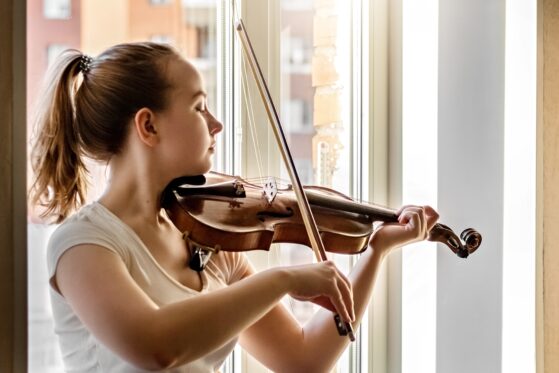
In a world that often celebrates speed and progress, many students rush through practice sessions hoping to master difficult pieces quickly. Unfortunately, this approach can reinforce poor intonation habits.
Slow practice provides the opportunity to hear every note clearly and make deliberate corrections. When students reduce the tempo, they gain enough time to evaluate pitch accuracy before moving to the next note. This careful approach strengthens both listening skills and muscle memory.
Professional violinists frequently rely on slow practice even after years of experience. Rather than viewing it as a beginner’s tool, they understand it as one of the most effective methods for maintaining technical precision. Through slow, attentive repetition, accurate intonation gradually becomes automatic.
Although the process may feel tedious at times, it lays the foundation for confident and expressive performance at faster tempos.

Why Intonation Never Stops Evolving
Many students believe there will be a moment when they finally “fix” their intonation forever. In reality, intonation remains a lifelong area of refinement.
As musicians advance, they encounter new positions, more complex repertoire, and increasingly sophisticated musical contexts. Playing in an orchestra, chamber ensemble, or duet introduces additional challenges because pitch must be adjusted to blend with other musicians. What sounds perfectly in tune in one situation may require subtle modifications in another.
Professional violinists continue training their ears and refining pitch accuracy throughout their careers. Rather than viewing this as discouraging, students should recognize it as part of the instrument’s beauty. The violin offers endless opportunities for growth, and intonation is one of the skills that continues to deepen with experience.
Overcoming Common Violin Intonation Struggles
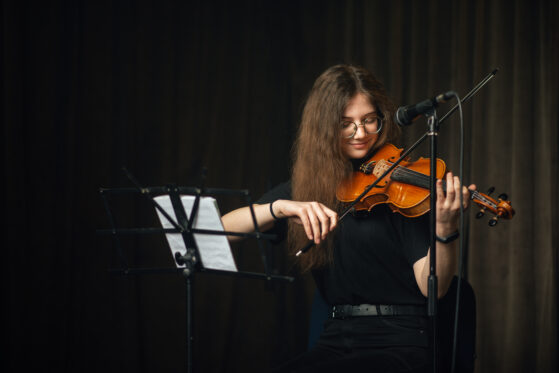
Few aspects of violin playing test a student’s patience more than intonation. There are moments when notes seem impossible to place correctly, and progress may appear frustratingly slow. Yet these challenges are shared by virtually every violinist, from beginners taking their first lessons to seasoned performers on international stages.
The key is to approach intonation as a gradual journey rather than a problem that needs an immediate solution. Careful listening, consistent practice, relaxed technique, and patience all contribute to long-term improvement. Each correction strengthens the connection between the ear, the mind, and the fingers.
Over time, what once felt impossible begins to feel natural. Notes become more secure, confidence grows, and the violin starts to sing with greater clarity and beauty.

Conclusion
Intonation is often considered the greatest challenge in violin playing because it demands the cooperation of technical skill, trained listening, concentration, and muscle memory. Unlike many other musical obstacles, it cannot be mastered through shortcuts or quick fixes. Instead, it develops gradually through thoughtful practice and continuous refinement.
Although the journey can be demanding, it is also incredibly rewarding. Every improvement in intonation brings greater confidence, richer tone, and more expressive musical performances. For violin students, mastering pitch is not simply about playing the correct notes—it is about developing the sensitivity and control that transform technique into true artistry.
At The Mystic Keys, our Violin Lessons Online are designed to help students strengthen their listening skills, refine finger placement, and build the confidence needed to play beautifully in tune. With consistent guidance and dedicated practice, overcoming intonation challenges becomes an achievable and rewarding part of every violinist’s musical journey.
For more information and exciting resources about learning music, visit our website at The Mystic Keys. For more music content and exciting offers follow us on
Facebook, Instagram, YouTube, LinkedIn, Twitter, Pinterest, and Threads.