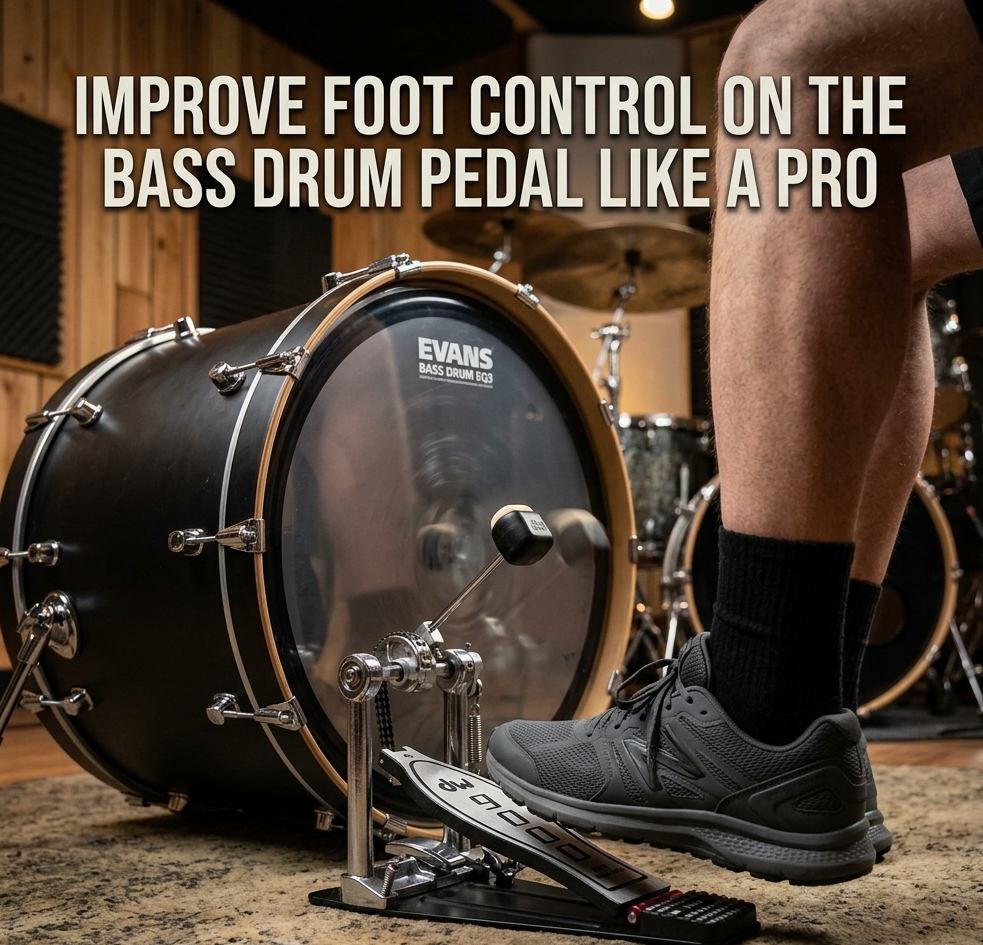
Improve Foot Control on the Bass Drum Pedal Like a Pro
Every drummer reaches a point where hand technique starts improving faster than foot technique. Fills become cleaner, grooves sound tighter, yet the bass drum still feels inconsistent. Many drummers actively try to Improve Foot Control, but the strokes still end up too weak, too loud, or uneven during faster patterns. This happens because foot control on the bass drum pedal is not only about strength. Timing, balance, muscle memory, and relaxation all play equally important roles.
Professional drummers make difficult footwork look effortless because their feet move with precision instead of unnecessary force. The pedal becomes an extension of the leg rather than a separate mechanical object. Once that connection develops, speed increases naturally, endurance improves, and grooves begin to feel smoother and more musical.
Improving foot control does not require extreme exercises or expensive gear. What matters most is consistency, proper technique, and understanding how the foot interacts with the pedal. Small adjustments in posture, motion, and practice habits can dramatically change the way the bass drum responds.
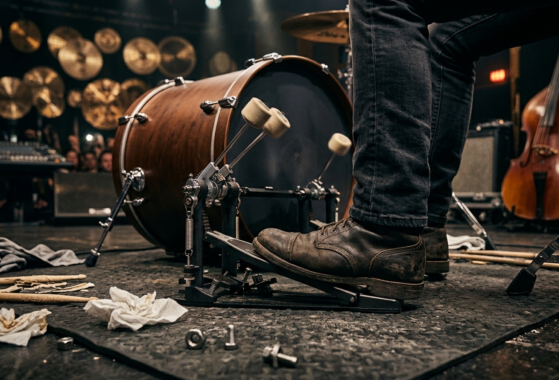
Understanding What Foot Control Really Means
Many drummers confuse foot control with speed. Although fast playing can be impressive, true control means being able to play any note at any volume with accuracy and consistency. A drummer with excellent foot control can execute soft ghosted bass drum notes, powerful accents, quick doubles, and steady grooves without losing balance or timing.
Control also involves efficiency. When the leg works harder than necessary, fatigue builds quickly and technique suffers. Professional players rely on relaxed movement instead of constant tension. Their feet stay responsive because the muscles are not fighting against the pedal.
At the same time, consistency matters more than occasional bursts of speed. One clean, evenly spaced pattern played smoothly is far more valuable than several rushed notes played without precision. Developing control means teaching the foot to move confidently in every situation, whether the groove is slow, fast, heavy, or subtle.
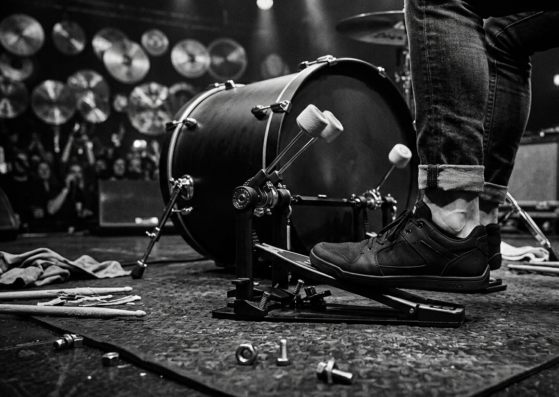
Improve Foot Control with Proper Seating and Balance
Before working on advanced foot techniques, posture needs attention. Poor balance affects foot control more than most drummers realize. If the body leans too far forward or backward, the legs compensate unnecessarily, creating tension and instability.
The throne height should allow the thighs to slope slightly downward rather than sitting completely flat. This position helps the legs move naturally while reducing strain on the hips and knees. Feet should feel grounded and relaxed instead of stretched awkwardly toward the pedals.
Equally important is upper body stability. Many players unknowingly move their shoulders or torso while playing bass drum patterns. Excessive body movement wastes energy and disrupts timing. Strong foot control comes from staying balanced while allowing the leg and ankle to move freely.
Once posture improves, even simple pedal exercises begin to feel smoother and more controlled.
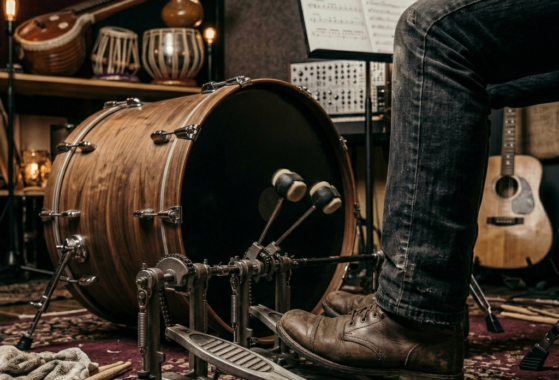
Learn the Difference Between Leg Motion and Ankle Motion
One of the biggest breakthroughs in bass drum technique comes from understanding how the leg and ankle work together. Beginners often rely entirely on the whole leg to strike the pedal. While this creates power, it limits speed and causes fatigue during longer playing sessions.
Experienced drummers combine leg weight with ankle motion. The leg provides support and overall force, while the ankle handles precision and rebound control. This combination allows the foot to stay responsive without becoming stiff.
For slower and heavier grooves, larger leg motion may feel natural. Faster patterns, however, require smaller and more efficient ankle-driven movements. Instead of stomping into the pedal repeatedly, the foot learns to bounce and recover smoothly after each stroke.
Developing ankle control takes patience because the movement initially feels unfamiliar. Nevertheless, once the ankle becomes stronger and more coordinated, bass drum playing starts feeling dramatically lighter and faster.
Practice Slow Before Practicing Fast
Most drummers want immediate speed, especially when learning doubles or rapid bass drum patterns. Unfortunately, rushing into fast tempos often creates sloppy habits that become difficult to fix later.
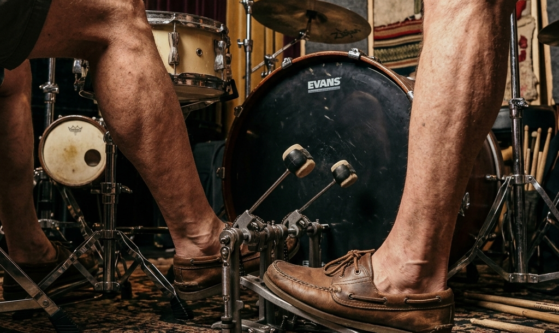
Slow practice builds accuracy first. Every stroke should sound even, controlled, and relaxed before the tempo increases. If the foot becomes tense during slow exercises, the problem will only grow worse at higher speeds.
Using a metronome helps expose inconsistencies that may otherwise go unnoticed. Start with simple quarter notes, then move to eighth notes and sixteenth notes while maintaining steady timing. Focus on clean execution rather than raw speed.
Gradual tempo increases produce far better long-term results than forcing the foot to move faster prematurely. Professional drummers develop speed through control, not panic.
Improve Foot Control by Using Pedal Rebound Efficiently
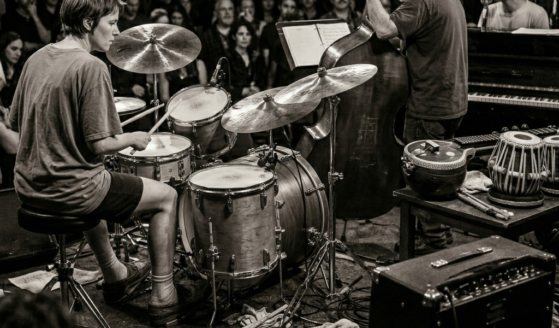
Learning to work with the rebound instead of against it changes everything. The foot should feel connected to the pedal while still allowing it to return naturally after each hit. Think of the motion as guiding the pedal rather than forcing it.
This awareness becomes especially important during faster patterns. Efficient rebound allows consecutive notes to flow smoothly with less effort. Without rebound control, double strokes and rapid grooves quickly become inconsistent.
Simple exercises repeated slowly can train this feeling effectively. Pay attention to how the pedal reacts after every stroke and allow the movement to stay fluid instead of rigid.
Improve Foot Control by Staying Relaxed While Playing
Many drummers believe stronger legs automatically create better foot technique. Although endurance and muscle development help, tension is usually the bigger obstacle.
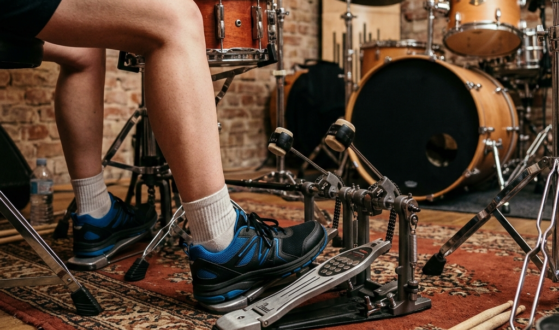
A tense foot cannot move efficiently. Tight muscles slow down reaction time, reduce accuracy, and drain stamina surprisingly fast. Professional drummers often appear relaxed even while playing extremely demanding patterns because they eliminate unnecessary effort.
Relaxation does not mean weak playing. Instead, it means using only the amount of force required for the desired sound. Powerful bass drum strokes can still come from loose and controlled movement.
During practice sessions, regularly check for tension in the ankle, calf, thigh, and hips. If the muscles feel locked or strained, pause briefly and reset the motion. Building relaxed technique early prevents long-term bad habits.
Improve Foot Control Through Better Groove Practice
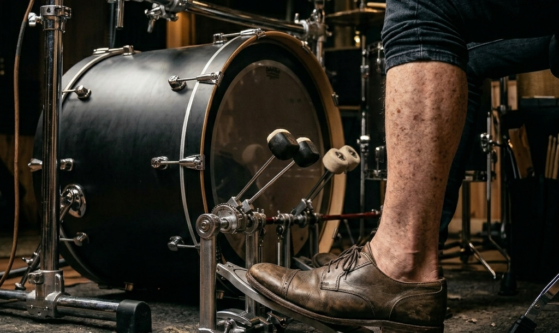
Technical exercises are valuable, but foot control truly develops when applied musically. Playing grooves forces the bass drum to interact naturally with the hands and hi-hat, creating real coordination challenges.
Simple rock grooves can reveal timing weaknesses immediately. If the bass drum notes rush ahead or drag behind the beat, the groove loses stability. Practicing basic patterns repeatedly with a metronome sharpens internal timing while improving pedal consistency.
As control improves, experiment with dynamic variations. Play some bass drum notes softer while keeping others strong and accented. Dynamic awareness teaches the foot to respond musically rather than mechanically.
Professional drummers rarely play every bass drum note at maximum volume. Their control allows subtle variations that make grooves feel alive and expressive.
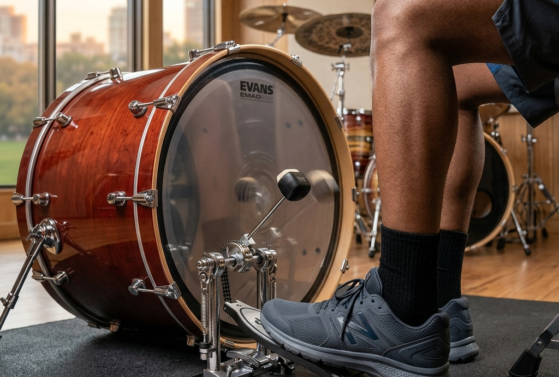
Work on Heel-Up and Heel-Down Techniques
Both heel-up and heel-down playing styles offer important benefits. Understanding each approach expands versatility and improves overall foot development.
Heel-down technique emphasizes control, finesse, and precision. Because the heel stays connected to the footboard, smaller motions become easier to manage. This method works particularly well for softer music, dynamic control, and developing ankle strength.
Heel-up playing generates greater power and speed by allowing the leg to contribute more weight. Rock, metal, and energetic styles often rely heavily on this technique because it produces stronger bass drum projection.
Neither approach is universally superior. Skilled drummers frequently switch between them depending on the musical situation. Practicing both styles strengthens different aspects of foot coordination and creates more flexibility behind the kit.
Improve Foot Control Without Overtraining Your Muscles
Bass drum endurance develops gradually. Long practice sessions filled with excessive tension can actually slow progress instead of improving it.
Short, focused sessions often produce better results than exhausting marathon workouts. Practicing clean patterns for fifteen to twenty concentrated minutes daily builds muscle memory more effectively than occasional overtraining.
Rest also matters. Muscles improve during recovery, not only during practice itself. If the ankle or calf feels overly strained, reducing intensity temporarily helps prevent injury and allows technique to stay healthy.
Consistency always beats intensity in the long run. Drummers who practice thoughtfully and regularly tend to improve faster than those who constantly push beyond control.
Improve Foot Control by Adjusting Your Pedal Properly
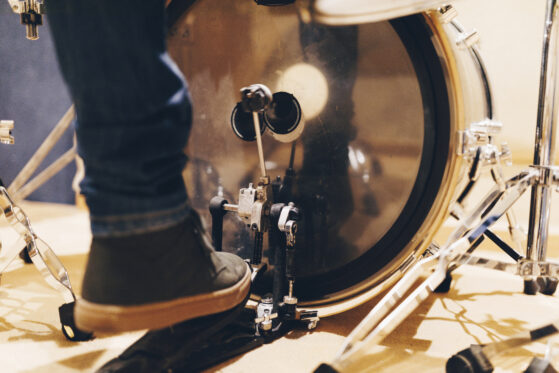
Even strong technique can feel uncomfortable if the pedal is poorly adjusted. Spring tension, beater angle, and footboard response all affect how the pedal reacts under the foot.
Tighter spring settings create faster rebound but may feel heavier. Looser settings require less effort initially but can reduce responsiveness during quicker passages. Finding the right balance takes experimentation.
The beater angle also changes the feel of the stroke. Some drummers prefer a longer motion for added power, while others choose shorter movement for speed and efficiency.
No single setting works for everyone. Comfortable pedal adjustment should support natural movement instead of forcing the foot into awkward mechanics.
Train the Weak Foot Separately
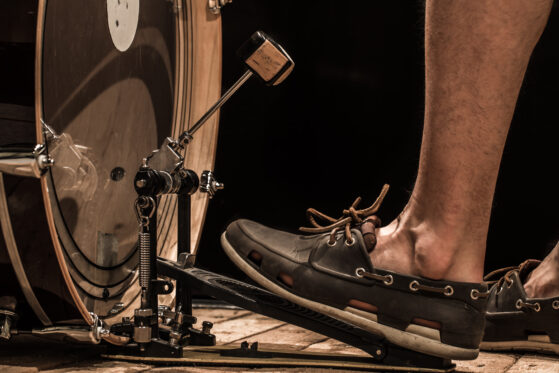
Drummers using double pedals often notice a major difference between their dominant and non-dominant foot. The weaker foot usually lacks the same timing precision, strength, and confidence.
Isolating the weaker foot during practice helps close this gap faster. Single-foot exercises improve coordination while forcing the non-dominant side to develop independently.
Patience becomes especially important here. Progress may feel slower initially, but consistent repetition gradually builds balance between both feet. Over time, the weaker side becomes far more reliable and controlled.
Balanced foot development leads to smoother double bass patterns and stronger overall coordination.
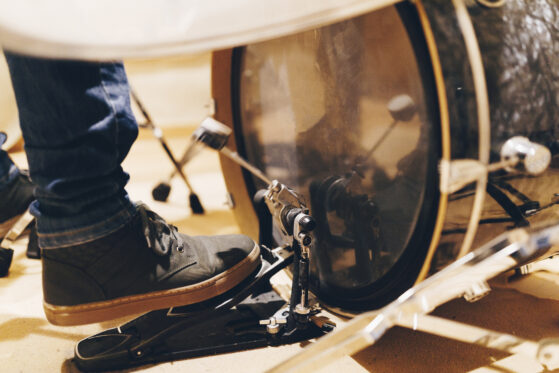
Improve Foot Control by Recording Your Practice Sessions
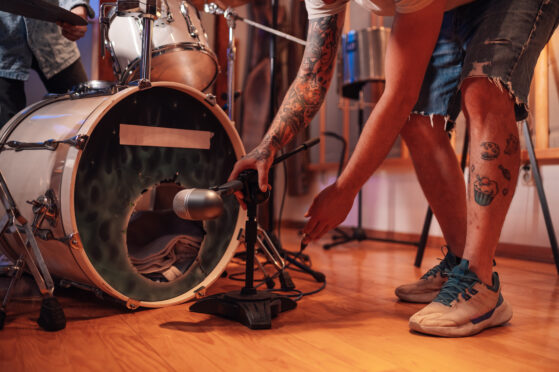
Many foot control issues are easier to hear than feel. Recording practice sessions reveals uneven timing, inconsistent dynamics, and tension-related problems that may go unnoticed during playing.
Listening back objectively helps identify patterns that need improvement. Sometimes the bass drum sounds rushed during fills, while other times the notes lack consistency in volume. Recognizing these details makes targeted practice far more effective.
Video recordings can also expose posture and motion problems. A drummer may discover excessive leg movement, unnecessary upper body tension, or awkward pedal technique simply by watching playback carefully.
Professional musicians constantly analyze their own playing because self-awareness accelerates improvement dramatically.
Final Thoughts
Improving foot control on the bass drum pedal is a gradual process built on precision, relaxation, and consistency. Speed eventually comes as a result of efficient movement rather than forced effort. The drummers who sound the most powerful are usually the ones using the least unnecessary tension.
Strong foot technique transforms every aspect of drumming. Grooves become tighter, fills feel cleaner, and endurance increases naturally. More importantly, the bass drum starts responding musically instead of mechanically.
Progress may feel slow at times, yet small improvements compound quickly when practice stays focused and consistent. Through dedicated practice, proper guidance, and structured Drums Lessons Online from The Mystic Keys, drummers can steadily develop the confidence and control needed to perform with greater precision and musicality. With patience and disciplined repetition, the pedal eventually begins to feel less like a piece of hardware and more like a natural extension of the body.
For more information and exciting resources about learning music, visit our website at The Mystic Keys. For more music content and exciting offers follow us on
Facebook, Instagram, YouTube, LinkedIn, Twitter, Pinterest, and Threads.