Slow Piano Practice | Why It Makes You a Better Pianist
Slow Piano Practice | Why It Makes You a Better Pianist
Every pianist dreams of playing with confidence, speed, emotion, and effortless control. Whether it is a flowing classical sonata, a complex jazz progression, or a modern film score, the final performance often appears smooth and natural. Yet behind that polished sound lies a practice method many students try to avoid—slow piano practice.
At first, playing slowly can feel frustrating. The music loses its dramatic energy, familiar pieces suddenly feel awkward, and progress may seem painfully delayed. Many learners assume that repeating a piece at full speed will eventually lead to mastery. In reality, the opposite is often true. Fast playing without control usually strengthens mistakes rather than correcting them.
This is where slow practice becomes transformative. It is not simply about reducing tempo. Instead, it is a deliberate process that trains the hands, sharpens the mind, and builds a deeper relationship with the music itself. Pianists at every level, from beginners to concert performers, rely on slow practice because it creates accuracy, consistency, and musical awareness that rushed repetition cannot provide.
Over time, this method changes not only how you play but also how you learn. The piano stops feeling like a battle against difficult passages and starts becoming an instrument you genuinely understand.
Slow Practice Builds a Strong Technical Foundation
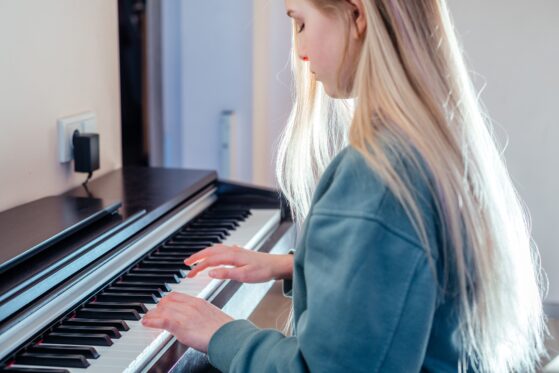
Technique is often misunderstood as speed alone. However, true piano technique is built on control, balance, precision, and coordination. Playing slowly allows the fingers to develop these qualities naturally.
When students rush through difficult passages, the hands tend to tense up. Incorrect fingerings become habitual, uneven rhythms go unnoticed, and unnecessary movement wastes energy. Because everything happens so quickly, the brain cannot properly analyze what the body is doing. Mistakes repeat themselves until they become deeply ingrained habits.
A slower tempo changes this completely.
Each movement becomes visible and intentional. You can observe how the wrist moves, how the fingers land on the keys, and whether the hand remains relaxed. Instead of surviving the passage, you begin understanding it. Gradually, the muscles learn efficient motion, which later makes faster playing far easier and more reliable.
Professional pianists frequently practice difficult sections at extremely slow tempos, even after mastering them. They do this because slow practice reinforces clean movement patterns. Once those patterns are secure, speed develops more naturally and with far less strain.
As a result, the pianist gains not just faster fingers but better control over the entire instrument.
Slow Piano Practice Improves Accuracy Before Speed
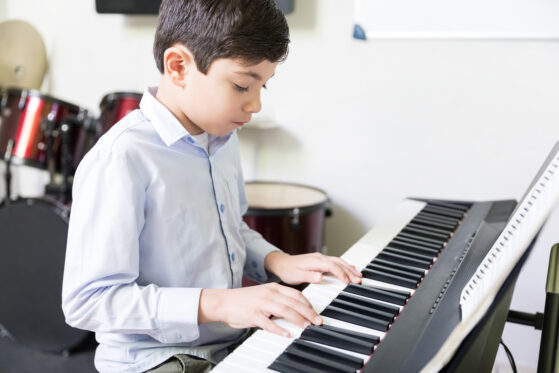
Many piano students measure progress by how quickly they can play a piece from beginning to end. Unfortunately, speed achieved too early often comes at the expense of accuracy.
Wrong notes, uneven timing, unclear articulation, and missed dynamics can easily hide inside fast playing. Since the piece keeps moving forward, the brain rarely has time to process these errors properly. Over repeated practice sessions, those mistakes become familiar and increasingly difficult to fix.
Slow practice interrupts this cycle.
By reducing the tempo, the pianist creates space to think ahead. Notes can be read more carefully, rhythms become clearer, and finger placement becomes more dependable. Rather than guessing where the hands should go, the player develops certainty.
This process may feel tedious initially, especially for impatient learners. Nevertheless, accuracy gained slowly saves enormous time later. A passage learned correctly from the beginning requires far less correction in the future.
Eventually, speed grows from confidence instead of panic. The hands begin moving faster because they already know exactly where to go.
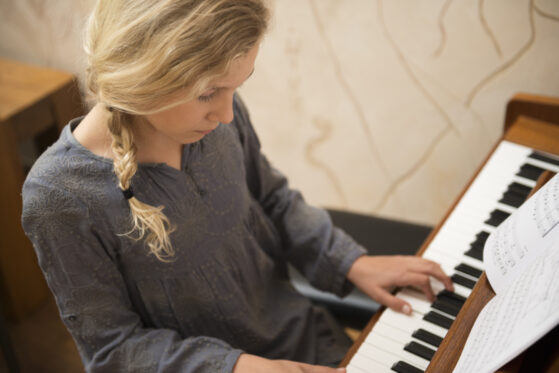
The Brain Learns Music More Deeply at Slower Tempos
Piano playing is not purely physical. It is also an intense mental activity involving memory, coordination, listening, and anticipation. Slow practice strengthens all of these processes simultaneously.
When music is played too quickly during the learning stage, the brain often operates in survival mode. The focus shifts toward simply reaching the next measure without collapsing. Under those conditions, musical understanding becomes shallow.
A slower tempo allows the mind to absorb details more effectively.
Patterns in harmony become easier to recognize. Chord progressions start making sense instead of appearing as isolated notes. Rhythmic structures feel more organized, and phrasing becomes easier to shape. Because the pianist has time to listen carefully, musical awareness increases dramatically.
This deeper understanding improves memory as well. Instead of memorizing movements mechanically, the player begins remembering the logic behind the music. Such memory is far more dependable during performances because it is supported by analysis and listening, not just muscle repetition.
Consequently, slow practice develops musicianship alongside technical ability.
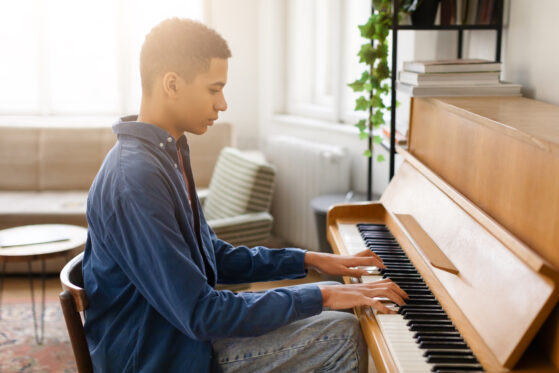
Slow Piano Practice Helps Prevent Tension and Injury
Physical tension is one of the most common obstacles in piano playing. Many students unknowingly tighten their shoulders, wrists, arms, or fingers while attempting difficult passages at full speed. Over time, this tension not only limits performance quality but can also lead to fatigue and discomfort.
Slow piano practice acts almost like a reset button for the body.
Because there is less pressure to keep up with the tempo, the pianist can pay attention to relaxation and posture. Small adjustments become easier to notice. Perhaps the wrist is lifting too high, the fingers are striking too aggressively, or the shoulders are becoming rigid during jumps. At a slower pace, these problems can be corrected before they grow into larger technical issues.
Furthermore, relaxed playing produces a better tone. Notes sound fuller, phrasing becomes smoother, and dynamics feel more controlled. The pianist learns that power does not come from force but from efficient movement and balanced touch.
In the long run, this healthier approach makes practice sessions more productive and sustainable.
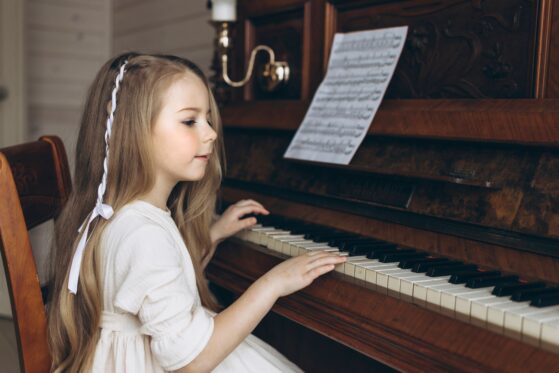
Slow Piano Practice Refines Musical Expression
Many people assume expressive playing only emerges after technical mastery. Yet musicality actually develops during the learning process itself, especially through slow practice.
At fast tempos, attention is usually consumed by survival. The pianist focuses on avoiding mistakes rather than shaping phrases or controlling tone. Important expressive details often disappear completely.
Slowing down changes the listening experience.
You begin hearing how one phrase connects to another. Dynamics can be explored with greater sensitivity, and articulation choices become more intentional. Even breathing within the music becomes easier to feel.
This slower exploration creates emotional connection. Instead of mechanically reproducing notes, the pianist starts communicating ideas and moods. A lyrical melody gains warmth, dramatic sections feel more powerful, and subtle harmonic changes become emotionally meaningful.
Interestingly, expressive playing learned slowly often remains intact when the tempo increases. Since the musical decisions were built into the piece from the beginning, they continue naturally during performance.
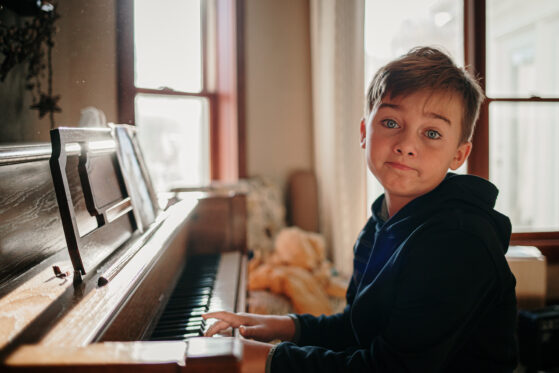
Confidence Grows Through Consistency
Confidence at the piano rarely comes from random successful attempts. Real confidence develops when a pianist can play something correctly again and again under different conditions.
Fast practice alone often creates inconsistency. One attempt may sound excellent while the next completely falls apart. This unpredictability causes frustration and performance anxiety because the player never feels fully secure.
Slow practice creates reliability instead.
Repeated correct execution teaches the hands and mind to trust the process. Difficult passages no longer feel accidental or unstable. Because the foundation is solid, the pianist approaches performances with greater calmness and control.
This consistency is especially valuable during stressful situations such as recitals, exams, or recordings. Under pressure, musicians naturally fall back on their strongest habits. If those habits were built carefully through slow practice, performance becomes far more dependable.
Confidence, therefore, is not created by rushing ahead. It is built patiently through repeated clarity and control.

Slow Piano Practice Teaches Patience and Discipline
Beyond technical improvement, slow practice develops an important mindset. In a world that often celebrates instant results, taking time to learn carefully can feel uncomfortable. Many students want visible progress immediately, which makes slow repetition seem unexciting.
However, piano mastery has always been connected to patience.
Slow practice teaches the value of gradual improvement. It trains musicians to focus on quality rather than shortcuts. Over time, this mindset becomes incredibly powerful because it encourages long-term growth instead of temporary achievement.
Students who embrace slow practice often become more disciplined learners overall. They develop stronger concentration, greater attention to detail, and a more realistic understanding of progress. Instead of becoming discouraged by difficult passages, they learn how to break challenges into manageable steps.
This mental resilience eventually benefits every area of piano study.
Why Fast Progress Often Comes From Slowing Down
Ironically, pianists who slow down often improve faster in the long term.
At first glance, this idea may seem contradictory. However, rushed practice creates extra problems that pianists later need to correct. Players miss notes, lose rhythmic stability, use poor fingering, and build unnecessary tension. These mistakes demand additional time and effort to fix. What initially feels faster eventually slows overall progress significantly.
Careful practice helps pianists avoid many of these setbacks.
When pianists learn music accurately from the beginning, they spend less energy correcting mistakes later. They develop more dependable hand movement, strengthen memory, and perform with greater confidence. A stable foundation also allows them to increase tempo more smoothly and with far less stress.
Because of this, experienced teachers consistently encourage students to slow down while working through difficult passages. They know that pianists must develop control before they attempt speed.
Once pianists build that control, they can increase speed naturally instead of forcing it through struggle.

Making Slow Piano Practice More Effective
Simply reducing tempo is not enough on its own. Effective slow practice requires active attention and thoughtful listening.
A pianist should remain mentally engaged throughout the process. Each note, rhythm, fingering, and dynamic should have a purpose. Practicing slowly without concentration can become mechanical and unproductive.
It also helps to divide challenging passages into smaller sections. Working on just a few measures at a time allows for deeper focus and cleaner repetition. Gradually, those sections can be connected until the larger piece feels comfortable.
Using a metronome can further improve consistency. Starting at a manageable tempo and increasing speed little by little creates steady progress without sacrificing accuracy.
Most importantly, patience is essential. Improvement through slow practice may not always feel dramatic from day to day, but its effects become unmistakable over time.

Final Thoughts
Many pianists underestimate slow piano practice because its benefits do not appear instantly flashy. It does not create the illusion of quick mastery, nor does it satisfy the urge to race through impressive passages immediately. Still, this simple approach remains one of the most powerful methods for achieving genuine musical growth.
When pianists practice slowly, they develop cleaner technique, stronger memory, deeper musical understanding, and greater confidence. They listen more carefully, move more efficiently, and build a stronger emotional connection with the music they play. At The Mystic Keys, students taking Piano Lessons Online learn how consistent slow practice creates long-term improvement and stronger musical control.
Most importantly, slow practice teaches pianists that they cannot achieve mastery through rushing. Instead, they build it through consistency, awareness, and patience.
In the end, playing slowly does not show weakness or lack of ability. Rather, it often shows that a pianist is truly learning and growing.
For more information and exciting resources about learning music, visit our website at The Mystic Keys. For more music content and exciting offers follow us on
Facebook, Instagram, YouTube, LinkedIn, Twitter, Pinterest, and Threads.