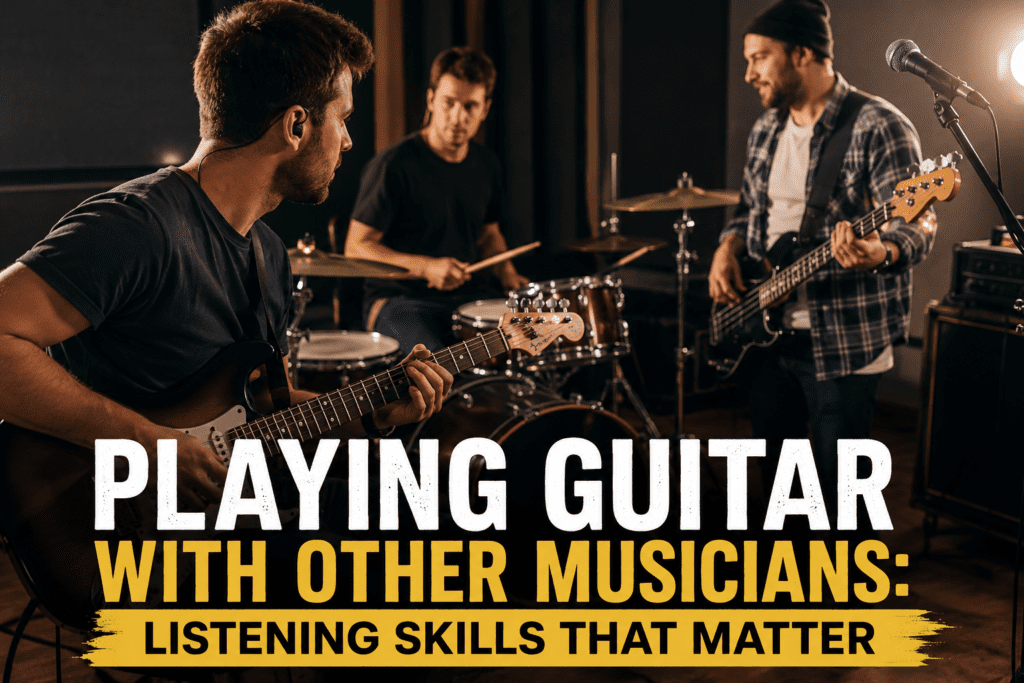
Playing Guitar With Other Musicians: Listening Skills That Matter
Playing guitar with other musicians is one of the most rewarding parts of music. Listening skills for guitarists are essential whether you are performing in a band, accompanying a singer, jamming with friends, or playing at church or school events. Your ability to listen is just as important as your ability to play.
Many guitarists focus only on chords, scales, and speed, but strong listening skills are what truly make a musician sound professional and connected with the group. Great ensemble playing happens when every musician listens carefully and responds to one another in real time.
Here are the essential listening skills every guitarist should develop while playing with others.
1. Listen to the Rhythm First
Rhythm is the foundation of any group performance. Even if you know all the right chords, poor timing can make the entire band sound messy.
Pay close attention to:
The drummer’s groove
The bassist’s timing
Tempo changes
Stops and transitions
Your strumming or picking should lock in with the rhythm section. A guitarist who plays in time instantly sounds more musical and reliable.
Tip:
Practice with a metronome and backing tracks regularly to improve timing accuracy.
2. Leave Space in the Music
One common mistake guitarists make is playing too much. Music needs space to breathe.
When playing with other musicians:
Avoid overplaying during vocals
Don’t fill every gap with riffs or solos
Allow keyboards, vocals, or other instruments to shine
Sometimes the best thing you can play is something simple and supportive.
Remember:
Good musicians know when not to play.
3. Listen to the Bass Guitar
The connection between guitar and bass is extremely important. The bass helps define the harmony and groove of the song.
By listening carefully to the bass player, you can:
Tighten your rhythm playing
Improve chord changes
Create stronger musical dynamics
Stay more connected to the groove
Rhythm guitar and bass should work together rather than compete.
4. Pay Attention to Dynamics
Dynamics refer to how loud or soft the music is played.
Great bands naturally build energy and emotion through dynamics:
Softer verses
Stronger choruses
Gentle intros
Powerful endings
As a guitarist, adjust your playing according to the mood of the song. Not every section should be played at maximum volume.
Ways to Control Dynamics:
Use lighter strumming
Adjust pick attack
Change pickup settings
Control volume knobs carefully
Listening to the overall sound of the band helps you blend better.
As a guitarist, adjust your playing according to the mood of the song. Not every section should be played at maximum volume.
5. Support the Vocalist
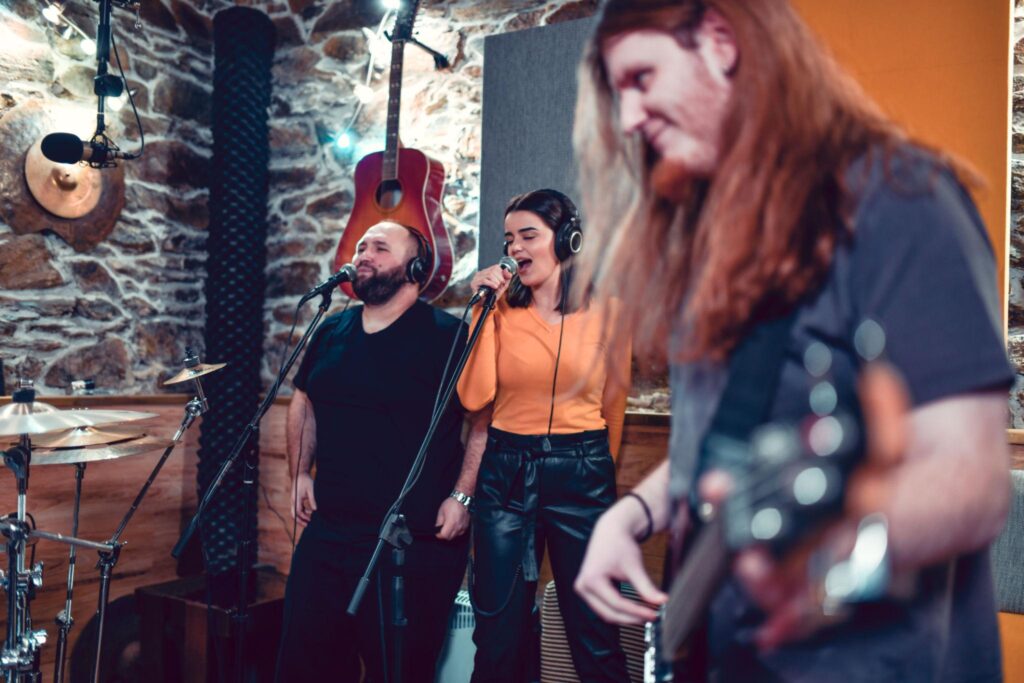
In many performances, the vocalist is the main focus. A guitarist should support the singer instead of overpowering them.
Pay attention to:
Vocal phrasing
Breathing spaces
Emotional expression
Melody movement
Simple chord voicings and tasteful fills often work better than complicated parts during singing sections.
6. Develop Eye Contact and Musical Awareness
Playing with others is not only about sound — visual communication matters too.
Watch for:
Cue signals
Count-ins
Section changes
Solo entries
Endings
Eye contact helps musicians stay together and respond quickly during live performances.
7. Learn to Adapt Quickly
Every live performance is different. Sometimes musicians change arrangements, extend solos, repeat choruses, or make mistakes.
A good guitarist listens carefully and adapts smoothly without stopping the performance.
The stronger your ears become, the easier group playing feels.
Playing guitar with other musicians is about teamwork, communication, and musical awareness. Technical skill is important, but listening carefully is what transforms individual players into a strong musical group.
The best guitarists are not always the fastest players — they are often the ones who listen deeply, support the music, and make everyone around them sound better.
By improving listening skills for guitarists, you will become a more confident guitarist, a better band member, and a more expressive musician overall.
Intersted in learning music with us? Register now
For more information and exciting resources about learning music, visit our website at The Mystic Keys. For more music content and exciting offers follow us on