
Carnatic Vocal Warm-Up Exercises Every Singer Should Practice
Carnatic music is a deeply expressive and technically rich art form that demands both precision and sensitivity from the voice. Because of this, Carnatic vocal warm-up exercises play an essential role in preparing singers before practice or performance, much like athletes prepare their bodies before training. A thoughtful warm-up routine not only improves vocal flexibility and tonal clarity but also helps protect the voice from strain and fatigue over time, allowing singers to approach their music with greater confidence and control.
Developing a consistent vocal warm-up habit helps singers improve pitch stability, strengthen breath control, and gradually expand vocal range. More importantly, it allows the voice to respond naturally to the subtle gamakas and intricate movements that define Carnatic music. With regular practice, warm-ups become the foundation upon which confident and expressive singing is built.
Let us explore some essential Carnatic vocal warm-up exercises that every singer should include in their daily routine.
Carnatic Vocal Warm-Up Exercises for Shruti Alignment
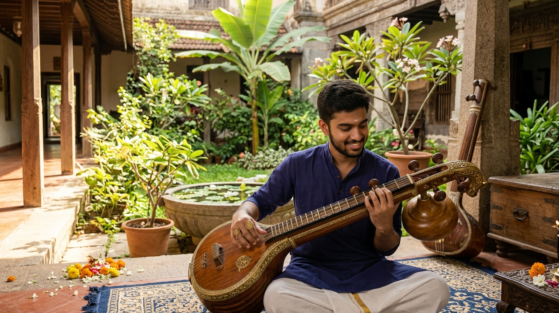
Every Carnatic vocal session should begin with tuning the voice to the shruti, as pitch alignment forms the backbone of classical singing. Without a stable connection to shruti, even technically accurate phrases can lose their musical impact.
Start by sustaining the tonic note “Sa” along with the tambura or shruti box. Allow the sound to settle naturally rather than forcing projection. Maintaining this note steadily helps the voice center itself within the tonal framework of the raga system.
Once comfortable with Sa, move gradually to Pa and higher Sa. Sustaining these notes encourages steadiness and develops listening sensitivity. Over time, this practice sharpens the ability to remain anchored to pitch throughout longer performances.

Practicing Sarali Varisai for Stability
After establishing pitch alignment, the next step involves practicing Sarali Varisai, which strengthens clarity and control in note transitions. These foundational exercises introduce the voice to structured movement across swaras in a simple yet effective manner.
Singing Sarali Varisai slowly helps build confidence in navigating the scale without tension. Careful repetition improves articulation while encouraging evenness across different registers. Gradually increasing tempo allows the voice to adapt without losing precision.
Consistency in practicing Sarali patterns ensures that singers maintain control even when progressing to more complex compositions later in the session.

Carnatic Vocal Warm-Up Exercises with Jantai Varisai for Strength
Jantai Varisai plays an important role in building vocal strength because it emphasizes double-note articulation. Repeating each swara develops firmness and enhances voice stability.
Unlike basic scale exercises, these patterns demand slightly greater effort from the vocal cords. Practicing them patiently helps improve endurance while also refining tonal clarity. Strong execution of Jantai Varisai often translates into more confident rendering of kritis and varnams.
Over time, singers begin to notice improved projection and better grip over higher notes through this exercise.
Improving Breath Control through Sustained Notes
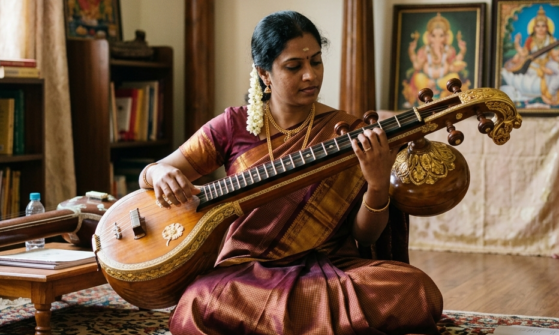
Breath management is essential for Carnatic vocalists, especially during longer phrases and improvisational passages. Sustained-note exercises train singers to regulate airflow without unnecessary strain.
Holding notes such as Sa, Ma, and Pa for extended durations allows the lungs and diaphragm to work in coordination with the voice. Maintaining a steady tone during these holds strengthens support and reduces instability.
As breath control improves, singers find it easier to execute gamakas and longer sangatis with greater ease and musicality.
Carnatic Vocal Warm-Up Exercises with Alankaram Practice for Flexibility
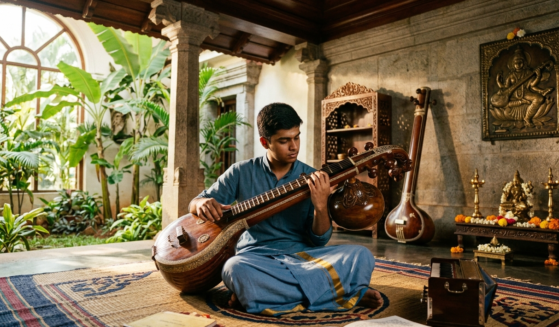
Once the voice begins to feel stable and responsive, practicing Alankarams helps increase flexibility across rhythmic structures. These patterned exercises introduce the voice to multiple tala frameworks while maintaining melodic accuracy.
Working through Alankarams slowly ensures that swaras remain distinct and well placed. Gradual tempo variation encourages adaptability and prepares singers for more rhythmically demanding compositions.
Regular engagement with these exercises improves coordination between melody and rhythm, which is essential for confident Carnatic performance.
Gentle Raga-Based Voice Exploration
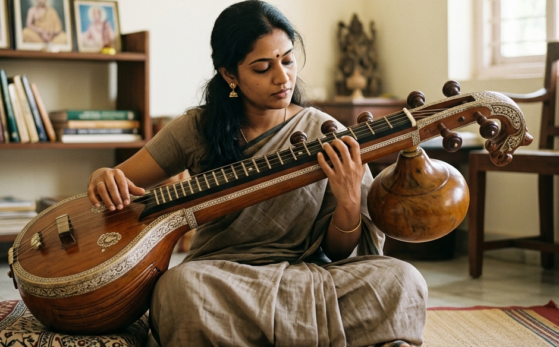
Warm-ups become more musically engaging when simple raga phrases are introduced toward the later part of the routine. Exploring familiar ragas through short phrases helps transition smoothly from technical preparation to expressive singing.
Instead of attempting elaborate improvisation immediately, singers benefit from practicing basic raga outlines with attention to gamaka precision. This approach allows the voice to settle naturally into the aesthetic mood of the session.
Such exploration not only enhances tonal color but also prepares the mind for deeper musical involvement.
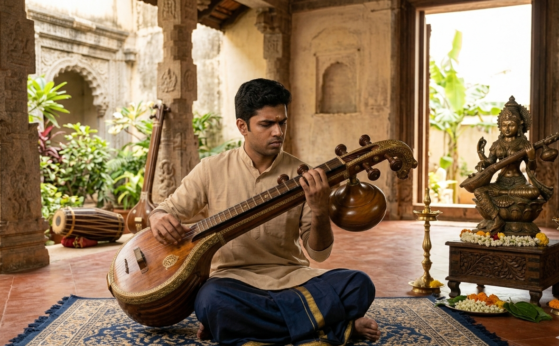
Carnatic Vocal Warm-Up Exercises with Akara Sadhakam for Tone Development
Akara Sadhakam is one of the most valuable techniques in Carnatic vocal training because it focuses entirely on tone production using the vowel sound “aa.” Practicing swara patterns in akara strengthens resonance and improves voice openness.
When done patiently, this exercise enhances smoothness across registers and reduces throat tension. The voice gradually develops richness and carrying capacity without forced effort.
As tonal quality improves, singers experience greater ease while handling both slow and fast passages in compositions.
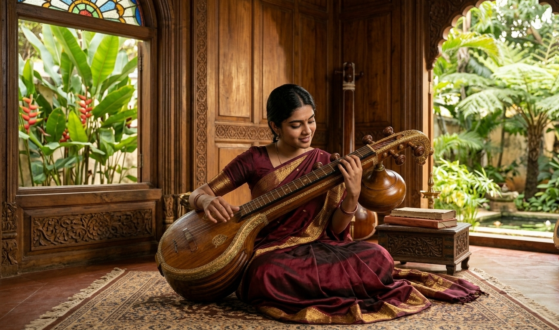
Ending Warm-Ups with Relaxed Phrase Singing
Closing the warm-up session with relaxed melodic phrases helps the voice transition naturally into the main practice segment. Singing short segments from varnams or simple kritis allows previously practiced techniques to settle comfortably into musical expression.
This stage acts as a bridge between technical preparation and performance-oriented singing. Instead of focusing on correction alone, singers begin to experience flow and confidence in their voice.
A calm conclusion to the warm-up routine ensures that the voice remains flexible, responsive, and ready for deeper practice.
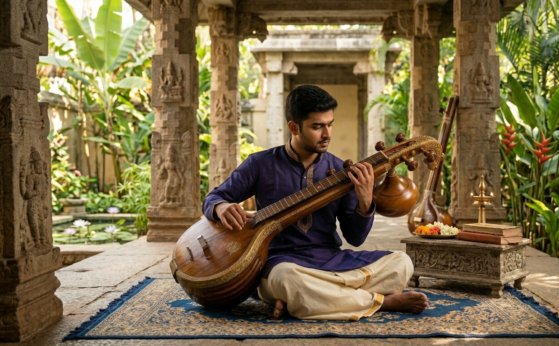
Carnatic Vocal Warm-Up Exercises for Building a Consistent Daily Routine
Warm-ups are most effective when practiced regularly rather than occasionally. Establishing a structured routine helps singers maintain vocal health while steadily improving technical ability, especially when guided through well-designed learning paths such as Carnatic Vocal Lessons Online offered by The Mystic Keys.
Even a short but focused warm-up session can significantly enhance overall performance quality. Gradual progress becomes noticeable when exercises are approached with patience and attention, allowing singers to experience steady improvement without strain.
Over time, these foundational practices support the development of a voice that is stable, expressive, and capable of handling the rich demands of Carnatic music with confidence and musical depth.
For more information and exciting resources about learning music, visit our website at The Mystic Keys. For more music content and exciting offers follow us on
Facebook, Instagram, YouTube, LinkedIn, Twitter, Pinterest, and Threads.