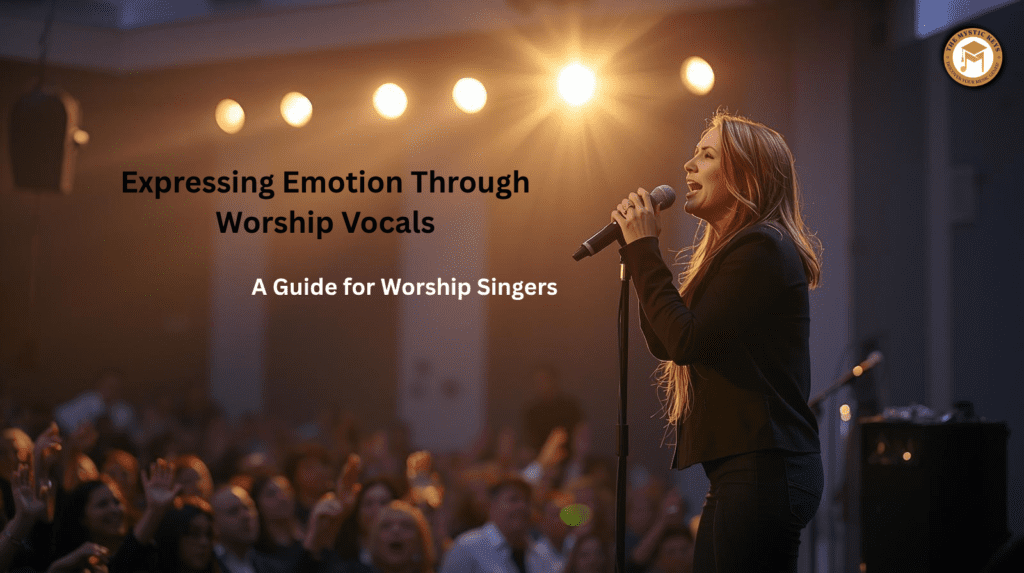
Expressing Emotion Through Worship Vocals | A Guide for Worship Singers
Worship music is more than singing the correct notes. It is about communicating the message of the song and connecting hearts to God. One of the most important skills for a worship singer is expressing emotion through worship vocals.
Many singers focus heavily on pitch, technique, and memorising lyrics. While these elements are important, worship becomes powerful when the singer communicates the heart and meaning behind the song.
In this guide, we will explore practical ways to develop the ability of expressing emotion through worship vocals so that your singing can lead people into a deeper worship experience.
Why Expressing Emotion Through Worship Vocals Is Important

When a worship leader sings with genuine emotion, the congregation can feel the message of the song rather than just hear it.
Expressing emotion through worship vocals helps to:
- Communicate the meaning of the lyrics clearly
- Create a deeper spiritual connection in worship
- Lead the congregation more effectively
- Make worship songs more authentic and powerful
A technically perfect vocal performance may sound impressive, but true worship singing connects the heart, voice, and message together.
Understand the Message Before Expressing Emotion Through Worship Vocals

Before singing any worship song, it is important to understand what the song is truly saying.
Ask yourself:
- What is the main message of the song?
- Is the song about gratitude, surrender, praise, or prayer?
- Which lines carry the strongest emotional meaning?
When you understand the lyrics deeply, emotional expression in worship singing becomes natural. The feeling will flow from the meaning of the song instead of being forced.
For example:
A song about God’s love should feel warm and sincere, while a song about victory or praise may require stronger energy and confidence.
Use Vocal Dynamics When Expressing Emotion Through Worship Vocals

Dynamics play a huge role in emotional singing. Dynamics simply mean how loud or soft you sing different parts of a song.
Instead of singing every line with the same intensity, vary your dynamics.
Examples include:
- Singing softly during reflective verses
- Building intensity during pre-chorus sections
- Singing strongly and confidently during the chorus
These changes help listeners feel the emotional journey of the song.
When used correctly, vocal dynamics greatly improve the emotional impact of worship singing.
Connect Personally With the Lyrics

One of the best ways to improve expressing emotion through worship vocals is to connect the lyrics with your personal faith and experiences.
Think about moments when the words of the song became meaningful in your own life.
For example:
- A lyric about faith during difficult times
- A lyric about gratitude for blessings
- A lyric about surrender and trust in God
When singers personally connect with the message, the emotion becomes authentic and genuine, which listeners immediately recognise.
Focus on Clear and Meaningful Phrasing

Another important aspect of expressing emotion through worship vocals is how you phrase the lyrics.
Phrasing refers to how you:
- Emphasise certain words
- Shape musical sentences
- Control breathing between lines
Instead of rushing through lyrics, allow the important words to stand out.
For example, words like:
- Love
- Grace
- Holy
- Faithful
- Savior
should be sung with clarity and intention.
Meaningful phrasing helps the congregation understand and feel the message of the song.
Use Facial Expression and Body Language
Emotion in worship singing is not only about the voice. Body language and facial expression also influence how the audience perceives the music.
Simple things can make a big difference:
- Gentle facial expression during reflective songs
- Open posture when leading praise
- Eye contact with the congregation
These visual elements support emotional worship singing and help communicate sincerity.
Practice Expressing Emotion Through Worship Vocals During Rehearsal
Many singers only focus on learning the melody during rehearsal. However, rehearsals are also the best time to practice emotional expression.
Try the following practice methods:
- Speak the lyrics as a prayer before singing them
- Practice singing the song softly and reflectively
- Record yourself and evaluate whether the emotion feels natural
The more you practice emotional expression in worship singing, the more natural it becomes during live worship.
Avoid Over-Singing or Forcing Emotion
One common mistake in worship singing is trying too hard to sound emotional.
True emotion does not require excessive vocal runs or dramatic singing.
Instead, focus on:
- Clear tone
- Controlled breathing
- Natural phrasing
- Honest delivery
Authenticity is always more powerful than exaggeration when singing worship songs with emotion.
Prepare Your Heart Before Leading Worship
Technical preparation is important, but spiritual preparation is equally essential.
Before leading worship, spend time in:
- Personal prayer
- Reflecting on the lyrics
- Quiet preparation
When the heart is prepared, expressing emotion through worship vocals happens naturally because the worship is genuine.
Expressing emotion through worship vocals is a skill that develops with practice, spiritual connection, and musical understanding.
When worship singers focus on the message of the song, connect personally with the lyrics, and use vocal dynamics effectively, their singing becomes more meaningful and impactful.
Remember that worship is not about vocal performance. It is about leading people into an authentic encounter with God through music.
By learning the art of expressing emotion through worship vocals, singers can transform simple songs into powerful moments of worship.
For singers and musicians who want to grow further, structured training can make a significant difference. Learning from experienced teachers helps develop vocal control, musical interpretation, and confidence in leading worship.
At The Mystic Keys, students can explore piano lessons online, vocal training, and worship music guidance designed to help musicians express music with greater emotion and understanding. These lessons support both beginners and developing worship leaders who want to strengthen their musical and spiritual expression.
Intersted in learning music with us? Register now
For more information and exciting resources about learning music, visit our website at The Mystic Keys. For more music content and exciting offers follow us on
Facebook, Instagram, YouTube, LinkedIn, Twitter, Pinterest, and Threads.