
How Canadian Families Can Make Music Learning Part of Daily Life
How Canadian Families Can Make Music Learning Part of Daily Life
Music can become a wonderful part of family life. Music learning for Canadian families can start with simple activities, from singing together in the morning to practising an instrument after school. These small musical activities can help children develop creativity, confidence, discipline, and listening skills.
For many parents in Canada, balancing school, homework, extracurricular activities, and family time can be challenging. However, music learning for Canadian families does not have to mean adding another stressful activity to an already busy schedule.
With simple routines, encouragement, and the right learning environment, families can make music a natural part of everyday life. Discover how music learning for Canadian families can become part of everyday routines with simple activities and enjoyable musical experiences.
1. Create a Simple Daily Music Routine
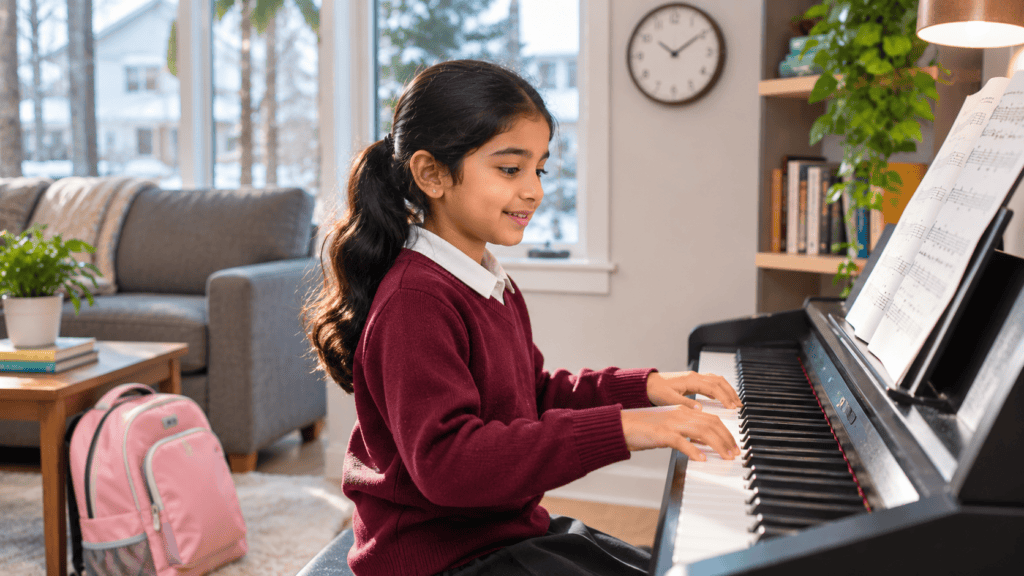
One of the easiest ways to introduce music into family life is by creating a consistent practice routine.
Children do not always need long practice sessions to develop their musical abilities. Even 15–20 minutes of focused practice each day can help them become more comfortable with their instruments.
Parents can encourage children to:
Practise piano or keyboard after completing homework.
Spend a few minutes learning guitar chords.
Sing their favourite songs together.
Listen to different styles of music.
Review what they learned in their previous music lesson.
The goal is to make music practice enjoyable rather than turning it into another school assignment.
2. Make Music a Family Activity

Music learning becomes more enjoyable when the whole family participates.
Parents do not need professional musical knowledge to support their children’s interests. Simply showing enthusiasm and participating in musical activities can make a difference.
Here are some activities Canadian families can enjoy together:
Organise a small family singing session.
Have a weekend music evening at home.
Encourage children to perform their favourite songs.
Listen to classical, jazz, pop, and traditional music.
Let children introduce their favourite musicians to the family.
These activities create positive experiences and help children develop a stronger connection with music.
3. Choose the Right Musical Instrument for Your Child
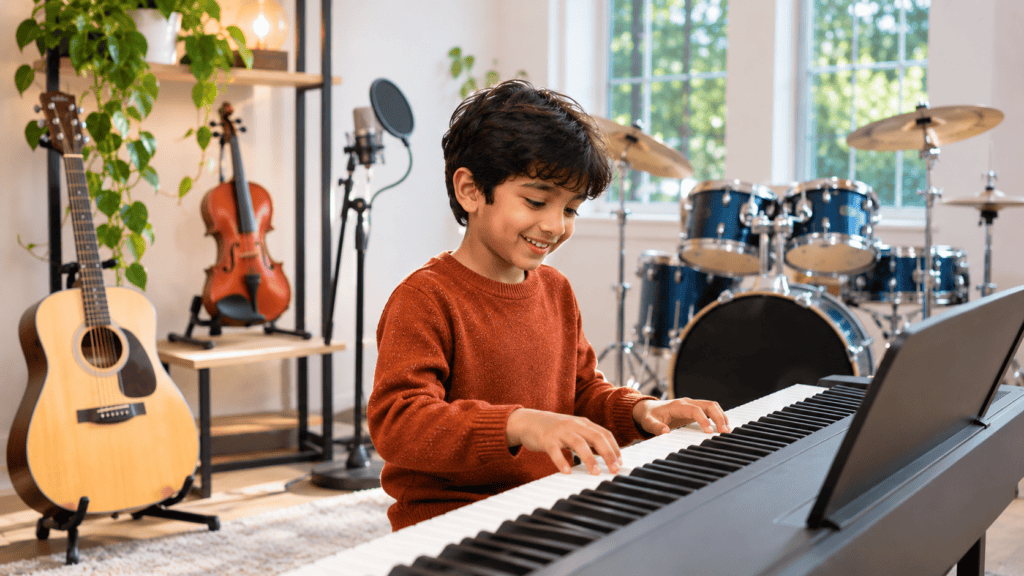
Every child has different interests and learning preferences. Some children enjoy playing the piano, while others are naturally attracted to the guitar, violin, drums, or singing.
Choosing an instrument that matches your child’s interests can make learning more enjoyable.
Consider these popular options:
Piano and Keyboard: Excellent for understanding musical notes, melodies, and basic music theory.
Guitar: A great choice for children who enjoy contemporary music and singing along.
Violin: Helps develop listening skills, coordination, and musical expression.
Drums: Suitable for children who enjoy rhythm, energy, and percussion.
Western Vocals: Helps children improve pitch, breathing, and vocal confidence.
Allowing children to explore different musical interests can help them discover an instrument they genuinely enjoy.
4. Make the Most of Online Music Lessons in Canada
Canadian families often have busy schedules, especially when children participate in school activities, sports, and other extracurricular programmes.
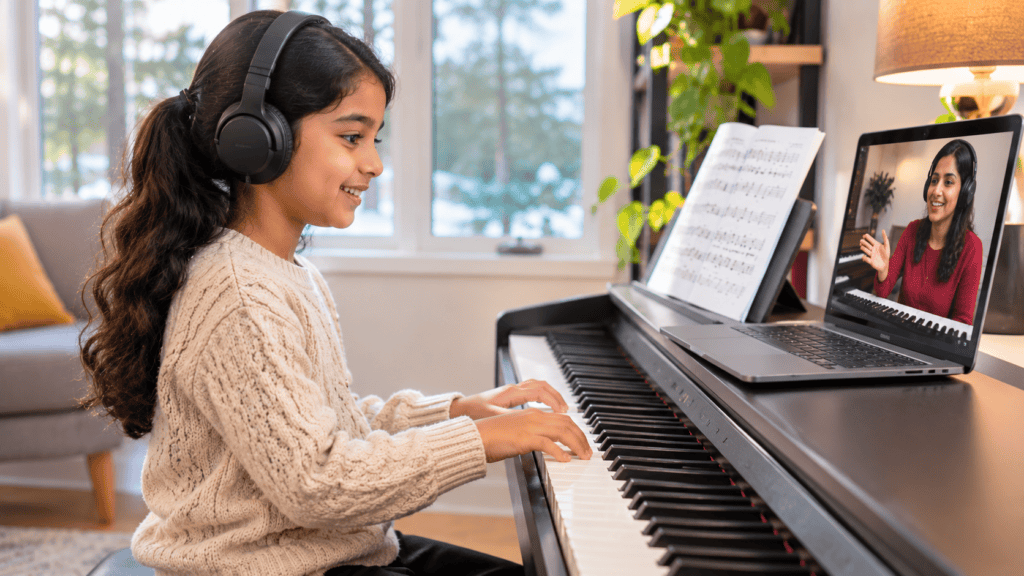
Online music lessons offer a flexible way to learn without travelling to a physical music school.
Through live online classes, children can learn from experienced music teachers from the comfort of their homes.
At The Mystic Keys, students can access personalised online music training, including live one-to-one piano and guitar lessons following the Trinity College London syllabus.
Online music lessons can offer several advantages:
Flexible class scheduling for busy families.
Personal attention from dedicated teachers.
Recorded lessons for revision and practice.
Learning materials and practice guidance.
International music examination preparation.
This approach allows children to continue developing their musical abilities while maintaining their regular school and family routines.
5. Encourage Children Without Creating Pressure
Every child learns at a different pace. Some children may understand a new musical concept quickly, while others need more time and practice.
Parents should focus on progress rather than perfection.
Here are a few ways to keep children motivated:
Appreciate their efforts, even when they make mistakes.
Avoid comparing their progress with other children.
Give them opportunities to perform at home.
Let them enjoy their favourite songs alongside structured lessons.
Positive encouragement helps children build confidence and develop a healthy attitude towards learning.
6. Use Music to Make Weekends More Meaningful
Weekends are a great opportunity for Canadian families to spend more time exploring musical interests.
Instead of treating music as something children only do during lessons, make it part of your weekend activities.
You could organise a family music challenge, watch live musical performances, explore different instruments, or encourage children to prepare a short performance.
Parents can also introduce children to Canadian musicians and different musical traditions. This helps them understand how music connects people, cultures, and communities.
Small weekend activities can create lasting memories while encouraging children to explore their creativity.
7. Build Long-Term Musical Habits Through Consistency
Developing musical skills takes time, patience, and regular practice. A single lesson cannot build strong musical abilities overnight.
A consistent routine, supportive parents, and structured guidance can help children make steady progress.
Families should aim to create a balanced schedule that includes regular lessons, independent practice, and opportunities to enjoy music.
With the right support, children can gradually improve their technique, musical understanding, listening skills, and confidence.
Make Music a Part of Your Family's Everyday Life with The Mystic Keys
Music can be much more than an extracurricular activity. It can become a meaningful part of a child’s development and everyday experiences.
At The Mystic Keys, we believe every child deserves personalised musical guidance and an enjoyable learning environment.
Our online music programmes help students develop their skills through live one-to-one classes, dedicated teacher support, recorded lessons, flexible scheduling, and international examination preparation.
Whether your child is interested in piano, guitar, vocals, violin, or another musical instrument, we are here to support their musical development.
Give your child the opportunity to discover the joy of music!
Visit The Mystic Keys to explore our online music programmes and book a free consultation.
Let Music Be Your Next Skill!