Music Lessons for Adults
Music Lessons for Adults: Is It Too Late to Start Learning?
Introduction: Music Lessons for Adults
Have you ever wanted to learn the piano, guitar, violin, or another musical instrument but felt that you were too old to begin? You are not alone. Many adults dream of making music but hesitate because they believe learning an instrument is something best started during childhood. The truth is that music lessons for adults can be rewarding at any age, whether you are learning for personal enjoyment, creative expression, or a long-held ambition.
Unlike children, adults often approach music with clearer goals, greater self-awareness, and a stronger understanding of why they want to learn. Although balancing practice with work and personal responsibilities can be challenging, the right guidance and a realistic learning routine can make musical progress achievable.
So, is it really too late to start learning music as an adult? Absolutely not. Let’s explore why adults can learn music successfully and how to begin your musical journey with confidence.

Why Music Lessons for Adults Are Worth Starting at Any Age
One of the biggest misconceptions about learning music is that you must start young to become good at it. While children may develop certain musical skills through early exposure, adults are equally capable of learning instruments and developing musical abilities.
The learning process may look different depending on your age, experience, and available practice time, but progress is possible at every stage of life.
Adults can learn to:
Understand rhythm, melody, and harmony.
Play popular songs on their favourite instruments.
Develop proper playing techniques.
Improve listening and coordination skills.
Perform music independently or with others.
You do not need childhood musical experience or natural talent to begin. Consistent practice, patient instruction, and achievable goals are far more important.
Benefits of Taking Music Lessons for Adults
Learning an instrument is not only about developing a new skill. It can also introduce creativity, enjoyment, and a refreshing change to everyday routines.
Here are some reasons why adults should consider starting music lessons.
1. Creative Benefits of Music Lessons for Adults
Adult life often revolves around professional responsibilities, family commitments, and daily routines. Finding time for a creative activity can help bring balance to an otherwise busy schedule.
Learning music gives you an opportunity to express yourself in a different way. Whether you enjoy playing gentle piano melodies, energetic guitar arrangements, or your favourite songs on the violin, music allows you to explore creativity at your own pace.
It can also be a satisfying way to reconnect with interests you may have put aside over the years.
2. How Music Lessons for Adults Keep Learning Interesting
Learning something new as an adult can be exciting. Music introduces you to different concepts, techniques, and styles that keep the learning experience engaging.
For example, piano lessons introduce melody, chords, rhythm, and coordination. Guitar lessons develop strumming, finger placement, chord transitions, and musical expression.
As you progress, every new technique and completed song gives you another reason to continue learning.
3. Emotional Benefits of Music Lessons for Adults
Music is closely connected to emotions. Playing an instrument can provide a meaningful way to express feelings, unwind, and enjoy a moment away from everyday pressures.
Many adults find that practising music becomes a relaxing part of their routine. Rather than focusing on work-related responsibilities, they can concentrate on rhythm, melody, and the experience of creating music.
Although music lessons are not a substitute for professional mental health support, they can be an enjoyable and personally meaningful leisure activity.
4. Building Confidence Through Music Lessons for Adults
Starting something unfamiliar can feel intimidating, especially when you are used to being competent in your professional and personal life.
However, learning an instrument teaches you to accept mistakes as part of improvement.
Your first successful chord change, your first complete song, or your ability to play a melody without stopping can become meaningful achievements.
Over time, these small milestones can help build confidence and encourage you to take on more challenging musical goals.
5. Enjoying Music Lessons for Adults at Your Own Pace
Adults do not necessarily need to follow the same learning schedule as children or professional music students.
You may want to learn a few favourite songs, play music for family gatherings, accompany yourself while singing, or simply explore an instrument as a hobby.
Your musical goals can shape your learning journey. There is no requirement to pursue examinations or professional performance unless that is something you genuinely want.
Choosing the Right Instrument for Music Lessons for Adults
Choosing the right instrument is an important part of starting your musical journey. The best option is usually the instrument that interests you most and fits your lifestyle, preferences, and goals.
Here are a few popular choices.
Piano and Keyboard
The piano is an excellent choice for adults who want to understand music theory while developing practical playing skills.
Its layout makes it easier to visualise musical notes, scales, chords, and melodies. Beginners can start with simple tunes before gradually exploring more advanced pieces.
Piano lessons for adults can include:
Reading musical notes.
Finger positioning and coordination.
Scales and chords.
Rhythm and timing.
Playing popular and classical pieces.
The piano is also suitable for people interested in classical music, contemporary songs, film scores, and accompaniment.

Guitar
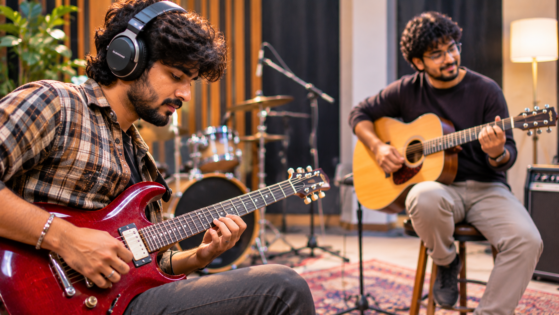
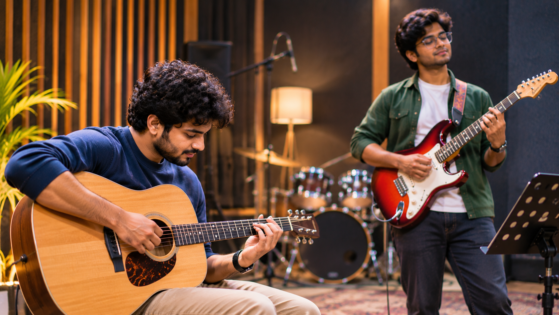
The guitar is a popular instrument among adults because it allows learners to play a wide range of musical styles.
Whether you enjoy acoustic melodies, rock music, pop songs, or worship music, guitar lessons can help you develop the techniques needed to play your favourite arrangements.
Beginners generally start with basic chords, strumming patterns, finger placement, and simple songs.
As their skills improve, they can explore fingerstyle playing, lead guitar, barre chords, and more complex arrangements.
Violin
The violin is a beautiful instrument for adults interested in classical, folk, and contemporary music.
It may require patience during the initial stages because learners need to develop bow control, posture, intonation, and coordination.
However, with structured instruction and regular practice, adults can gradually develop the skills required to play melodies and complete musical pieces.
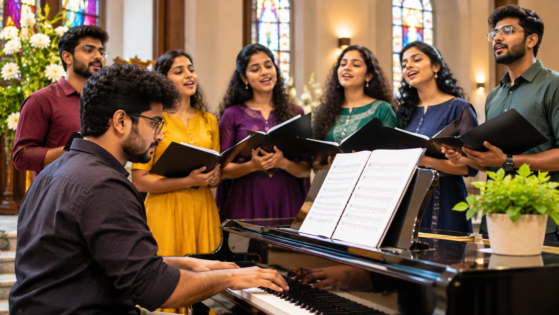
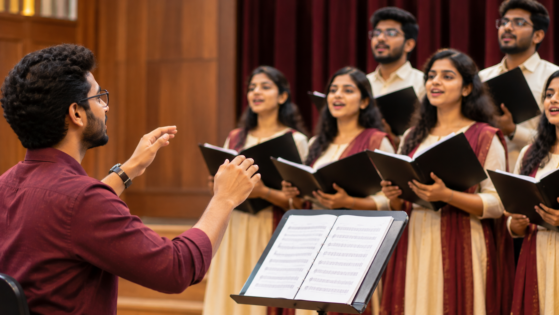
Singing and Vocal Lessons
Not every musical journey needs to involve an instrument. Adults who enjoy singing can benefit from structured vocal training.
Vocal lessons can help develop:
Breath control.
Pitch accuracy.
Vocal range.
Clear pronunciation.
Vocal tone and expression.
Confidence while singing.
Whether you enjoy Western vocals, classical singing, or contemporary music, lessons can help you understand your voice and use it more effectively.
Drums
For adults who enjoy rhythm and energetic music, drums can be an exciting instrument to learn.
Drum lessons introduce learners to basic beats, coordination, timing, sticking techniques, and different rhythmic patterns.
You can begin with simple exercises before progressing towards more complex grooves and musical styles.
Common Challenges in Music Lessons for Adults
Although adults can learn music successfully, starting later in life may come with a few challenges. Understanding these difficulties can help you approach your lessons with realistic expectations.
1. Limited Time for Practice
Work, family, and personal responsibilities can make it difficult to maintain a consistent practice routine.
Unlike children who may have more flexible schedules, adults often need to plan their music practice around other commitments.
The solution is to start with manageable practice sessions. Even 15–20 minutes of focused practice can help reinforce what you learn during lessons.
Consistency matters more than practising for several hours occasionally.
2. Fear of Making Mistakes
Many adults feel uncomfortable making mistakes, especially when learning in front of a teacher.
You may worry about playing the wrong notes, forgetting a chord, or struggling with a particular technique.
However, mistakes are a normal part of learning music. They help you identify areas that need improvement.
Instead of expecting perfect performance immediately, focus on understanding the process and gradually improving your skills.
3. Comparing Yourself With Younger Learners
It is easy to compare your progress with children or people who have been learning music for years.
However, everyone begins with different experiences, abilities, and learning opportunities.
Your progress should be measured against your own starting point rather than someone else’s achievements.
Remember that learning music as an adult is a personal journey, not a competition.
4. Difficulty Understanding Music Theory
Musical notation, scales, chords, and rhythm may initially seem complicated, particularly if you have never studied music before.
A good teacher can introduce these concepts gradually and connect theory with practical exercises.
For example, instead of learning chords only through written explanations, a piano or guitar teacher can demonstrate how they sound and how they are used in familiar songs.
This makes musical concepts easier to understand and apply.
5. Maintaining Motivation
Progress may feel slow during the early stages, especially when you are working on basic techniques.
Setting small goals can make the process more rewarding. Learning one complete song, improving a difficult chord transition, or playing a short melody without stopping can provide a sense of achievement.
Choose music you genuinely enjoy so that practice remains interesting.
How to Choose the Best Music Lessons for Adults
Choosing suitable lessons can make a significant difference to your learning experience. Adults often benefit from a flexible, personalised approach that considers their goals, schedule, and previous experience.
Here are some factors to consider before enrolling.
1. Look for Experienced Music Teachers
A qualified and experienced teacher can help you develop correct techniques from the beginning.
Look for instructors who understand how to teach adult beginners and can explain musical concepts clearly.
A teacher should be patient, encouraging, and able to adapt lessons according to your learning pace.
2. Choose a Personalised Learning Approach
Every adult has different musical interests.
Some may want to learn classical piano, while others may prefer playing contemporary songs on the guitar. A singer may want to improve vocal technique, while another learner may simply want to sing with greater confidence.
Choose lessons that consider your individual goals rather than following a completely fixed approach.
3. Consider Flexible Scheduling
A busy schedule should not prevent you from learning music.
Online music lessons can make learning more convenient because you can attend classes from home without travelling to a music school.
Look for lesson schedules that work with your professional and personal commitments.
4. Check the Lesson Structure
Good music lessons should provide a clear learning direction.
A structured programme may include:
Instrument fundamentals.
Technique development.
Music theory.
Practical exercises.
Song-based learning.
Regular progress evaluation.
A combination of theory and practical playing helps you understand what you are learning and apply it confidently.
5. Choose Lessons That Match Your Skill Level
If you are a complete beginner, look for lessons designed specifically for beginners.
You should not feel pressured to learn advanced techniques before understanding the fundamentals.
If you already have some musical experience, your teacher can help identify your current level and create a suitable learning plan.
Are Online Music Lessons for Adults Effective?
Yes. Online music lessons have made music education more accessible to adults who may not have the time or opportunity to attend in-person classes.
With a suitable instrument, a stable internet connection, and a video-calling platform, you can receive personalised instruction from home.
Online lessons can offer several advantages:
Convenience: You can learn without spending time travelling to a music school.
Flexible scheduling: Lessons can often be arranged around work and personal commitments.
Personalised instruction: One-to-one sessions allow teachers to focus on your individual strengths and areas for improvement.
Access to teachers: You can connect with instructors beyond your immediate location.
Comfortable learning environment: Practising from home may help beginners feel more relaxed and confident.
However, online learning still requires active participation. You should position your camera correctly, follow demonstrations carefully, and practise regularly between lessons.

How Much Should Adults Practise Between Music Lessons?
One of the most common questions adult beginners ask is how much time they need to practise to see progress.
The answer depends on your goals, current skill level, and availability.
You do not need to spend hours practising every day. A short, focused routine can be effective when followed consistently.
Here is a simple practice schedule you can consider:
| Practice activity | Suggested time |
|---|---|
| Warm-up exercises | 3–5 minutes |
| Technique practice | 5 minutes |
| Music theory or rhythm | 5 minutes |
| Learning a song | 10 minutes |
| Reviewing previous lessons | 5 minutes |
You can adjust this routine according to your schedule and the instrument you are learning.
If you have only 15 minutes available, focus on one or two specific skills rather than trying to cover everything at once.
The most important thing is to practise regularly and apply the feedback you receive from your teacher.
Tips for Making Music Lessons for Adults a Consistent Habit
If you are ready to begin learning music, a few simple habits can help you stay consistent and enjoy the experience.
Start With Realistic Goals
Avoid setting unrealistic expectations at the beginning. You do not need to master an instrument within a few months.
Start with achievable goals, such as learning basic chords, playing a simple melody, or understanding fundamental rhythms.
Choose Music You Enjoy
Learning becomes more exciting when you practise songs you already love.
Ask your teacher to include music that matches your interests while still helping you develop essential techniques.
Create a Consistent Practice Routine
Choose a time when you can practise without frequent interruptions.
It could be early in the morning, during an afternoon break, or after work. A predictable routine makes it easier to maintain consistency.
Be Patient With Yourself
Some techniques may take longer to understand than others. You may find certain songs easy while struggling with seemingly simple exercises.
That is completely normal.
Give yourself enough time to develop coordination, musical understanding, and confidence.
Celebrate Small Achievements
Every improvement deserves recognition.
Completing your first song, playing a chord progression smoothly, or singing with better pitch accuracy are all signs of progress.
Celebrating these milestones can help you remain motivated throughout your learning journey.
Why Choose The Mystic Keys for Music Lessons for Adults?
Starting music lessons as an adult should feel encouraging, enjoyable, and accessible. The right learning environment can help you overcome hesitation and build confidence from the very first lesson.
At The Mystic Keys, learners can explore different musical interests through online music education and personalised guidance from internationally certified teachers.
Whether you want to learn piano, guitar, violin, drums, or develop your singing skills, you can work towards your musical goals with structured lessons and individual attention.
You do not need previous musical experience to begin. Lessons can help you understand the fundamentals, develop proper techniques, and gradually progress towards the music you enjoy playing.
With flexible online learning, you can make music a part of your routine without putting your professional or personal responsibilities aside.
Conclusion
It is never too late to start learning music. Whether you are in your twenties, forties, fifties, or beyond, you can begin developing musical skills and enjoy the experience of creating music.
The key is to choose an instrument you love, find a supportive teacher, set realistic goals, and practise consistently. You do not have to become a professional musician to benefit from learning music.
Sometimes, the greatest achievement is simply doing something you have always wanted to do.
Your musical journey does not have an age limit. The best time to start is when you are ready.
For more information and exciting resources about learning music, visit our website at The Mystic Keys. For more music content and exciting offers follow us on
Facebook, Instagram, YouTube, LinkedIn, Twitter, Pinterest, and Threads,