For more information and exciting resources about learning music, visit our website at The Mystic Keys. For more music content and exciting offers follow us on Facebook, Instagram, YouTube, LinkedIn,
Twitter, Pinterest, and Threads.

Live Instruments or Karaoke Tracks
Live Instruments vs Karaoke Tracks for Choir Performances: Which Is Better?
Introduction
A choir performance is more than a group of voices singing together. The accompaniment, rhythm, dynamics, and emotional connection all contribute to the overall musical experience. But when preparing for a concert, school event, church service, or community celebration, choir directors often face an important decision: Should the choir perform with live instruments or karaoke tracks?
Both options have advantages. Live instruments allow musicians to respond to the choir in real time, while karaoke tracks provide consistent accompaniment without requiring a full band. The right choice depends on the choir’s experience, budget, performance setting, and musical goals.
In this guide, we will explore the differences between live instruments and karaoke tracks, their advantages and disadvantages, and how to choose the best option for your next choir performance.
What Are Live Instruments or Karaoke Tracks in Choir Performances?
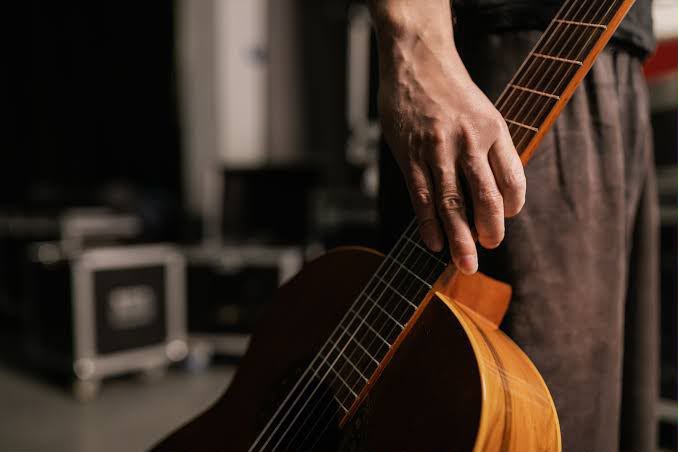
Live accompaniment means that musicians perform alongside the choir rather than relying entirely on a prerecorded instrumental track.
Depending on the song live instruments or karaoke tracks and available resources, the accompaniment may include:
- Piano or keyboard
- Acoustic or electric guitar
- Bass guitar
- Drums and percussion
- Strings or orchestral instruments
- A small instrumental ensemble or full band
The musicians follow the choir director, listen to the singers, and adjust their playing to support the performance.
For example, a pianist can soften the accompaniment when the choir sings a quiet passage and build the intensity during a powerful chorus. A guitarist can adjust the rhythm to match the choir’s phrasing, while a drummer can help maintain energy
during upbeat songs.
This interaction makes live accompaniment especially valuable for performances that require musical expression, flexibility, and spontaneous changes.
What Are Live Instruments or Karaoke Tracks for Choir Performances?
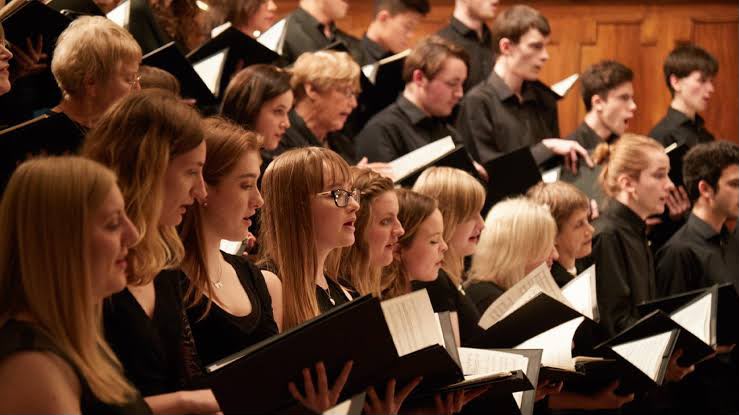
Live Instruments or Karaoke tracks, also known as backing tracks, are prerecorded musical accompaniments that play through a sound system while the choir sings.
Depending on the recording, a track may include drums, bass, piano, guitars, strings, synthesizers, and other instrumental layers. The choir performs the vocal parts over the recorded music.
Unlike live musicians, backing tracks follow a fixed arrangement. The tempo, instrumental parts, transitions, and ending are generally predetermined.
Karaoke tracks can be useful for:
- School choir competitions
- Community performances
- Small choirs without regular instrumentalists
- Events with limited rehearsal time
- Performances that require a full instrumental sound on a limited budget
A well-produced track can provide a polished accompaniment even when a choir does not have access to a live band. However, singers must rehearse carefully because the recording will continue even if the choir loses its place.
Live Instruments or Karaoke Tracks: Key Differences
Understanding the main differences can help choir directors make a practical decision.
| Factor | Live instruments | Karaoke tracks |
|---|---|---|
| Musical flexibility | Musicians can respond to the choir | Arrangement and tempo are usually fixed |
| Sound consistency | Depends on musicians and rehearsal | The recording remains consistent |
| Emotional expression | Allows spontaneous musical interaction | Expression must fit the recorded arrangement |
| Budget | May require musician fees and equipment | Often more affordable once a suitable track is available |
| Rehearsal needs | Requires coordination between singers and musicians | Requires practice with the exact track |
| Technical requirements | Instruments, players, and sound setup |
Playback device, audio files, and sound system |
| Mistake recovery | Musicians may help the choir recover | The choir must catch up with the continuing track |
| Musical learning | Develops listening and ensemble skills | Can help develop timing and familiarity with arrangements |
Neither option is automatically better in every situation. The quality of the musicians, the production of the track, and the preparation of the choir all influence the final performance.
Advantages of Using Live Instruments or Karaoke Tracks for Choir Performances
1. Greater Musical Flexibility
One of the biggest advantages of live instruments is the ability to adjust the music in real time.
Choirs do not always sing at exactly the same tempo throughout a performance. A conductor may stretch a phrase, slow down at the end of a verse, or build anticipation before the final chorus.
Live musicians can follow these changes and adapt their playing accordingly.
For example, if the choir needs extra time to complete a sustained note, the pianist can extend the accompaniment naturally. A guitarist can also adjust the rhythm to support a more expressive vocal phrase.
This flexibility helps the performance feel connected rather than restricted by a fixed recording.
2. Better Control Over Dynamics and Expression
Dynamics refer to how loud or soft the music is performed. They play an important role in creating contrast and emotion.
Live instrumentalists can respond to the choir’s volume and tone. They can play softly beneath a delicate verse, gradually increase the intensity, and create a powerful finish when the music calls for it.
This is particularly useful for songs with emotional transitions, dramatic climaxes, or changes in mood.
A choir singing a gentle opening followed by a strong final chorus can benefit from musicians who shape the accompaniment alongside the singers.
3. Stronger Interaction Between Musicians and Singers
Live performances encourage musicians and singers to listen to one another.
The pianist may watch the conductor for a cue, the guitarist may respond to a change in energy, and the percussionist may adjust the intensity to support the vocal sections.
This shared musical awareness helps develop ensemble skills. Choir members learn to follow cues, maintain timing, listen across the group, and respond to changes rather than depending entirely on a recording.
These skills are valuable beyond a single performance because they support more confident and independent musicianship.
4. Easier Recovery From Mistakes
Mistakes can happen during live performances. A singer may enter late, a section may miss a cue, or the choir may need an extra moment to find its place.
Experienced accompanists can sometimes adjust the music to help singers recover. They may simplify a passage, reinforce the harmony, or follow the conductor’s cue to bring the ensemble back together.
This does not mean live accompaniment eliminates mistakes. Musicians must be well prepared and able to communicate effectively. However, the ability to adapt can be a significant advantage.
5. A More Personal Performance Experience
Live instruments can create a sense of connection between the choir and its accompaniment.
Musicians can shape phrases, respond to the atmosphere of the room, and bring their own interpretation to the music. This can make the performance feel more personal and engaging for both singers and listeners.
For concerts, worship services, and special events where musical expression is central, this interaction can add considerable value.
Disadvantages of Using Live Instruments
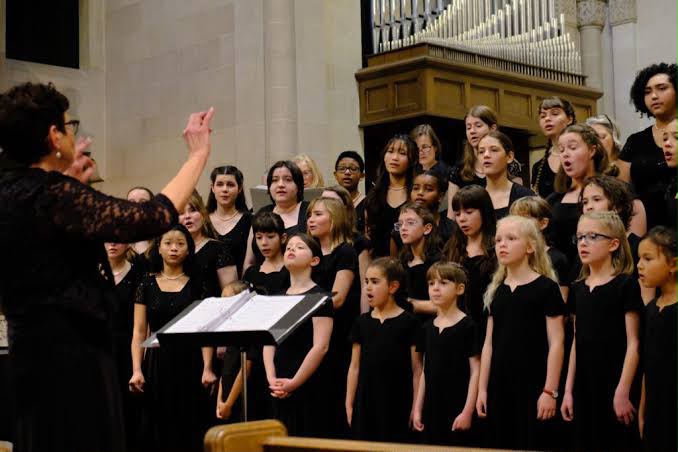
Although live accompaniment offers flexibility, it also presents practical challenges.
1. Higher Costs
Hiring instrumentalists may involve performance fees, rehearsal payments, transportation, and equipment expenses.
A full band can require a substantial budget, especially when several musicians are needed. Smaller organizations may not be able to afford live accompaniment for every performance.
Choirs should consider their available resources before committing to this option.
2. More Rehearsal Coordination
Live musicians need time to learn the songs, understand the arrangement, and rehearse with the choir.
If the choir and instrumentalists have different schedules, organizing joint rehearsals can become difficult. Last-minute changes to keys, song structure, or transitions may also require additional preparation.
A clear rehearsal plan and shared sheet music can help reduce these problems.
3. Inconsistent Performance Quality
Live accompaniment depends on the preparation and skill of the musicians. An under-rehearsed band may struggle with tempo, balance, entrances, or transitions.
If the instruments overpower the singers, the choir’s words may become difficult to hear. If the accompaniment is too quiet or lacks rhythmic stability, the choir may struggle to maintain energy.
Live music offers flexibility, but it still requires careful coordination and sound balancing.
Advantages of Using Karaoke Tracks for Choir Performances
1. Consistent Tempo and Arrangement
A karaoke track plays the same arrangement every time. This consistency can help singers become familiar with the introduction, rhythm, instrumental transitions, and ending.
Once the choir learns where to enter and how the song progresses, rehearsals can become more structured.
Backing tracks can also provide steady harmonic and rhythmic support, helping singers practice their parts in the context of the complete song. The quality of the recording matters, so directors should choose tracks that sound clear and suit the choir’s style.
2. A More Budget-Friendly Option
Karaoke tracks can be an affordable alternative when hiring musicians is not practical.
A choir may be able to use a suitable prerecorded accompaniment without paying multiple performers for rehearsals and the event itself. This can be especially helpful for school groups, small community choirs, and organizations with limited budgets.
However, the total cost may still include track licensing or purchase, audio equipment, and technical support.
3. Convenient for Limited Rehearsal Schedules
Arranging rehearsals with several musicians can be challenging. A backing track allows the choir to rehearse whenever the singers and director are available.
The same file can be used for sectional practice, full rehearsals, and the final performance. Singers can become familiar with the tempo and structure before the event.
For best results, the choir should practice with the exact version that will be used on stage.
4. Full Instrumental Sound Without a Full Band
A professionally produced track may contain several instrumental layers, creating a rich sound that would otherwise require multiple musicians.
For example, a choir performing a contemporary pop song may need drums, bass, keyboard, guitar, and strings to reproduce the intended arrangement. A suitable track can provide these elements through a single playback system.
This makes backing tracks practical for performances where the musical arrangement is complex but live instrumental resources are limited.
5. Easier Planning for Structured Events
Backing tracks can simplify events that follow a fixed schedule. The director can prepare the files in performance order and coordinate them with stage movements, lighting cues, or other planned transitions.
This is particularly helpful for school functions, competitions, and productions where several groups perform one after another.
The important requirement is to organize the files carefully and test the playback system before the event.
Disadvantages of Using Karaoke Tracks

1. Limited Flexibility
The main limitation of karaoke tracks is that they cannot respond naturally to the choir.
If the singers slow down during a phrase or the conductor wants to extend the ending, the recording will generally continue at its programmed tempo and length.
This can create timing problems if the choir is not well prepared. Directors should choose a track with an appropriate tempo and rehearse entrances, transitions, and cutoffs until the singers can follow it confidently.
2. Less Real-Time Musical Interaction
A recording cannot watch the conductor, respond to the singers’ breathing, or adjust its dynamics according to the choir’s performance.
The choir must adapt to the track rather than the track adapting to the choir.
This can make expressive passages more challenging, particularly when a song depends on flexible phrasing or spontaneous musical changes.
3. Technical Problems Can Disrupt the Performance
Backing tracks rely on playback equipment. A device may fail, the wrong file may be selected, or the audio may not connect properly to the sound system.
Poor sound quality can also affect the performance. If the accompaniment is too loud, it can overpower the choir. If it is too quiet, singers may struggle to maintain their timing.
A technical rehearsal, backup device, offline audio files, and a clearly assigned playback operator can reduce these risks.
4. Less Opportunity to Practice Live Ensemble Skills
When a choir always performs with prerecorded accompaniment, singers may have
fewer opportunities to learn how to respond to live musicians.
They still develop timing and listening skills, but they may have less practice following spontaneous tempo changes, reacting to instrumental cues, or recovering when something unexpected happens.
Choirs that want to develop broader musical skills can balance track-based rehearsals with occasional sessions involving live piano, guitar, or other instruments.
Which Option Is Better Live Instrument or Karaoke Tracks for Different Types of Choir Performances?
The best choice depends on the performance’s purpose and requirements.
School Choir Performances
For school choirs, the decision often depends on the students’ experience, the availability of instrumentalists, and the event budget.
Karaoke tracks can work well for assemblies, school celebrations, and competitions where a consistent arrangement is useful. Live piano or a small band can be more suitable when the school has capable musicians and wants to encourage collaboration.
Practical recommendation: Use tracks when resources are limited, but introduce live accompaniment when possible to help students develop ensemble awareness.
Church and Worship Choirs
Worship music may include changes in tempo, extended phrases, repeated choruses, and moments that respond to the congregation or worship leader.
Live instruments can be especially useful when these changes are part of the service. A keyboardist or guitarist can follow the leader and adjust the accompaniment to the needs of the moment.
Backing tracks can still be effective for rehearsed choir presentations, special musical items, or services where a live band is unavailable.
Practical recommendation: Choose live accompaniment when responsiveness is important. Use a track when the arrangement is fixed and the choir can rehearse reliably with it.
Community and Amateur Choirs
Community choirs often have varying levels of musical experience and limited rehearsal time.
A backing track can provide dependable support and make complex arrangements more accessible. Live accompaniment may offer a more flexible experience when a skilled pianist or small ensemble is available.
Practical recommendation: Base the decision on the choir’s confidence, the complexity of the music, and the availability of musicians.
Competitive Choir Performances
Competitions may have specific rules about accompaniment, so organizers should check the requirements before making a decision.
Live instruments may allow expressive interpretation, but they also require precise coordination. Backing tracks provide a consistent arrangement, but singers must stay aligned with the recording.
Practical recommendation: Confirm the competition rules first, then choose the format the choir can execute most confidently.
Large Concerts and Special Events
Large concerts may benefit from live accompaniment when a well-rehearsed band or orchestra is available. The musicians can support expressive changes and help shape the overall performance.
A high-quality backing track can be a strong alternative when a complete live ensemble is not feasible. A poorly rehearsed partial band is not automatically better than a well-produced recording; the decision should focus on the musical result.
Practical recommendation: Choose the option that supports the arrangement most effectively and can be rehearsed to a professional standard.
Can Choirs Combine Live Instruments and Karaoke Tracks?
Yes. A hybrid approach can offer the advantages of both methods.
For example, a choir might use a live pianist to lead the performance while a prerecorded track provides additional strings, percussion, or atmospheric sounds. Another choir may use a backing track for most songs and invite a guitarist or keyboardist to accompany selected pieces.
This approach can provide a fuller sound without requiring every instrument to be played live.
However, hybrid accompaniment needs careful planning. The live musicians must stay synchronized with the recording, and the director should establish clear cues for entrances, tempo, transitions, and endings.
Before the performance, rehearse the complete setup rather than testing the live and recorded elements separately.
How to Choose the Right Accompaniment for Your Choir
Before deciding between live instruments and karaoke tracks, ask the following questions.
1. What Is the Goal of the Performance?
If the goal is to create an expressive, flexible performance, live instruments may be the better fit. If the priority is consistency and a predetermined arrangement, a backing track may be more practical.
2. What Resources Are Available?
Consider the budget, available musicians, rehearsal time, venue, and sound equipment.
A well-prepared pianist may be sufficient for a simple arrangement. A complex contemporary song may need a full band or a suitable prerecorded track.
3. How Experienced Is the Choir?
A beginner choir may benefit from the predictable structure of a backing track, provided the tempo and arrangement are appropriate. An experienced choir may enjoy the freedom of live accompaniment.
Neither option removes the need for practice. Singers must learn their vocal parts, listen carefully, and understand the arrangement.
4. Does the Music Require Tempo Changes?
Songs with flexible phrasing, dramatic pauses, or spontaneous transitions often benefit from live musicians.
Songs with a fixed tempo and clearly defined structure can work well with prerecorded accompaniment.
5. Have You Tested the Setup?
For live instruments, rehearse the balance between the choir and the musicians.
For backing tracks, test the exact audio file through the venue’s sound system. Confirm the volume, starting cue, file order, and ending. Keep a backup copy available.
These checks can prevent avoidable problems on performance day.
Tips for a Successful Choir Performance With Live Instruments
If your choir chooses live accompaniment, preparation is essential.
- Share the arrangement early: Give musicians the correct sheet music, chords, and song structure before rehearsals.
- Agree on the tempo: Decide how fast the song should feel and identify passages where the tempo may change.
- Watch the conductor: Musicians and singers should understand the cues for entrances, transitions, and endings.
- Balance the sound: Make sure the accompaniment supports the choir instead of overpowering the voices.
- Rehearse the difficult sections: Focus on transitions, sustained notes, and the final cutoff rather than repeating the entire song unnecessarily.
- Practice together: Even skilled musicians need time to understand the choir’s phrasing and performance style.
The aim is to create an accompaniment that supports the singers musically and allows the choir to perform with confidence.
Tips for a Successful Choir Performance With Karaoke Tracks
A backing track can produce excellent results when the choir prepares carefully.
- Choose the correct key: Make sure the melody fits the singers’ vocal ranges.
- Use a suitable tempo: A track that is too fast or too slow can make the performance unnecessarily difficult.
- Practice with the exact file: Avoid switching to an unfamiliar version on the day of the performance.
- Mark the entry points: Singers should know when the introduction ends and when their parts begin.
- Rehearse the ending: Practice the final note and cutoff so the choir finishes together.
- Check the audio system: Test the track through the actual speakers and confirm that the choir can hear it clearly.
- Prepare a backup: Keep an offline copy of the file and have a second playback option available.
The choir should learn to follow the accompaniment rather than rely on visual reminders or guesswork.
How The Mystic Keys Helps Students Develop Musical Confidence
At The Mystic Keys, music education can help learners build the skills needed to participate confidently in group performances.
Learning an instrument such as piano, keyboard, or guitar develops an understanding of rhythm, harmony, chords, and musical expression. These skills are valuable for students who want to accompany singers, support a choir, or become more versatile musicians.
With structured lessons and regular practice, learners can work on:
- Maintaining a steady tempo
- Recognizing chord progressions
- Following musical cues
- Controlling dynamics
- Listening and responding to other musicians
- Playing accompaniment patterns suitable for different songs
Whether a choir performs with live instruments or prerecorded tracks, musicianship remains important. Strong timing, careful listening, and a clear understanding of the music help singers and instrumentalists work together effectively.
Conclusion: Live Instruments vs Karaoke Tracks for Choir Performances
So, which is better: live instruments or karaoke tracks for choir performances?
Live instruments are often the stronger choice when flexibility, musical interaction, and expressive control are priorities. They allow musicians to respond to the choir and adapt to the performance in real time.
Karaoke tracks are often the more practical choice when affordability, consistency, and convenience matter most. They provide a dependable accompaniment without requiring a group of live musicians.
Neither option guarantees a successful performance. The quality of the arrangement, the choir’s preparation, the sound setup, and the suitability of the accompaniment all matter.
For some choirs, a combination of live instruments and backing tracks may offer the best balance. The most important goal is to choose an approach that supports the singers, fits the music, and creates an enjoyable experience for the audience.
Ultimately, great choir performances come from preparation, teamwork, and musical understanding—not simply from whether the accompaniment is live or prerecorded.