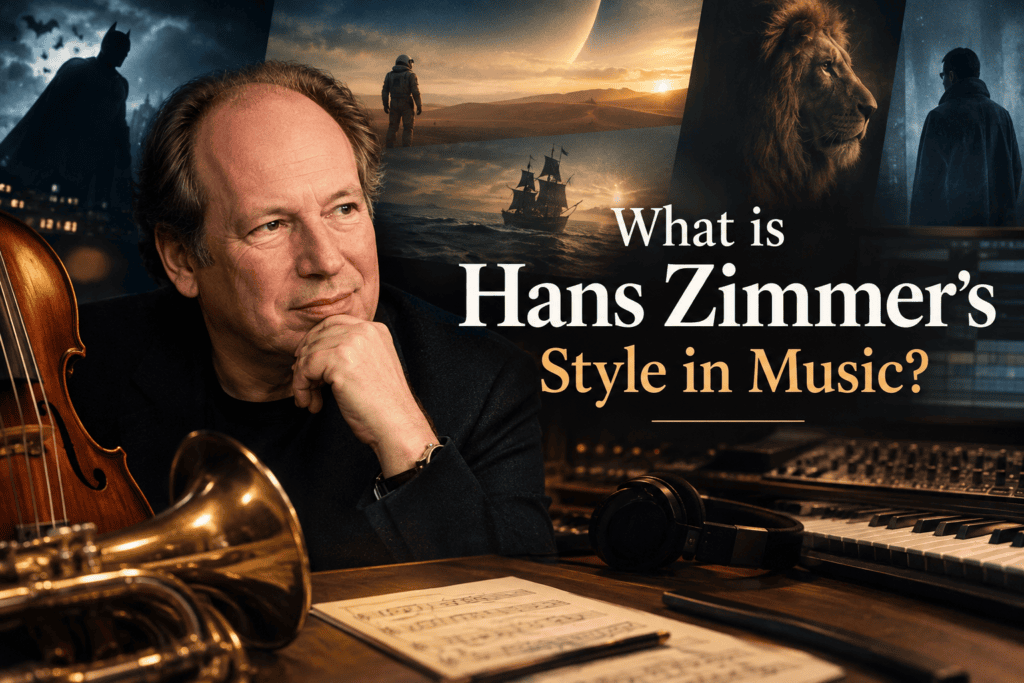
Understanding what is Hans Zimmer’s style in music helps us appreciate why his compositions feel so powerful and unforgettable. As one of the most influential film composers, Hans Zimmer has redefined modern movie soundtracks with his unique blend of orchestral and electronic elements.
His music is not just heard—it is felt.
What is Hans Zimmer’s Style in Music
To understand what is Hans Zimmer’s style, it’s important to look at how he combines traditional and modern sounds. Unlike classical composers who rely only on orchestras, Zimmer mixes:
This fusion creates a bold and cinematic experience.
What is Hans Zimmer Style in Music: Core Elements
One of the defining features of what is Hans Zimmer’s style in music is his use of sound design.
He often:
Creates unique textures instead of just melodies
Uses deep bass sounds
Builds tension through layers
This makes his music immersive and dramatic.
Minimalism with Impact
Zimmer’s style is often simple but effective.
Instead of complex compositions, he:
Uses repeating patterns
Focuses on a few strong ideas
Builds intensity gradually
This minimalism is a key part of what is Hans Zimmer’s style in music.
Strong Emotional Build-Up
Emotion is at the heart of his compositions.
Zimmer:
Starts softly
Gradually increases intensity
Creates powerful climaxes
This structure keeps listeners engaged and emotionally connected.
Close Connection with Film Story
Another important aspect of what is Hans Zimmer’s style in music is how closely his music connects with the story.
He:
Composes based on the film’s theme
Works closely with directors
Enhances characters and emotions
His music becomes part of the storytelling.
Iconic Use of Instruments
Zimmer is known for experimenting with instruments.
He often uses:
Heavy brass sections
Deep percussion
Layered strings
Electronic pads
These create his signature cinematic sound.
Collaboration and Innovation
Zimmer frequently collaborates with other musicians and composers.
He:
Works with large teams
Encourages creative input
Uses advanced technology
This approach keeps his music fresh and innovative.
Tips to Learn from Hans Zimmer’s Style
If you want to learn from his style:
Focus on emotion over complexity
Use repetition effectively
Experiment with sounds
Build intensity gradually
These techniques can improve your musical expression.
How The Mystic Keys Helps Students
At The Mystic Keys, we teach concepts inspired by what is Hans Zimmer’s style in music, including:
Sound layering techniques
Emotional playing
Modern music production basics
Creative composition
This helps students explore cinematic music styles.
👉 Visit our page, Piano Lessons Online to explore more about our piano curriculum
Conclusion
So, what is Hans Zimmer’s style in music? It is a powerful blend of simplicity, emotion, technology, and storytelling. His ability to create immersive soundscapes has changed the way we experience film music.
His music proves that simplicity, when used correctly, can create something truly epic.
For more information and exciting resources about learning music, visit our website at The Mystic Keys. For more music content and exciting offers follow us on
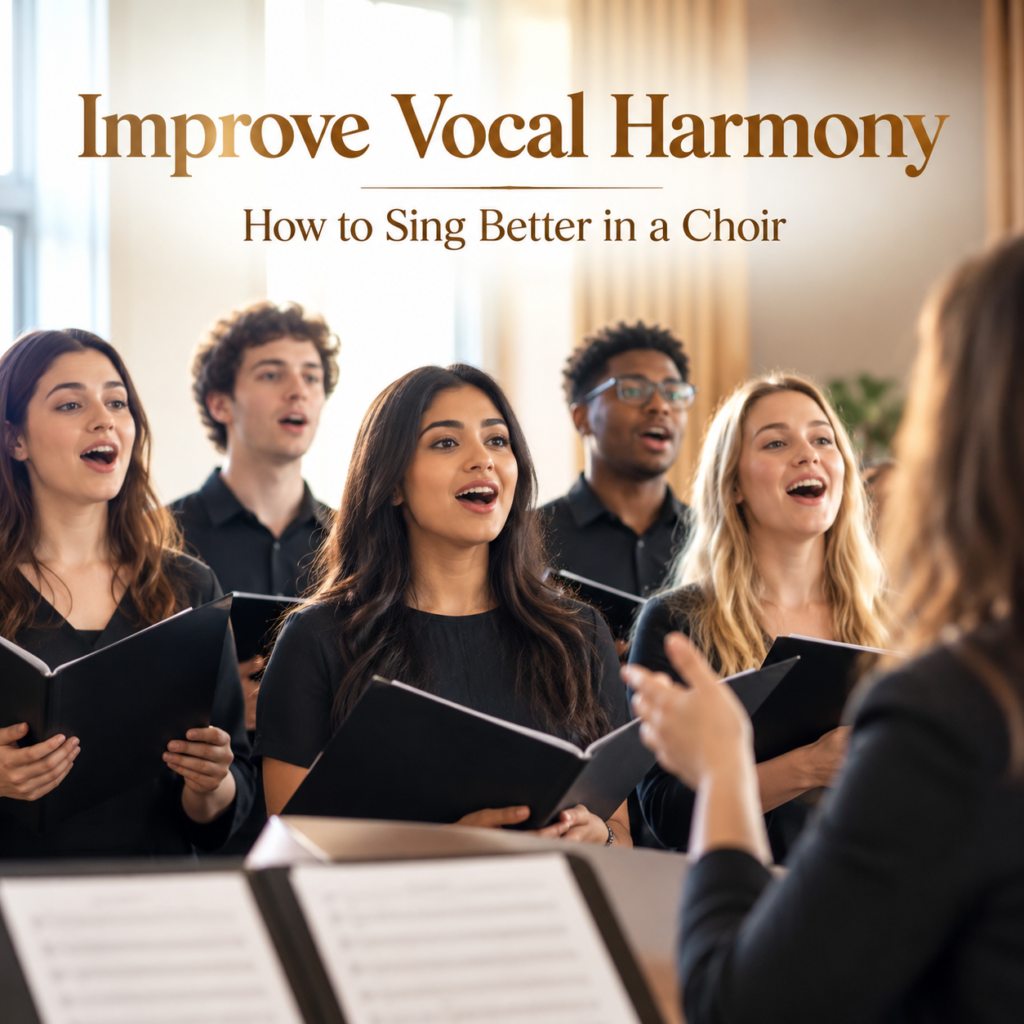
Improve Vocal Harmony | How to Sing Better in a Choir
Singing in a choir is about more than simply knowing the lyrics and singing the right notes. It is about listening, blending, responding, and creating a unified musical sound with the people around you. A strong choir can make several individual voices sound like one expressive instrument, and learning how to Improve Vocal Harmony plays a major role in creating that effect. Developing better harmony skills helps singers stay in tune, blend naturally with others, and contribute confidently to the overall sound of the choir.
Whether you are a beginner joining a choir for the first time or an experienced singer looking to refine your technique, improving your vocal harmony can transform the way you sing. With the right approach, you can become more confident with your part while also learning how to support the overall sound of the group.
For singers looking to build these skills through structured guidance, The Mystic Keys offers music learning through personalized online lessons, helping students develop their vocal technique, musical understanding, and confidence from wherever they are.
What Is Vocal Harmony?
Vocal harmony happens when different singers perform different notes that complement each other while following the same musical structure. Instead of everyone singing the exact same melody, each voice contributes its own part to create a richer and fuller sound.
In a choir, you may encounter soprano, alto, tenor, and bass parts, although the exact arrangement can vary depending on the piece. Each section has a role to play, and the beauty of the performance comes from how these parts work together.
That means singing harmony requires more than having a good individual voice. You also need to understand where your part fits within the larger musical arrangement. Once you begin thinking beyond your own notes, your ability to contribute effectively to a choir improves significantly.
Start by Strengthening Your Vocal Technique
Before focusing heavily on harmony, it is important to develop a reliable vocal foundation. Good posture, controlled breathing, clear pronunciation, and healthy vocal production can make it much easier to sing your part consistently.
Breathing is particularly important because choir singing often involves sustained phrases and controlled dynamics. Instead of taking shallow breaths between words, learn to breathe comfortably and efficiently so that your voice remains supported throughout a musical phrase.
Warm-ups can also prepare your voice before rehearsals and performances. Gentle scales, humming, lip trills, vowel exercises, and simple vocal patterns can help you gradually bring your voice into a comfortable singing range.
As your technique becomes more consistent, you will have greater control over pitch and tone. That foundation makes the next step—listening—much easier.
Learn to Listen Beyond Your Own Voice
One of the most important skills for choir singing is active listening.
When you sing harmony, you cannot focus only on whether your own notes sound correct. You also need to hear the melody, the other vocal sections, the rhythm, and the overall blend. Your part exists within that larger musical picture.
During rehearsals, try occasionally listening to the other sections instead of concentrating entirely on your own line. Notice how their notes interact with yours. If your part moves upward while another section moves downward, listen to how those movements create a particular musical effect.
Over time, this develops your musical awareness. You begin to anticipate how your voice should fit rather than simply reacting to what you hear.
Improve Vocal Harmony with Better Pitch Accuracy
Pitch accuracy is essential when singing harmony because even a small pitch difference can affect the entire chord.
Start by becoming comfortable with your assigned vocal part. Practise difficult intervals slowly and repeat them until the movement between the notes feels natural. If a particular section repeatedly causes problems, isolate those few measures rather than singing the entire song from beginning to end every time.
It can also help to practise your part alongside a piano, keyboard, or suitable vocal reference. Sing the notes individually first, then connect them into phrases. Eventually, challenge yourself by reducing your dependence on the reference and checking whether you can maintain your pitch independently.
The goal is not simply to hit every note mechanically. You want to develop an internal sense of pitch that allows you to remain secure even when several other voices are singing around you.
Understand Your Harmony Part
Knowing the lyrics is only one part of preparing for a choir performance. You should also understand what your vocal line is doing musically.
Pay attention to where your part enters and exits, which words receive emphasis, where the dynamics change, and how your line interacts with the melody. Some harmony parts may sound unusual when practised alone because they were written specifically to complement another vocal line.
This is why it is useful to learn the melody even when you are not singing it. Understanding the main tune gives you a reference point and helps you recognize how your harmony supports it.
Once you understand the relationship between the parts, memorising your own line often becomes easier as well.
Practise Singing Without Being Dependent on the Melody
A common challenge for choir singers is accidentally drifting toward the melody. This can happen when the main tune is particularly familiar or when another section is singing it loudly.
To strengthen your independence, practise your harmony part on its own. Once you are comfortable, add the melody at a lower volume or use a recording of the full arrangement. Focus on maintaining your own line while remaining aware of what is happening around you.
Gradually, your ear learns to separate the different musical layers.
This skill becomes especially valuable during live performances, where you may hear several voices simultaneously. Rather than becoming distracted by surrounding parts, you can remain connected to your own musical line while still contributing to the collective sound.
Improve Vocal Harmony Through Vocal Blending
A choir is not usually trying to sound like a collection of individual soloists. The aim is often to create a balanced, unified vocal texture.
Vocal blending involves matching aspects such as tone quality, vowel shapes, volume, pronunciation, and phrasing. If one singer produces a dramatically different sound from everyone else, that voice may stand out even when the pitch is correct.
Try to listen to the people around you and adjust appropriately. This does not mean losing your natural voice; instead, it means learning how to use it in a way that supports the ensemble.
Vowels are particularly important. When singers pronounce the same vowel differently, the resulting chord can sound less unified. Matching vowel shapes and consonant timing can therefore make a noticeable difference to the overall performance.
Improve Vocal Harmony by Focusing on Dynamics
Singing the correct notes at the correct volume is not enough to create an expressive choir performance. Dynamics help determine which musical moments should feel intimate, powerful, gentle, dramatic, or uplifting.
If every singer performs at the same volume throughout a song, the arrangement can quickly become flat. On the other hand, carefully controlled changes in volume allow the choir to shape the music together.
Listen to the conductor or musical direction and pay attention to the arrangement. When your section is supporting the main melody, you may need to sing more softly. At another moment, your harmony may become an important musical feature and require greater presence.
The key is balance. Your voice should be heard by you and remain technically supported, but it should also fit naturally into the sound of the ensemble.
Improve Your Rhythm and Timing
Harmony is not only about pitch. Timing is equally important.
If one section enters too early, holds a note too long, or releases a phrase too late, the entire arrangement can lose its precision. This becomes particularly noticeable when different vocal parts have contrasting rhythms.
Practise difficult rhythmic passages separately before combining them with the melody. Counting carefully can help, especially when your part contains rests, syncopation, or entrances that occur between the main melody phrases.
As your rhythmic confidence grows, you can concentrate more fully on expression and blend during rehearsals.
Record Yourself While Practising
Recording your practice sessions can reveal things you may not notice while singing.
When you listen back, pay attention to pitch stability, pronunciation, breathing, volume, rhythm, and whether your voice sounds connected to the arrangement. You may discover that a section you thought was strong needs more control, or that you are unintentionally becoming louder during certain phrases.
Listening back also helps you develop a more objective understanding of your singing. Instead of relying entirely on how your voice feels while you perform, you can hear what the listener actually experiences.
Even short recordings can become useful learning tools when used consistently.
Learn to Follow the Conductor
A choir depends on coordination, and the conductor plays a central role in maintaining that coordination.
Watch for cues indicating entrances, cut-offs, tempo changes, dynamics, and expressive direction. Looking down constantly at your lyrics or sheet music can cause you to miss important visual signals.
As you become more familiar with your part, try to spend more time looking up. This allows you to respond more naturally to the conductor and stay connected with the rest of the choir.
Following visual cues becomes particularly important during performances because small timing adjustments may happen in real time.
Practise in Sections, Then as a Group
Individual practice is valuable, but choir harmony ultimately needs to work in an ensemble.
Start by learning your own part securely. After that, practise with singers who have the same part, if possible. Once your section feels comfortable, introduce the other vocal parts and work on how everything fits together.
This gradual approach can make complicated arrangements much easier to understand. Instead of trying to solve every musical challenge simultaneously, you build confidence layer by layer.
Eventually, you should be able to sing your part confidently while hearing the complete arrangement around you.
Improve Vocal Harmony by Developing Your Musical Ear
Better harmony singing comes from developing your ears as much as your voice.
Try identifying whether a note is higher or lower than another. Listen for intervals and simple chords. Sing a note and then try to reproduce it without a reference. You can also practise matching pitches with another singer or an instrument.
Ear training may seem separate from choir singing at first, but the connection becomes clear with practice. The stronger your musical ear becomes, the easier it is to recognize when your pitch needs adjustment and how your part relates to the surrounding voices.
Most importantly, give yourself time. Harmony is a skill that becomes more natural through repeated listening and singing.
Common Mistakes to Avoid When Singing in a Choir
One common mistake is trying to sing louder to make sure your part is heard. In reality, excessive volume can disrupt the balance of the ensemble. Instead, focus on accurate pitch, clear diction, and appropriate dynamics.
Another issue is following the strongest voice rather than your assigned part. If you constantly allow another section to pull your pitch toward the melody, your harmony can lose its independence. Returning to your musical reference and practising your part separately can help.
Ignoring pronunciation can also affect the group sound. When vowels and consonants are inconsistent, even accurate harmonies may sound disconnected. Paying attention to unified diction can make the choir sound significantly more cohesive.
Finally, avoid treating rehearsal as a performance every time. Rehearsals are where you experiment, make corrections, ask questions, and build consistency. Use that time to identify weaknesses rather than simply trying to sound perfect.
Improve Vocal Harmony with The Mystic Keys
Building stronger vocal harmony requires consistent practice, musical guidance, and an understanding of how your individual voice fits into an ensemble. The Mystic Keys, an online music academy, provides personalized one-on-one music lessons designed around the learner’s goals and level.
Through flexible online learning, students can work on vocal technique, pitch, rhythm, ear training, musical expression, and confidence with guidance suited to their individual needs. The personalized format also allows learners to spend more time working on specific challenges rather than following a one-size-fits-all approach.
For singers interested in developing their skills further, structured vocal training can provide a strong foundation that carries over into choir singing, performances, worship music, and other musical settings.
Bring Your Voice Into Harmony
Good choir singing begins with individual preparation, but it comes alive through collective awareness. You need to know your notes, understand the melody, listen to the people around you, and respond to the musical direction of the group.
With regular vocal exercises, focused ear training, pitch practice, rhythmic awareness, and attention to blending, your harmony skills can steadily improve. More importantly, you begin to understand that singing in a choir is not about making your voice stand above everyone else—it is about knowing when to lead, when to support, and how to make every note contribute to the music.
At The Mystic Keys, our online music academy, we believe that personalized guidance and consistent practice can help singers build stronger vocal technique, musical awareness, and confidence. Whether you are preparing for choir singing or simply looking to develop your voice, focused online lessons can help you take your musical skills further.
Learn your part. Listen to the whole. Sing as one.
For more information and exciting resources about learning music, visit our website at The Mystic Keys. For more music content and exciting offers follow us on
Online Music Academy in the UAE | Find the Right One for You
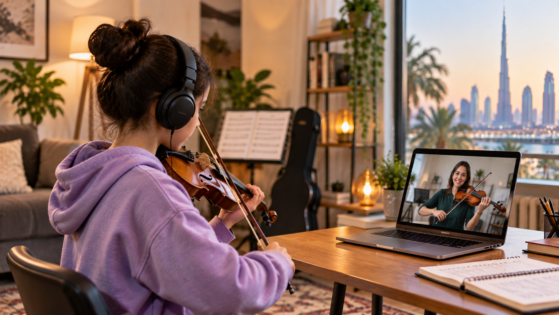
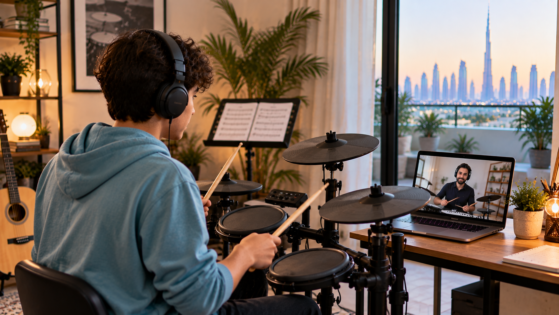
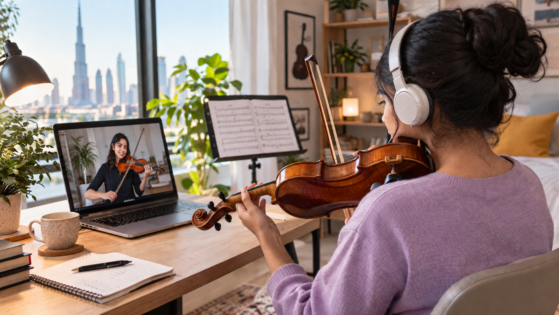
Learning music has become more accessible than ever. Whether you are living in Dubai, Abu Dhabi, Sharjah, Ajman, or another part of the UAE, you no longer need to travel to a music school several times a week to receive structured musical training. With an online music academy in the UAE, students can now learn an instrument or develop their voice from the comfort of home while connecting with experienced instructors through live online classes.
However, having more choices also means that finding the right academy requires some thought. Not every online music class follows the same teaching method, offers the same level of personal attention, or provides the same opportunities for structured learning.
So, how do you choose an online music academy that genuinely suits your goals, schedule, learning style, and level of experience?
Let’s explore what you should look for before making your choice.
Why Choose an Online Music Academy in the UAE?
The UAE is known for its fast-paced lifestyle. Between school, university, work, family responsibilities, and daily commitments, finding time for regular activities can sometimes be challenging. Music learning should add something positive to your routine rather than create another logistical difficulty.
That is where online music education can make a meaningful difference.
Instead of spending time travelling to and from a physical academy, students can attend lessons from home. A suitable time slot can be arranged around their existing schedule, making it easier to maintain consistency.
For families, this can be particularly convenient. Parents do not necessarily have to spend time travelling with students for every lesson. Adults who have always wanted to learn piano, guitar, vocals, or another instrument can also fit lessons into their working schedules more easily.
More importantly, online learning is no longer limited to watching recorded tutorials. Modern online music education can include live interaction, real-time feedback, demonstrations, guided practice, and personalised instruction.
What Should You Look for in an Online Music Academy in the UAE?
Once you decide that online learning is suitable for you, the next question becomes more important: which academy should you choose?
The answer depends largely on what you want from your musical journey. Someone learning piano as a hobby may have very different requirements from a student preparing for a graded examination. Similarly, a beginner learning guitar will have different needs from an experienced vocalist looking to improve technique.
Therefore, instead of choosing an academy simply because it offers a particular instrument, look at the overall learning experience.
Look for Personalised Music Lessons
Music is not a subject where every student progresses in exactly the same way.
Two students may begin learning piano at the same age and level, yet one may progress faster with notation while another may need more time with coordination and rhythm. A vocalist may require specific exercises for pitch and breath control, while a guitarist may need additional guidance with chord transitions and technique.
This is why personalised learning can be so valuable.
One-on-one online music lessons allow the instructor to concentrate on the individual student, observe their progress, identify areas that need improvement, and adapt lessons accordingly.
Choose an Academy That Offers the Music You Actually Want to Learn
Another important consideration is the range of courses available.
Perhaps you are interested in piano today but may eventually want to explore music theory, vocals, guitar, or another area of music. Having access to different disciplines through the same online music academy can make the learning journey more convenient.
Depending on the academy, students may find courses ranging from piano and keyboard to acoustic and electric guitar, Western vocals, Hindustani and Carnatic vocals, violin, drums, ukulele, music theory, and other specialised areas.
The Mystic Keys offers a broad range of online music courses, including piano, keyboard, acoustic guitar, electric guitar, Western vocals, Hindustani vocals, Carnatic vocals, violin, drums, ukulele and singing, worship piano and singing, and music theory.
Consider the Experience and Qualifications of the Teachers
An online platform is only as effective as the teaching experience it provides.
A beautifully designed website or a large course catalogue cannot replace a good teacher. Before enrolling, find out who will actually teach you, what their musical background is, and whether they have experience working with students at your level.
For beginners, patience and the ability to explain fundamental concepts clearly are extremely important. More advanced learners may require an instructor who understands technique, performance, theory, improvisation, or examination requirements in greater depth.
If certification is part of your goal, teacher expertise becomes even more relevant. The Mystic Keys provides preparation for graded music examinations, including Trinity College London, with training that can cover practical and theory requirements depending on the student’s level and goals.
Why Flexible Scheduling Matters in an Online Music Academy in the UAE
A good music-learning routine needs consistency.
At the same time, life in the UAE can be busy. School timings, office hours, family commitments, holidays, travel, and other responsibilities can make a rigid class schedule difficult to maintain.
This is one of the major advantages of online music education.
An academy that offers flexible scheduling can make it easier for students to select suitable lesson times around their existing commitments. The Mystic Keys offers flexible online learning options designed to accommodate students’ availability and time zones.
For working adults, this flexibility can make the difference between an enjoyable long-term learning routine and a course that is difficult to continue.
Don’t Ignore the Importance of a Structured Curriculum
Flexibility does not mean that learning should be unstructured.
A good online music academy should provide a clear learning path. Students need to know what they are learning, why they are learning it, and how one skill connects to the next.
For example, a beginner pianist may start with basic posture, hand position, rhythm, simple notation, and introductory exercises before progressing towards chords, scales, repertoire, and more advanced techniques.
Similarly, vocal training may gradually introduce pitch, breathing, vocal exercises, pronunciation, repertoire, and performance-related skills.
A structured curriculum gives students a sense of direction and makes progress easier to observe.
Think About Your Goal Before Choosing an Online Music Academy in the UAE
Perhaps the most useful question to ask yourself is simple:
Why do I want to learn music?
Your answer can help you determine what kind of academy and course you need.
You may want to learn an instrument simply because you love music. Perhaps you have always wanted to play your favourite songs on the piano or guitar. Another student may want to improve vocal technique, develop music theory knowledge, or prepare for a graded examination.
Some learners may already have musical experience and want to progress to a more advanced level. Others may be starting completely from scratch.
There is no single correct reason to learn music. What matters is that the academy understands your objective and can shape the learning experience accordingly.
Online Music Learning Should Include More Than Just a Video Call
A common misconception is that online music education simply means connecting to a video call once a week.
The lesson itself is important, but so are the learning resources, practice guidance, feedback, and continuity between sessions. Students need opportunities to revisit concepts, practise what they have learned, and gradually build upon previous lessons.
Session recordings can also be useful in this regard, allowing students to revisit parts of a lesson when practising between classes, depending on the academy’s system.
What About Music Exams and International Certification?
For some learners, music is more than a hobby.
Students who want formal recognition of their skills may eventually consider graded music examinations. In such cases, it is worth choosing an academy that understands the requirements of recognised examination systems and can prepare students appropriately.
The Mystic Keys provides preparation for Trinity College London graded examinations, including practical and theory preparation depending on the student’s level.
If certification is one of your goals, ask the academy about the examination board, preparation methodology, expected level, and whether examination support is included in the learning programme.
Is an Online Music Academy in the UAE Suitable for Beginners?
Absolutely — provided the programme is designed appropriately.
You do not need to already know how to read music or play an instrument before beginning many online music courses. Beginners can start with fundamental concepts and gradually develop their skills.
In fact, starting from the basics can be beneficial because students learn proper techniques instead of developing habits that may later be difficult to correct.
The Mystic Keys offers courses that allow beginners to start from foundational levels, while certain advanced subjects may require prior knowledge.
Can Children and Adults Learn Together?
Music education is not limited to a particular age group.
Children can benefit from developing rhythm, listening skills, coordination, creativity, and musical awareness. Adults, meanwhile, may approach music with different motivations — perhaps learning an instrument they always wanted to play or returning to music after several years.
An online academy that teaches different age groups can therefore accommodate a wider range of learners.
For parents, it is worth discussing the learner’s age, attention span, previous experience, and goals with the academy before selecting a course.
Why One-on-One Online Learning Can Be a Strong Choice in the UAE
Group learning can be enjoyable, but individual instruction offers a different kind of experience.
During a one-on-one lesson, the instructor can focus entirely on one student’s playing or singing. Mistakes can be addressed immediately, exercises can be adjusted, and the pace can be changed according to the learner’s progress.
This can be especially helpful when learning an instrument because small technical issues can become difficult habits if they are not corrected early.
For students who already have some experience, personalised lessons can also prevent unnecessary repetition. Instead of spending considerable time on skills they already understand, learners can focus on areas where they need further development.
How to Decide Which Online Music Academy Is Right for You
Choosing an online music academy is not simply about finding the lowest fee or the largest number of courses.
Think about the complete experience.
Does the academy offer the instrument or vocal style you want? Are the lessons live and interactive? Can the schedule fit comfortably into your routine? Will you receive individual attention? Are qualified and experienced teachers available? Is there a structured curriculum? Can the academy support your goals if you eventually want to prepare for graded examinations?
Once you have answers to these questions, comparing different academies becomes much easier.
It is also useful to speak with the academy before enrolling. Ask about the course structure, lesson duration, teacher experience, scheduling, practice expectations, and what happens after the initial lessons.
Why The Mystic Keys Can Be Considered for Online Music Learning in the UAE
For students in the UAE looking specifically for an online music academy, The Mystic Keys offers a learning model built around online instruction, individual attention, flexible scheduling, and a broad selection of music courses.
Its online music education platform serves students internationally, allowing learners to attend lessons from home rather than travelling to a physical music centre. The academy offers courses across instruments, vocals, music theory, and related areas, with options for beginners and more advanced learners.
The approach is particularly suited to learners who value personalised instruction and flexibility. Students can work towards different objectives — whether that means learning for enjoyment, developing technical skills, improving musical understanding, or preparing for recognised graded examinations.
The academy was founded with the aim of making music education accessible from home, and its online model continues that approach for students across different locations.
Your Music Journey Can Begin with an Online Music Academy in the UAE
Traditional music education often means travelling to an academy, attending fixed classes, and following a set schedule.
Technology has changed that.
Today, your living room can become your practice space. Your laptop can connect you with a music instructor anywhere in the world. Lessons can fit around your routine, with structured guidance and personalised feedback.
For learners in the UAE, an online music academy offers a convenient way to make music part of everyday life. It also reduces travel and scheduling challenges.
The key is to choose thoughtfully. Look at the teachers, teaching approach, flexibility, curriculum, individual attention, and learning resources. Most importantly, consider your musical goals.
The right music academy is not just about learning an instrument.
It is about learning, practising, and growing as a musician.
If you are looking for an online music academy in the UAE, The Mystic Keys offers personalised online music education across a wide range of instruments and vocal disciplines. With flexible learning options, students can learn at their own pace and work towards their musical goals.
For more information and exciting resources about learning music, visit our website at The Mystic Keys. For more music content and exciting offers follow us on
Billy Joel Songs for Piano That Can Improve Your Piano Skills
Billy Joel songs for piano are a great way for piano learners to explore memorable melodies, expressive chord progressions, rhythmic patterns, and musical arrangements. Billy Joel is one of the most influential singer-songwriters and pianists in popular music, with songs that offer useful techniques for players at different skill levels.
For piano learners, studying his music can be a practical way to develop musical skills while playing songs you enjoy. Whether you are a beginner or an intermediate pianist, the right song can help you improve rhythm, chords, hand coordination, dynamics, and musical expression.
In this guide, we will look at 5 Billy Joel songs for piano that can help you develop important piano skills while making your practice sessions more enjoyable.
1. Piano Man – Improve Chords and Accompaniment
“Piano Man” is one of Billy Joel’s most recognizable songs and a great choice for learning piano accompaniment.
The song provides an opportunity to practice chord changes while maintaining a steady rhythmic pattern. Beginners can start by learning the basic chord progression before gradually adding more movement to the accompaniment.
Piano skills you can develop
Basic chord transitions
Left-hand accompaniment
Steady rhythm
Chord recognition
Playing while maintaining a consistent tempo
If you are learning piano, songs with repeating chord patterns can help you become more comfortable moving between different chords.
2. Just the Way You Are – Develop Smooth Chord Changes
“Just the Way You Are” is useful for practicing smooth transitions between chords and creating a relaxed musical feel.
The piano part requires control rather than simply pressing the correct notes. Paying attention to how one chord connects to the next can help improve finger movement and musical phrasing.
Piano skills you can develop
Smooth chord transitions
Finger control
Musical phrasing
Dynamics
Playing with a relaxed rhythm
Try practicing the chord changes slowly. Once they feel comfortable, gradually increase the tempo while keeping the transitions clean.
3. Vienna – Work on Dynamics and Expression
“Vienna” offers a different learning experience because it allows pianists to focus heavily on expression and dynamics.
Learning this song can help you understand that playing piano is not only about accuracy. Volume, timing, articulation, and phrasing all contribute to the emotional character of a performance.
Piano skills you can develop
Dynamic control
Expressive playing
Phrasing
Timing
Pedal awareness
Start by learning the notes and rhythms accurately. Then experiment with playing certain phrases softer or louder to understand how dynamics affect the music.
4. New York State of Mind – Improve Rhythm and Musical Feel
“New York State of Mind” is a great example of how piano can support a song without overpowering the melody and vocals.
Working on this piece can help you develop rhythmic consistency and learn how to make an accompaniment feel natural.
Piano skills you can develop
Rhythmic accuracy
Chord accompaniment
Groove and timing
Hand coordination
Musical interpretation
Use a metronome during practice if you have difficulty maintaining a consistent pulse. Begin slowly and focus on keeping your rhythm steady.
5. She's Got a Way – Practice Melody and Accompaniment
“She’s Got a Way” is a beautiful song for working on the relationship between melody and accompaniment.
When learning a piano arrangement, try to make the melody stand out while keeping the accompanying notes softer. This is an important skill for pianists because it teaches you how to create different musical layers.
Piano skills you can develop
Melody control
Hand independence
Chord accompaniment
Dynamics
Musical expression
Practice the melody separately first. Then add the accompaniment and focus on keeping the melody clear.
How Billy Joel Songs Can Improve Your Piano Playing
The value of learning these songs goes beyond simply being able to play them from beginning to end. Each piece can help you focus on a different aspect of piano technique.
For example, Billy Joel songs for piano can help you work on:
The key is to practice each song with a specific goal rather than trying to learn everything at once.
How to Practice These Songs Effectively
Choose one song that matches your current ability level. Start by learning the basic melody, chords, and rhythm.
Break the song into small sections and practice each section slowly. Once you can play the notes accurately, begin working on dynamics, phrasing, and expression.
Recording yourself can also help you identify timing problems, uneven notes, or sections that need more practice.
Which Billy Joel Song Should You Learn First?
The right choice depends on your current piano level and the skill you want to develop.
If you want to work on chords and accompaniment, “Piano Man” can be a useful starting point. If your goal is dynamics and expression, “Vienna” provides opportunities to focus on musical interpretation.
Rather than choosing a song only because it sounds impressive, choose one that gives you a specific technical or musical challenge.
Build Your Piano Skills Through Songs You Love
Learning familiar music can make piano practice more enjoyable and purposeful. Billy Joel’s songwriting provides many opportunities to study chords, rhythm, melody, accompaniment, and expression.
The five songs in this guide—“Piano Man,” “Just the Way You Are,” “Vienna,” “New York State of Mind,” and “She’s Got a Way”—can each help you develop different areas of your playing.
With regular practice and proper guidance, you can gradually turn the techniques you learn from individual songs into skills you can use across many different pieces.
Learn Piano with The Mystic Keys
Looking for structured piano lessons online?The Mystic Keys provides personalized online piano training for learners of different ages and skill levels. Lessons can focus on technique, musicality, chords, songs, theory, and performance skills.
Start learning piano with The Mystic Keys and turn the songs you love into opportunities to improve your playing.
Intersted in learning music with us? Register now
For more information and exciting resources about learning music, visit our website at The Mystic Keys. For more music content and exciting offers follow us on