
Muscle Memory in Piano | The Science Behind Effortless Playing
Muscle Memory in Piano | The Science Behind Effortless Playing
Many people admire experienced pianists and assume that they are simply gifted. Watching their fingers glide across the keys with speed and precision often creates the illusion that they are hardly thinking about what they are playing. However, behind every effortless performance lies something much more fascinating than talent alone—muscle memory in piano.
Although the term “muscle memory” is widely used among musicians, it does not actually mean that your muscles remember anything. Instead, it refers to the brain’s remarkable ability to automate repeated movements until they become almost second nature. Every scale, chord progression, and musical phrase that feels effortless today was once practiced slowly and deliberately.
Understanding how muscle memory works can transform the way you practice the piano. Rather than spending countless hours repeating pieces without direction, you can train your brain to develop stronger, more reliable movement patterns. As a result, your practice sessions become more productive, your confidence grows, and performing becomes significantly less stressful.
This article explores the science behind muscle memory, explains why it matters for pianists, and shares practical ways to develop it effectively.

What Is Muscle Memory?
The phrase “muscle memory” is somewhat misleading because muscles themselves do not store memories. Instead, the brain and nervous system create highly efficient pathways that control repeated movements.
Whenever you learn a new piano piece, your brain works hard to process every detail. It has to identify the notes, interpret rhythm, coordinate both hands, maintain posture, and listen carefully to the sound. Initially, every movement requires conscious effort, which is why beginners often feel mentally exhausted after a short practice session.
With consistent repetition, however, these movements become more efficient. The brain gradually recognizes familiar patterns and begins performing many actions automatically. Consequently, your fingers seem to “know” where to go without requiring constant thought.
This process explains why experienced pianists can focus on musical expression instead of worrying about every individual note. Since the basic movements have become deeply ingrained, more mental energy remains available for dynamics, phrasing, articulation, and emotional interpretation.

The Science Behind Muscle Memory in Piano
Muscle memory offers far more than faster finger movement. It allows pianists to perform with greater confidence, consistency, and artistic freedom.
Imagine trying to think about every finger movement while performing in front of an audience. Such a task would quickly become overwhelming. Fortunately, well-developed muscle memory reduces this mental burden by handling many mechanical movements automatically.
As a result, performers can concentrate on communicating emotion rather than merely pressing the correct keys. Musical phrasing becomes more expressive, timing feels more natural, and overall performances become more engaging.
Furthermore, muscle memory improves sight-reading and learning efficiency. Since familiar hand positions and common chord shapes already exist in your motor system, learning new pieces often becomes much easier.
Even during stressful performances, strong muscle memory provides stability. Although nerves may affect concentration, deeply practiced movements often remain dependable under pressure.

How Repetition Builds Muscle Memory in Piano
Repetition is the foundation of muscle memory, but not every repetition is equally valuable.
Playing a difficult passage from beginning to end several times may feel productive. Unfortunately, repeating mistakes strengthens incorrect movement patterns just as effectively as repeating correct ones. Therefore, practicing carelessly can actually reinforce bad habits.
Purposeful repetition, on the other hand, trains the brain more effectively. Each correct repetition strengthens the desired neural pathway while gradually eliminating hesitation and uncertainty.
Initially, progress may seem slow because the brain is still processing every movement consciously. Gradually, however, those movements become smoother, more consistent, and increasingly automatic.
Eventually, entire musical phrases begin feeling like single coordinated actions instead of dozens of separate finger movements. This is one of the clearest signs that muscle memory is developing successfully.

Slow Practice Creates Faster Results
One of the biggest misconceptions among piano students is that playing quickly helps develop speed. In reality, slow practice is one of the fastest ways to build reliable muscle memory.
Moving slowly allows your brain to observe every finger movement with greater accuracy. It also provides enough time to correct mistakes before they become habits.
Professional pianists often practice challenging passages at a fraction of the final performance speed. Although this approach may appear inefficient, it enables them to develop precise movement patterns that remain dependable when the tempo increases.
Once accuracy becomes consistent, speed naturally follows. Increasing the tempo gradually ensures that the brain maintains the same high-quality movement pattern rather than replacing it with rushed, inaccurate motions.
Consequently, patience during slow practice often leads to greater speed later.

The Importance of Consistency for Muscle Memory in Piano
Developing muscle memory depends more on regular practice than on occasional marathon sessions.
Short daily practice sessions continually reinforce neural connections, preventing the brain from forgetting newly learned movements. In contrast, practicing for several hours only once a week often results in slower long-term improvement.
Each time you revisit a musical passage, the brain strengthens existing pathways while refining movement accuracy. Over weeks and months, these small improvements accumulate into noticeable progress.
Consistency also reduces frustration because skills remain fresh rather than needing to be relearned repeatedly after long breaks.
For this reason, many experienced teachers recommend practicing every day, even if only for a limited amount of time.

Mental Practice Also Strengthens Muscle Memory
Interestingly, physical practice is not the only way to improve motor skills.
Research suggests that mentally rehearsing a piece activates many of the same brain regions involved in actual performance. Visualizing finger movements, hearing the music internally, and imagining successful execution all contribute to strengthening neural pathways.
Professional concert pianists frequently use mental practice when traveling, recovering from injuries, or preparing for important performances.
Although visualization cannot completely replace physical practice, combining both methods often produces stronger and more reliable learning.
This technique becomes especially useful for memorizing difficult passages before sitting at the piano.
Why Mistakes Become Habits in Muscle Memory Training
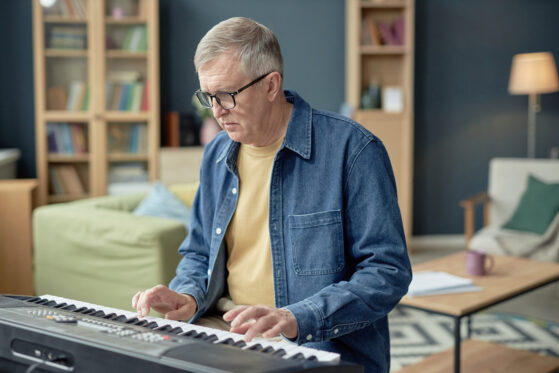
The brain does not automatically distinguish between correct and incorrect repetitions. Instead, it simply strengthens whichever movement pattern is practiced most frequently.
Consequently, repeating mistakes teaches the brain to perform those mistakes more efficiently.
Many students become frustrated because they consistently stumble at exactly the same location in a piece. In many cases, the problem is not lack of ability but repeated practice of the incorrect movement.
Breaking this cycle requires slowing down, identifying the specific problem, and practicing the correct version multiple times before returning to full speed.
Replacing incorrect habits takes patience, yet doing so ultimately creates stronger and more dependable muscle memory.
Balancing Muscle Memory with Musical Understanding
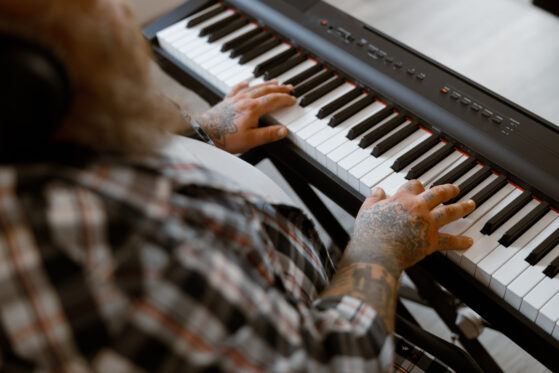
Although muscle memory is incredibly valuable, relying on it alone can be risky.
A pianist who memorizes movements without understanding the music may struggle if concentration is interrupted during a performance. Losing track of a single measure can make it difficult to continue because the entire movement sequence has been disrupted.
Musical understanding provides an additional layer of security. Knowing chord progressions, harmonic structure, rhythm, phrasing, and form helps performers recover more easily if something unexpected happens.
Therefore, effective practice combines physical repetition with intellectual understanding. When both systems work together, memorization becomes much stronger and performances become more confident.

Practical Ways to Build Stronger Memory
Building reliable muscle memory does not require complicated techniques. Instead, it depends on practicing with intention and consistency.
Begin each new piece slowly enough to eliminate unnecessary mistakes. Focus on relaxed, controlled movements rather than speed. As accuracy improves, increase the tempo gradually while maintaining the same level of precision.
Breaking difficult passages into smaller sections also allows the brain to master one movement pattern at a time before combining everything together.
In addition, practicing hands separately before putting both hands together often creates more secure motor patterns. Recording yourself occasionally can reveal unnoticed errors that may otherwise become permanent habits.
Finally, avoid practicing until exhaustion. Since mental focus decreases with fatigue, shorter, concentrated sessions usually produce better long-term results than lengthy, distracted practice.

Can Muscle Memory Fade?
Like any learned skill, muscle memory becomes weaker without regular reinforcement.
After taking a long break from piano, familiar pieces may initially feel awkward. Fingers might hesitate, timing may become inconsistent, and previously comfortable passages can seem surprisingly difficult.
Fortunately, relearning is usually much faster than learning from the beginning. Because the neural pathways already exist, the brain simply needs to strengthen them again through consistent practice.
This is why many pianists are able to regain lost skills relatively quickly after returning to the instrument.
Final Thoughts
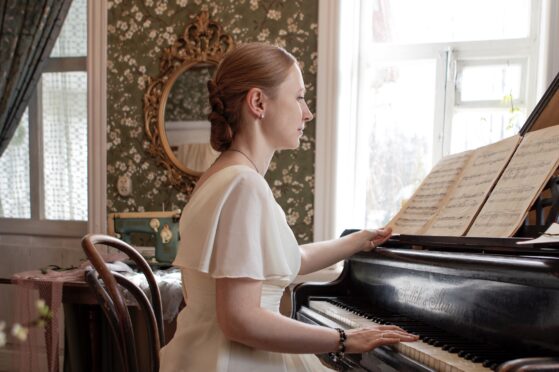
Effortless piano playing is rarely effortless to achieve. Behind every graceful performance lies countless hours of thoughtful, consistent practice that has trained the brain to execute complex movements automatically.
Muscle memory is not about your fingers remembering notes—it is about your brain building powerful neural pathways that transform deliberate actions into natural responses. Every correct repetition strengthens those pathways, making your playing smoother, faster, and more reliable over time.
At the same time, the most accomplished pianists understand that muscle memory works best when combined with musical understanding, attentive listening, and expressive interpretation. Technical confidence creates the freedom to focus on artistry, allowing the music—not the mechanics—to take center stage.
Whether you are just beginning your musical journey or refining advanced repertoire, choosing structured Piano Lessons Online can help you develop effective practice habits that build strong and reliable muscle memory. With consistent guidance and dedicated practice, every session brings you one step closer to confident, expressive playing. At The Mystic Keys, students are encouraged to combine proper technique with mindful practice, creating a strong foundation for musical growth that lasts a lifetime.
For more information and exciting resources about learning music, visit our website at The Mystic Keys. For more music content and exciting offers follow us on
Facebook, Instagram, YouTube, LinkedIn, Twitter, Pinterest, and Threads.