

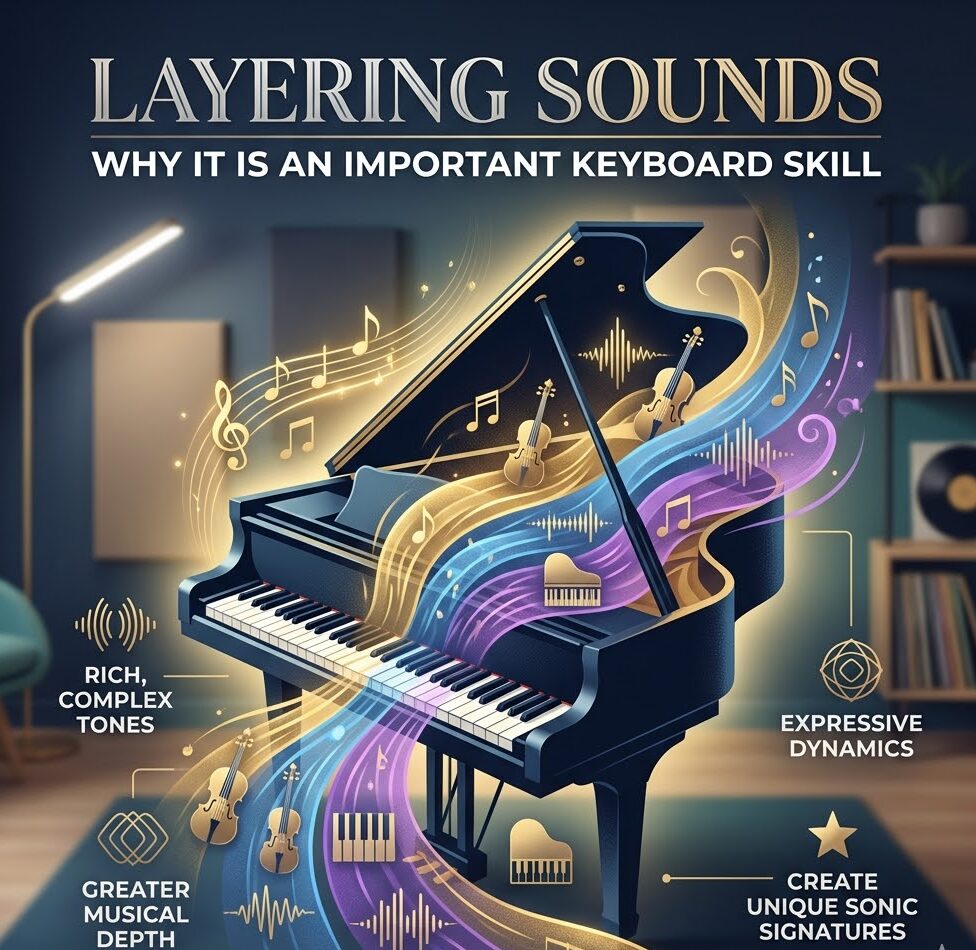
Layering Sounds | Why It Is an Important Keyboard Skill
Layering Sounds | Why It Is an Important Keyboard Skill
The keyboard is one of the most versatile instruments in modern music. Unlike many other instruments that are limited to a single sound source, keyboards have the unique ability to recreate entire musical landscapes. A player can perform a piano melody, add the warmth of strings, blend in atmospheric pads, and even introduce orchestral textures—all from a single instrument. This remarkable capability is made possible through a technique known as layering sounds, where multiple tones and instrument voices are combined to create a richer, fuller, and more expressive musical texture. By mastering this skill, keyboardists can transform simple performances into dynamic and immersive musical experiences.
For beginners, layering may seem like an advanced feature reserved for professional musicians and performers. In reality, it is a skill that can significantly enhance a keyboardist’s musical expression at any level. Understanding how to combine sounds effectively allows players to create richer performances, support ensemble arrangements, and develop a more professional approach to music-making.
As digital keyboards and synthesizers continue to evolve, sound layering has become an increasingly important skill. Musicians who learn how to use it thoughtfully gain access to a wider range of creative possibilities and develop a deeper understanding of musical texture and arrangement.

Understanding Layering Sounds on the Keyboard
Sound layering refers to the process of combining two or more sounds so they can be played simultaneously from the keyboard. Instead of hearing a single instrument voice when a key is pressed, the listener hears multiple sounds blended together into one cohesive texture.
Imagine playing a simple melody using only a piano sound. The result may be beautiful, but adding a soft string section underneath instantly creates greater depth and emotional impact. Similarly, combining a piano with a subtle choir pad can transform an ordinary passage into something cinematic and immersive.
The goal of layering is not merely to make the sound louder. Rather, it is about creating dimension, character, and musical richness. Each layer contributes its own tonal qualities, allowing the overall sound to become more expressive and engaging.
Because modern keyboards provide access to hundreds or even thousands of sounds, learning how these voices interact becomes an essential part of developing as a musician.

Why Layering Creates a Fuller Musical Experience
One of the biggest advantages of sound layering is the ability to fill out the musical space. A single sound often occupies a limited range of frequencies and emotional qualities. When additional layers are introduced carefully, the music gains a broader and more balanced sonic presence.
This becomes particularly important during solo performances. A keyboardist performing alone may not have the support of multiple instrumentalists. Through layering, however, a single performer can recreate some of the richness typically associated with a full band or ensemble.
Listeners often respond positively to layered sounds because they feel more complete and immersive. The music appears larger, more textured, and emotionally compelling. As a result, even simple chord progressions can take on a more sophisticated and professional character.
Consequently, mastering layering enables keyboard players to deliver performances that sound more polished without necessarily increasing technical complexity.

Enhancing Emotional Expression Through Layering Sounds
Music is deeply connected to emotion, and the sounds chosen by a musician play a major role in shaping the listener’s experience. Layering provides an effective way to enhance those emotional qualities.
A piano layered with warm strings can create a sense of nostalgia and tenderness. Combining an electric piano with ambient pads may produce a reflective and dreamy atmosphere. On the other hand, adding brass or synth layers can generate excitement, energy, and dramatic intensity.
Different musical situations call for different emotional colors. Since layering allows multiple timbres to coexist, it offers keyboardists greater control over the mood they wish to convey. This flexibility becomes especially valuable when accompanying singers, performing worship music, composing original pieces, or creating film-inspired arrangements.
Rather than relying solely on technique to communicate emotion, musicians can use carefully selected sound combinations to strengthen the expressive impact of their performance.

Developing a Better Understanding of Musical Arrangement
Learning to layer sounds also improves a keyboardist’s understanding of arrangement. Every successful arrangement involves balancing different musical elements so they complement rather than compete with one another.
When experimenting with layers, players quickly discover that not all sounds blend effectively. Some combinations create clutter, while others work together beautifully. Through this process, musicians develop a stronger awareness of frequency ranges, tonal balance, and texture.
Over time, these skills translate into better musical decision-making. Keyboardists begin to recognize when a piece needs additional support and when simplicity is more effective. They learn how to create contrast between sections and how to shape musical dynamics through sound selection.
As a result, layering becomes more than a technical keyboard function. It evolves into a practical lesson in orchestration and arrangement that benefits every aspect of musicianship.

Supporting Band and Ensemble Performances
The importance of layering extends beyond solo performance. In band settings, layered sounds can help keyboardists fulfill multiple musical roles simultaneously.
For example, a keyboard player may need to support harmonic structure while also contributing atmospheric textures. By layering piano with strings or pads, both functions can be achieved at once. This allows the keyboard to occupy a supportive role without overwhelming other instruments.
Effective layering can also strengthen transitions, build intensity during choruses, and provide continuity throughout a performance. Since modern bands often rely on keyboards to supply sounds that are not represented by other instruments, the ability to create layered textures becomes especially valuable.
Therefore, keyboardists who understand layering often become more adaptable and versatile contributors within an ensemble environment.

Expanding Creativity and Personal Style with Layering Sounds
Every musician strives to develop a unique artistic voice. Sound layering provides countless opportunities for creative exploration and experimentation.
Two keyboardists may play the same notes, yet their performances can sound completely different because of the layers they choose. One player may favor lush cinematic textures, while another might prefer bright electronic combinations. These choices become part of an individual’s musical identity.
Experimentation often leads to unexpected discoveries. A combination that initially seems unusual may produce a distinctive and memorable sound. Through regular exploration, musicians build a personal library of favorite layers that reflect their artistic preferences.
This creative freedom encourages curiosity and innovation, helping players move beyond simply reproducing music and toward actively shaping their own sonic signature.

Improving Performance Confidence
Confidence on stage often comes from knowing that your instrument can deliver the desired musical impact. Layering helps create that assurance by giving performances greater depth and presence.
A well-designed layered sound can make even straightforward passages feel powerful and engaging. Instead of worrying about whether the music sounds too thin, the performer can focus on expression, timing, and audience connection.
Furthermore, layered sounds often inspire players to perform with greater energy and emotion. The richer sonic environment provides immediate feedback, making the performance experience more rewarding and enjoyable.
For many keyboardists, this increased confidence contributes significantly to overall musical growth.
Common Mistakes to Avoid When Layering Sounds
Although layering is a valuable skill, it requires thoughtful application. Adding too many sounds at once can result in a muddy and unfocused mix. When every layer competes for attention, the musical clarity begins to disappear.
Balance is essential. Each sound should serve a purpose and contribute something unique to the overall texture. Volume levels, tonal characteristics, and frequency ranges must work together harmoniously.
Another common mistake involves selecting layers solely because they sound impressive individually. Some sounds may be excellent on their own yet clash when combined. Careful listening is therefore crucial throughout the layering process.
The most effective layered sounds are often surprisingly simple. A few well-chosen voices typically produce a stronger result than a large collection of competing sounds.

Conclusion
Sound layering is far more than a keyboard feature—it is an essential musical skill that enhances expression, creativity, arrangement knowledge, and performance quality. By learning how different sounds interact, keyboardists gain the ability to create fuller textures, support ensembles more effectively, and communicate emotion with greater impact.
As musicians become more comfortable with layering, they discover new dimensions within their instrument. Ordinary performances begin to feel richer, compositions become more engaging, and artistic possibilities expand significantly. Whether performing on stage, accompanying a band, composing original music, or simply practicing at home, mastering the art of layering can elevate a keyboardist’s musical journey and unlock a world of creative potential. At The Mystic Keys, our Piano Lessons Online help students develop not only strong playing techniques but also practical skills like sound layering, enabling them to create more expressive and professional keyboard performances.
For more information and exciting resources about learning music, visit our website at The Mystic Keys. For more music content and exciting offers follow us on
Facebook, Instagram, YouTube, LinkedIn, Twitter, Pinterest, and Threads.