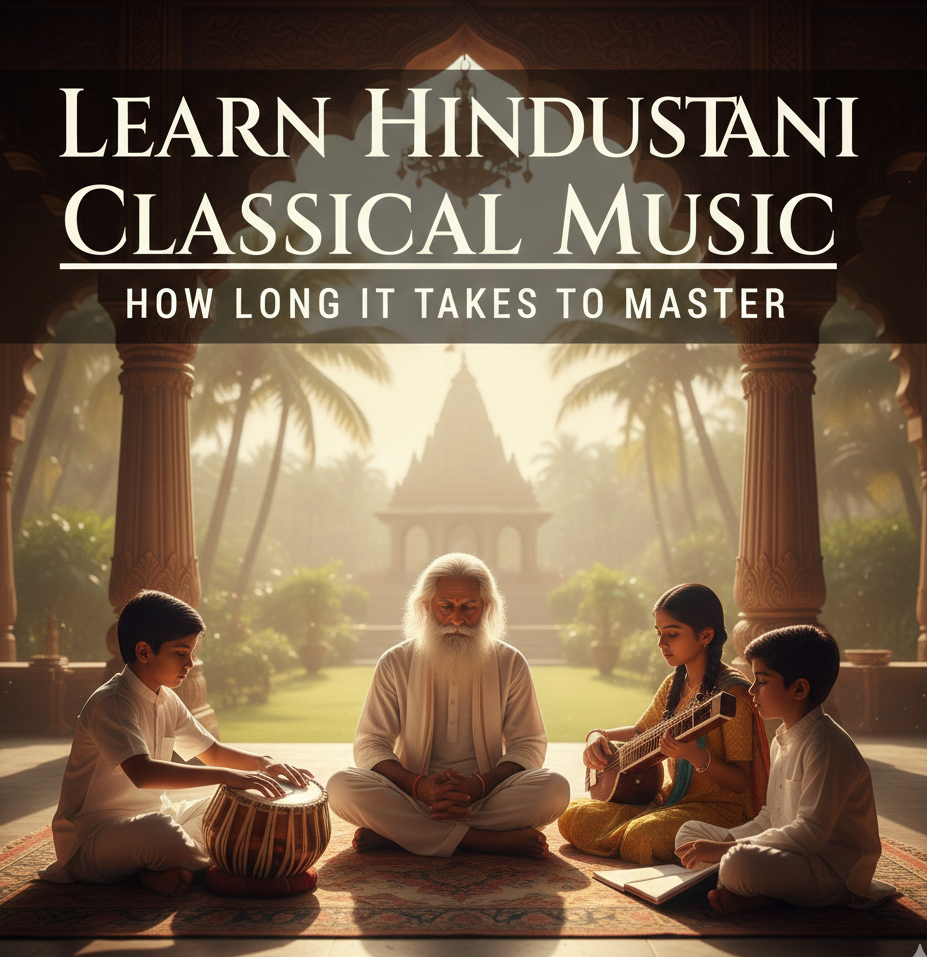
Learn Hindustani Classical Music | How Long It Takes to Master
Learn Hindustani Classical Music | How Long It Takes to Master
If you’ve ever been mesmerized by a late-night recital or lost yourself in a slow, unfolding aalap, you may have found yourself wondering: How long does it take to learn Hindustani classical singing? It’s a question that seems simple at first, but the answer is more nuanced. After all, what does “learning” really mean in a tradition as rich and layered as this?
Hindustani classical music is not something you can finish like a regular course. It is a journey that unfolds over years, sometimes decades, and continues throughout life. Unlike modern skills, where progress can be tracked with levels or certificates, this art grows gradually. Each lesson, each practice session, each performance builds on the last, slowly shaping the voice, the ear, and the musical sensibility. To understand how long this journey might take, it helps to first look closely at the nature of the music itself, and what it asks of those who wish to truly learn it.
Understanding the Nature of Hindustani Classical Music
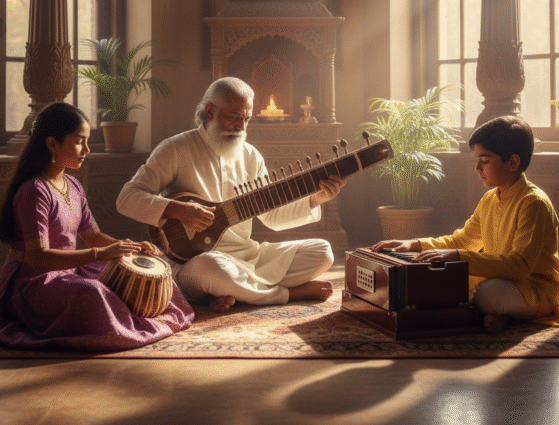
Hindustani classical music is deeply rooted in centuries of tradition, passed down through oral transmission and enriched by profound spiritual inquiry. Over time, it evolved across North India, shaped not only by royal patronage and devotional movements but also by the enduring guru–shishya (teacher–disciple) tradition, which emphasized guidance, discipline, and personal connection.
At its heart are ragas — intricate melodic frameworks with carefully defined ascending and descending patterns — and talas, the rhythmic cycles that give structure and life to the performance. Legendary maestros such as Pandit Bhimsen Joshi and Kishori Amonkar did far more than sing the notes; they brought ragas to life, expanding them with imagination, discipline, and emotional depth that touched the soul.
Because this art form depends so heavily on subtle pitch control, nuanced improvisation, and the expression of emotion, learning it requires developing not just the voice, but also the ear, the mind, and the spirit. And achieving that level of depth — that true understanding — takes time, patience, and dedication.
Starting Young | Learn Hindustani Classical Singing from Age 5
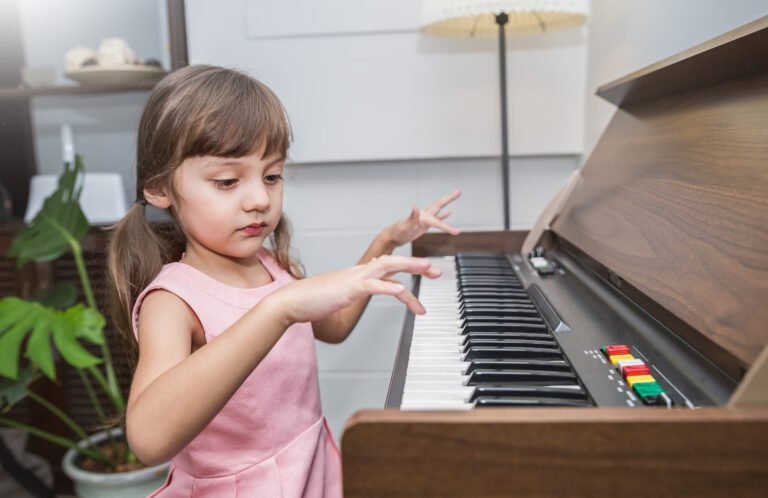
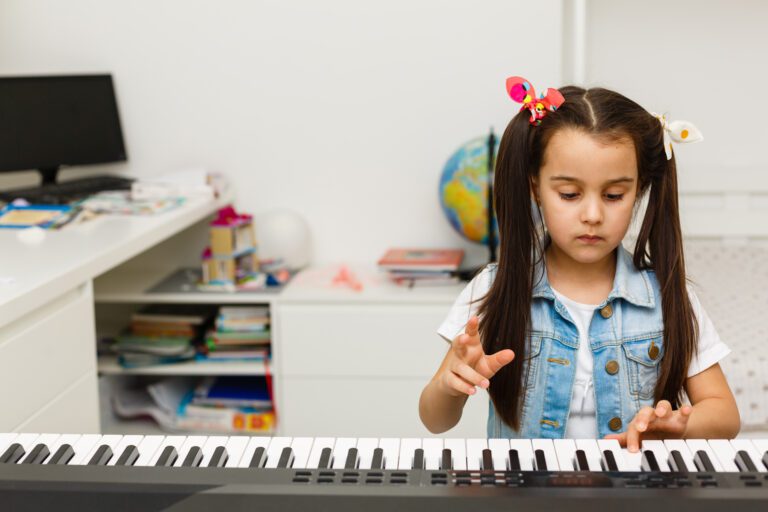
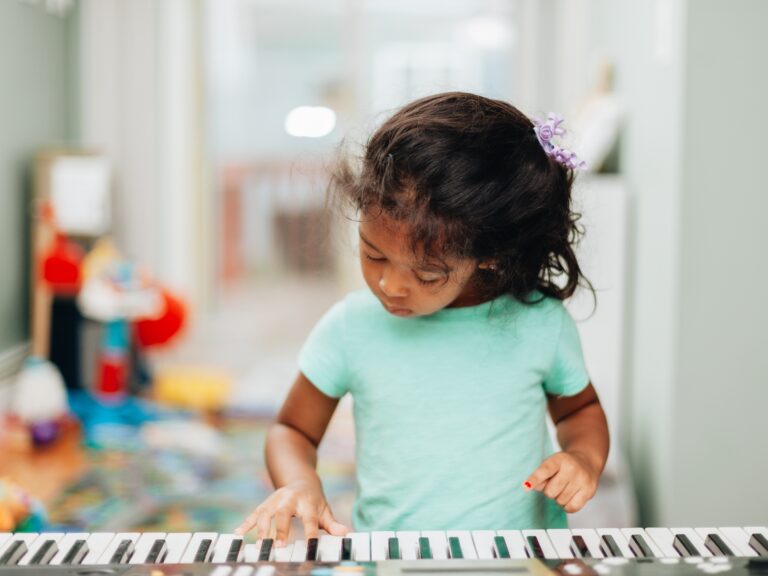
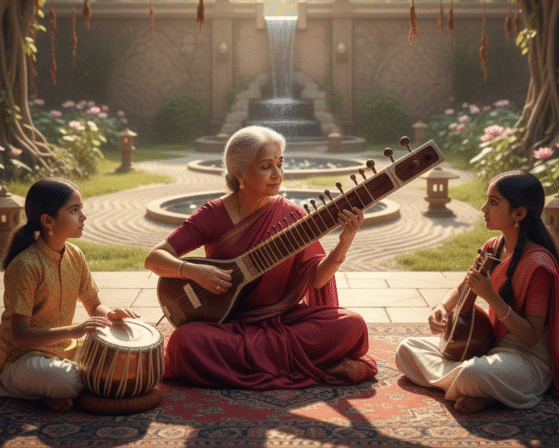
Most students begin learning Hindustani classical music around the age of 5, when their natural sense of sound and rhythm can be nurtured. At this stage, the focus is on basics such as:
Recognizing and singing swaras (Sa, Re, Ga, Ma, Pa, Dha, Ni)
Simple exercises and alankars
Introduction to ragas like Yaman or Bhupali
Developing voice control and breath awareness
These early years are about building a foundation. The goal is not speed, but a stable voice, a trained ear, and the habit of regular practice. With guidance, children absorb these basics naturally, making learning fun and preparing them for deeper growth later on.
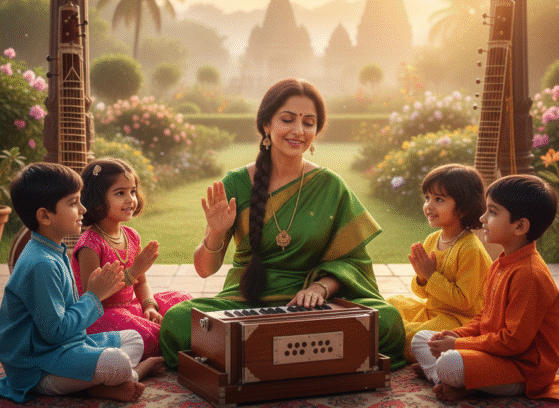
Learn Hindustani Classical Compositions | Developing Skills Over Childhood
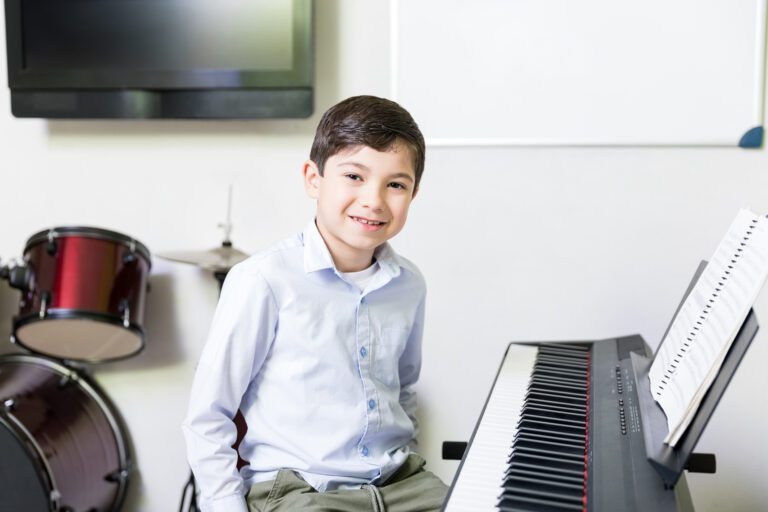
As students progress through childhood, roughly between ages 8–12, they begin moving from exercises to structured compositions (bandish). This stage is when students start to experience the magic of music in a deeper way.
Key learning elements include:
Understanding the personality and mood of different ragas
Learning to elaborate through aalap and bol-aalap
Developing rhythm awareness and improvisation within a raga
By the pre-teen years, students often perform in small gatherings or student concerts, gaining confidence and familiarity with performance. The journey here shifts from just singing notes to expressing the emotion of the music.
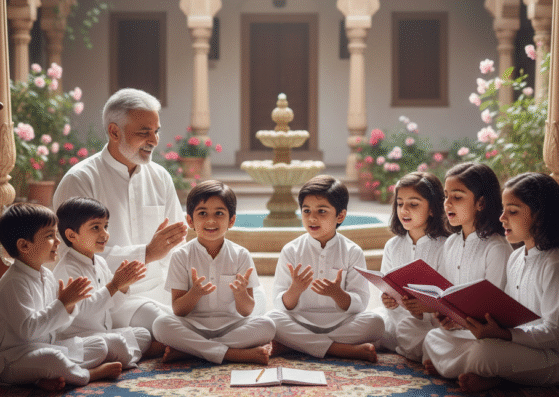
Deepening the Craft | Learn Hindustani Classical Singing in Teen Years
From the teenage years onward (around 13–18), students begin refining their voice, expanding repertoire, and gaining deeper understanding of rhythm and melody. This is the stage where artistic maturity starts to emerge:
Sustaining long, slow vilambit khayal performances
Exploring complex ragas and improvisations
Developing personal expression within the raga framework
Even after years of practice, mastery is still distant, but a dedicated student starts to sound more like a performer than a learner.
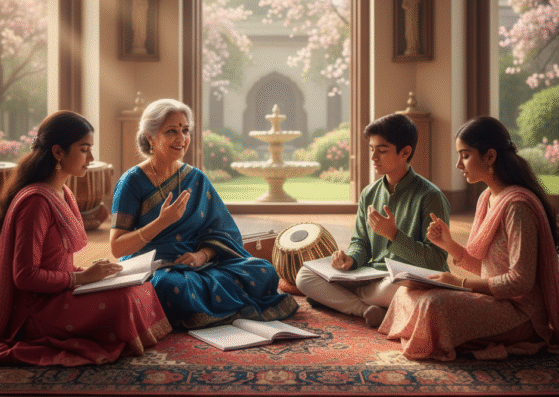
The Role of the Guru in Learning Hindustani Classical Music
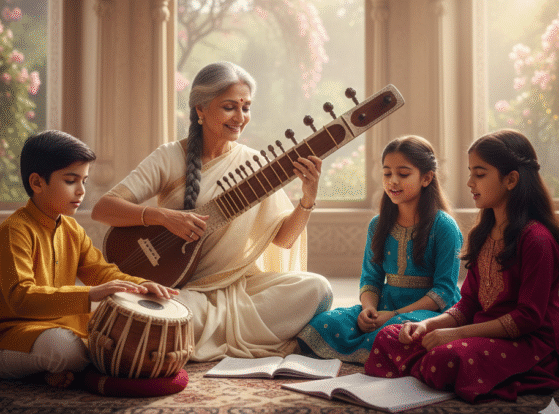
A skilled guru can profoundly shape a student’s progress. In the traditional guru–shishya system, disciples absorbed more than lessons — they learned discipline, lifestyle, and the subtle sensibilities that bring music to life.
Even today, personalized mentorship matters just as much. While recordings and apps offer guidance, they cannot teach the nuances of voice modulation, pitch control, or interpretation. With the right guru, learning becomes more structured, meaningful, and deeply rooted, turning practice into a journey rather than just a routine.
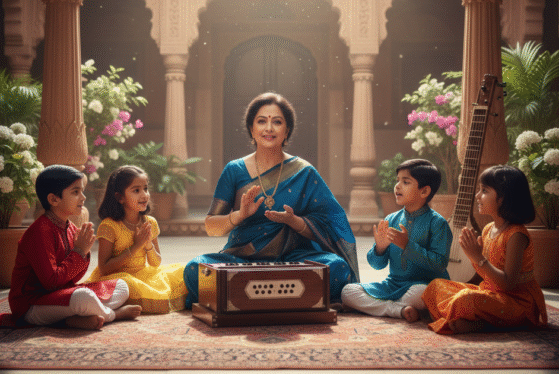
Practice | The True Determining Factor
No discussion about timelines is complete without emphasizing riyaaz — daily disciplined practice. Even children starting at age 5 need consistency to develop control, pitch, and stamina. Two students with the same teacher may progress at very different rates depending on:
Consistency of practice
Quality of listening
Vocal discipline
Physical and mental stamina
Even professional artists maintain rigorous daily practice routines. The voice, after all, is an instrument that must be tuned continuously.
Can You Ever “Finish” Learning Hindustani Classical Singing?
In short — the answer is no. There is no final certificate or endpoint in Hindustani classical music. Even the legendary maestros, who are considered pillars of this tradition, always regarded themselves as lifelong students. The art evolves continuously, shaped not just by practice, but by age, life experiences, and emotional maturity.
Along the way, you may achieve competence in a few years, perform confidently during adolescence or early adulthood, and even begin teaching after a decade or more. Yet true mastery remains elusive — it is not a destination but a lifelong journey, one that unfolds gradually as you deepen your understanding and connection with the music.
Final Thoughts | Depth Over Speed
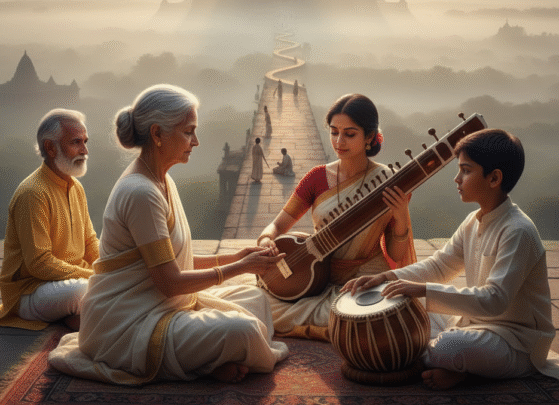
In a world that values speed and quick certifications, Hindustani classical music asks us to slow down. It teaches patience, focus, and the art of surrender. The real beauty isn’t in how fast you learn, but in how deeply the music shapes your mind and soul.
Instead of asking, “How long will it take?”, ask: “Am I ready to commit to a lifelong journey with music?”
With Hindustani Vocal Lessons Online from The Mystic Keys, you can start this journey from anywhere, practicing consistently under expert guidance. As you learn, time stops feeling like a measure of progress — and every note, every raga, becomes part of the journey itself.
For more information and exciting resources about learning music, visit our website at The Mystic Keys. For more music content and exciting offers follow us on
Facebook, Instagram, YouTube, LinkedIn, Twitter, Pinterest, and Threads.