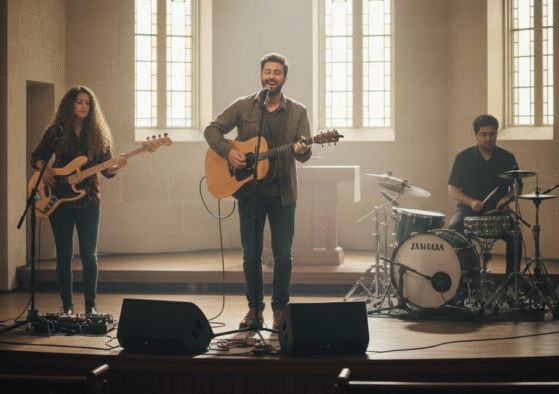
Playing Guitar in Band | How to Blend, Not Compete
For many guitarists, joining a band feels like a rite of passage. After hours spent practicing alone—chasing cleaner chord changes, faster runs, or the perfect tone—playing with other musicians feels like validation. Yet, once the excitement settles, a deeper realization emerges: playing guitar in a band is not about proving skill, but about contributing meaningfully.
A band is a conversation, not a contest. When the guitar blends instead of battles for attention, the music becomes more powerful, cohesive, and emotionally resonant.
Playing Guitar in a Band Means Rethinking Your Role
One of the biggest adjustments guitarists face is understanding that their instrument no longer carries the entire musical load. In a band, roles are shared. The bass provides weight and movement, the drums shape time and energy, vocals guide emotion, and other instruments fill harmonic space.
Playing guitar in a band means choosing where you belong in that structure. Sometimes you support rhythmically, sometimes harmonically, and sometimes by stepping back entirely. This shift—from self-focused playing to song-focused playing—is what allows the guitar to truly belong rather than compete.
Listening First, Playing Second
Blending begins with listening. While technical ability matters, awareness matters more. A guitarist who listens closely will naturally adjust their volume, rhythm, and phrasing to fit what the band is doing.
This kind of listening goes beyond hearing notes. It involves feeling the groove of the drums, understanding the bass line’s direction, and recognizing when vocals need space. As listening becomes instinctive, playing becomes responsive rather than intrusive, and the band starts to sound like a unified voice instead of individual parts layered together.
Tone Decisions While Playing Guitar in a Band
Tone that sounds incredible in isolation can become problematic in a full mix. Excessive distortion, heavy low end, or overly bright settings can clutter the sonic space and compete with other instruments.
When playing guitar in a band, tone should serve clarity. Slightly cleaner sounds often cut through better and leave room for vocals and keys. Adjusting tone based on the song’s mood—lighter for verses, fuller for choruses—helps the guitar support the overall arrangement rather than dominate it.
Rhythm Guitar | The Quiet Backbone of the Band
Rhythm guitar is one of the most powerful yet underestimated roles in a band. It’s not about complexity; it’s about consistency. A strong rhythm part locks in with the drums and gives the song stability.
By resisting the urge to overplay, rhythmguitar creates space and momentum. Repetition becomes a strength, not a weakness. When the groove is solid, everything else feels more confident, proving that sometimes the most impactful contribution is the least flashy one.
Lead Playing Without Musical Competition
Lead guitar naturally draws attention, but even here, blending remains essential. Effective lead playing feels intentional, not constant. Well-placed fills, melodic responses to vocals, or short hooks between sections enhance the song rather than hijack it.
A mature guitarist understands that silence can be as expressive as sound. By choosing moments carefully, lead parts feel earned, and the guitar becomes a storyteller instead of a show-off.
Dynamics While Playing Guitar in a Band
Dynamics are where blending truly comes alive. Songs need contrast—soft and loud, sparse and full—and the guitar plays a crucial role in shaping that emotional movement.
Playing guitar in a band means knowing when to step forward with confidence and when to pull back with restraint. These shifts create tension and release, keeping listeners engaged and giving the music depth and movement.
Communication and Musical Trust
Blending isn’t just musical—it’s interpersonal. Talking openly about arrangements, tones, and song direction builds trust. Rehearsals become collaborative spaces where ideas are shaped collectively rather than defended individually.
A guitarist who adapts easily and values feedback becomes someone bands want to play with. Over time, this trust leads to tighter performances and a stronger musical bond.
Ego, Growth, and the Guitarist’s Evolution
At its core, blending requires humility. Letting go of constant self-expression doesn’t diminish creativity—it refines it. When ego steps aside, musical maturity steps forward.
Guitarists who understand this evolution often find that their playing becomes more respected, not less. The band sounds better, the songs feel stronger, and the guitar finds its most meaningful voice.
Conclusion | The True Art of Playing Guitar in a Band
Playing guitar in a band is ultimately about finding balance—between expression and restraint, between confidence and awareness. When the focus shifts from standing out to blending, the energy of the entire group transforms, and collaboration naturally takes the lead over competition. At The Mystic Keys, students of Guitar Lessons Online learn how subtle choices in timing, tone, and phrasing can enhance the music as a whole, creating harmony that feels both intentional and alive.
In this shared musical space, the guitar doesn’t disappear; instead, it discovers its most meaningful role, supporting the song exactly where it’s needed. Each note becomes purposeful, each chord resonates with the arrangement, and the instrument—while part of a larger ensemble—emerges as infinitely more powerful than when played alone. By embracing this approach, every guitarist can contribute not just sound, but emotion, depth, and cohesion to the music.
For more information and exciting resources about learning music, visit our website at The Mystic Keys. For more music content and exciting offers follow us on
Learning Worship Music | Advantages of Turning Music into Prayer
Learning worship music is not merely a musical pursuit; it is a deeply enriching journey that engages the heart, mind, and spirit. Rooted in devotion and expression, worship music allows individuals to grow musically while simultaneously nurturing faith, character, and community awareness. Over time, this learning process becomes transformative, shaping perspectives and cultivating inner depth.
The following sections explore the advantages of this journey into worship music in a more detailed and layered way, highlighting its wide-ranging impact while maintaining a balanced and flowing structure.
Learning Worship Music to Deepen Spiritual Connection and Faith Awareness
One of the most significant advantages of this journey into worship music is its ability to deepen spiritual connection. As learners engage repeatedly with sacred lyrics and melodies, the messages embedded within the music begin to take root more profoundly.
Learning worship music encourages intentional reflection. Songs often draw directly from spiritual teachings, scriptures, and prayers, allowing learners to internalize faith-based ideas naturally through repetition. This processstrengthens personal belief and creates a deeper awareness of spiritual values.
Additionally, worship music creates moments of stillness and reverence. While practicing or performing, individuals often experience a sense of peace and closeness to the divine. Over time, this journey into worship music becomes an act of worship in itself—one that strengthens faith not through words alone, but through sound, emotion, and presence.
Learning Worship Music as a Channel for Emotional Expression and Inner Healing
Learning worship music offers a meaningful way to express complex emotions. Worship songs often reflect the full spectrum of human experience—joy, gratitude, sorrow, longing, repentance, and hope—making them deeply relatable.
Through music, learners find a healthy outlet for emotional release. Singing or playing worship music can bring comfort during difficult seasons and amplify joy during moments of gratitude. This emotional engagement helps individuals process feelings that may otherwise remain unspoken.
Moreover, the meditative nature of worship music supports inner healing. Regular engagement canreduce stress, calm anxious thoughts, and create emotional balance.In this way, this journey into worship music contributes not only to spiritual well-being but also to emotional resilience and mental clarity
Learning Worship Music to Develop Musical Discipline and Creative Growth
From a practical perspective, this journey into worship music builds strong musical foundations. It enhances skills such as rhythm, pitch accuracy, harmony, coordination, and listening ability. Regular practice instills discipline, patience, and consistency—qualities essential for long-term musical growth.
What distinguishes this process is the sense of purpose behind the practice. Because worship music is centered on meaning rather than competition, learners often approach improvement with sincerity and dedication instead of pressure. This creates ahealthier relationship with learning and progress.
At the same time, this journey into worship music nurtures creativity. While it follows certain traditions, it also encourages thoughtful expression through arrangements, harmonies, and instrumental interpretation. Creativity is guided by intention—how best to support the message and atmosphere of worship—resulting in meaningful and purposeful artistic growth.
Learning Worship Music to Strengthen Community, Unity, and Service
Worship music is inherently communal. Learning worship music often leads individuals into choirs, worship teams, or group settings where collaboration becomes essential.
These shared musical experiences foster unity and fellowship. Musicians learn to listen attentively, blend harmoniously, and work together toward a common spiritual goal. This cooperative environment builds mutual respect, trust, and encouragement.
Learning worship music also reinforces the value of service. Rather than focusing on individual recognition, learners understand their role in supporting collective worship. This mindset strengthens empathy and reinforces the idea that music can be a gift offered for the benefit of others.
Cultivate Humility, Focus, and Lifelong Purpose
Another powerful advantage of learning worship music lies in the personal values it nurtures. Because the focus remains on devotion rather than display, learners gradually develop humility and self-awareness.
Learning worship music also enhances focus and mindfulness. Attention to lyrics, timing, dynamics, and atmosphere encourages presence in the moment. This mindful engagement often carries over into daily life, improving concentration and reducing mental distractions.
Over time, learning worship music becomes a lifelong source of purpose. It provides comfort during challenges, guidance during uncertainty, and a consistent way to reconnect with faith. The lessons learned through this journey—discipline, compassion, patience, and devotion—continue to influence character long after specific songs are learned.
Conclusion
The advantages of learning worship music extend far beyond technical skill or performance ability. It deepens spiritual connection, supports emotional expression and healing, strengthens musical discipline and creativity, fosters community and service, and cultivates humility and focus. Through this holistic journey, worship music becomes more than an art form—it becomes a meaningful pathway to growth, reflection, and lasting purpose.
Today, platforms such as The Mystic Keys are making this journey more accessible than ever. With thoughtfully designed Worship Piano & Singing Lessons Online, learners can grow musically and spiritually from the comfort of their own space. These guided lessons help individuals understand not only how to play or sing, but why worship music matters, encouraging intentional practice, deeper reflection, and confident participation in worship settings.
By combining structured musical training with a heart-centered approach to worship, learning worship music through such platforms empowers individuals to serve with excellence, sincerity, and purpose—turning every note into an offering and every lesson into a step toward meaningful spiritual growth.
For more information and exciting resources about learning music, visit our website at The Mystic Keys. For more music content and exciting offers follow us on