Which Online Music Academy Is the Best in the UK?
Finding the right online music academy UK students can join isn’t simply about choosing the school with the biggest name or the longest list of courses. In 2026, learners can choose between live one-to-one tuition, small-group lessons, independent learning platforms, and specialist music schools offering online programmes. The right choice depends on what you want to learn, how you prefer to study, your level, and the kind of guidance you expect from a teacher.
For someone searching for piano, guitar, vocals, violin, drums, keyboard, music theory, or another subject, comparing the actual learning experience is far more useful than relying on a simple “best academy” label.
So, what should you look for?
What Makes a Good Online Music Academy?

A good online music academy should provide more than a video call with a teacher. The learning experience should have structure, clear goals, regular feedback, and a sensible path for progression.
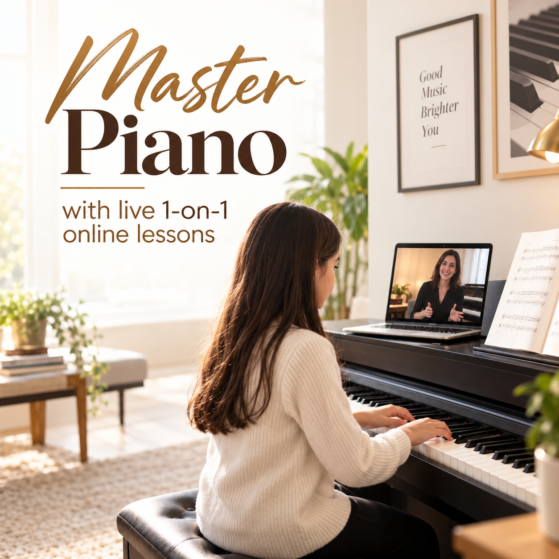
Live online tuition has become an established part of music education in the UK. Current UK comparisons distinguish live lessons with human teachers from app-based, self-paced learning, with each approach serving different types of learners.
For students who want personal guidance, live teaching can be particularly useful because the teacher can observe technique, listen to the student’s playing or singing, correct mistakes, and adapt the lesson in real time.
1. Look for Personalised Music Lessons
One of the first things to consider when choosing an online music academy UK learners can access is whether the lessons are genuinely personalised.
Every student starts from a different point. A complete beginner may need help understanding basic rhythm and notation, while an experienced musician might want to work on improvisation, advanced harmony, performance technique, or a particular repertoire.
One-to-one teaching makes it easier for the teacher to adjust the lesson according to the student’s level and goals rather than following exactly the same pace for everyone.
2. Check the Teachers and Their Experience

The quality of an online academy depends heavily on its teachers.
Look beyond words such as “expert” or “professional” and find out what the academy actually provides. Consider the teacher’s musical background, teaching experience, qualifications, specialist areas, and experience working with students at different levels.
For example, some UK-based online providers specifically promote experienced instructors and personalised tuition, while specialist teachers may focus heavily on examination preparation or particular instruments.
The best teacher for one student may not be the best match for another. A classical pianist preparing for an examination and a teenager learning pop songs have very different requirements.
3. Consider the Range of Courses
If you are planning to study music for several years, it can be useful to choose an academy that offers more than one learning pathway.
Look for courses covering the instruments and musical areas that interest you, such as:
- Piano and keyboard
- Acoustic and electric guitar
- Singing and vocals
- Violin
- Drums
- Music theory
- Indian classical music
- Worship music
- Songwriting
- Music production
The advantage of having multiple subjects available through one academy is that students can explore different areas of music without having to completely change their learning environment.
4. Check Whether the Academy Supports Music Exams

For students who want formal qualifications, examination preparation can be an important factor.
In the UK, recognised examination systems include organisations such as ABRSM and Trinity College London, among others. ABRSM currently offers assessments ranging from beginner levels through advanced diplomas, including practical and digital assessments.
An academy that supports examination preparation can help students understand repertoire, technical requirements, theory, sight-reading, aural skills, and performance expectations.
However, exam preparation shouldn’t completely replace broader musicianship. A student can work toward a grade while also developing musical understanding, creativity, listening, and performance confidence.
5. Look at the Lesson Format
Not all online music education works in the same way.
Some platforms provide pre-recorded material. Others use apps that allow students to practise independently. Some schools provide live one-to-one lessons, while others combine individual teaching with group classes.
If direct interaction is important to you, check whether the academy provides live lessons with a real teacher.
For example, London School of Music currently offers one-to-one online lessons in areas including piano, guitar/bass, singing, and drums, with lesson recordings available.
The format should match how you learn best.
6. Don't Ignore Scheduling Flexibility

One of the biggest reasons people choose online music education is convenience.
A student may be balancing school, university, work, family responsibilities, or other activities. A rigid schedule can make it difficult to attend lessons consistently.
Look for an academy that offers reasonable scheduling options and makes it possible to maintain a regular learning routine.
For example, The Mystic Keys describes flexible scheduling, multiple time options, and weekly online classes as part of its online programmes.
Flexibility is valuable, but consistency is even more important. A convenient schedule should still encourage regular lessons and practice.
7. Ask Whether Lesson Recordings Are Available
A live lesson ends after the video call, but the learning shouldn’t necessarily end there.
Lesson recordings can allow students to revisit explanations, demonstrations, exercises, difficult passages, and teacher feedback while practising during the week.
Some UK online providers already incorporate recordings into their learning model. London School of Music, for example, states that full recordings of its online lessons are available to students, while SAM Music Service provides lesson recordings through its online student platform.
For beginners in particular, having something to refer back to can make independent practice much easier.
8. Look for a Structured Curriculum

A collection of individual lessons isn’t necessarily the same as a structured music course.
A good curriculum should answer a simple question:
What will I learn next?
Students should gradually develop skills rather than jumping randomly between songs.
Depending on the instrument, a structured programme might include:
Technique → Music Theory → Repertoire → Ear Training → Sight-Reading → Performance
The exact balance will depend on the student’s goals, but there should be a clear sense of progression.
The Mystic Keys, for example, describes structured pathways covering technique, theory, ear training, sight-reading, improvisation, and repertoire within its piano programme.
9. Think About What Happens Between Lessons
A weekly lesson alone doesn’t create a musician.
Practice between lessons is where students develop coordination, memory, technique, musical understanding, and confidence.
This is why it is worth asking whether an academy provides practice guidance, lesson notes, recordings, exercises, or other resources.
The teacher should ideally give the student something specific to work on rather than simply saying, “Practise this song.”
A clear practice plan can turn a 60-minute lesson into several productive days of independent learning.
10. Consider the Student's Age and Level
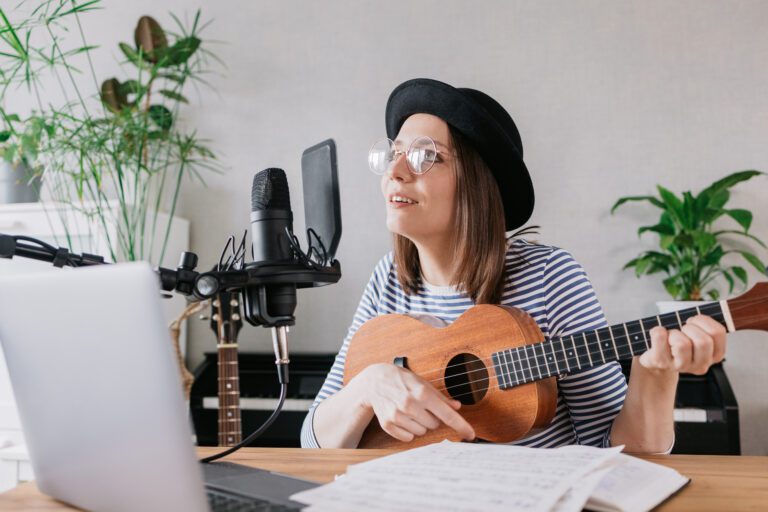
The right learning environment can also depend on age and experience.
Children may need lessons that are engaging, encouraging, and appropriately paced. Adults may prefer practical repertoire and flexible scheduling. Advanced students may require detailed technical feedback and more challenging musical material.
Look for an academy that clearly supports your level instead of assuming that one teaching approach works for everyone.
For example, The Mystic Keys currently describes its online piano programme as suitable for beginners, children, and advanced learners, with personalised learning and different levels of repertoire and musicianship.
11. Think Beyond a Single Instrument
Music is interconnected.
A pianist who develops ear training may find it easier to understand harmony. A guitarist who learns music theory may become more comfortable improvising. A singer who studies keyboard can develop stronger pitch awareness and harmonic understanding.
Some online academies offer multiple disciplines, allowing students to expand their musical education over time.
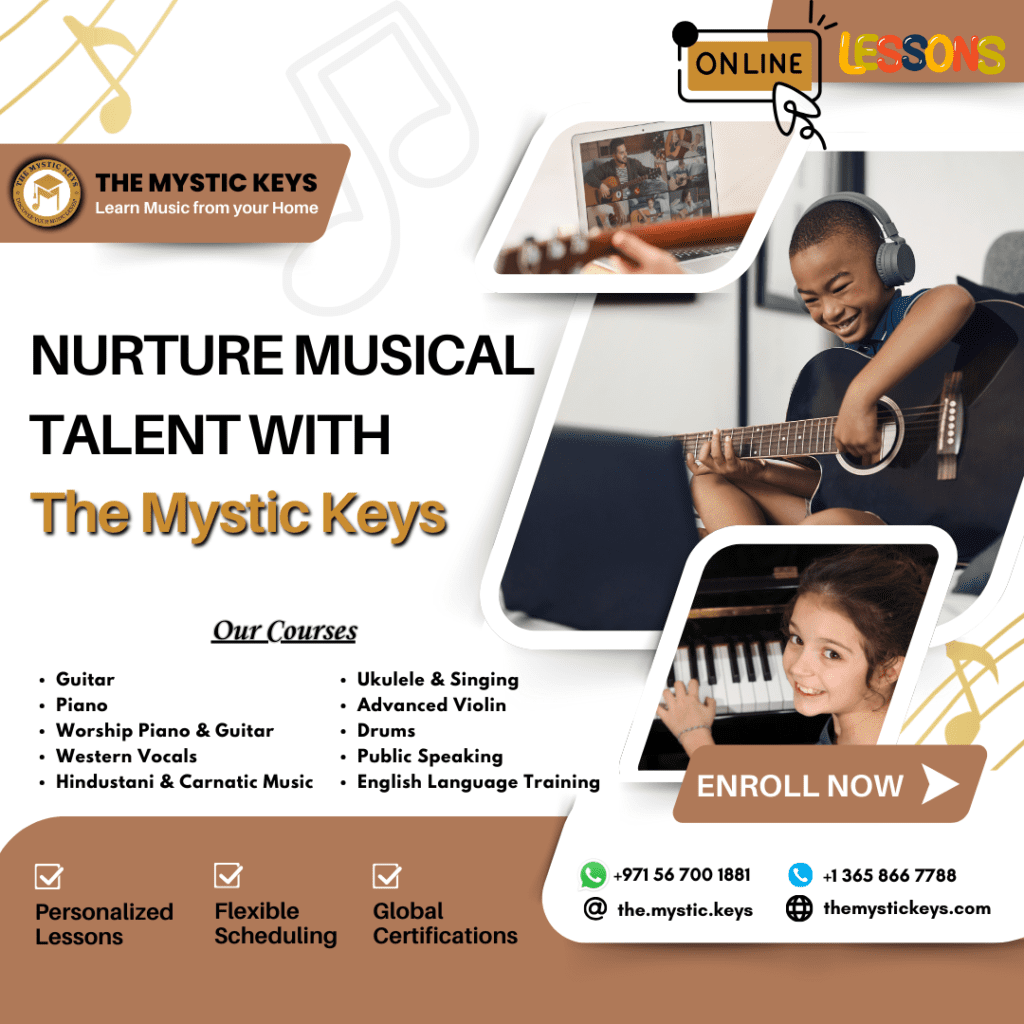
The Mystic Keys currently lists courses including piano, keyboard, electric and acoustic guitar, drums, Western vocals, violin, Carnatic vocals, Hindustani vocals, worship piano and singing, ukulele, music theory, choir training, and other subjects.
12. Take a Trial or Consultation Before Committing
A trial lesson can tell you much more than a website description.
Use the opportunity to assess:
- Does the teacher explain clearly?
- Do they listen to your goals?
- Are corrections constructive?
- Is the lesson organised?
- Does the teaching style suit you?
- Do you feel comfortable asking questions?
- Is the technology reliable?
- Is there a clear plan for future lessons?
The Mystic Keys, for example, states that prospective students can discuss their requirements, choose a convenient time, and take a trial session before enrolling.
A trial isn’t just an opportunity for the academy to demonstrate its teaching. It is also an opportunity for the student to decide whether the learning environment feels right.
What About Pricing?

Online Music Academy UK Price is naturally part of the decision, but it shouldn’t be viewed in isolation.
Two academies may advertise similar prices while offering very different lesson durations, teacher experience, resources, class sizes, or additional support.
Current UK examples show considerable variation. First Musical Academy London lists five 30-minute online one-to-one piano or singing lessons at £80, while SAM Music Service lists 30-minute individual online lessons at £20.50 per lesson for 2026.
Instead of asking only, “How much does a lesson cost?”, ask:
“What exactly is included in the lesson and the learning programme?”
That provides a much more useful comparison.
So, Which Online Music Academy Should You Choose?
There isn’t one academy that can objectively be called the best choice for every learner.
Someone preparing for an ABRSM examination may prioritise exam-focused instruction. A beginner may care more about patient teaching and a comfortable learning environment. A working adult may value flexible scheduling. A singer may want specialist vocal coaching, while a guitarist may want contemporary playing and improvisation.
The better question is:
Which online music academy matches your particular goals, instrument, level, schedule, and preferred learning style?
For students considering The Mystic Keys, its online programmes include personalised one-to-one and small-group options, flexible scheduling, recorded sessions on relevant courses, and pathways covering beginner through advanced learning. Its website also states that it supports Trinity College London preparation and other examination pathways.
That makes it one option worth considering alongside other UK and international online providers, particularly for learners who want a broad range of instruments and structured online instruction.
Final Thoughts
Choosing an online music academy UK students can learn from is ultimately about finding the right combination of teaching quality, personal attention, course structure, flexibility, resources, and long-term progression.
Don’t choose an academy simply because someone calls it “the best.” Look at what it actually offers and compare those features with what you want to achieve.
For some students, that may mean intensive exam preparation. For others, it may mean learning favourite songs, developing performance confidence, exploring a new instrument, preparing for worship, or building a strong musical foundation from scratch.
The most useful online music education is the kind that gives students a capable teacher, a clear direction, regular feedback, and enough flexibility to keep learning consistently.
For learners exploring online music education, The Mystic Keys provides live online lessons across a wide range of instruments and musical disciplines, with personalised learning options and flexible scheduling.
The right musical journey doesn’t have to look the same for everyone. What matters is finding an academy and teacher that fit the way you want to learn.
For more information and exciting resources about learning music, visit our website at The Mystic Keys. For more music content and exciting offers follow us on
Facebook, Instagram, YouTube, LinkedIn, Twitter, Pinterest, and Threads.