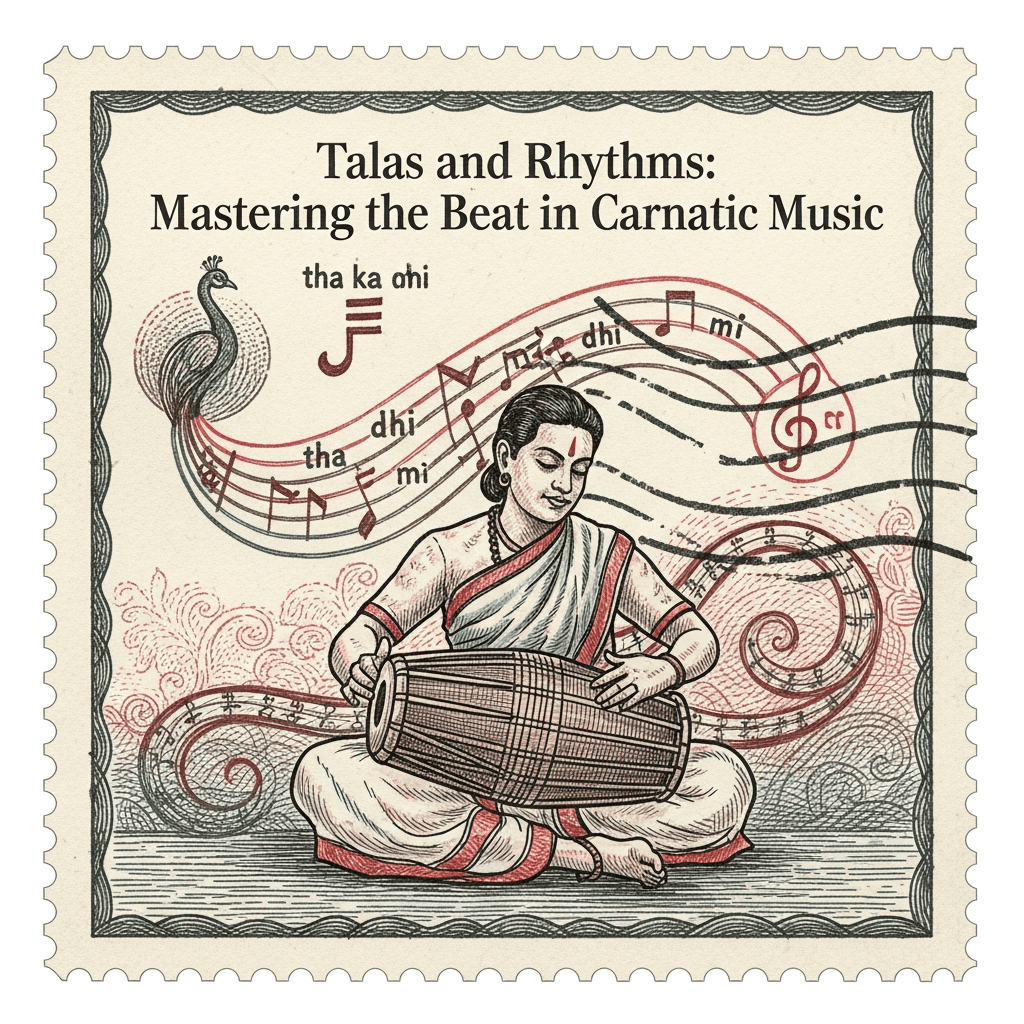
Talas and Rhythms: Mastering the Beat in Carnatic Music
Carnatic music is built on melody, devotion, and discipline, but rhythm gives it life and structure. While ragas shape emotion, Carnatic music talas define time, balance, and movement. Without a strong rhythmic foundation, even the most beautiful melody loses its power.
Understanding talas is essential for vocalists, instrumentalists, and percussionists alike. From beginners learning simple beats to advanced musicians exploring complex rhythmic cycles, mastering rhythm transforms how music is felt, performed, and communicated.
This blog explores the rhythmic framework of Carnatic music talas, how they work, why they matter, and how learners can steadily develop rhythmic confidence.
The Importance of Rhythm in Carnatic Music
Rhythm in Carnatic music is not just a background element. It is an active force that interacts constantly with melody. Every composition, improvisation, and performance relies on a precise understanding of rhythmic structure.
Key roles of rhythm in Carnatic music include:
Supporting melodic improvisation
Creating tension and release within musical phrases
Guiding ensemble coordination between artists
Carnatic music talas provide this structure, ensuring that creativity stays rooted in discipline.
What Are Talas in Carnatic Music?
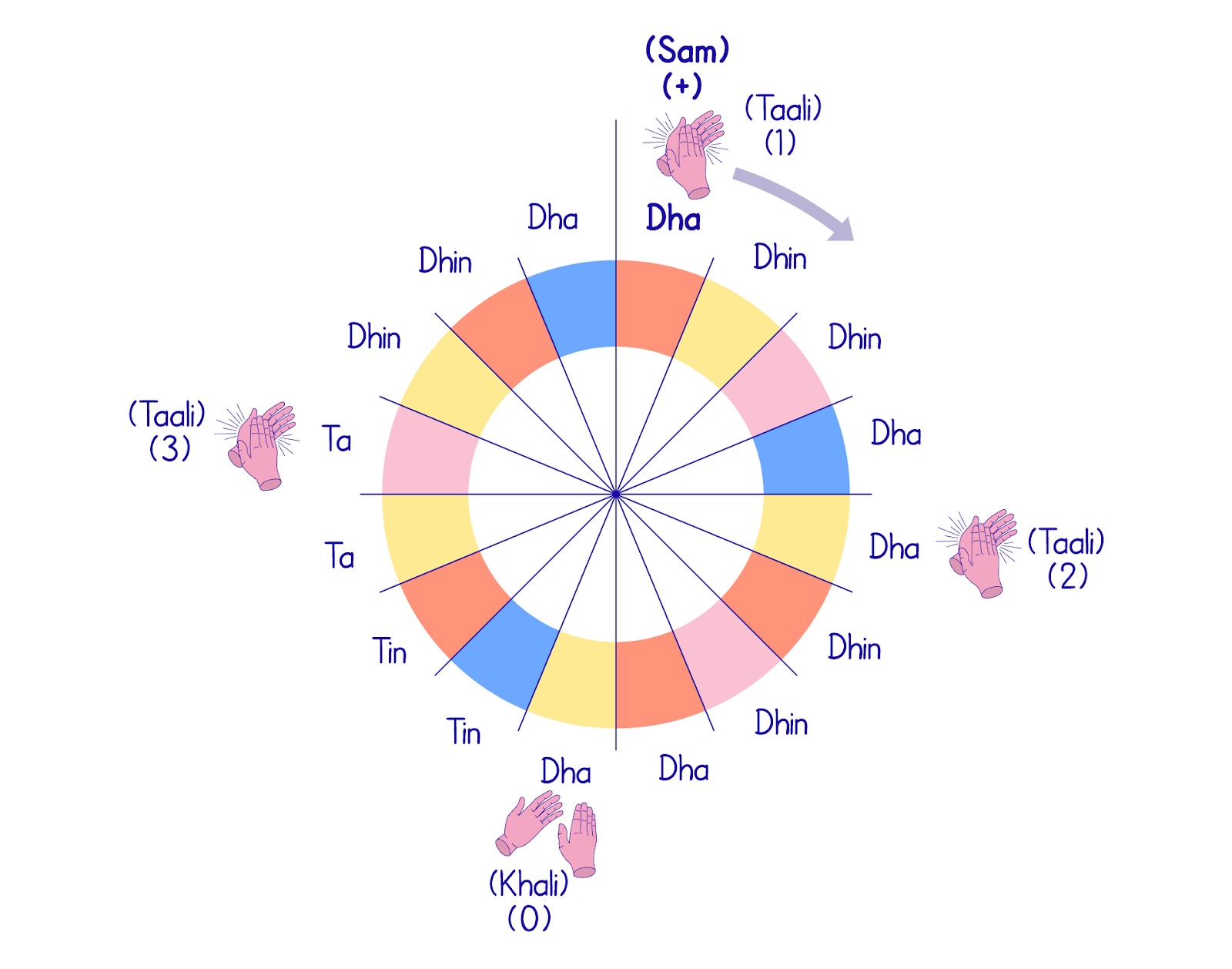
A tala is a rhythmic cycle consisting of a fixed number of beats arranged in a specific pattern. Unlike Western time signatures, Carnatic music talas are cyclical, meaning they repeat continuously throughout a composition.
Each tala is defined by:
The number of beats in a cycle
The grouping of beats into sections
Hand gestures used to mark beats
A consistent tempo that guides performance
Understanding these elements allows musicians to stay aligned with the rhythm, even during complex improvisations.
Basic Components of Carnatic Music Talas
Before diving into advanced rhythms, learners must understand the fundamental building blocks of talas.
Angas: The Sections of a Tala
Each tala is divided into smaller units called angas. These sections organize the beats and give structure to the rhythmic cycle.
The primary angas include:
Laghu, a beat followed by finger counts
Drutam, a beat followed by a wave
Anudrutam, a single beat
Different combinations of these angas form various Carnatic music talas.
The Tala System and Its Classification
Carnatic music uses a systematic framework to classify talas. This structured approach helps musicians understand and learn rhythm logically.
The Suladi Sapta Tala System
The foundation of Carnatic rhythm is the Suladi Sapta Tala system, which includes seven core talas:
Each of these talas can be performed in different beat counts, creating a wide variety of rhythmic possibilities.

Common Carnatic Music Talas Every Learner Should Know
Certain talas appear frequently in compositions and performances, making them essential for beginners and intermediate learners.
Adi Tala: The Most Widely Used Rhythm
Adi Tala consists of eight beats and is the most commonly used tala in Carnatic music. Its balanced structure makes it ideal for learning rhythm and composition structure.
It is commonly used in:
Beginner lessons
Kriti compositions
Concert performances
Rupaka Tala: Simple Yet Expressive
Rupaka Tala usually consists of three or six beats depending on interpretation. Its lighter feel allows expressive melodic phrasing.
Misra Chapu: A Popular Folk-Influenced Rhythm
Misra Chapu has seven beats and creates a flowing, asymmetrical feel. It is widely used in devotional and semi-classical compositions.
How Rhythm Is Marked in Carnatic Music
Unlike written notation alone, Carnatic rhythm is traditionally taught through physical movement and vocal syllables.
Hand Gestures and Tala Keeping
Performers mark talas using hand movements that represent each beat. This physical connection strengthens rhythmic awareness and timing accuracy.
Sollukattu and Vocal Rhythm Training
Rhythmic syllables known as sollukattu help musicians internalize beats. These syllables train the mind to recognize rhythmic patterns even without instruments.
Role of Percussion in Carnatic Music Talas
Percussion instruments play a central role in reinforcing rhythm and guiding performances.
Mridangam: The Rhythmic Backbone
The mridangam is the primary percussion instrument in Carnatic music. It outlines tala structure while adding rhythmic creativity.
Other percussion instruments include:
Ghatam
Kanjira
Morsing
Together, they enrich the rhythmic texture of a performance.
Rhythm and Improvisation in Carnatic Music
Improvisation in Carnatic music requires strong rhythmic control. Even spontaneous creativity follows tala discipline.
Improvisational forms that rely heavily on rhythm include:
Kalpana swaras
Tanam
Tani avartanam
In each form, mastery of Carnatic music talas ensures that improvisation remains structured and musically meaningful.
Challenges Beginners Face
Many learners struggle with rhythm initially because it mands coordination, counting, and consistency.
Common challenges include:
Losing track of beat cycles
Difficulty maintaining tempo
Confusion during complex tala transitions
Weak coordination between melody and rhythm
These challenges are natural and can be overcome with guided practice.
Practical Tips to Master Carnatic Music Talas
Developing rhythmic confidence takes time and consistency. The following strategies help learners progress steadily.
Practice techniques include:
Keeping tala while listening to compositions
Practicing slow tempos before increasing speed
Vocalizing rhythmic syllables daily
Clapping and counting without instruments
Practicing with a metronome or rhythm app
Structured learning accelerates this process significantly.
Learning Carnatic Rhythm in the Modern Era
Traditional tala training has adapted to modern tools without losing its essence. Today’s learners benefit from:
Online rhythm exercises
Video demonstrations
Interactive tala visualizations
Guided lessons with structured progression
Platforms like The Mystic Keys integrate traditional rhythm concepts with modern teaching methods, making Carnatic rhythm more accessible without compromising authenticity.
Advanced Understanding
As musicians progress, rhythm becomes more layered and expressive. Advanced concepts include:
Nadai variations within a tala
Cross-rhythms and rhythmic modulation
Complex korvais and rhythmic patterns
Mathematical precision blended with musical expression
At this stage, rhythm becomes both intellectual and intuitive.
Why Rhythm Defines Musical Maturity
True musical growth is reflected in rhythmic control. A musician with strong tala understanding:
Performs confidently in ensembles
Improvises without losing structure
Communicates effectively with accompanists
Maintains consistency across performances
Carnatic music talas are not just technical tools; they are markers of musical maturity.
Conclusion: Mastering the Heartbeat of Carnatic Music
Rhythm is the heartbeat of Carnatic music, and talas provide its pulse. From simple beat cycles to intricate rhythmic patterns, mastering Carnatic music talas deepens musical understanding and performance confidence. With patience, discipline, and the right guidance, rhythm transforms from a challenge into a powerful form of expression.
For learners seeking structured rhythm training alongside melodic development, Carnatic Lessons Online can support your journey while preserving the depth and discipline of Carnatic music traditions.
For more information and exciting resources about learning music, visit our website at The Mystic Keys. For more music content and exciting offers follow us on
Facebook, Instagram, YouTube, LinkedIn, Twitter, Pinterest, and Threads.