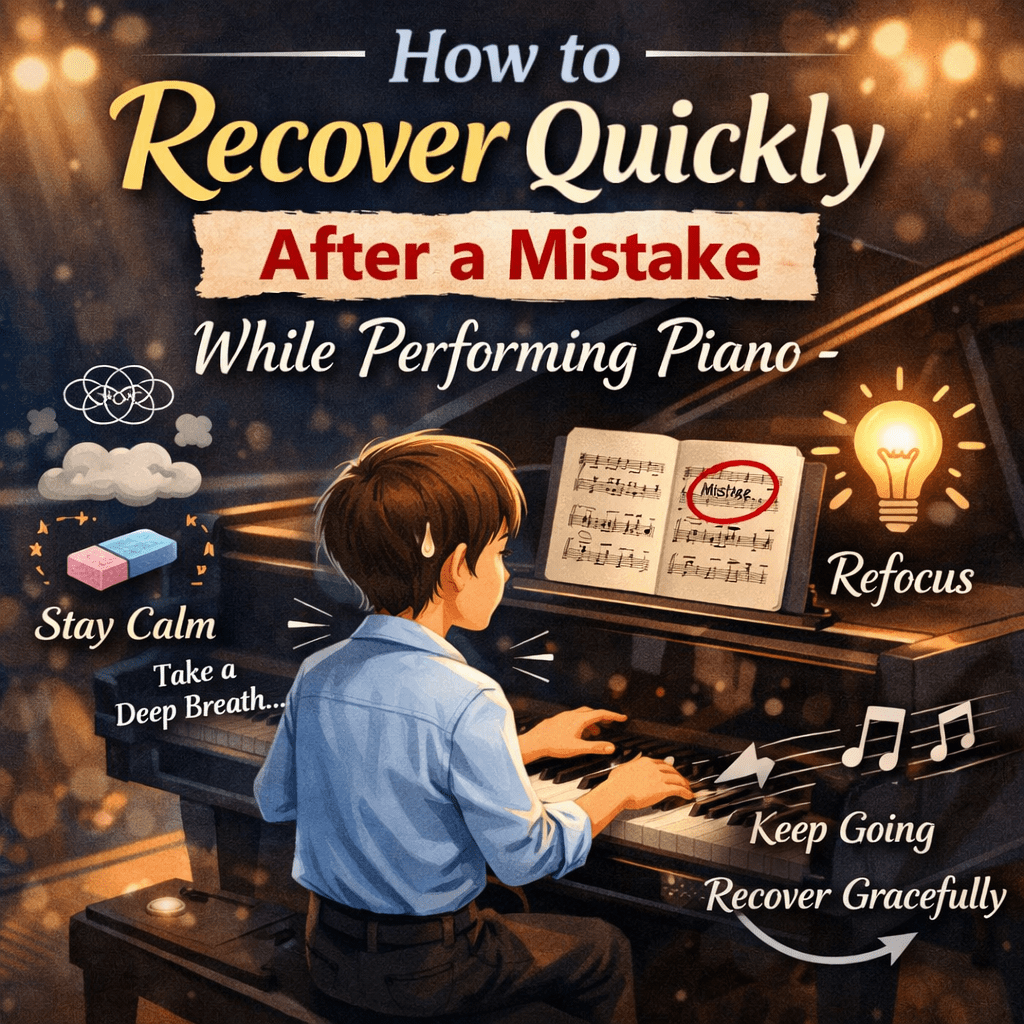
How to Recover Quickly After a Mistake While Performing Piano
Live piano performances can be exciting, emotional, and sometimes unpredictable. Even the most experienced pianists occasionally hit the wrong note, lose their place in the music, or miss a chord. What truly separates confident performers from beginners is how they recover quickly after a mistake while performing piano. Mistakes during a performance are completely normal. In fact, even professional musicians make small errors during concerts. The key is not perfection, but the ability to continue playing smoothly without interrupting the musical flow. Learning how to Recover From Piano Mistakes quickly after a mistake while performing piano helps musicians maintain confidence, keep the audience engaged, and deliver a powerful performance despite minor slips.
In this guide, we will explore practical strategies, mental techniques, and practice methods that will help pianists recover quickly and continue performing with confidence.
Why Mistakes Happen During Piano Performances
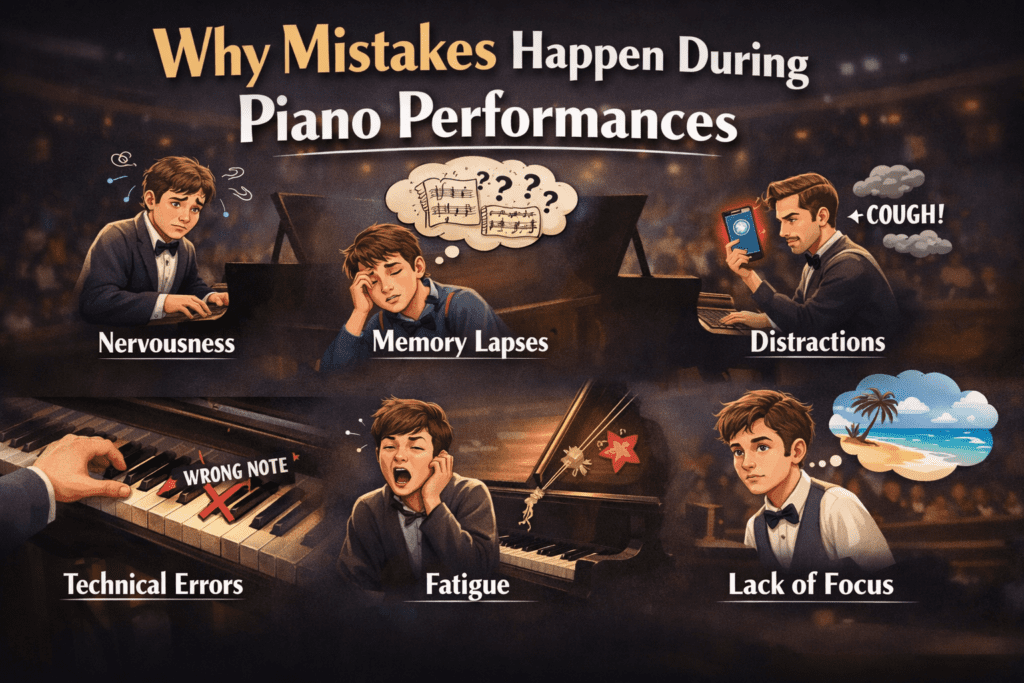
Before learning how to Recover From Piano Mistakes during a live performance, it is important to understand why mistakes happen in the first place. Mistakes are not always caused by poor practice. Many factors can influence a pianist during a performance.
Performance Anxiety
Stage fright is one of the most common causes of mistakes. When performing in front of an audience, adrenaline levels increase, which can affect concentration and muscle coordination.
Even well-prepared musicians may experience:
Learning to stay calm under pressure is an important step for musicians who want to Recover From Piano Mistakes confidently during a performance.
Overthinking During Performance
Many pianists practice a piece repeatedly until it becomes natural. However, during a performance, they sometimes begin overanalyzing every note.
This interrupts muscle memory and can lead to hesitation or mistakes.
Instead of overthinking, performers should trust their preparation and allow their hands to move naturally. Developing confidence in your practice makes it easier to Recover From Piano Mistakes and continue playing smoothly.
Lack of Performance Experience
Practicing in a quiet room is very different from performing in front of people. Without experience performing for others, musicians may feel uncomfortable when the spotlight is on them.
Regular performance practice builds confidence and helps pianists stay calm and Recover From Piano Mistakes without disrupting the flow of the music.
Temporary Loss of Focus
Sometimes mistakes happen simply because of a brief distraction. A small noise, a sudden thought, or a momentary lapse in attention can cause a pianist to miss a note.
The key is not to panic but to quickly Recover From Piano Mistakes and continue playing with confidence so the performance remains smooth and enjoyable for the audience.
The Golden Rule: Never Stop Playing

The most important rule when learning how to recover quickly after a mistake while performing piano is simple:
Never stop the music.
Stopping in the middle of a piece draws attention to the mistake and breaks the emotional flow of the performance.
Instead:
Most audience members do not know the exact notes of the piece. If you continue confidently, they may never even notice the mistake.
Professional performers often follow this principle because maintaining the musical flow is more important than correcting every single note.
Focus on Rhythm Instead of Individual Notes
When a mistake occurs, many pianists panic and try to fix the wrong note immediately. This often creates more problems.
A better strategy is to focus on maintaining the rhythm.
Rhythm is the backbone of music. If the rhythm continues smoothly, the performance still feels natural and controlled.
Here are some helpful techniques:
Keep counting internally
Continue playing the chord progression
Rejoin the melody at the next opportunity
Even if a few notes are incorrect, a steady rhythm keeps the music sounding intentional.
Skip Ahead to the Next Musical Section

Another useful recovery technique is jumping ahead to the next recognisable section.
If you lose your place in the music, instead of trying to replay the missed notes, move forward to the next phrase or chord change.
This technique works especially well when you:
Understand the structure of the piece
Recognize chord progressions
Memorize important sections of the music
Professional musicians often rely on structural awareness to navigate through mistakes smoothly.
Develop Strong Muscle Memory
Muscle memory is one of the most powerful tools for pianists. After practicing a piece many times, your fingers begin to remember the movement patterns automatically.
However, when a mistake occurs, some performers start thinking too much, which interrupts this natural process.
Instead of panicking:
Trust your muscle memory
Allow your fingers to continue moving
Avoid stopping to analyze the mistake
Strong muscle memory helps you recover quickly and maintain musical flow.
Maintain Confidence to Recover From Piano Mistakes During Performance
Another important part of recovering quickly after a mistake while playing the piano is maintaining a confident appearance on stage.
Your body language communicates a lot to the audience. If you visibly react to a mistake, people will notice.
To maintain confidence:
Keep your posture relaxed
Continue playing naturally
Avoid facial expressions that show frustration
Focus on the music instead of the mistake
Many professional musicians make small mistakes during concerts, but their calm stage presence prevents the audience from noticing.
Practice Regularly to Recover From Piano Mistakes Faster

One of the best ways to prepare for mistakes is to practice recovering from them during your regular practice sessions.
Instead of stopping every time you make a mistake, train yourself to continue playing.
Here are some useful exercises:
Practice Starting From Different Sections
Start playing from random points in the piece instead of always beginning from the start.
This improves your ability to jump back into the music quickly.
Simulate Performance Conditions
Try playing your piece:
In front of friends or family
While recording yourself
Without stopping, even if mistakes happen
This builds performance confidence.
Practice Without Stopping
During some practice sessions, set a rule: no stopping allowed.
Even if mistakes occur, continue playing until the end of the piece.
This develops mental resilience for live performances.
Strengthen Your Musical Understanding to Recover From Piano Mistakes
Understanding the structure of a piece can make recovery much easier.
Instead of memorizing only individual notes, try learning:
Chord progressions
Musical phrases
Repeating patterns
Key changes
When you understand how the music is built, it becomes easier to find your place again after a mistake.
Train Your Mind to Recover From Piano Mistakes Without Panic

One of the biggest obstacles for performers is the fear of making mistakes. This fear can actually increase the likelihood of errors.
It is important to remember that music is an expressive art form, not a technical exam.
Even world-class performers make small mistakes during concerts.
Instead of aiming for absolute perfection, focus on:
Musical expression
Emotional connection with the audience
Communicating the music effectively
Accepting imperfections helps you stay relaxed and recover more quickly.
Build Confidence to Recover From Piano Mistakes Naturally

Confidence grows with experience. The more often you perform, the more comfortable you will become handling unexpected situations.
Some ways to gain experience include:
Performing at small events
Participating in recitals
Playing for friends and family
Recording and sharing performances online
Each performance builds confidence and improves your ability to recover quickly from mistakes.
Final Thoughts
Learning how to recover quickly after a mistake while performing piano is an essential skill for every pianist. Mistakes are a natural part of live music, but they do not have to ruin your performance. By staying calm, maintaining rhythm, trusting your practice, and continuing confidently, you can keep the music flowing even when small errors occur.
The audience remembers the overall musical experience, not a single wrong note. With regular practice, guidance, and the right mindset, you can learn to handle mistakes gracefully and deliver memorable piano performances every time. If you want structured guidance and professional training, you can also learn piano online with The Mystic Keys, where experienced teachers help students build confidence, improve performance skills, and develop strong musical techniques from the comfort of home.
For more information and exciting resources about learning music, visit our website at The Mystic Keys. For more music content and exciting offers follow us on
Facebook, Instagram, YouTube, LinkedIn, Twitter, Pinterest, and Threads.