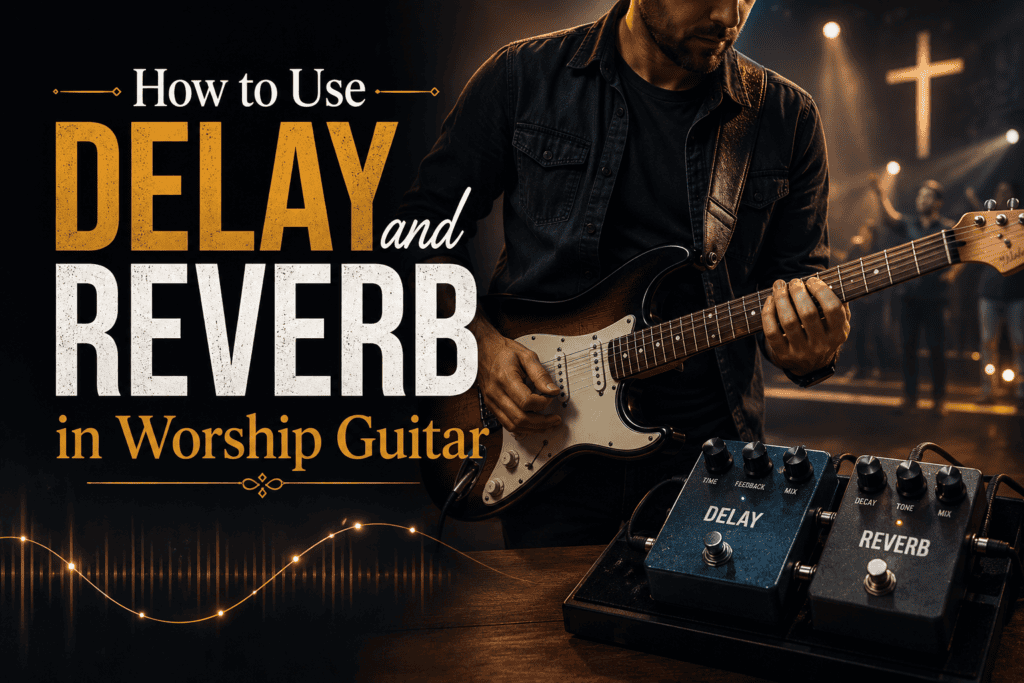
How to Use Delay and Reverb in Worship Guitar
Worship guitar is not simply about playing the right chords at the right time. The sound surrounding those chords can completely change the atmosphere of a song. Two of the most important tools for creating that atmosphere are delay and reverb. When used carefully, these effects can turn a simple guitar part into something spacious, emotional, and supportive. Understanding worship guitar effects helps guitarists create a sound that complements the worship team without overwhelming the rest of the arrangement.
Delay and reverb are particularly useful in worship because they can create space around the guitar. A clean chord played without effects may sound direct and dry, while the same chord with carefully controlled ambience can feel wider and more immersive. However, using more effects does not automatically create a better sound. The goal is to understand what each effect does and learn when to use it.
Whether you are playing acoustic worship, contemporary Christian music, or modern church music with an electric guitar, learning how to control delay and reverb can significantly improve your playing and your ability to support a worship environment.
Understanding Worship Guitar Effects
Before adjusting pedals or digital effects, it is important to understand the difference between delay and reverb.
Reverb creates the impression that your guitar is being played inside a physical space. It produces reflections that continue briefly after you play a note or chord.
Delay creates distinct repetitions of the original sound. Depending on the settings, you may hear one clear repeat or a long series of echoes.
Although both effects create space, they do so in very different ways.
What Reverb Does
Reverb can make a guitar sound like it is being played in a room, hall, church, or large performance space. It adds depth and helps prevent a clean guitar tone from sounding too dry.
What Delay Does
Delay repeats what you play after a selected amount of time. The repeats can be subtle and almost invisible, or they can become a major part of the musical arrangement.
Understanding this difference is the first step toward using effects intentionally.
Why Delay and Reverb Work So Well in Worship
Worship arrangements often leave space between musical parts. Instead of filling every moment with notes, guitarists may play sustained chords, repeated patterns, melodic lines, or atmospheric textures.
Delay and reverb allow those sounds to continue naturally after the guitarist has stopped playing.
This creates a sense of movement without requiring the guitarist to play constantly.
Creating Space Without Overplaying
One of the most useful qualities of these effects is that they allow a guitarist to sound present without taking up too much musical space. A few carefully chosen notes can become part of the overall atmosphere.
This is especially valuable during quieter sections where excessive playing could distract from vocals or other instruments.
Choosing the Right Reverb for Worship Guitar
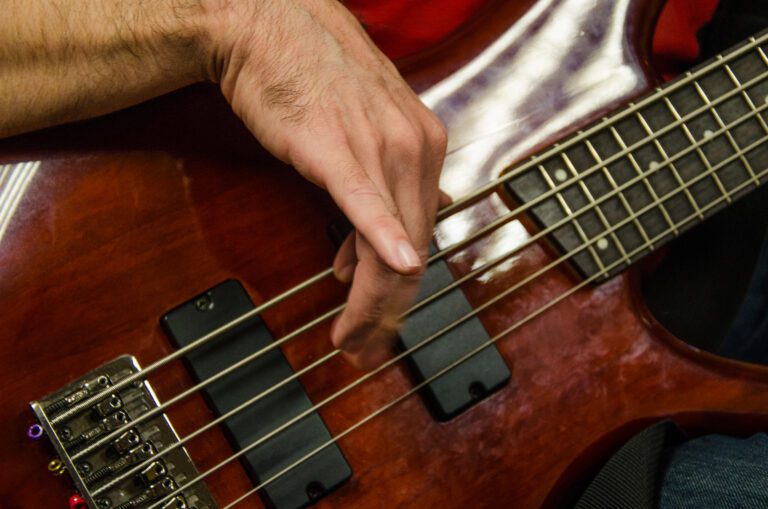
Not every type of reverb produces the same result. Different reverb styles create different impressions of space.
Common types include:
- Room
- Hall
- Plate
- Spring
- Shimmer
- Ambient or modulated reverb
For worship guitar, hall and ambient-style reverbs are often useful when a large, spacious sound is desired. Room reverb can work well when you want something more natural and controlled.
Start with a Moderate Reverb
A common mistake is adding too much reverb because the sound feels impressive when playing alone.
However, a guitar that sounds beautiful by itself may become unclear once the full band begins playing.
Start with a moderate amount and listen to the guitar within the complete arrangement.
Understanding Reverb Decay

Decay determines how long the reverb continues after the original note has been played.
A short decay creates a subtle sense of space, while a longer decay creates a larger and more atmospheric sound.
For rhythmic worship guitar parts, shorter or moderate decay can help maintain clarity. Longer decay can work beautifully during instrumental sections, introductions, prayer moments, or slower worship passages.
Match Decay to the Song
The right decay depends on the tempo and arrangement.
A long reverb tail can sound beautiful during a slow song but may become messy when used with fast rhythmic playing.
Using Reverb for Different Worship Sections
A worship song rarely stays at the same intensity from beginning to end.
The guitar may need to sound different during an intimate verse, a building pre-chorus, and a powerful final chorus.
During quieter sections, a wider and softer reverb can help create intimacy.
During larger sections, slightly more presence and controlled ambience can help the guitar blend with the full band.
Dynamics Should Influence Your Effects
Instead of using exactly the same effect settings throughout an entire service, learn to think about how the guitar needs to function in each section.
The effects should serve the music rather than become the focus of attention.
Understanding Delay in Worship Guitar
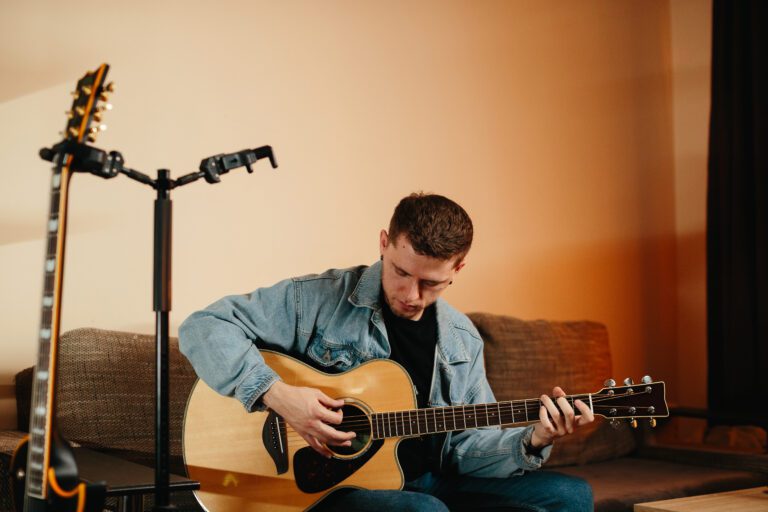
Delay is one of the most recognizable effects in modern worship guitar.
A guitarist can play a simple melody while the delay creates rhythmic repetitions underneath it. This makes the guitar sound fuller without requiring additional notes.
Delay can be used for:
- Repeating chord patterns
- Melodic lines
- Swells
- Introductory textures
- Sustained notes
- Rhythmic patterns
- Atmospheric transitions
The key is controlling the timing and number of repeats.
Choosing Delay Time
Delay time determines how long it takes before the repeated sound appears.
Short delays can create thickness and subtle depth.
Medium delays can create noticeable rhythmic repetitions.
Long delays can produce spacious, atmospheric textures.
Match Delay to the Tempo
Delay becomes particularly effective when its timing works with the tempo of the song.
Many modern delay units allow musicians to synchronize the delay to the song’s tempo, making the repetitions feel naturally connected to the rhythm.
Instead of hearing random echoes, the listener experiences a musical pattern.
Understanding Delay Feedback
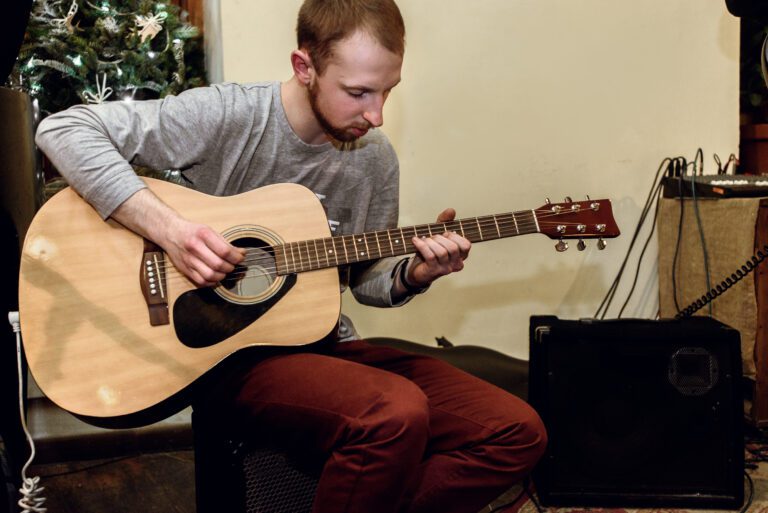
Feedback controls how many times the delayed signal repeats.
Low feedback produces only a small number of repeats.
Higher feedback creates a longer series of echoes.
For most worship situations, it is useful to begin with moderate feedback and increase it only when the arrangement requires a more atmospheric sound.
Too Much Feedback Creates Clutter
When too many repeats overlap with one another, the guitar can lose definition. This becomes especially problematic when several instruments are already occupying the same frequency range.
The goal is not to create as many echoes as possible. The goal is to create the right amount of movement.
Using Delay for Rhythmic Guitar Parts
Delay can become part of the rhythm rather than simply an additional effect.
For example, a guitarist can play a simple repeated pattern and allow the delay to create additional rhythmic movement.
This technique can make a basic guitar part sound much more complex.
Leave Space for the Delay
When using rhythmic delay, avoid filling every space with additional playing.
Let the effect complete the musical phrase.
This approach creates a cleaner and more professional sound.
Combining Delay and Reverb
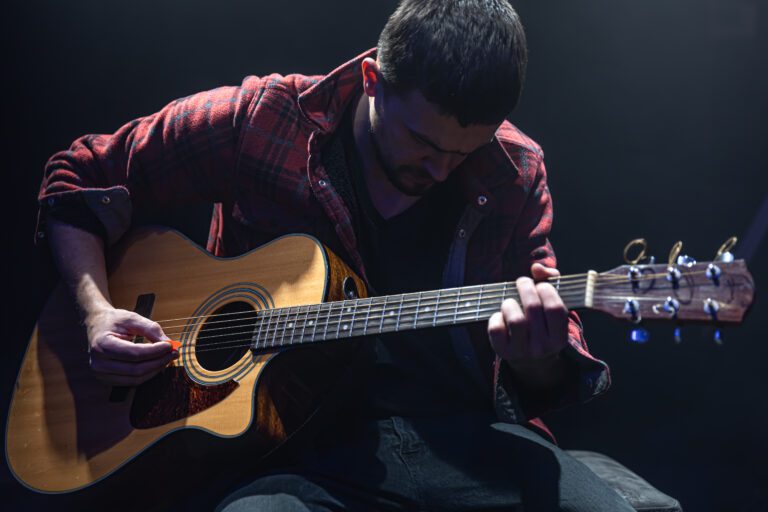
Delay and reverb are often used together, but they should not compete with each other.
A useful approach is to think of delay as creating movement and reverb as creating space.
The delay provides the repeated notes, while the reverb places those sounds into a larger environment.
Create Depth Without Losing Clarity
If both effects are set too strongly, the guitar can become washed out.
Start with subtle settings and gradually increase them while listening to the entire band.
The ideal combination should make the guitar feel larger without making individual notes disappear.
Using Effects in Quiet Worship Moments
Effects can be particularly powerful during intimate sections.
Instead of playing full chords continuously, a guitarist might use single notes, harmonics, volume swells, or lightly picked patterns.
A gentle reverb combined with a subtle delay can allow these sounds to float around the vocal.
Simplicity Makes Effects More Effective
The fewer notes you play, the more noticeable each note becomes.
This is why restraint is such an important part of atmospheric worship guitar.
Using Effects During Builds and Climaxes
As a worship song becomes more intense, the guitar arrangement often changes.
The guitarist may move from sparse textures to stronger chords, melodic phrases, or rhythmic patterns.
At this point, effects should continue supporting the arrangement without making the sound excessively large.
A powerful guitar tone does not necessarily require maximum reverb and delay.
Let the Band Create the Bigger Sound
When drums, bass, keyboards, vocals, and multiple guitars enter the arrangement, the overall sound naturally becomes larger.
Your effects should adapt to that change rather than competing with it.
Common Mistakes with Worship Guitar Effects
One of the most common mistakes is using too much of everything.
Too much reverb can make chords sound unclear.
Too much delay can create distracting repetitions.
Too much volume can overpower the vocals.
Too many effects can make the guitar lose its natural character.
Other common problems include changing settings constantly, failing to listen to the full band, and choosing effects based only on how they sound when practicing alone.
Always Listen in Context
An effect should be judged within the complete arrangement.
What sounds subtle through headphones may become overwhelming through a large church sound system.
How to Practice Worship Guitar Effects

Learning effects should be part of your regular guitar practice rather than something you only experiment with before a performance.
Choose a familiar worship song and practice the same part with different settings.
Try:
- Dry guitar
- Light reverb
- Moderate reverb
- Short delay
- Long delay
- Delay and reverb together
Listen carefully to how each change affects the musical
atmosphere.
Record Your Practice
Recording yourself is particularly useful because effects can sound different from the player’s perspective compared with the audience’s perspective.
Listen back and ask whether the guitar supports the song or simply becomes more noticeable.
Developing Your Own Worship Guitar Sound
There is no single perfect worship guitar tone.
Different guitarists use different combinations of pedals, amplifiers, digital processors, guitars, pickups, and effects.
Your sound should ultimately support your playing style and the worship environment in which you perform.
Build Your Sound Gradually
Start with a good clean or slightly driven guitar tone before adding effects.
A strong basic tone makes delay and reverb much easier to control.
Effects should enhance a good guitar sound rather than compensate for a weak one.
Listening Is More Important Than Your Pedalboard
A guitarist can own expensive effects and still struggle to create a musical worship tone.
The most important skill is learning to listen.
Listen to the worship leader.
Listen to the drummer.
Listen to the bass.
Listen to the other guitarists.
Listen to the room.
Then decide what the guitar needs to contribute.
Serve the Song First
The purpose of worship guitar is not to demonstrate how many effects you can use.
Your role is to support the song, the worship leader, and the congregation.
When your playing serves those goals, even a simple guitar tone can be powerful.
Conclusion
Learning how to use delay and reverb effectively can transform the way a guitarist approaches worship music. Reverb creates depth and atmosphere, while delay adds movement, repetition, and rhythmic texture. When these effects are used thoughtfully, they can turn simple guitar parts into expressive musical layers without overwhelming the rest of the worship team.
The key is balance. Start with simple settings, learn how each effect behaves, practice with a metronome and backing tracks, and most importantly, listen to the complete arrangement. The best worship guitar effects are not necessarily the loudest or most complicated ones. They are the effects that help the guitar occupy the right space at the right moment.
At The Mystic Keys, our personalized Worship Guitar Lessons Online help students develop rhythm, chord knowledge, musical sensitivity, effects control, improvisation, and confident worship accompaniment. With one-on-one guidance from experienced instructors, you can learn not only how to play guitar, but how to use your sound intentionally to support every worship moment.
For more information and exciting resources about learning music, visit our website at The Mystic Keys. For more music content and exciting offers follow us on
Facebook, Instagram, YouTube, LinkedIn, Twitter, Pinterest, and Threads.