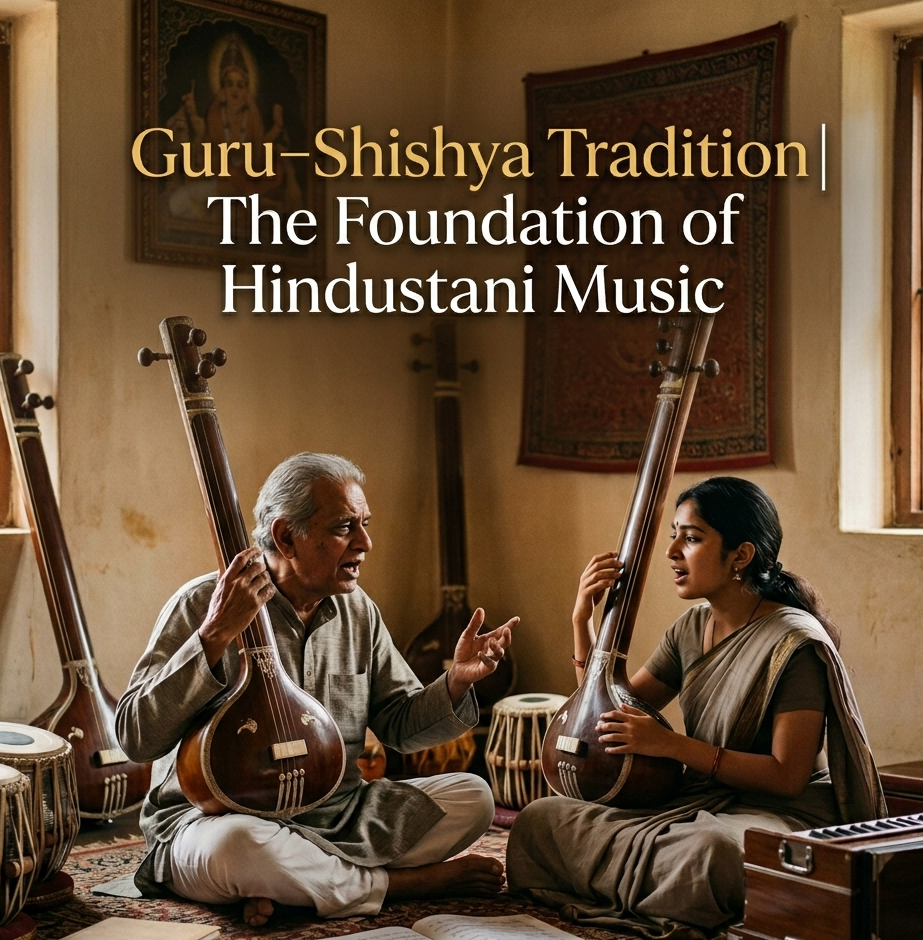
Guru Shishya Tradition | The Foundation of Hindustani Music
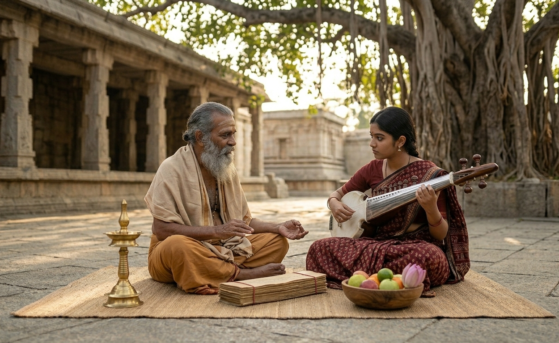
Hindustani music stands not merely as a performing art but as a living, breathing tradition shaped by centuries of devotion, discipline, and deep human connection. At the core of its growth and continuity lies the Guru Shishya tradition, an age-old system of learning in which gurus pass musical knowledge, values, and artistic sensibilities directly to their disciples through close personal guidance. Unlike modern institutional methods, this tradition extends far beyond structured lessons and fixed syllabi, fostering a bond rooted in trust, discipline, and surrender. As the learning deepens over time, the relationship gradually evolves into a shared journey where the guru not only teaches music but also shapes the disciple’s artistic vision and character. In this process, technique merges with temperament, and skill connects with soul, making music a lived experience rather than just a practiced art.
For this reason, understanding the Guru–Shishya tradition becomes essential to understanding the emotional depth and individuality of Hindustani music itself. More than simply mastering ragas or perfecting rhythm, this journey guides the disciple toward internalizing music as a way of life, where learning transforms into living and practice transforms into expression.
The Guru Shishya Tradition as the Core of Musical Learning
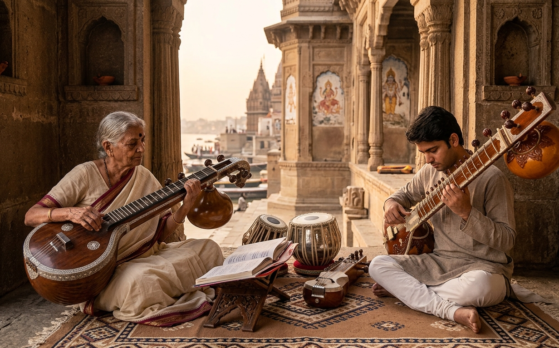
The Guru–Shishya tradition thrives on trust, surrender, and mutual respect. A guru does far more than teach lessons; they guide, nurture, and shape both the artistic and personal growth of the student. At the same time, the shishya embraces the learning process with humility and patience, often dedicating years—or even decades—to mastering the subtle nuances of the art.
This relationship extends far beyond simple instruction. By spending time with the guru, the student observes not only musical techniques but also the guru’s way of thinking, emotional depth, and philosophical understanding. Through this continuous interaction, the student gradually absorbs these qualities, allowing the music to become an inseparable part of their identity while developing a unique artistic voice.
In this way, the Guru–Shishya tradition preserves musical heritage without allowing it to become stagnant. Each generation carries forward the foundation it inherits, while also shaping and enriching the art through its own lived experiences.
Guru Shishya Tradition and the Oral Transmission of Knowledge
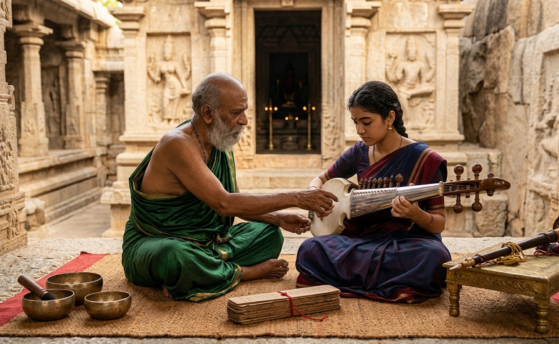
One of the defining features of Hindustani music training within the Guru–Shishya tradition is its oral method of learning. Instead of depending heavily on written notation, the guru passes on knowledge through singing, demonstration, and repetition, while the shishya absorbs it through attentive listening and imitation. Through this process, the student captures the sound, understands the microtones, and learns the subtle ornamentations that written notation often fails to convey.
This method demands focused practice and active participation in every lesson. Over time, the student sharpens the ear. The learner also develops a natural understanding of musical structure. Instead of memorizing compositions, the student begins to feel the music deeply. Gradually, responding to music becomes natural and effortless.
As training continues, learning becomes more immersive. Every rehearsal contributes to the student’s growth. Informal musical moments also add valuable lessons. Slowly, music moves beyond practice sessions. It becomes an essential part of daily life.
Guru–Shishya Tradition and the Cultivation of Discipline
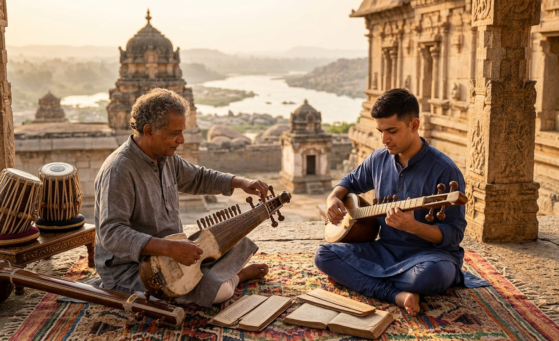
The Guru–Shishya tradition places strong emphasis on discipline. Progress is rarely immediate, and quick results are neither expected nor encouraged. Students often spend years perfecting basic elements before moving on to complex improvisations.
Such a process cultivates patience and resilience. Challenges are inevitable, yet they are treated as essential steps rather than obstacles. Emotional maturity develops alongside technical skill, allowing the artist to express deeper layers of feeling through music.
This gradual unfolding also teaches the value of perseverance. In a world that often prioritizes speed and instant gratification, the tradition stands as a reminder that true mastery requires time and dedication.
Guru Shishya Tradition in Preserving Gharanas
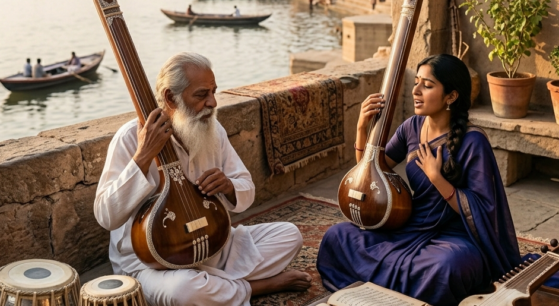
Hindustani music is rich with diverse styles known as gharanas—distinct lineages that carry specific aesthetic principles and techniques. The Guru–Shishya system plays a crucial role in preserving these identities. Through close mentorship, the subtle characteristics of each gharana are passed down with authenticity.
However, preservation does not mean rigidity. As students evolve, they bring their own sensibilities into the tradition. Innovation arises naturally, rooted in a strong foundation. In this way, the music remains dynamic while honoring its heritage.
The balance between continuity and creativity is what keeps Hindustani music vibrant across generations.
Guru Shishya Tradition Beyond Musical Training
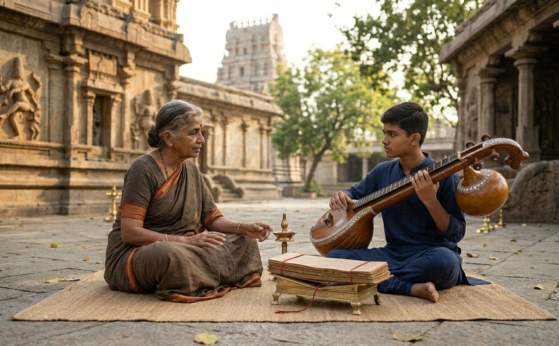
Learning under a guru goes beyond formal instruction. Students absorb the teacher’s values and worldview, making the journey deeply personal and transformative. The guru nurtures respect, ethics, and humility alongside musical skill.
This holistic approach shapes not just musicians but thoughtful individuals. These lessons influence how students listen, think, and engage with the world. Music, in turn, becomes a path to self-discovery and inner growth.
Traditional classrooms often lack this depth, as limited interaction and fixed time cannot fully recreate such immersive learning.
The Evolution of the Guru Shishya Tradition in Modern Times
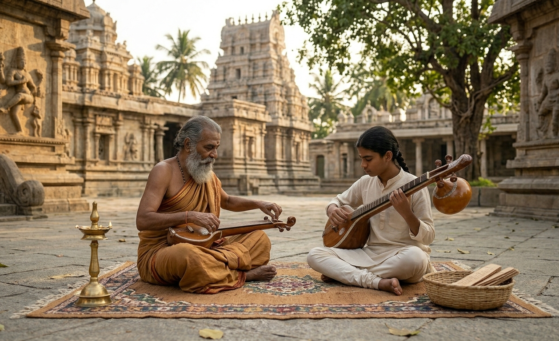
While the traditional model remains revered, it has adapted to modern realities. Institutional learning, online platforms, and global exposure have reshaped music education, yet the essence of the Guru–Shishya relationship endures.
Many artists now blend structured learning with personalized mentorship. Technology increases access, while core values—dedication, respect, and close guidance—remain intact. The real challenge is preserving authenticity alongside accessibility.
Encouragingly, the tradition remains resilient. It evolves without losing its soul, finding new expression in a changing world.
Conclusion | The Timeless Relevance of the Guru–Shishya Tradition
The Guru–Shishya tradition is more than a method of teaching; it is the foundation upon which Hindustani music stands. Its strength lies in its ability to nurture not just skill, but sensitivity and depth. Through this enduring bond, music is passed on as a living experience rather than static knowledge, preserving its emotional richness and cultural essence across generations.
Even as times change, the essence of this relationship continues to inspire and adapt to modern forms of learning. Institutions and platforms like The Mystic Keys are carrying forward this timeless legacy by making Hindustani vocal lessons online more accessible to learners across the world, while still upholding the values of personalized guidance and dedicated mentorship. In this way, the Guru–Shishya tradition continues to thrive, reminding us that art flourishes most when it is shared with sincerity, shaped through connection, and sustained by devotion.
For more information and exciting resources about learning music, visit our website at The Mystic Keys. For more music content and exciting offers follow us on
Facebook, Instagram, YouTube, LinkedIn, Twitter, Pinterest, and Threads.