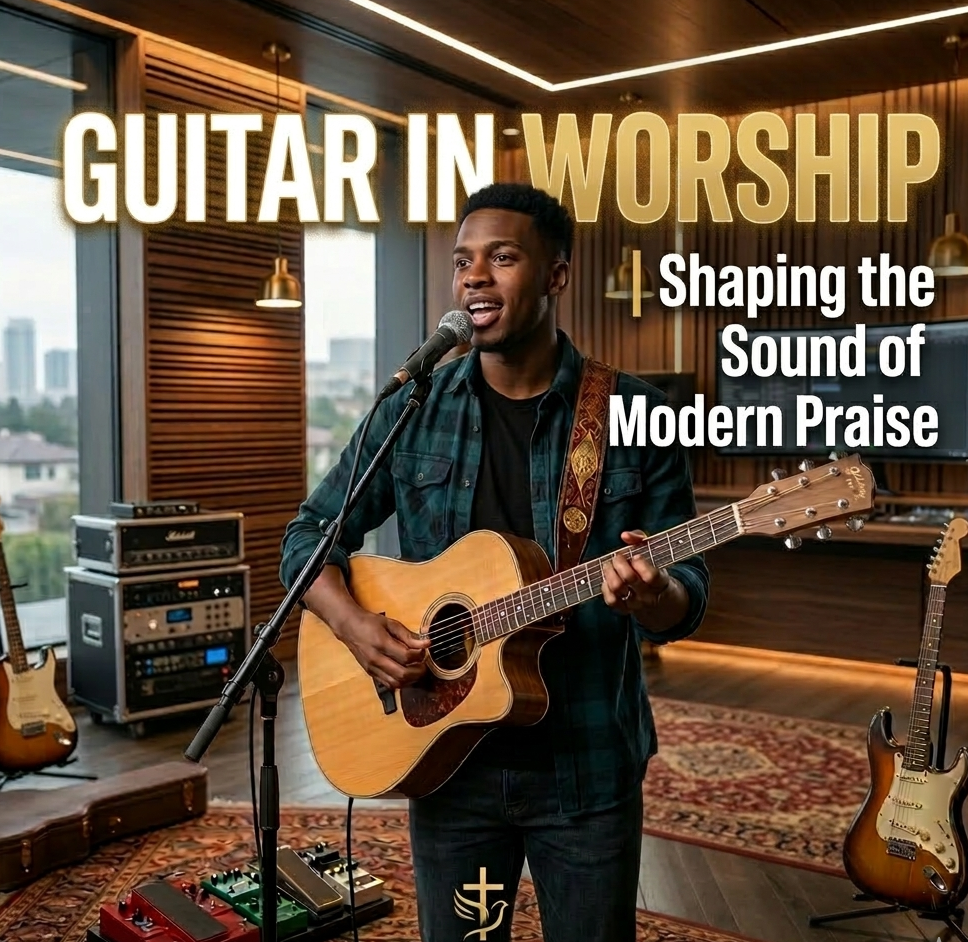
Guitar in Worship | Shaping the Sound of Modern Praise
Music has always stood at the heart of worship, bridging the human spirit with the divine. Over time, worship communities have actively reshaped their soundscape, embracing cultural shifts, technological advances, and evolving expressions of faith. In this dynamic journey, Guitar in Worship has taken a central role, actively shaping how modern praise is created and experienced. Musicians have brought the guitar to the forefront, establishing it as one of the most influential instruments in contemporary worship. Its transformation from a casual, portable instrument into a defining voice of modern praise continues to inspire and resonate deeply.
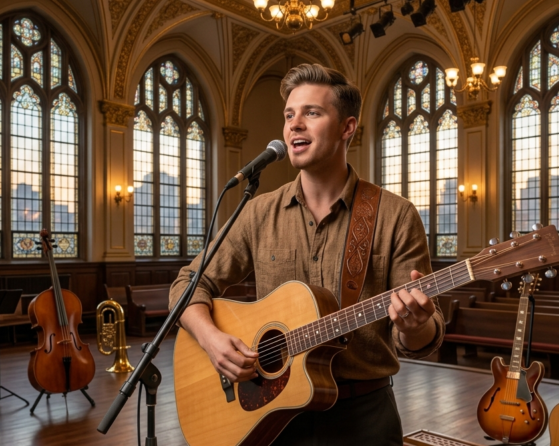
The Humble Entry of the Guitar into Worship
Not too long ago, worship music in many traditions was defined by organs, choirs, and classical arrangements. The atmosphere was often formal, structured, and rooted in long-standing liturgical practices. Then, gradually, the guitar began to appear—first in smaller gatherings, youth groups, and informal prayer meetings.
This shift didn’t happen overnight. At first, the guitar was seen as unconventional, even out of place in sacred settings. However, its accessibility and versatility made it hard to ignore. Unlike larger instruments, it required minimal setup and could be played almost anywhere. That simplicity allowed more people to participate in leading worship, making music feel less like a performance and more like a shared experience.
As acceptance grew, so did the guitar’s presence. What started as a quiet addition soon became a defining element of contemporary worship.

A Sound That Feels Personal and Intimate
One of the most powerful qualities of the guitar is its ability to create intimacy. Its tones can be soft and reflective or bright and uplifting, adapting effortlessly to the mood of a song. This flexibility allows worship leaders to guide congregations through a wide range of emotions—from quiet surrender to joyful celebration.
The acoustic guitar, in particular, has a way of drawing people in. Its warm, natural sound feels close and personal, almost like a conversation rather than a performance. In moments of prayer or reflection, this quality becomes especially significant. It encourages listeners to engage not just with the music, but with their own thoughts and spiritual journey.
At the same time, the electric guitar adds another dimension. With effects like reverb and delay, it can create expansive, atmospheric textures that elevate the overall sound. These layers help build a sense of awe and wonder, enhancing the collective worship experience.
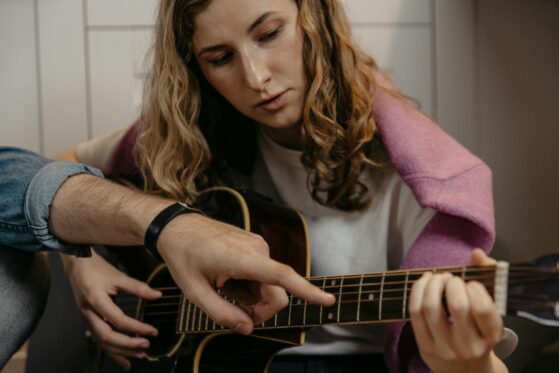
Guitar in Worship | Bridging Tradition and Modern Expression
While the guitar is often associated with modern music, it has also played a key role in connecting traditional worship with contemporary styles. Many classic hymns have been reimagined with guitar arrangements, making them more accessible to younger generations without losing their original message.
This blending of old and new has allowed worship to remain relevant across different age groups. It creates a shared space where tradition is honored, yet innovation is embraced. The guitar, with its adaptability, becomes the perfect instrument for this balance.
Moreover, its presence has encouraged creativity within worship teams. Musicians are no longer limited to rigid formats. Instead, they can experiment with rhythms, dynamics, and arrangements, bringing fresh life to familiar songs.
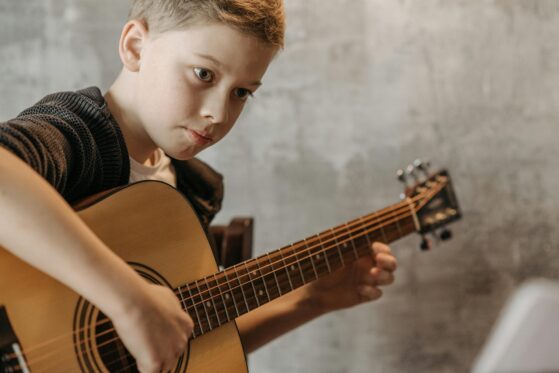
Guitar in Worship | Empowering Participation and Community
Another significant impact of the guitar lies in how it empowers participation. Because it is relatively easy to learn compared to many other instruments, more individuals feel encouraged to pick it up and contribute to worship.
This accessibility fosters a sense of community. Instead of relying on a select few trained musicians, churches and groups can involve a wider range of people. Worship becomes less about perfection and more about collective expression.
In addition, the portability of the guitar allows worship to extend beyond traditional settings. Whether it’s a small home gathering, a retreat, or an outdoor event, the guitar makes it possible to carry music wherever people gather. That mobility reinforces the idea that worship is not confined to a specific place—it can happen anywhere.

The Emotional Journey Through Sound
Music in worship goes beyond melody or lyrics; it actively guides an emotional and spiritual journey. The guitar shapes this journey by using dynamics and progression with intention and purpose.
A simple chord progression sets a reflective tone and invites quiet contemplation. As musicians add layers and build intensity, the music leads the congregation into moments of joy and celebration. The guitar serves as both a foundation and a guide, making each transition feel natural and meaningful.
These shifts create a worship experience that feels alive and engaging. Without them, the music feels static and disconnected. With the guitar driving the flow, the sound carries a constant sense of movement and growth, reflecting the inner journey of faith.
Technology and the Expanding Role of the Guitar
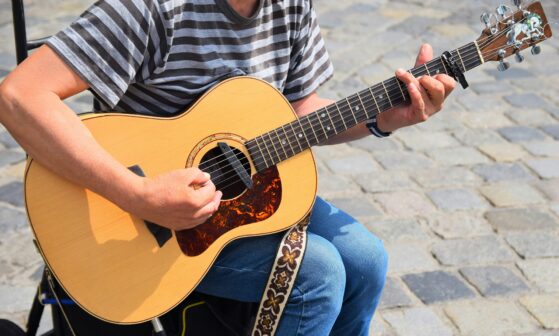
As technology has advanced, so has the role of the guitar in worship. Effects pedals, digital processors, and sound systems have expanded what the instrument can achieve. Today, a single guitarist can produce a wide range of sounds—from ambient textures to powerful leads.
This evolution has transformed the overall sound of modern praise. Worship music now often features rich, layered arrangements that rival professional studio recordings. Yet, despite these advancements, the essence of the guitar remains unchanged. It continues to serve as a tool for expression, connection, and devotion.
Interestingly, technology has also made it easier for musicians to learn and grow. Online tutorials, chord libraries, and virtual collaborations have opened new opportunities for aspiring worship guitarists. As a result, the instrument’s influence continues to spread.
Guitar in Worship | Challenges and Finding the Right Balance
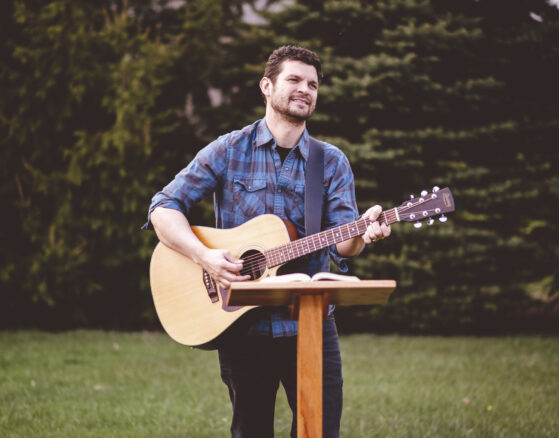
Despite its many strengths, the prominence of the guitar in worship also brings certain challenges. There is always a risk of focusing too much on sound and performance, rather than the purpose behind the music.
Balance becomes essential. The goal is not to showcase technical skill, but to support the message and create an environment where people can connect spiritually. When used thoughtfully, the guitar enhances worship. When overused or misused, it can become distracting.
Leaders and musicians often need to be intentional about how they use the instrument. Simplicity, at times, can be more powerful than complexity. Knowing when to play and when to pause is just as important as knowing what to play.

The Continuing Influence of the Guitar
Looking ahead, the guitar shows no signs of losing its place in worship. Its adaptability ensures that it can evolve alongside changing musical trends while still maintaining its core identity.
New generations of musicians continue to bring fresh perspectives, experimenting with styles and sounds that reflect their unique contexts. At the same time, the guitar remains a familiar and comforting presence, grounding worship in something both timeless and approachable.
Ultimately, its influence goes beyond music. The guitar represents a shift toward inclusivity, creativity, and authenticity in worship. It reminds us that the most powerful expressions are often the simplest ones—rooted in sincerity rather than spectacle.
Guitar in Worship | A Sound That Resonates Beyond the Notes
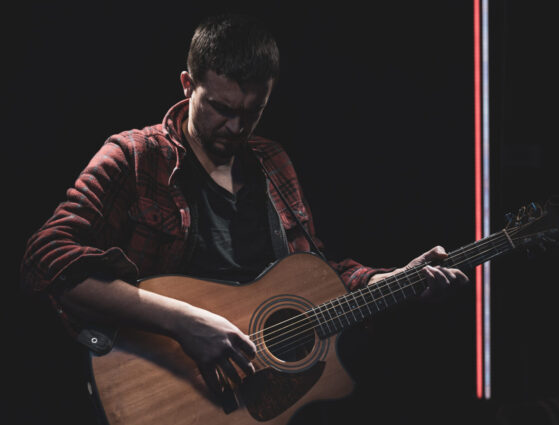
In the end, the guitar’s role in worship goes far beyond chords or melodies. It creates connection—bringing people together, linking generations, and drawing the human heart closer to something greater.
As worship continues to evolve, the guitar will remain at its center, shaping the sound of modern praise while staying true to its purpose. Its strings carry more than music; they express emotion, strengthen faith, and build a shared sense of devotion that resonates far beyond the notes themselves.
At The Mystic Keys, we bring this vision to life through thoughtfully designed Guitar Lessons Online. We guide learners not just to play the instrument, but to use it as a meaningful tool for expression and worship. Through structured learning and creative exploration, we continue to inspire, connect, and uplift hearts at every stage of the musical journey.
For more information and exciting resources about learning music, visit our website at The Mystic Keys. For more music content and exciting offers follow us on
Facebook, Instagram, YouTube, LinkedIn, Twitter, Pinterest, and Threads.